Axios Vitals

September 08, 2025



Welcome to Monday, Vitals crew. Today's newsletter is 1,085 words or a 4-minute read.
🚨 New from Axios: A show built for your small screen launching this month. We're bringing you candid conversations with leaders shaping business, tech, culture and more. Watch the promo video; read more in Variety.
1 big thing: China deals threaten U.S. biotech
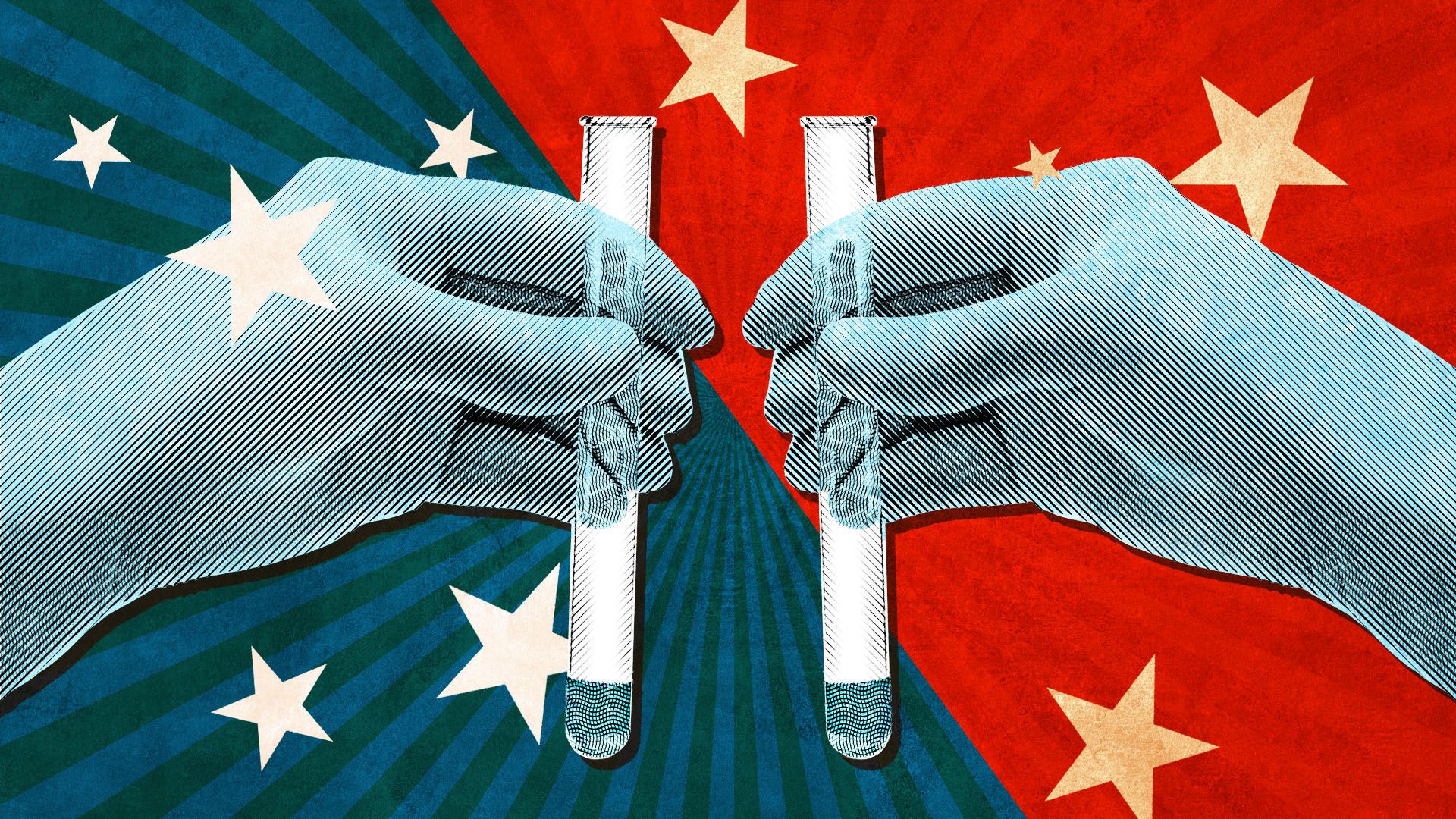
A surge of recent licensing deals for Chinese drugs is sending new signals that the U.S. could be toppled as the world's biotech leader.
Why it matters: A decade-long national strategy to develop its biopharmaceutical industry has left China in a position to deliver medical products faster and cheaper.
- It's part of a global power shift that's seen China emerge as a powerhouse in tech, including AI and chemistry, Andrei Iancu, undersecretary of commerce for intellectual property in the first Trump administration, told Axios.
- "Any way you cut it, any way you measure, they're basically pointing in the same direction: China taking the lead, already leading, or knocking on the door in these various areas," Iancu said.
By the numbers: China-sourced antibodies, heart treatments and other drug candidates will make up almost 40% of all licensing deals this year, up from less than 3% five years ago, according to Evaluate Pharma.
- Chinese biotech shares surged earlier this year amid an increase in licensing deals for cancer treatments, Financial Times reported in July.
- An analysis last week in Nature found 11 big pharma companies — including AstraZeneca, Bristol Myers Squibb, Eli Lilly and GSK — collectively committed more than $150 billion to license novel assets from Chinese sources in the last five years.
Between the lines: China's biotech boom comes as the U.S. is paring federal funding for biomedical research and freezing grants to universities and medical research institutes.
- Steep FDA staff cuts, the Trump administration's proposed 40% budget reduction for NIH and its termination of $500 million for mRNA vaccine development could chill investor enthusiasm and fuel an exodus of research talent.
- "This current retrograde step by the U.S. will allow others to catch up and likely pull ahead in the context of vaccines," Robin Shattock, professor of mucosal infection and immunity at Imperial College London, told Inside Higher Ed.
- An independent commission earlier this year recommended Congress and the White House dedicate a minimum of $15 billion over the next five years to unleash more private capital into the U.S. biotechnology sector.
2. White House floats lower tariffs on some drugs


The White House says it will consider lowering tariffs on hundreds of products across sectors including pharmaceuticals and food, depending on what specific deals can be struck with trading partners.
Why it matters: The prospect of lower tariffs or exemptions could be a boon to the health care industry and some manufacturers as well.
Driving the news: Late Friday night, the administration released a memo on a new tariff annex called the "Potential Tariff Adjustment for Aligned Partners" (PTAAP).
- Some or all of the products on the list "may" have tariffs reduced from high reciprocal rates to lower levels, the White House said, if countries make deals that help "mitigate the national emergency relating to the trade deficit" and address other trade concerns.
- There are four broad categories, including generic pharmaceuticals and their ingredients and food and agricultural products where there isn't sufficient domestic supply to meet demand.
Zoom in: The pharmaceuticals list is long, offering potential exemptions on amino acids, vitamins, certain antidepressants, hormones, penicillin and other essentials.
Reality check: As the White House memo makes clear, these products will still be tariffed — just at potentially lower rates, on a case-by-case basis, depending on what deals their exporters make.
- It's not a return to the summer's "TACO trade" ("Trump Always Chickens Out"), but it does mark a step back from assurances that the new reciprocal rates imposed Aug. 1 were firm and final.
3. FDA tightens focus on GLP-1 ingredient imports

The FDA is cracking down on imports of unapproved ingredients used in copycat GLP-1 weight-loss drugs, creating a "green list" of products from foreign sources that it's inspected or that appear to be in compliance with its standards.
Why it matters: Consumer demand for the blockbuster drugs has fueled a surge of compounded versions of drugs like Wegovy and Zepbound that are not approved by the FDA and could carry safety risks.
- Regulators previously identified compounded versions that had dosing errors, contained unapproved substances and triggered adverse events, some of which required hospitalization, the FDA said.
Driving the news: The "green list" import alert covers active pharmaceutical ingredients, or APIs, from compliant manufacturers. Those from other sources can be stopped at the border without inspection.
- "Our priority is protecting public health by ensuring all active ingredients used in GLP-1 drugs are obtained from compliant manufacturers," said George Tidmarsh, director of the FDA's Center for Drug Evaluation and Research. "Targeting illegal foreign GLP-1 active ingredients at the border is a critical part of this work."
4. New rare-disease process could lift up market
The FDA's proposed changes to the approval process for ultrarare-disease drugs could reduce investor risk in one of biotech's most precarious sectors, Katherine Davis wrote first on Pro.
Why it matters: The shift will give rare disease companies more predictability in outcomes, which could trigger increased dealmaking.
Catch up quick: The new Rare Disease Evidence Principles (RDEP) were proposed by the FDA's drug and biologics centers last week.
- The RDEP would accept more clinical trials without a control group for rare disease drugs, along with other supportive evidence.
Zoom in: The policy is aimed at drugs for diseases with very small patient populations — generally those fewer than 1,000 people — facing no known treatments and serious disability or death.
- Sarepta, Dyne Therapeutics and Rocket Pharmaceuticals were cited by Jefferies analysts as potential beneficiaries.
Yes, but: "It remains unclear what tangible impact the framework will have on the development process and approval timeline," William Blair analyst Sami Corwin wrote in a note.
If you need smart, quick intel on health tech dealmaking for your job, get Axios Pro.
5. While you were weekending

💉 President Trump changed his tune on vaccines, saying "pure and simple — they work" and appearing to break with Health Secretary Robert F. Kennedy Jr. on who should be eligible for shots. (Axios)
📔 Kennedy's forthcoming report on the causes of autism will link the use of Tylenol during pregnancy to the neurodevelopmental disorder, according to a published report. (Axios)
👀 BioZorb was marketed to help breast cancer patients, but the company behind it kept complaints from regulators and the public. (Bloomberg)
Thanks for reading Axios Vitals, and to senior health care editor Adriel Bettelheim and copy editor Matt Piper. Please ask your friends and colleagues to sign up.
Sign up for Axios Vitals