Axios Vitals

June 01, 2026



Welcome to June, Vitals gang. Today's newsletter is 815 words, a 3-minute read.
1 big thing: Questions linger over Trump health memo


President Trump's medical checkups have turned into mini dramas pitting the public's right to know against a public figure's medical privacy — with a heavy overlay of political intrigue.
The big picture: The White House added another twist late Friday night by releasing a three-page memo summarizing Trump's visit to Walter Reed National Military Medical Center the prior Tuesday that concluded he was "in excellent health" and "fully fit" to carry out all of his duties.
- It took three days to release the findings, which arrived at 10:44pm ET on a Friday night.
- And while they were more comprehensive than some past readouts, the memo from White House physician Sean Barbabella didn't put to rest persistent questions about apparent bruising on Trump's hands, swollen ankles and his alertness during some public events.
What's inside: The memo said Trump, who turns 80 in two weeks, demonstrated "strong cardiac, pulmonary, neurological and overall physical function."
- It again attributed the bruising of his hands to frequent handshaking and aspirin therapy and noted "slight lower leg swelling" it characterized as improved from last year.
- It said an AI-enhanced electrocardiogram estimated his cardiac age "to be approximately 14 years younger than his chronological age."
- Trump was counseled to take low-dose aspirin, increase physical activity and lose weight, which the report put at 238 pounds — 14 pounds more than an April 2025 physical.
The intrigue: Jonathan Reiner, former Vice President Dick Cheney's heart doctor, wrote on X that the report left unanswered questions, including why there have been repeated CT scans of the heart during his checkups and whether the medical team addressed his daytime fatigue and sleepiness.
- Bob Wachter, chair of the Department of Medicine at the University of California, San Francisco, said Trump "appears to be quite healthy from a cardiovascular standpoint" but questioned why he needs to be on aspirin.
2. Grantmaking plan shakes researchers
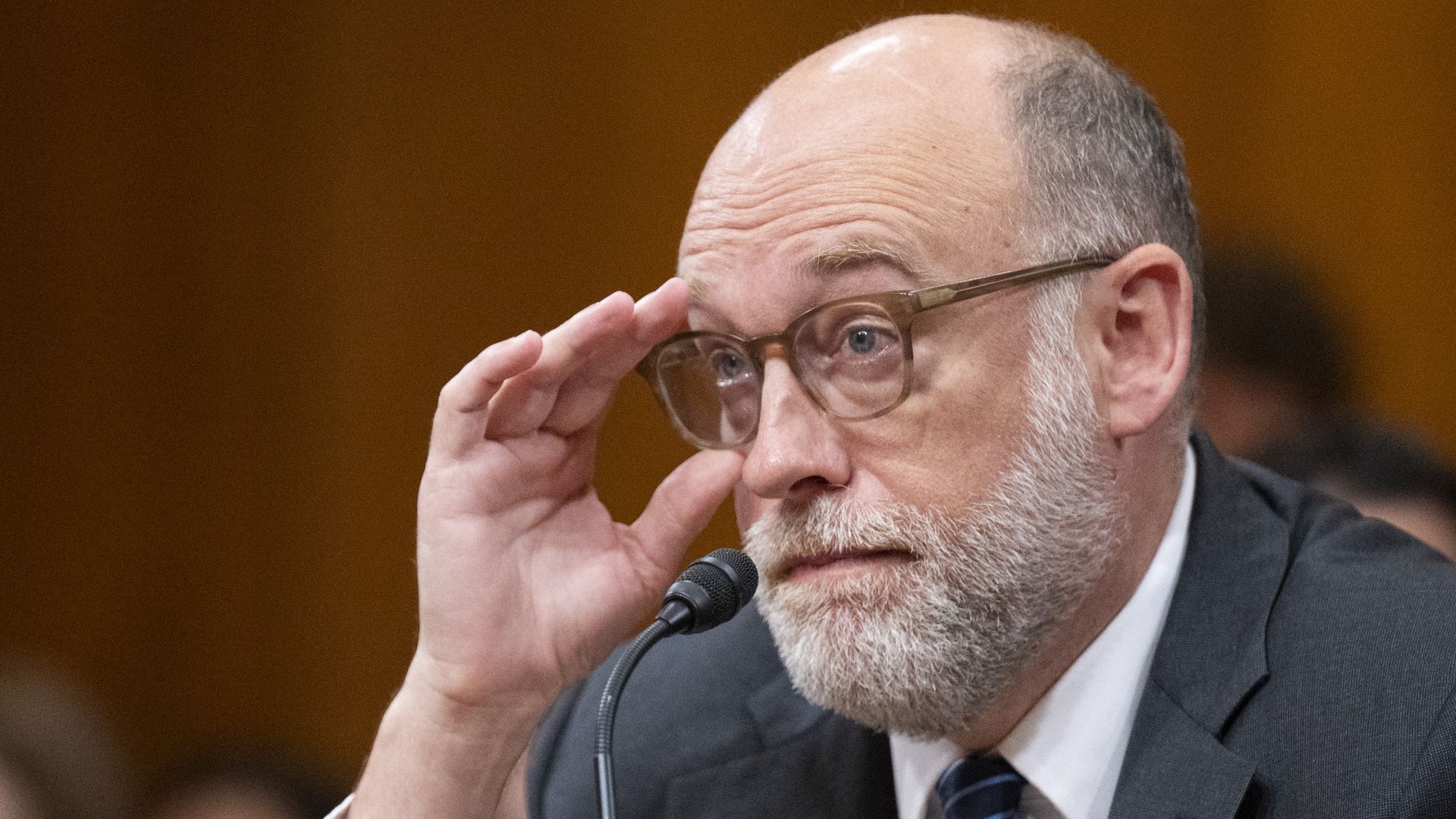
A Trump administration proposal to overhaul how research agencies award grants is stoking new fears about political interference in publicly funded research.
The big picture: The document tracks with past administration efforts to cut funding, but would establish a standard framework for the whole government.
- The administration wants to reduce funding for research it says doesn't support the mission of agencies like NIH, including diversity, equity and inclusion initiatives.
What's inside: The Office of Management and Budget proposal would treat peer reviews by program officers or scientists as advisory, and would make political appointees do a "pre-issuance review" to ensure discretionary grants advance the president's policy priorities.
- It also lays out criteria for not funding or promoting DEI policies, "theories or ideologies that deny the biological reality of sex or the sex binary in humans" or procedures to transition a person under 19 from one gender to another.
- It additionally would also allow grants to be terminated mid-award.
What they're saying: "It is a complete political control apparatus layered over every stage of the federal science funding lifecycle," former NIH program official Elizabeth Ginexi wrote on Substack.
- Some research advocates said the move amounts to an unprecedented power grab by OMB director Russell Vought.
- OMB says the revisions are aimed at ensuring tax dollars aren't wasted and that funded activities are consistent with law and policy.
3. Trump again backs narrowing childhood shots

Trump issued an order late Friday directing federal agencies to use a recent HHS assessment of childhood immunizations as a guide for the entire government.
Why it matters: It's a further endorsement of efforts under Health Secretary Robert F. Kennedy Jr. to cut the number of shots the government recommends for kids and align the U.S. with what the administration calls consensus among peer nations.
Driving the news: The order directs the CDC and its Advisory Committee on Immunization Practices to review the assessment and the latest clinical data and update the vaccine schedule for children and adolescents.
- The HHS assessment found the U.S. recommends more childhood vaccines than any peer nation, including more than twice as many vaccine doses as some European nations.
- It backed cutting the number of recommended shots to 11. Other vaccines — including for the flu, rotavirus, hepatitis A and B, some varieties of meningitis and RSV — would only be recommended for higher-risk children or when a doctor recommends them.
An earlier bid by Kennedy to narrow the childhood vaccination schedule was blocked by a federal judge in March.
4. While you were weekending

🦠 Congo reported 282 confirmed Ebola cases and 42 deaths, the Africa CDC said. (Reuters)
🪲 Kennedy unveiled new efforts to combat Lyme disease, saying Americans are living in "a science fiction nightmare." (Boston Globe)
🏥 Quorum Health is shifting from private equity-backed ownership to a nonprofit model, unlocking new ways for its hospitals to get tax-exempt funding. (HealthExec)
Thanks for reading Axios Vitals, and to editors Adriel Bettelheim and David Nather and copy editor Matt Piper. Please ask your friends and colleagues to sign up.