Axios Vitals

January 22, 2026

Welcome back, Vitals gang. Today's newsletter is 960 words, a 3.5-minute read.
1 big thing: Insurers face pressure on affordability

Health insurers are feeling political heat as Republicans try to shape the affordability narrative and counter Democratic messaging on health care costs.
Why it matters: President Trump and his allies have been increasingly assailing health plans over costs while seeking to deflect blame for blocking enhanced Affordable Care Act subsidies that help people afford premiums.
- But the administration and Congress have less leverage than they have with drugmakers, and would have to address underlying drivers of health costs to really do something about premiums.
Driving the news: House Republicans have called CEOs of five of the largest health insurance companies in back-to-back hearings today, where they will be pressed on costs of coverage.
- Executives from UnitedHealth, CVS, Elevance, Cigna and Ascendiun will appear before the House Energy and Commerce and Ways and Means committees.
- Energy and Commerce Chair Brett Guthrie (R-Ky.) said yesterday the companies cover over half of the insured lives in the U.S., "so everybody's being affected by the high cost of health insurance."
Between the lines: It's one thing to bash insurers, but quite another to match the talk with substantive health system changes.
- "I think it's interesting that they're adopting some of the anti-insurer, populist rhetoric, but it needs to be backed up with actual policies that hold the health industry to account," said Anthony Wright, executive director of consumer group Families USA.
- He added that the hearing also should not be used to "distract" from the need to extend the ACA subsidies.
The other side: Insurers agree there's a problem, but say they're working to bring costs down. Executives blame high premiums on the prices charged by hospitals and drug companies.
2. Charted: The big measles surge

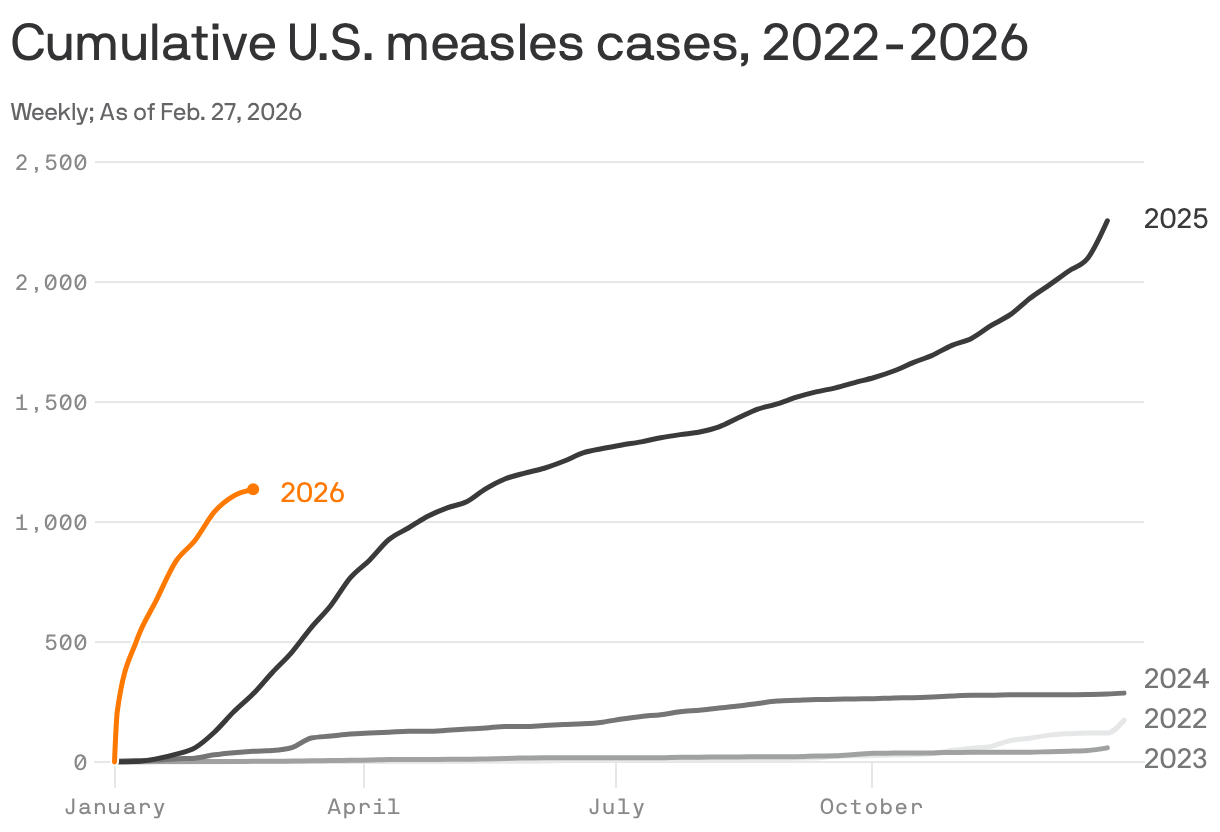
This chart shows what it looks like to hit a 30-year high in measles cases — and why the U.S. is on track to lose its measles "elimination status."
Why it matters: We've all heard that cases are on the rise, but the reality is that they're skyrocketing.
- It started with an outbreak in West Texas, and now infections are reported in nine states and hundreds are in quarantine due to a major surge in South Carolina.
- More than 9 out of 10 cases were among unvaccinated people or those with unknown vaccination status, per the CDC.
What they're saying: On Tuesday, Ralph Abraham, a top CDC official, told reporters that the end of the measles elimination status in the U.S. would be "just the cost of doing business, with our borders being somewhat porous [and] global and international travel," Stat reported.
What we're watching: The risk of spillover increased with holiday travel. North Carolina and Ohio reported infected individuals who traveled to the outbreak epicenter in South Carolina.
3. 1 big number: GLP-1 prescribing
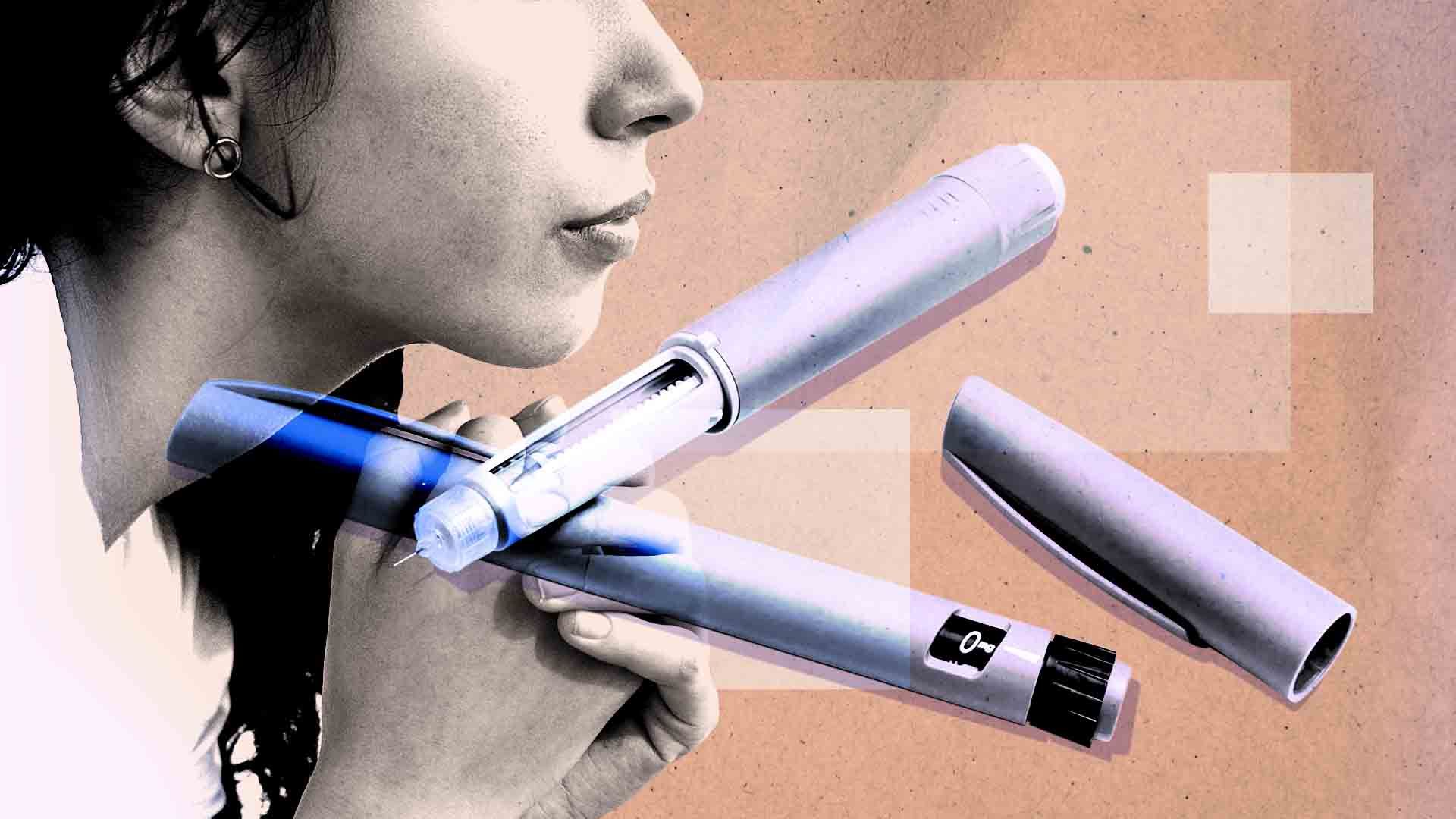
GLP-1 weight-loss drugs accounted for just over 7% of all U.S. drug prescriptions at the end of 2025, according to health data company Truveta Research.
Why it matters: The popular treatments are changing lives and improving health outcomes, but the cost is prompting some employers and other payers to limit coverage.
What they found: Tirzepatide, the active ingredient in Eli Lilly's Mounjaro and Zepbound, remained the leading anti-diabetic and anti-obesity medication by volume and showed the largest increase in total prescribing from September to December.
- Almost 2.2 million patients received 11.2 million total GLP-1 prescriptions between the start of 2019 and the end of 2025.
- More than 7 in 10 GLP-1s were prescribed to treat diabetes, and about 27% were used to treat obesity, among prescriptions where the use was known.
- Less than half (46.7%) of first-time anti-obesity medication prescriptions were filled within 60 days.
Reality check: There are some signs the GLP-1 boom may be cooling. Overall prescribing rates in December were just 5% higher than in September.
4. 10 million microdosed psychedelics: Study
An estimated 10 million U.S. adults took very small doses of psilocybin, LSD and other psychedelics for their mental health last year, according to a new findings from RAND.
Why it matters: While possession of many of the substances is prohibited under federal law, more states and localities are changing policies or making enforcement less of a priority.
By the numbers: 69% of those who used psilocybin — also known as magic mushrooms — in the past year reported microdosing at least once.
- 65% of MDMA users and 59% of LSD users also reported microdosing.
Psilocybin was by far the most commonly used psychedelic overall.
- More than 4% of the roughly 10,000 adults surveyed said they used psilocybin in the past year. That translates into more than 11 million people when extrapolated to the full population.
- About 1.8% of adults said they used MDMA, also known as ecstasy, in the past year.
Reality check: There's been little clinical research published on the effects of microdosing, which is far from a full-brown "trip." A 2024 review said LSD trials have shown mild effects on mood, sleep, social cognition, reward response and pain perception — but that more research is needed.
What we're watching: Health Secretary Robert F. Kennedy Jr. is a vocal supporter of psychedelic-assisted therapy, and has said the administration is looking into ways to support it.
5. Catch up quick
🎤 Kennedy made a stump-style speech in the key swing state of Pennsylvania, in a possible preview of how he'll be deployed to boost support for the GOP in the midterms. (Politico)
💵 The administration threatened to strip Illinois of federal health dollars over a state law requiring medical providers to refer patients for abortion services. (WashPost)
🍼 Three of the world's largest dairy companies are recalling and blocking batches of infant formula after a contamination scare that began with Nestle widened. (Reuters)
Thanks for reading Axios Vitals, and to editors Adriel Bettelheim and David Nather and copy editor Matt Piper. Please ask your friends and colleagues to sign up.
Sign up for Axios Vitals