Axios Vitals

December 07, 2024


Happy Saturday! Here's our latest special edition about what's next for health care as a new administration assembles and power realigns in Congress.
🎉 These special editions are being led by our colleagues at Axios Pro Health Care Policy: reporters Victoria Knight and Peter Sullivan and senior health care editor Adriel Bettelheim.
- If you like what you see, sign up for Axios Pro Policy.
- Today's newsletter is 665 words, a 2.5-minute read.
1 big thing: Searching for drug discount fixes

The federal drug discount program for safety-net hospitals and clinics has been a perennial source of disputes among powerful health industries.
- And with time running out for Congress to act on changes to the program this year, some states are taking the lead.
The big picture: The federal 340B program may not command many headlines, but it's one of the biggest government drug programs. It is also growing at a rapid clip, with discounted drug purchases hitting a record of $66.3 billion in 2023.
- The program is mired in litigation and administrative disputes, with drugmakers and providers accusing each other of gaming the system.
- Pharma accuses providers of using the program to pad their profits rather than helping vulnerable patients. Providers dispute such characterizations and say the program helps them stretch limited federal resources.
State of play: Lawmakers have taken several recent cuts at reforming the program but will probably have to pick up where they left off next year.
- Then, incoming Senate Majority Leader John Thune (R-S.D.)— who's long been involved in the issue — will be in charge of the upper chamber's schedule.
Meanwhile, some states are stepping into the void to address program spending.
- California voters last month approved a ballot measure mandating that 98% of 340B revenue be directed to patient care. Providers that don't comply with the rule could lose their ability to operate as a health care entity.
- Last week, Minnesota became the first state to release a transparency report on 340B. It noted providers in the state reaped $630 million in 340B revenue for the 2023 calendar year.
- It also found the state's largest 340B hospitals benefited the most from the program, while the state's safety net clinics lagged.
States have made previous attempts to set 340B guardrails, including blocking drug manufacturers from limiting the availability of discounted drugs at certain pharmacies and restricting when providers can use program discounts.
- Some courts have ruled that states have some leeway to set requirements since federal 340B law does not mention pharmacies or the delivery of drugs.
Friction point: Pharma manufacturers impatient with how 340B has rapidly expanded over the years have been trying to clamp down on how discounts are issued to providers.
- Johnson & Johnson, Eli Lilly and Sanofi recently tried to implement rebate models that would no longer give upfront discounts but would reimburse providers after the drugs are bought.
- The federal Health Resources Services Administration blocked J&J and Lilly from implementing the changes, and the matter is now tied up in litigation.
- It's not clear how the incoming Trump administration would address changes like these.
The bottom line: With the stakes high and court cases piling up, 340B reform will loom large in the 119th Congress, experts predict.
- "With Sen. Thune as majority leader and [Sen. Bill] Cassidy as health committee chair, there will be a greater push to make 340B reform happen in the next Congress," said Darbin Wofford, a senior health policy adviser at Third Way.
- "We've seen exponential growth in the program over the past decade, and lawmakers are looking to make improvements."
2. Senate health committee becomes a focal point
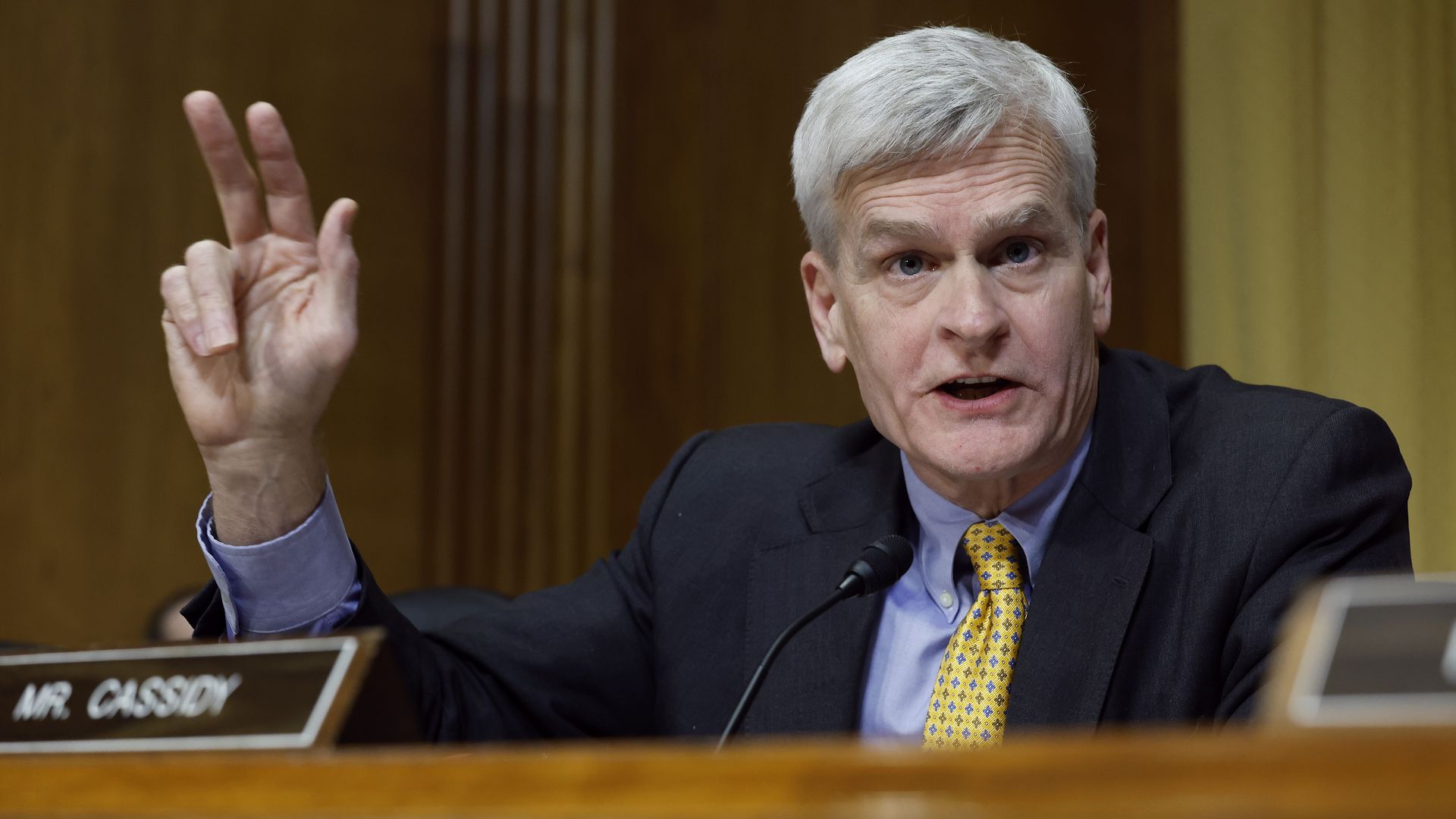
Any congressional fixes to 340B will likely have to run through the Senate health committee, whose incoming chair, Bill Cassidy (R-La.), has been investigating the program.
Here are key questions the committee and a separate Senate working group on 340B are trying to resolve:
- Are community health centers that negotiated discounts under 340B applying the savings to patients?
- Are pharmacies like CVS Health and Walgreens generating revenue from 340B when they contract with drugmakers to distribute the discounted drugs — and is it benefiting patients?
- What are manufacturers' justifications for imposing restrictions on the use of contract pharmacies to dispense the discounted drugs?
- Is there truth in the drug industry's argument that a lack of oversight and accountability, combined with rapid program growth, has transformed the program in favor of providers?
- Should 340B providers' pleas for new measures to prevent drugmakers from restricting access to discounts be heeded by Congress?
Thanks for reading Axios Vitals, and to senior health care editor Adriel Bettelheim, managing editor David Nather and copy editor Kathie Bozanich.
Sign up for Axios Vitals