Axios Vitals

February 23, 2026



Welcome back, Vitals gang. Today's newsletter is 969 words, a 3.5-minute read.
1 big thing: HHS tries again on drug discount revamp

The Trump administration is doubling down on efforts to revamp the federal discount drug program — a major flashpoint between Big Pharma and hospitals.
Why it matters: The so-called 340B program has been mired in litigation, most recently over administration efforts to let drugmakers carry out price reductions through rebates instead of cutting prices at the front end.
- After a court halted the attempt, federal health officials this month laid the groundwork to reintroduce changes that providers say could cost them hundreds of millions of dollars.
Driving the news: The Health Resources and Services Administration last week began soliciting feedback on whether and how to make hospitals and clinics in the program pay full price up front for the medications.
- Drugmakers would then rebate the price difference later, after verifying that a facility qualifies for a discount.
- The agency is asking hospitals for financial data to back up industry claims that such a change would threaten facilities' cash flows and create administrative hassles as they contend with federal Medicaid cuts.
Context: The 340B program covers more than $81 billion in annual drug purchases but has been mired in controversy and litigation, with drugmakers squaring off against providers.
- A federal court in Maine ruled late last year that the HHS didn't solicit enough stakeholder feedback before proposing its initial rebate model.
- The new notice HHS sent this month "suggests a sense of urgency in advancing a new rebate model proposal," lawyers at Quarles & Brady wrote in a blog post.
- Drug companies have been trying to move in the direction of rebates themselves over the past couple of years, arguing that many providers are gaming the system and getting 340B program discounts as well as Medicaid rebates for drugs.
The other side: Hospitals plan to respond to the information request, but they're holding out hope that HHS will drop the rebate idea altogether.
2. The threat of pharma tariffs hasn't gone away


The Supreme Court decision striking down many of President Trump's tariffs hasn't stripped away the threat of new duties on drug imports.
Why it matters: Trump has used the threat of tariffs to help extract price concessions from big pharmaceutical companies, but there are various kinds of tariffs, and the ones the Supreme Court found illegal rely on a different authority than he would use for imported drugs.
- The high court decision left intact his authority to impose so-called Section 232 tariffs on individual sectors like pharmaceuticals.
- Companies that cut pricing deals with Trump have received three years of tariff relief.
State of play: The Commerce Department has reportedly concluded a national security investigation of drugs and drug ingredients that could underpin new trade restrictions to protect domestic production, similar to those the administration levied on aluminum and steel.
- Trump has 90 days from the conclusion to decide if a national security threat exists and whether to act.
- But the tariff push has at times complicated ongoing drug price talks — and top drug industry executives like Pfizer CEO Albert Bourla have said the uncertainty is discouraging more investment in U.S. manufacturing and R&D.
- An added twist is that Trump agreed to exempt U.K. drug imports from tariffs for the rest of his term as part of last May's trade agreement with Britain.
What we're watching: Whether Trump opts to use Section 232 authority on drug imports not covered by existing agreements — and how that plays into the election-year debate over health costs.
3. Quote du jour
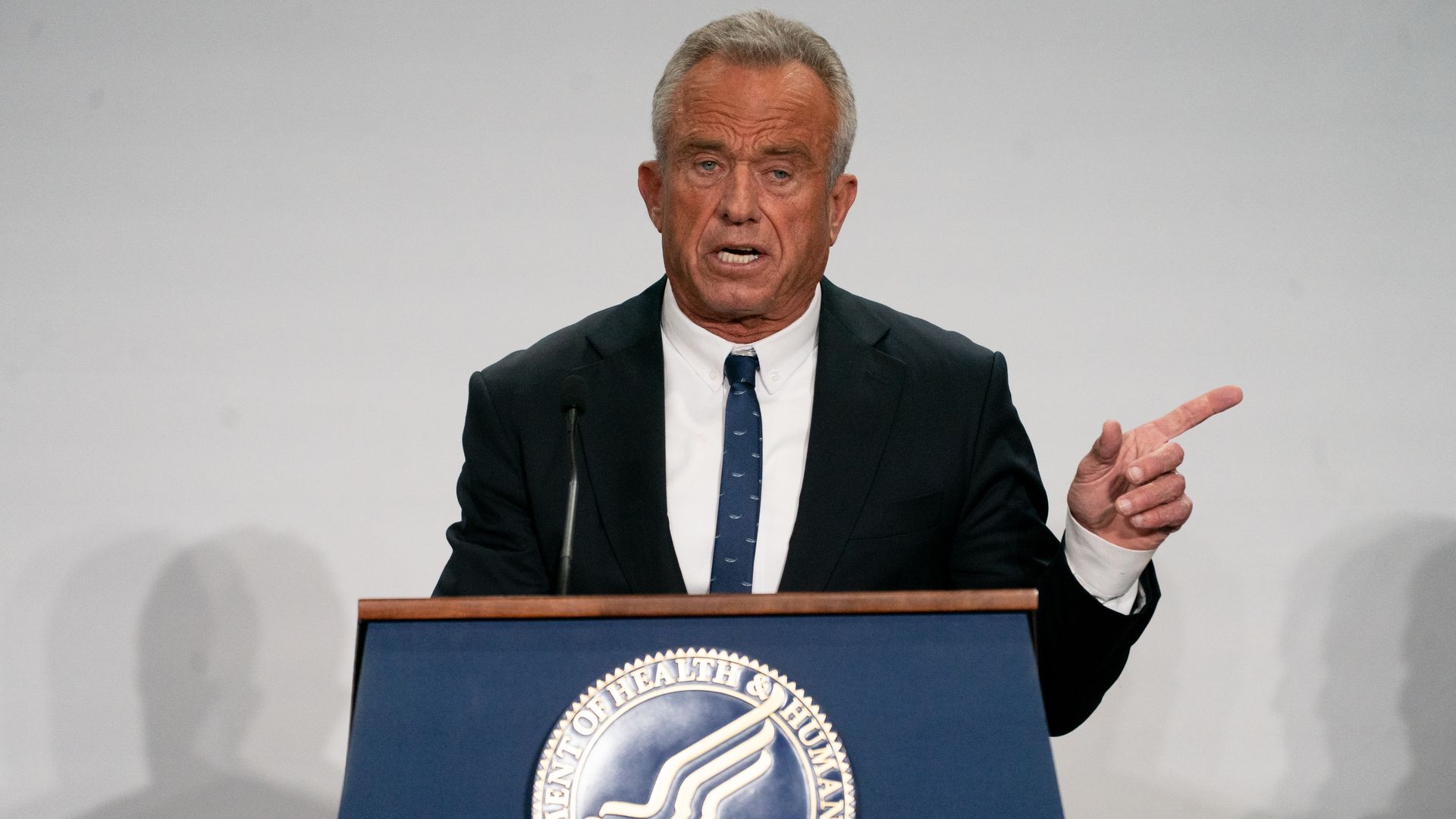
"Having seen over 300 patients with this condition over the course of my 30-year career, no one else has ever claimed or felt that they developed this condition due to a vaccination of any kind."— Steven Bielamowicz, director of the Voice Treatment Center at the George Washington University School of Medicine, to the Washington Post on Health Secretary Robert F. Kennedy Jr.'s suspicion that flu vaccine triggered his voice disorder.
4. Gene therapies could squeeze workplace plans

Multimillion-dollar cell and gene therapies may be providing new hope to patients with debilitating diseases but still are rarely used on people enrolled in employer health plans, an analysis of claims data by the Employee Benefit Research Institute found.
Why it matters: As more therapies are approved for a wider range of conditions, employers will have to reevaluate how they finance health care and ensure that benefits are sustainable.
What they found: Only 9.2 out of 100,000 covered individuals used cell and gene therapies in 2022, mostly for sickle cell disease.
- Cell and gene therapy users accounted for just under 0.1% of enrollees, and about 0.5% of total spending between 2018 and 2022.
- While the FDA approved 48 therapies as of 2025, more are being developed, and not just for rare diseases.
"Despite their limited use, [therapy] users may represent a disproportionate share of overall health care spending," the report said. "Traditional cost-sharing mechanisms such as deductibles and out-of-pocket maximums will have little effect on use of health care services among high-cost claimants."
The intrigue: Large employers who can spread financial risk across a broad base of enrollees can absorb the cost of outlier events, such as claims for cell and gene therapies, EBRI said.
- Smaller companies may have to buy stop-loss insurance that reimburses the plan sponsor for claims that exceed predetermined thresholds.
5. While you were weekending

💸 Political appointees aligned with Kennedy circumvented critical safeguards in an apparent rush to fund research that could support changes to the U.S. vaccine schedule. (Rolling Stone)
🚬 As smoking rates fall, companies and influencers are pushing the purported cognitive and health benefits of indulging in oral nicotine. (Stat)
💊 Targeting fentanyl has incentivized illegal drug suppliers to experiment with other compounds that bypass detection, creating a new phase of the overdose crisis. (Axios)
Thanks for reading Axios Vitals, and to editors Adriel Bettelheim and David Nather and copy editor Matt Piper. Please ask your friends and colleagues to sign up.
Sign up for Axios Vitals