Axios Vitals

July 24, 2026


Happy Friday! Today's newsletter is 714 words, a 2.5-minute read.
1 big thing: Health nominations stall in committee

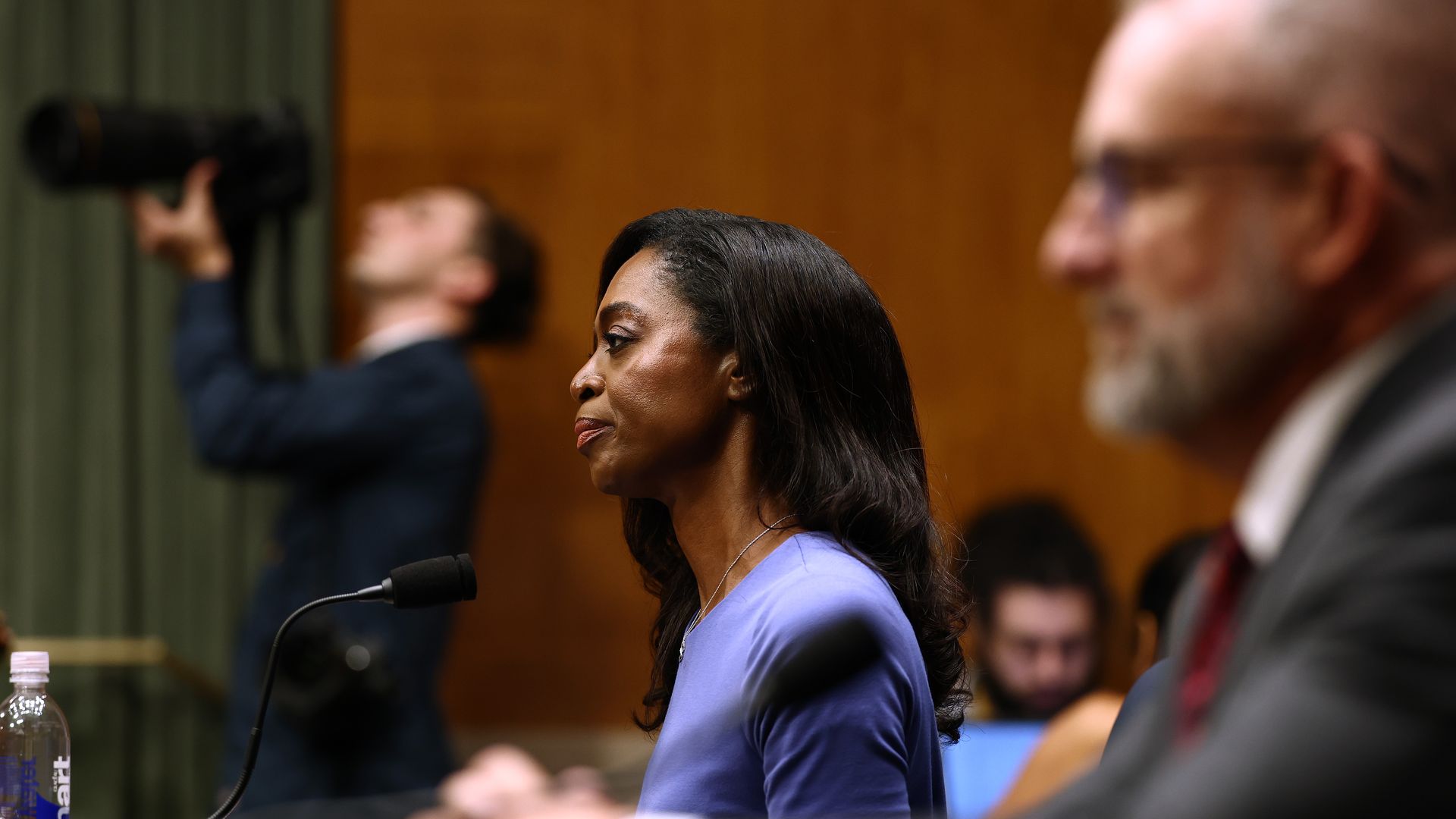
The Trump administration's backlog of high-level health appointments isn't getting any smaller after the Senate health committee postponed votes yesterday on the CDC director nominee and a divisive pick for an assistant health secretary post.
Why it matters: CDC nominee Erica Schwartz probably will have enough Republican votes to be approved after committee Chair Bill Cassidy (R-La.) said he'll support her — he just couldn't get enough GOP senators to show up yesterday.
- But lingering tensions over public health policies were apparent as the committee postponed a vote on Sean Kaufman, President Trump's pick for assistant secretary for preparedness and response, after he faced tough questions on past anti-vaccine statements.
The big picture: The committee is expected to try the Schwartz vote next week. It's a necessary step to reset a course for the beleaguered public health agency that's been without a full-time political leader for almost a year.
- Cassidy, who grilled Schwartz about whether she could be independent at last week's confirmation hearing, said yesterday that he was confident that "she knows what she is doing and will stand against those who do not."
- Yet some senators said their concerns intensified after Schwartz sidestepped questions about political interference or whether she would alert them if forced to adopt unscientific policies.
- "While I respect Dr. Schwartz' achievements, I have very little confidence in her ability to keep the job while maintaining independence from the pressures of this administration," Sen. Lisa Blunt Rochester (D-Del.) said in a statement.
Some public health experts were openly disappointed with Schwartz's testimony last week, predicting the former deputy surgeon general wouldn't stand up to Trump or Health Secretary Robert F. Kennedy Jr. at a time when the nation is facing public health threats like cyclospora and measles.
- Physician-author Jeremy Faust noted she didn't give clear statements debunking links between vaccines and autism and didn't appear to know the CDC's Office on Smoking and Health is, for all practical purposes, closed.
- Faust noted Schwartz also claimed to be unaware of a recent HHS policy spurning mRNA vaccine research.
Yes, but: Republican senators appeared more divided over Kaufman, who has a history of questioning vaccines.
- Cassidy expressed frustration with Kaufman's previous statements on vaccine safety during his confirmation hearing last week.
- A committee spokesperson said on Thursday that conversations with the administration for the path forward are ongoing.
There are more Trump health picks that will help fill the Senate's calendar after August recess.
- They include Chris Klomp for deputy health secretary, Nicole Saphier for surgeon general and Ge Bai for assistant health secretary for planning and evaluation. The White House also is vetting finalists for commissioner of the FDA.
2. New genome atlas could find more drug targets
Researchers peeling away the mysteries of the human genome have developed an atlas that could help explain how variations in DNA contribute to conditions like atrial fibrillation, bipolar disorder and schizophrenia.
Why it matters: New tools that delve into chemical tags and the three-dimensional architecture of the genome could lead to the development of new drugs.
Driving the news: Researchers wrote in Science yesterday that they built a 3D atlas of nearly 87,000 human cells offering one of the clearest views yet of how DNA is organized and regulated across the human body.
- The atlas covers 16 types of human tissues and is available through an interactive browser at no cost.
- It could serve as a training tool for AI models that predict the effects of genetic variants.
Zoom out: Most of the human genome is made up of regions that don't contain instructions for making proteins but still have important biological functions.
- Researchers want to know how these vary between individuals and how they guide the course of a disease, or what treatments might be effective.
- "A lot of the genetic variation that predisposes someone to disease is in non-coding parts of the genome," said co-author Jesse Dixon, an associate professor at the Salk Institute for Biological Studies.
- "By adding in the 3D genome aspect, we can potentially bridge that gap — connecting non-coding variations with the genes they affect in specific cells and tissues."
Thanks for reading Axios Vitals, and to editors Adriel Bettelheim and David Nather and copy editor Matt Piper. Please ask your friends and colleagues to sign up.
Sign up for Axios Vitals