Axios Vitals

November 19, 2025



Halfway there, gang. Today's newsletter is 1,047 words or a 4-minute read.
⚡️ Join Axios' Caitlin Owens in Washington, D.C., today at 5:30pm ET for a conversation on expanding and improving access to health care with Reps. Bob Onder (R-Mo.) and Robin Kelly (D-Ill.). RSVP here.
1 big thing: GOP digs in against extension
Republicans are taking a harder line against extending enhanced Affordable Care Act subsidies — and doubling down on an alternative plan that would send the money directly to consumers.
Why it matters: President Trump's opposition to an extension makes it increasingly unlikely that Republicans will agree to renew the tax credits, even though it's not clear how the GOP alternative would work.
Driving the news: Trump wrote on Truth Social yesterday that the "only" plan he will support is "sending the money directly back to the people," and that Congress should not "waste your time" on anything else, like a subsidy extension.
- Trump didn't elaborate on how his plan would work. The ACA already gives people financial help in buying insurance.
Some GOP proposals envision giving people money for a health savings account on top of existing ACA coverage, mitigating concerns about healthy people leaving the market.
- Senate health committee Chair Bill Cassidy (R-La.) outlined a plan on Monday that would redirect the enhanced subsidy money to an HSA to help pay out-of-pocket costs for people who chose bronze-level ACA plans, which tend to have high deductibles.
Another possible outcome would be allowing people to buy cheaper, skimpier coverage that doesn't comply with the ACA. Some policy experts warn that would destabilize the ACA markets, by prompting an exodus of healthier people.
Senate Majority Leader John Thune (R-S.D.) wouldn't rule out a bipartisan solution when asked about Trump's comments yesterday, saying "we'll see" how negotiations go and that "there's an openness" to a deal on the GOP side.
- The biggest obstacle, he said, could be whether Democrats agree to apply the Hyde Amendment to the subsidies and add restrictions on using the funds for abortions.
- Cassidy is framing his plan as the most realistic option, given White House and House GOP leadership resistance to the subsidies.
The Senate Finance Committee will hold a hearing this morning on health care costs, giving senators a chance to further stake out their positions.
2. Sanders pushes Dems to go big

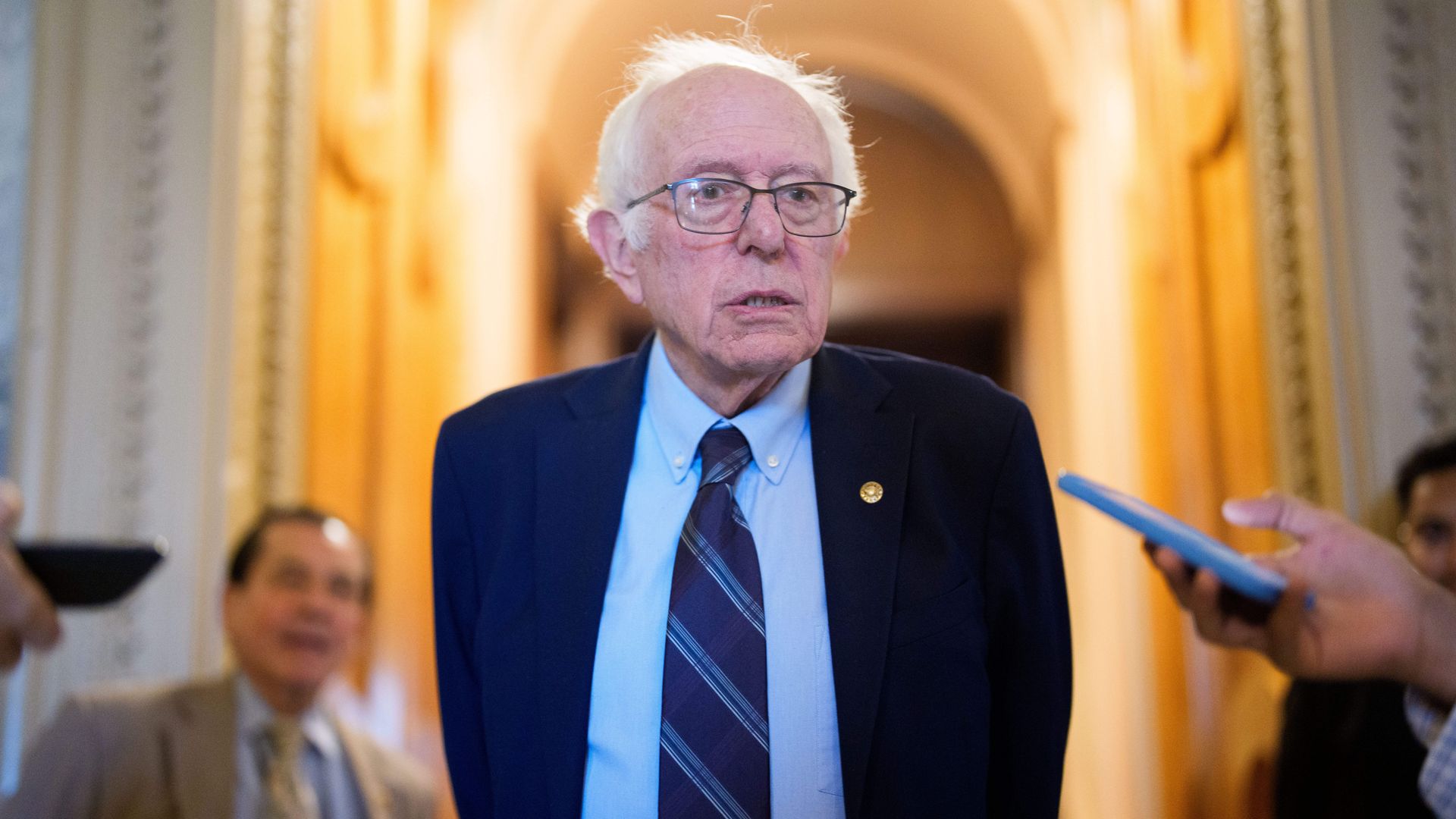
Sen. Bernie Sanders is urging Senate Democrats to unite behind an expansive health care proposal in the negotiations over ACA tax credits.
Why it matters: Sanders (I-Vt.) wants the Democratic proposal to extend the ACA tax credits, repeal $1 trillion in GOP health care cuts, expand Medicare and lower prescription drug prices, he said in a letter to colleagues late Monday.
- Republicans, however, have signaled that any deal to extend the tax credits must be short term and require reforms.
- Without an extension of enhanced marketplace subsidies by year's end, millions Americans on the ACA marketplaces could see the monthly premiums they pay more than double.
The big picture: Democratic leaders have argued that the government shutdown has made health care a top political issue.
- Sanders, the top Democrat on the Senate health committee, said Democrats must make proposals that address "systemic deficiencies."
3. Worker insurance cost to break $18,500

The average cost of covering a U.S. worker will exceed $18,500 next year, underscoring concerns about health care affordability and prompting benefit changes, according to a new Mercer survey.
Why it matters: The added costs will force tough tradeoffs for employers who've tried to maintain generous benefits in tight labor markets and be passed on to workers already reeling from inflationary pressure.
- The corporations are likely to offer more plan options, take steps to guide workers to high-performing providers and provide specialized health programs in areas like diabetes and fertility.
By the numbers: Higher drug spending, including on GLP-1 weight-loss medications, will drive up total health benefit costs an expected 6.7% in 2026, accounting for the highest increase in 15 years, Mercer said.
- The survey found that this year, the average cost of employer-sponsored coverage reached $17,496 per employee, a 6% increase that's well above the rate of inflation and wage growth.
- A factor behind the increase was sharp growth in prescription drug spending, which rose 9.4% on average for large employers with 500 or more employees.
- 49% of large employers covered costly GLP-1 weight-loss drugs in 2025 — up from 44% in 2024.
What's ahead: Corporations already are increasing the number of medical plans to pick from.
- More are pushing plans with smaller networks of providers, along with stand-alone programs designed to help employees better manage specific health conditions, Mercer said.
4. Tylenol maker could see autism cases revived

Tylenol maker Kenvue could face the revival of more than 500 lawsuits alleging the painkiller causes autism, after a U.S. appeals court questioned whether they were dismissed because a trial judge improperly excluded evidence, Reuters reports.
Why it matters: While there's no firm evidence of a link, the comments of two judges on a 2nd U.S. Circuit Court of Appeals panel during a hearing suggest that some of the testimony might have been admissible, per the outlet.
- The hearing came nearly two months after Trump and top health officials suggested a connection, despite inconclusive evidence.
Between the lines: Parents of children with autism and ADHD in 2022 began suing the makers of Tylenol and generic acetaminophen for failing to sufficiently warn about an increased risk of the conditions if the medication is taken during pregnancy.
- The plaintiffs engaged researchers from institutions including Harvard and the University of Southern California to present evidence they said shows a causal link between acetaminophen and autism and ADHD.
- But a federal judge in 2023 decided that the testimony and research of expert witnesses called in by the plaintiffs wasn't conclusive.
5. Catch up quick
🥼 Private Medicaid insurers dominate the program, but when enrollees need care, they often can't get appointments with doctors listed in those insurers' networks. (WSJ)
🏥 Republicans created a special $50 billion fund to help rural hospitals stay afloat, but the biggest impacts of funding cuts may be in cities. (NYT)
🍼 Nestle is adding sugar to baby food tailored to the African market, according to an NGO, which has accused the company of not adhering to health standards applied to richer nations. (Al Jazeera)
Thanks for reading Axios Vitals, and to editors Adriel Bettelheim and David Nather and copy editor Matt Piper. Please ask your friends and colleagues to sign up.