Axios Vitals

November 13, 2025


Welcome to Thursday! Today's newsletter is 1,073 words or a 4-minute read.
1 big thing: Drug price deals may have limited impact
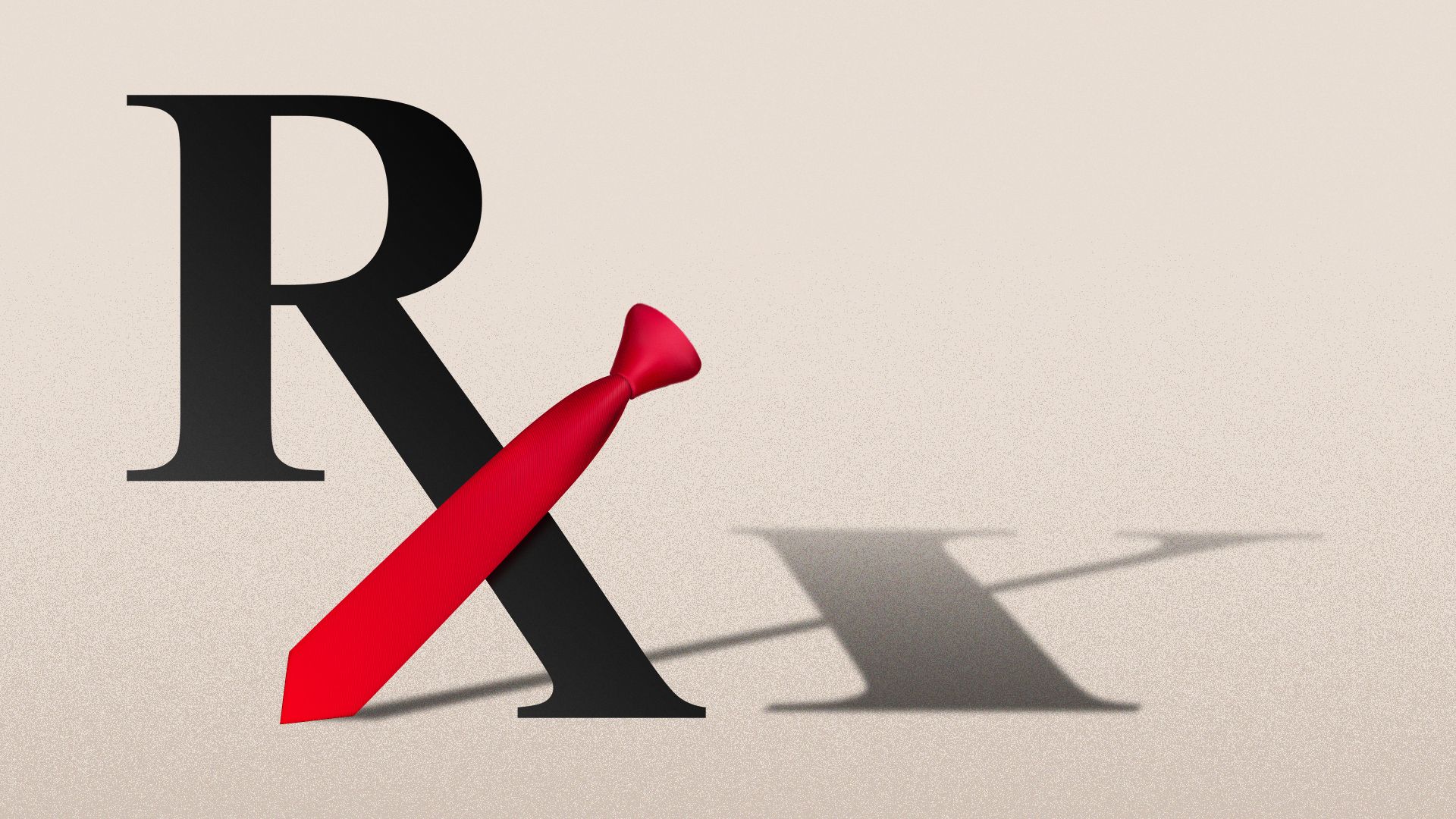
The Trump administration portrays its deals with drug manufacturers as major victories against rising drug prices — but they won't have a huge impact on most consumers' wallets.
Why it matters: Tying U.S. prices to what's paid abroad doesn't guarantee Americans will pay less — especially in Medicaid, where out-of-pocket costs already are capped.
- And the discounted prices that will be offered on the government's TrumpRx portal may not benefit the more than 305 million Americans with insurance, who'll likely have access to cheaper brand-name medicines through their plans.
State of play: Five drugmakers — Pfizer, AstraZeneca, EMD Serono, Eli Lilly and Novo Nordisk — have struck deals with the Trump administration so far, and more deals are expected.
- Few details are available on the actual terms of these deals.
- The companies will offer drugs at lower cash-pay prices to consumers through TrumpRx.
- They'll also give state Medicaid programs access to their medications at the lowest prices paid by other developed countries through a newly announced pilot program.
Where it stands: Most Medicaid enrollees already pay no more than $8 out of pocket for prescription drugs. The new deals aren't going to lower that further.
- The marked-down cash prices on TrumpRx could offer the convenience of comparison shopping — but the 92% of Americans who already have health coverage likely have lower out-of-pocket costs through their plans, said Edwin Park, research professor at the McCourt School of Public Policy at Georgetown University.
- "There's been a lot of more pomp and circumstance around the bilateral deals than their real impact will be," said Steve Knievel, access to medicines advocate at Public Citizen.
- "It's unclear how sustainable they'll be, to the extent they're voluntary arrangements and being done through pilot models."
Yes, but: Last week's deal on GLP-1 anti-obesity drugs could be the exception.
- Many employers won't cover GLP-1s for weight loss because of the upfront expense, so reduced cash prices could make a big difference. The pricing deal also expands Medicare coverage and could influence more states to cover the drugs through Medicaid.
2. States scramble to avoid Medicaid shortfalls

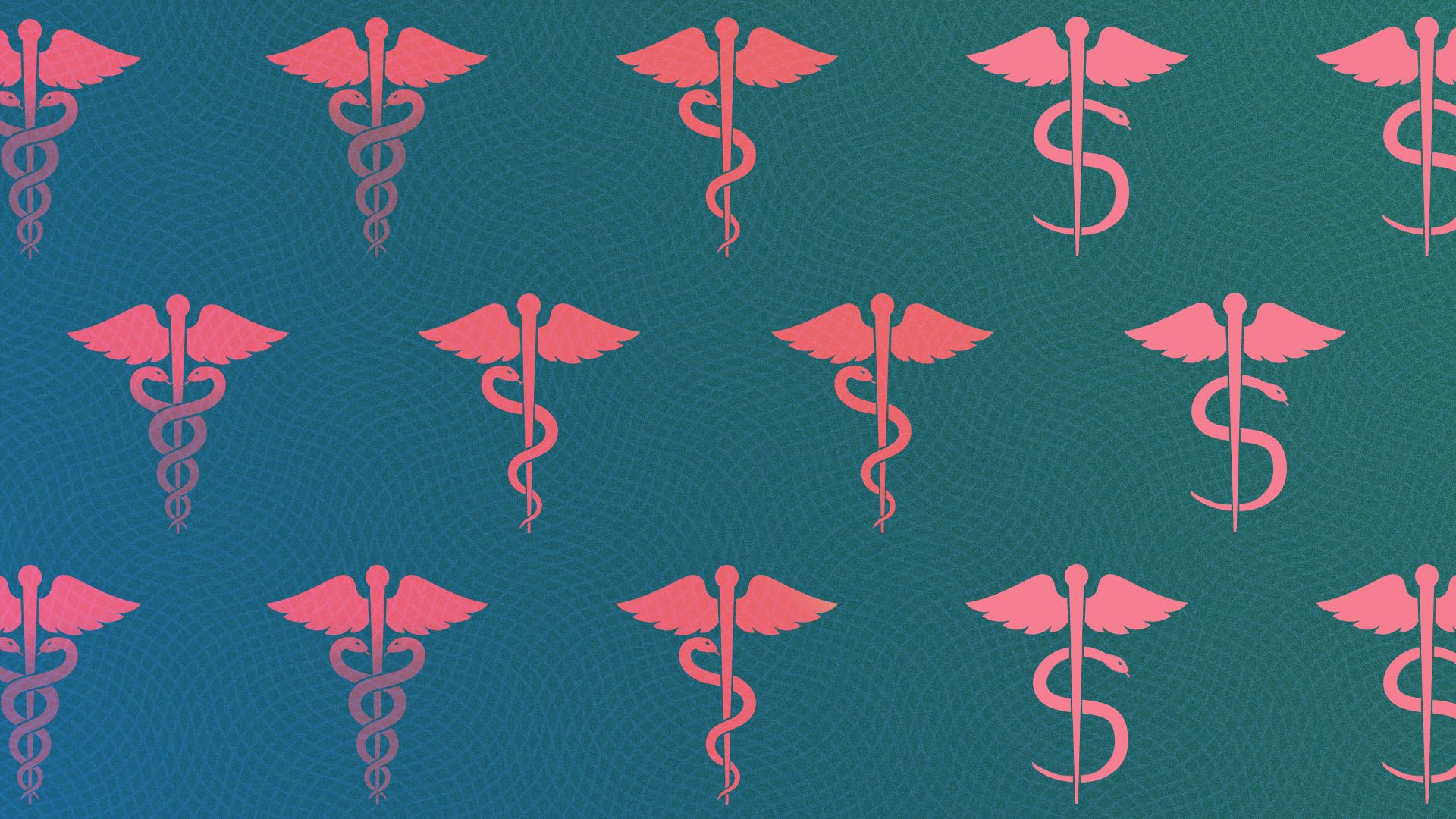
Rising health costs and nearly $1 trillion of cuts to federal Medicaid spending are forcing states to scramble in order to keep their Medicaid programs from slipping into the red, an annual survey of state officials finds.
Why it matters: Some are responding by imposing new limits on how they pay health providers and could face pressure to cut or limit optional benefits like dental or vision care.
- Medicaid accounts for a large share of state budgets, serving more than 1 in 5 Americans and accounting for nearly a fifth of health care spending.
What they found: A KFF survey of Medicaid officials in all states and the District of Columbia found almost two-thirds face at least a "50-50" chance of a Medicaid budget shortfall in FY 2026.
- The states anticipate Medicaid spending growth of almost 8% in FY 2026, primarily driven by higher costs for long-term care, drug benefits and behavioral health services.
- Meanwhile, they're bracing for the effects of the Republican budget law, which cut federal Medicaid spending by $911 billion over the next decade and prohibited states from imposing new taxes on providers or increasing existing taxes to help cover their costs.
- Federal workforce cuts and tariff changes are adding to the uncertainty, though fiscal conditions and the impact of federal changes vary across states, KFF noted.
3. Private equity keeps notching health care wins


Private equity once again has prevailed over U.S. antitrust regulators, as a federal judge ruled that leading firm GTCR can proceed with its $627 million takeover of medical coatings company Surmodics.
The big picture: New administration, same result.
- This was the first antitrust case brought by Trump 2.0, which has tended to favor remedies over litigation.
- It also comes 18 months after Joe Biden's FTC tried and failed to stop a different private equity deal in the health care sector.
Catch up quick: GTCR in May 2024 announced its take-private agreement for Surmodics, the largest U.S. provider of specialized coatings for catheters and other medical devices.
- It didn't say so at the time, but GTCR planned to merge Surmodics with existing portfolio company Biocoat, which the FTC believes would give the combined entity more than a 50% market share for outsourced hydrophilic coatings.
- GTCR offered to sell select Biocoat assets, but the FTC wasn't persuaded and instead chose to sue.
Driving the news: A federal judge in Chicago ruled on Monday that the proposed divestiture satisfies competition concerns, and also that the FTC's market analysis was inadequate.
4. Shutdown deal re-criminalizes THC products

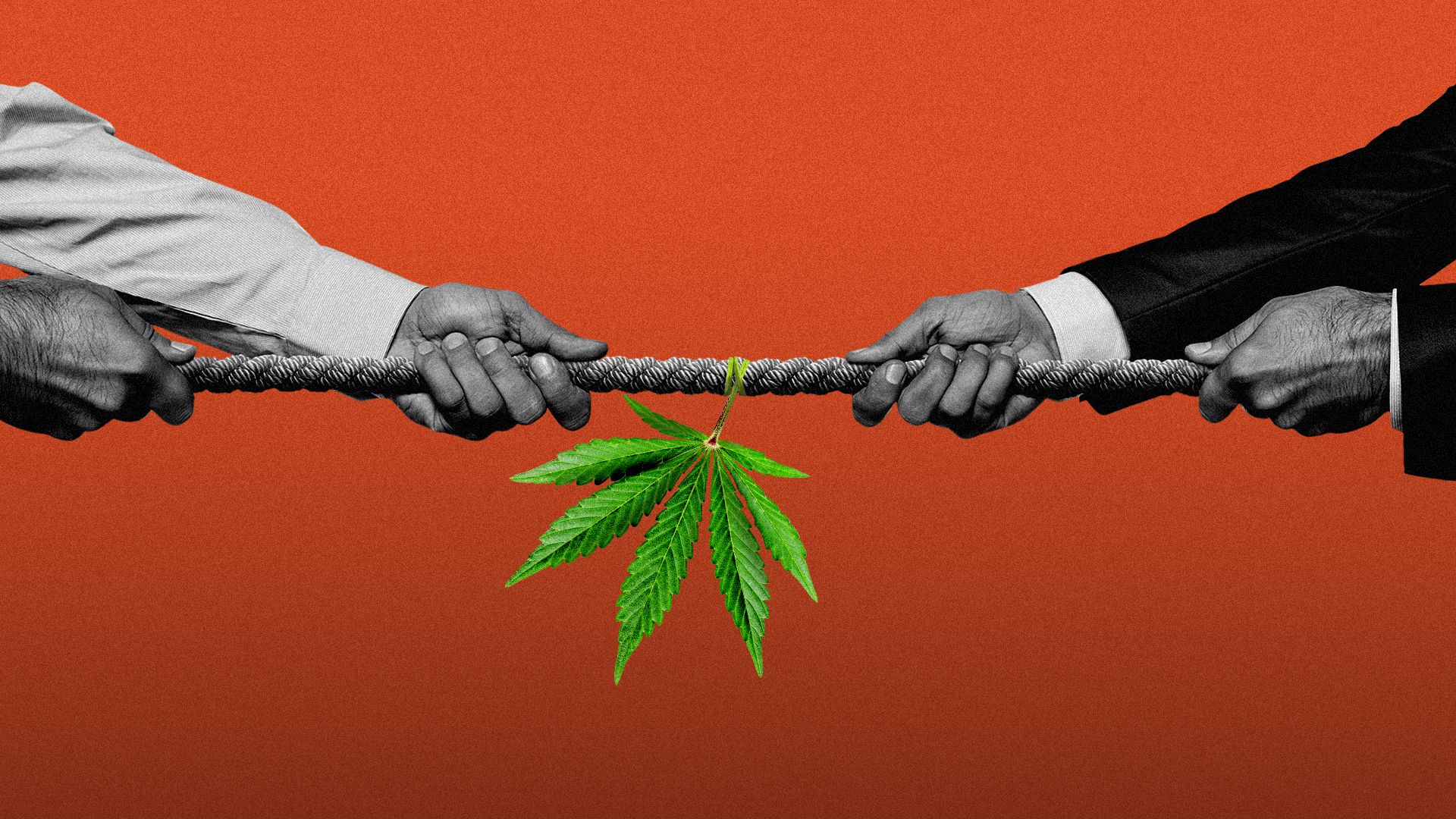
The spending bill to end the government shutdown included a ban on many products infused with THC, the psychoactive component of the cannabis plant.
The big picture: A last-minute provision in the bill re-criminalized many hemp-derived THC products that were legalized via the 2018 Farm Bill.
Driving the news: The Senate passed the funding package on Monday and the House cleared it last night.
- Sen. Rand Paul (R-Ky.) waged an unsuccessful last-minute fight to strip the THC language.
The other side: Sen. Mitch McConnell (R-Ky.), who authored the 2018 Farm Bill, has been a leading proponent of revisiting the THC provision, arguing that companies have exploited it to create intoxicating substances.
State of play: Cannabis and its derivatives are considered marijuana unless an exception applies, and the Farm Bill names hemp as an exception, per a bill summary.
- Hemp products legally permitted for sale vary by state, but typically include food and beverage, balms or lotions, tinctures, and pills.
- Low-dose THC seltzers have been a lifeline for struggling craft breweries in Minnesota, Axios' Nick Halter writes. A 2021 state law, for instance, created a boom of companies that grow, manufacture and sell edibles.
5. Catch up quick
🤔 Vice President JD Vance praised Health Secretary Robert F. Kennedy Jr. for defying convention and his willingness to question established science at a "Make America Healthy Again" summit in Washington. (AP)
🧬 The FDA unveiled a new regulatory approach to keep pace with advances in personalized medicine, inspired by the case of Baby KJ, who was treated with a custom gene therapy. (Endpoints News)
👀 Democrats are so angry about the shutdown deal that Sen. Jeanne Shaheen (D-N.H.), who voted for it, is facing blowback from her daughter, who's a congressional candidate. (NYT)
Thanks for reading Axios Vitals, and to editors Adriel Bettelheim and David Nather and copy editor Matt Piper. Please ask your friends and colleagues to sign up.
Sign up for Axios Vitals