
Axios Vitals

March 02, 2026

Welcome to March, Vitals crew. Today's newsletter is 1,048 words, a 4-minute read.
1 big thing: Fewer infectious disease specialists


New doctors are increasingly moving away from specializing in infectious diseases as the prevalence of vaccine-preventable illnesses like measles and whooping cough ticks up.
Why it matters: The Trump administration's cuts to public health funding and its overhaul of federal vaccine policy may be putting even more of a damper on a field that took the brunt of the COVID-19 pandemic.
- It doesn't help that the field has historically paid less than other specialties.
Interest from medical residents "was markedly worse" this year, said Wendy Armstrong, president-elect of the Infectious Diseases Society of America.
- "I think that reflects the environment that we are in right now where our specialty has frankly been under attack."
By the numbers: 319 physicians applied for infectious disease fellowships that will begin later this year, compared with 404 at the specialty's recent post-pandemic peak in 2021, according to data from the National Residency Matching Program.
- Doctors filled only about 61% infectious disease fellowship positions offered this year, compared with 88% of positions five years ago.
Physicians often enroll in additional optional training in a specialty following their medical residencies. Fellowships were offered in 81 subspecialties this year.
Zoom out: Infectious disease specialists have been the target of backlash from the COVID-19 pandemic, with skeptics undermining or dismissing the field as irrelevant, Boghuma Titanji, an assistant professor of medicine at Emory University, recently wrote in MedPage Today.
- That's worsened in the past year as Trump administration political appointees slashed research funding and questioned the expertise of public health professionals.
- "The hostility directed at the field has been unlike anything we've seen in decades. That takes a psychological toll, and trainees see that," Titanji wrote.
The other side: The Trump health department blames the situation on its predecessors.
Zoom out: Low compensation also is discouraging infectious disease training, IDSA's Armstrong said.
2. Surgeon general pick hasn't secured GOP votes
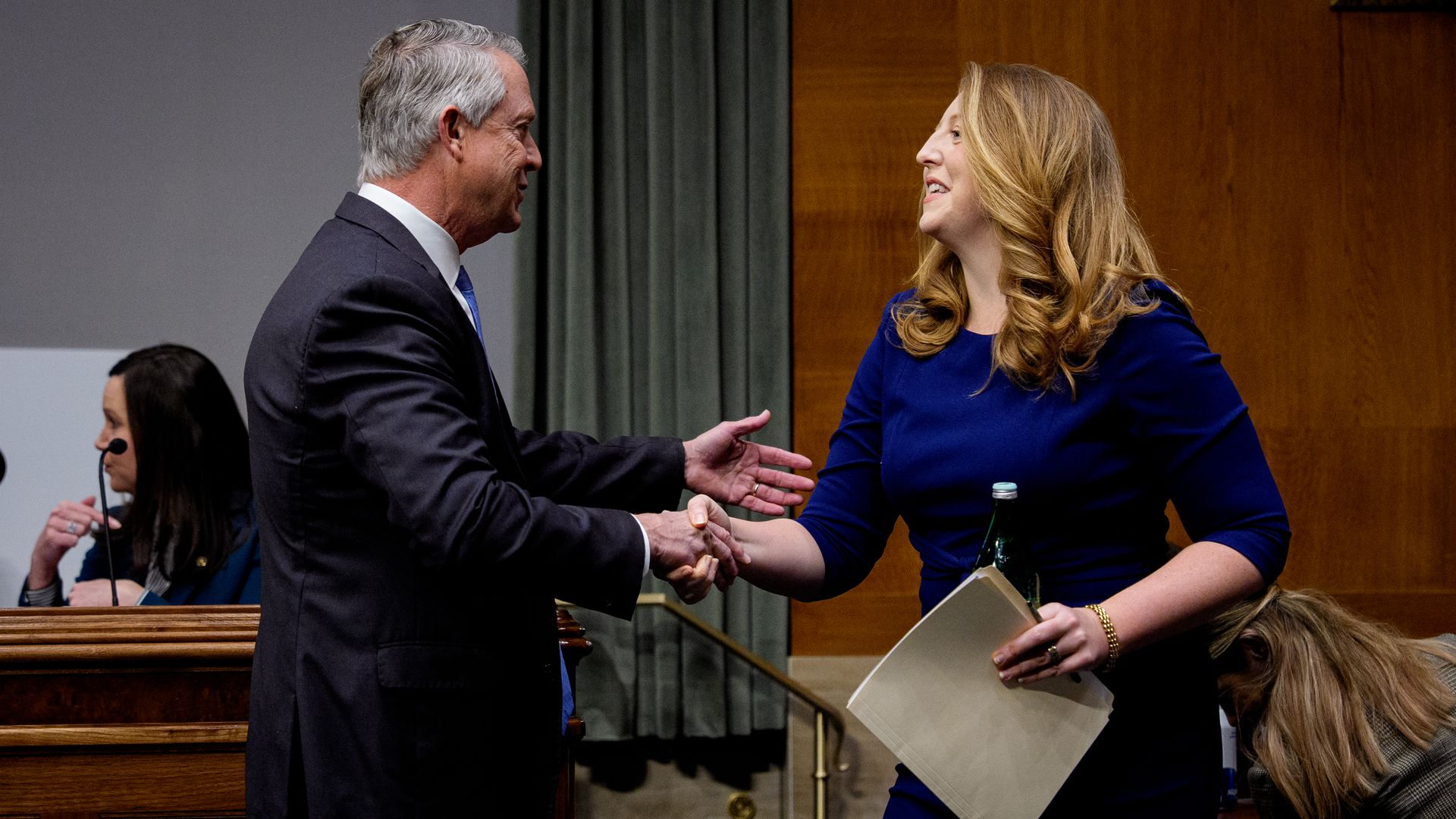
Some key Republican senators are undecided on whether to advance the nomination of President Trump's pick for surgeon general after she ducked tough questions on her vaccine views during a confirmation hearing last week.
Why it matters: Nutrition influencer Casey Means can't lose any Republican votes in the Senate health committee, assuming all of the panel's Democrats oppose her.
What they're saying: Sen. Lisa Murkowski (R-Alaska), a key moderate on the panel, told Axios she still has questions after grilling Means about matters including her skepticism about giving all newborns the hepatitis B vaccine.
- "I have some follow-on questions about some of the statements that she made when I was in the committee room about vaccines," Murkowski said. "I wanted to hear her response to other members when I wasn't there, so I'm still doing that."
- Asked if she was satisfied with what she had heard so far, Murkowski replied, "If I was, then I wouldn't want to go back and see the responses to the other questions."
- Sen. Susan Collins (R-Maine) said "I haven't made a decision," adding that she is sending "additional questions" to Means.
The intrigue: The chair of the committee, Sen. Bill Cassidy (R-La.) repeatedly pressed Means on where she stands on vaccine recommendations, including measles shots. He has not said how he will vote. His office did not respond to requests for comment.
3. Billions in Medicaid cuts to squeeze states

State Medicaid budgets will be reduced by $665 billion over a decade due to changes from the Republican tax-and-spending law, with California and New York taking the biggest hits, according to a new RAND analysis.
The big picture: New work requirements on nondisabled adults and limits on provider taxes will have the greatest impact on state budgets, forcing some to cut benefits, pare enrollment or draw more heavily on general funds to maintain coverage.
What they found: 20 states are expected to see substantial reductions of 5% or more to their Medicaid budgets.
- The heaviest burden will fall on those that expanded their Medicaid programs under the Affordable Care Act or that extensively use provider taxes or supplemental payments to bump reimbursements above standard Medicaid rates.
- Arizona, Iowa and Nevada could see declines of more than 15%, while California and New York are projected to experience the greatest reductions in dollar terms, about $112 billion and $63 billion, respectively.
- A few less populous states, including Wyoming and South Dakota, could see modest increases in Medicaid budgets due to the law's $50 billion in rural health funding.
Savings to the federal government will total $714 billion over the period studied, and the authors estimate there will be 7.6 million fewer Medicaid enrollees by 2034.
4. Trade probe focuses on China's biotech support
The U.S. is launching an investigation into how Chinese state support and pricing practices in biotech is affecting the market share and competitiveness of American businesses.
Why it matters: The International Trade Commission probe comes as China is threatening U.S. preeminence in drug-making, and the findings could lead to tariffs and other trade actions next year.
Driving the news: The ITC said its focus includes genomic sequencing, synthetic biology and the manufacturing of active pharmaceutical ingredients.
- Senate appropriators requested the probe as part of a spending package that passed in January.
- The agency will hold a public hearing on the investigation on May 27 and expects to publish its findings by next January.
The Trump administration and Congress are increasingly focusing on how national security concerns are taking hold in health care โ and ongoing competition issues with China.
- Lawmakers last year voted to cut off taxpayer funding to certain Chinese biotech companies deemed to pose national security risks.
- Meanwhile, major drug companies are cutting more licensing deals for Chinese-developed drugs and expanding their footprints in the country.
Related: China's drug era is already here
5. While you were weekending
๐ธ The FDA plans to give bonuses to scientific staff for speeding up drug reviews. (Bloomberg)
๐งพ The Trump administration's new rules for ACA plans would shift more health care costs to Americans, with higher deductibles that could lead to larger bills. (NYT)
๐ A 1% annual decline in U.S. measles vaccination rates for the next five years could add $1.5 billion a year in medical and societal costs, per the Yale School of Public Health. (NBC News)
Thanks for reading Axios Vitals, and to editors Adriel Bettelheim and David Nather and copy editor Matt Piper. Please ask your friends and colleagues to sign up.
Sign up for Axios Vitals