
Axios Vitals

April 15, 2026

Welcome to Wednesday. Today's newsletter is 952 words, a 3.5-minute read.
⚡️ Join Axios Live in Washington, D.C., on Wednesday, April 22, at 7:30am ET for an event on access to specialty care, featuring Rep. Greg Murphy (R-N.C.), Rep. Kim Schrier (D-Wash.) and No Patient Left Behind executive director Priscilla VanderVeer. RSVP.
1 big thing: States hit a roadblock on PBM laws
State efforts to regulate pharmacy benefit managers are colliding with federal law, reviving a power struggle over who can police the companies that manage drug benefits for most Americans.
Why it matters: The states are trying to rein in the middlemen that negotiate drug prices and pay pharmacies, but they're running into a federal law that has the final say over employer health plans.
Driving the news: A federal appeals court last week ruled against Tennessee in a case over whether the state could require PBMs to partner with any pharmacy that's willing to accept their terms and conditions.
- That followed rulings against PBM laws in Iowa and Oklahoma that courts found were preempted by the federal ERISA law.
- "There is no clear path for states," said Marcia Wagner, founder of the Wagner Law Group, which specializes in employer benefit law.
Between the lines: The rulings mark a setback for states that rushed to pass PBM laws after the Supreme Court upheld an Arkansas effort in 2020 — and who blame the companies for rising drug prices and squeezing out independent pharmacies.
The other side: The Pharmaceutical Care Management Association, a PBM trade group, called the Tennessee ruling "a win" for patients, adding it should discourage other state legislatures from pursuing similar laws.
What's next: States like North Dakota have successfully defended laws targeting PBM practices like gag clauses, which prevent pharmacists from telling consumers they could save money by paying for their prescription rather than using their health insurance.
- Congress, meanwhile, approved a series of changes to PBM business practices in the January government funding deal that, among other things, will change the way the companies are compensated in Medicare.
- And the Trump administration has proposed new transparency rules for employer plans that call for PBMs to disclose their financial dealings with drugmakers, pharmacies and other health system players.
2. Amazon launches AI drug discovery platform

Amazon has launched a new AI application that it says will help scientists design and test novel drugs more quickly and precisely.
Why it matters: Amazon is entering the crowded AI drug discovery race, intensifying competition to achieve faster, cheaper drug development, Katherine Davis wrote first on Pro.
Zoom in: Dubbed Amazon Bio Discovery, the agentic AI application provides an AI model library that generates and evaluates potential drug molecules for new antibody therapies.
- Users can train models on their own prior experimental data to make and test drug candidates. Once a drug candidate is identified, users can send them to Amazon lab partners, including Twist Bioscience and Ginkgo Bioworks.
- Bio Discovery clients so far include Memorial Sloan Kettering Cancer Center, Bayer and Voyager Therapeutics, and Amazon said 19 of the top 20 global pharma companies already use its AWS.
The big picture: Amazon's ambitions threaten a growing crop of drug discovery startups that have already raised millions from investors.
- Novo Nordisk and OpenAI also announced a partnership Tuesday focused on boosting Novo's efficiency across manufacturing, distribution, supply chains and corporate capabilities.
If you need smart, quick intel on health tech dealmaking for your job, get Axios Pro.
3. FDA pulls approval for drug floated for autism
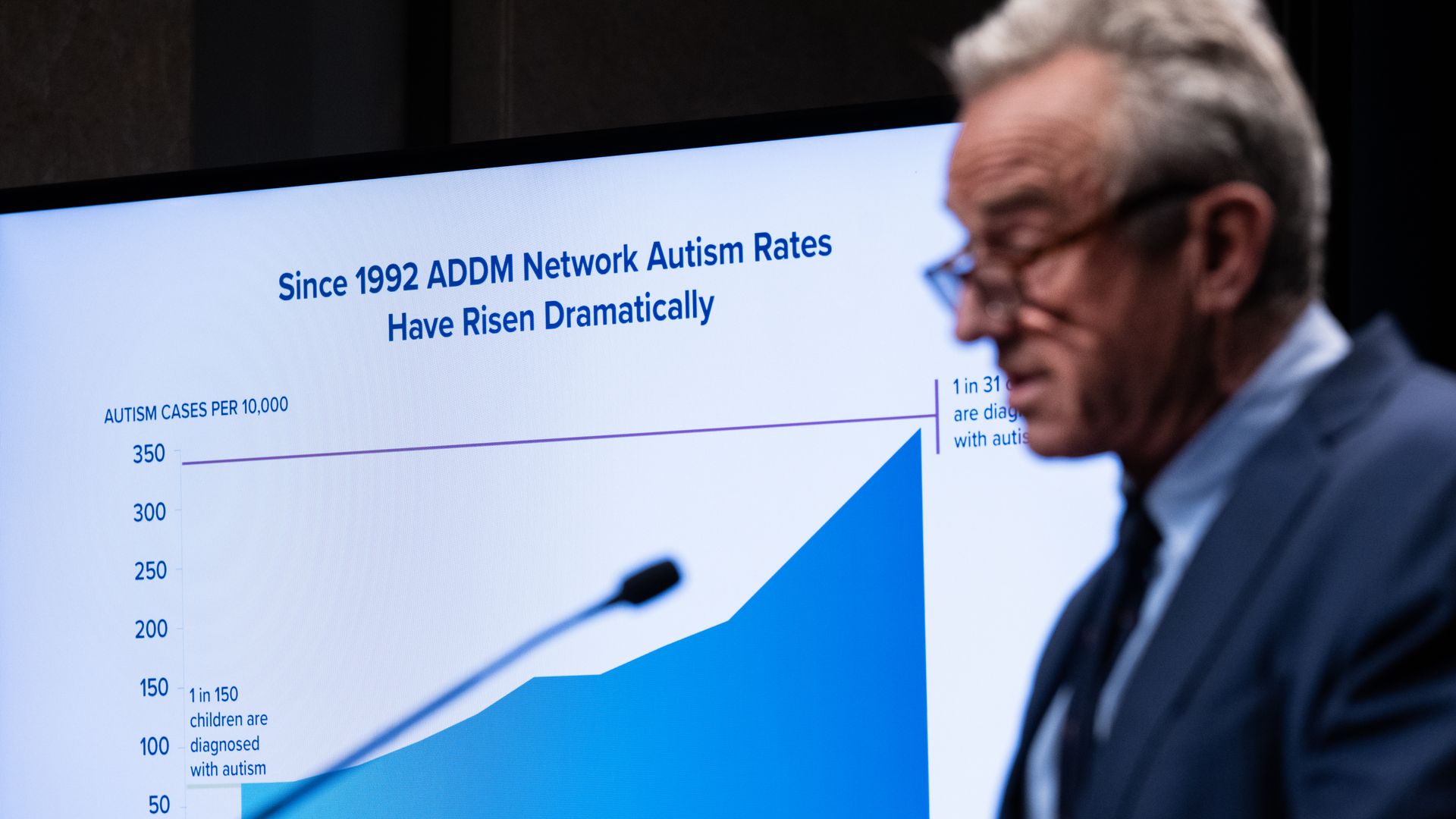
The FDA withdrew a new drug application for leucovorin, which surged in popularity last year after President Trump's health officials suggested that it could be used as a treatment for autism symptoms.
Why it matters: "Off-label" prescribing jumped following a White House event at which Health Secretary Robert F. Kennedy Jr. said it could benefit large numbers of children with the neurodevelopmental condition.
Driving the news: FDA officials wrote in the Federal Register they were scrapping the updated use for leucovorin at the request of manufacturer GlaxoSmithKline, because the company no longer markets the medicine.
- The agency took the unusual step of initiating a reapproval of the drug in September, citing evidence it could lead to improvements in speech-related deficits for a subset of children, per BioSpace.
- Regulators in March approved the drug to treat cerebral folate deficiency, a rare condition that some people with autism also have but that is estimated to affect less than 1 in a million people.
- Pulling the application doesn't affect generic versions of the drug, which remain available.
Leucovorin dates to the 1980s and traditionally has been used alongside chemotherapy treatment. GSK hasn't sold the drug since 1999, according to the Wall Street Journal.
4. Gen Z's front door to health care


Roughly 1 in 12 Americans now regularly use retail locations or urgent care clinics as their source of care, new data from the CDC's National Center for Health Statistics shows.
This use of settings like grocery stores or drug stores is particularly apparent in young adults, with more than three times as many between the ages of 18 and 34 (12.2%) making them their regular source of care compared with seniors 65 and up (3.8%).
- Despite high-profile failures among retailers in health care delivery, the trend underscores how convenience is reshaping interactions with the health care system — at least among the young and healthy.
5. Catch up quick
💊 Maryland's state affordability board set a price cap for a widely prescribed diabetes treatment — only the second time a state has taken such a step. (Stat)
⚕️ Black women remain three times more likely than white and Hispanic women to die from pregnancy-related complications, per the CDC. (Axios)
🎲 The legalization of gambling is outpacing the public health response to addiction. (Fierce Healthcare)
Thanks for reading Axios Vitals, and to editors Adriel Bettelheim and David Nather and copy editor Matt Piper. Please ask your friends and colleagues to sign up.
Sign up for Axios Vitals