Axios Vitals

October 08, 2025



Halfway there, gang. Today's newsletter is 1,094 words or a 4-minute read.
1 big thing: Exclusive — Transplant network stalled by shutdown
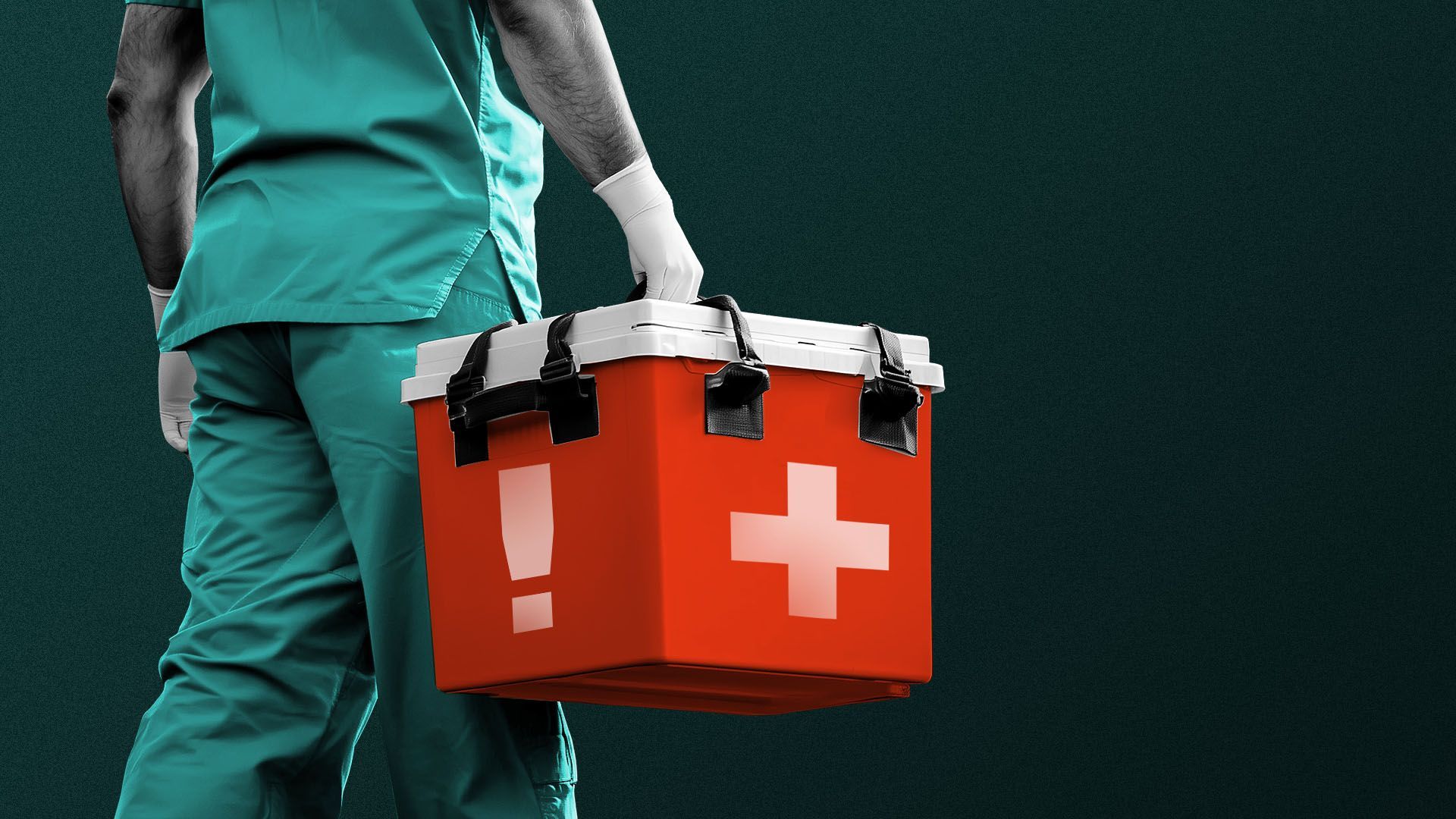
HHS last week ordered the federal organ procurement and transplant network to halt much of its work until the government shutdown is over, Axios has learned.
Why it matters: Patients will still be able to receive and donate organs, but many internal oversight functions will stop while the government remains closed, according to the United Network for Organ Sharing.
- The nonprofit manages most network functions under a government contract.
State of play: The organ donation and transplant network has had to stop some monitoring of transplant and donation outcomes and the impact of new policies, UNOS told Axios.
- An Oct. 2 document from HHS viewed by Axios says the network can only continue support for critical patient safety work during the shutdown, along with work on lawsuits and fee collection that doesn't require government input.
- Permitted work includes matching and allocating organs; IT support; continued communication with patients on waitlists and addressing life-threatening risks, the document says.
More than 90 staff members at UNOS, about 25% of the organization, have been furloughed due to the shutdown.
- The federal government also owes UNOS more than $10 million for work already completed dating back to 2024, the organization said.
Yes, but: The network wasn't significantly affected by past shutdowns, since most of the funding comes from fees paid by hospitals when they list a patient on the transplant waitlist, UNOS said.
- "During the Democrat-led shutdown, HRSA is only working on activities related to patient safety and on-going operations of the organ matching system," HHS press secretary Emily Hilliard said in a statement to Axios.
The intrigue: Health Secretary Robert F. Kennedy Jr. has prioritized organ transplant system safety, taking action last month to bar one affiliate that distributed donated organs due to safety and performance concerns.
2. Former surgeons general sound alarm on RFK Jr.

Six former U.S. surgeons general yesterday joined a growing list of credentialed medical experts and others in health circles to raise alarm about Kennedy.
Why it matters: The common theme is Kennedy's disregard for evidence-based science is dangerous, particularly when it comes to vaccines.
Driving the news: On Tuesday, the surgeons general — who served in Republican and Democratic administrations and include Jerome Adams from President Trump's first term — wrote an op-ed in the Washington Post stating Kennedy is "endangering the health of the nation."
- "Never before have we issued a joint public warning like this. But the profound, immediate and unprecedented threat that Kennedy's policies and positions pose to the nation's health cannot be ignored," they wrote.
The big picture: It follows a similar warning from nine former CDC directors and acting directors last month, who cited the undermining of vaccines, as well as dismantling of public health expertise within federal agencies.
- It also follows the explicit call last month for Kennedy's resignation by more than 20 medical organizations including the Infectious Diseases Society of America, the American Public Health Association and the Association for Professionals in Infection Control and Epidemiology.
President Trump has stood by Kennedy despite mounting criticism.
- HHS spokesperson Andrew Nixon said in a statement that the "same officials who presided over the decline in America's public health are now criticizing the first Secretary to confront it head-on."
3. Justices seem skeptical of conversion therapy ban
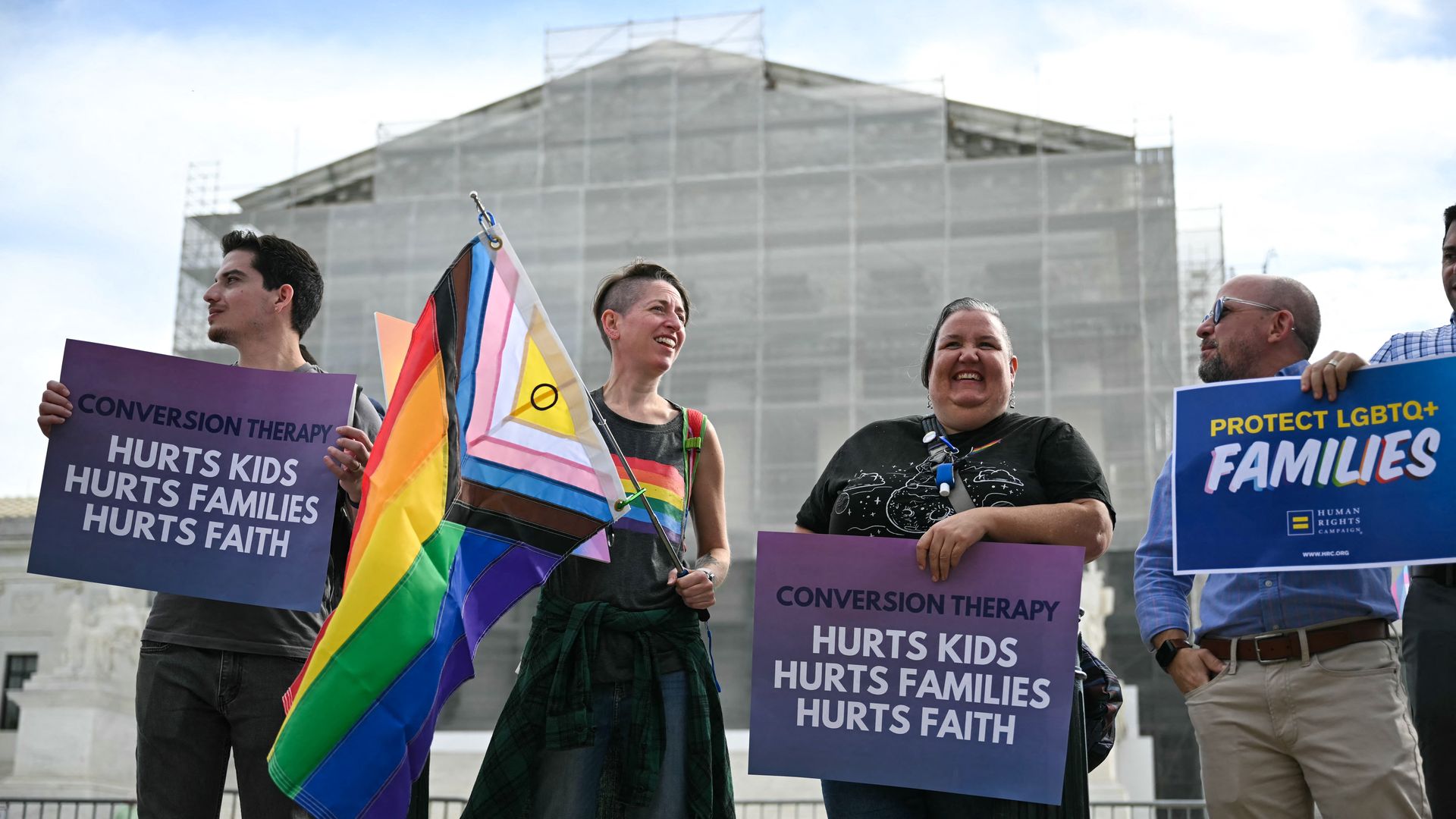
The Supreme Court yesterday appeared open to a Christian counselor's argument that Colorado's ban on youth conversion therapy hampers her First Amendment right to free speech.
Why it matters: A decision backing the counselor, Kaley Chiles, could force more than 20 states to revisit their bans on the practice, which aims to change sexual orientation and gender identities to align with a person's religious beliefs and has been condemned by leading medical associations.
Conservative justices, who've backed protected speech in past cases, questioned whether Colorado's law put undue restrictions on counselors.
- "Just because they're engaged in conduct doesn't mean that their words aren't protected," Chief Justice John Roberts said.
- Justice Samuel Alito also questioned whether medical consensus can be influenced by ideology.
Zoom in: The conservative Alliance Defending Freedom, which represented Chiles, argued that Colorado didn't consider less-restrictive alternatives to a conversion therapy ban, and that Colorado can't prove the counseling causes harm.
- Colorado's solicitor general, Shannon Stevenson, told justices that the state's law doesn't restrict free speech but rather regulates professional conduct. It doesn't apply to life coaches or religious ministers, because they aren't licensed by the state and held to a specific standard of care, she added.
4. A biosecurity strategy for the times

Advancements in AI and biology are making it easier to design novel pathogens, creating the need for a new strategy that addresses threats from individuals who could single-handedly trigger pandemics, according to a strategy paper from Stanford University's Hoover Institution.
The big picture: The thinking should be built around precepts like "distrust but verify" and include private sector "bioaudits" of labs, companies and universities to certify safety and catch risks early.
- Research on live pathogens that could potentially cause a pandemic should be forbidden, unless the work is absolutely needed to improve tests, treatments or vaccines, the authors write.
What they're saying: The paper is critical of time-consuming debates over COVID's origins and says policies have to be updated to acknowledge that it's now routine to build viruses from scratch.
- It's also critical of the politicization of public health, stating: "Unlike individual health, public health requires some baseline sense of belonging to a broader group and community that agrees on basic principles of scientific expertise and social governance."
- The authors call for steps including new investments in DNA sequencing and computing to better detect pathogens, and anonymized analyses of people's antibodies, to provide better signals of when someone's exposed.
The bottom line: The moves would cost the government no more than $40 billion annually — less than half of what it costs to operate and maintain the nuclear arsenal each year, the authors write.
5. Catch up quick
🚫 The Trump administration quietly ended support for an HHS program that helped poor people access federal disability benefits and prevented homelessness. (Axios)
👀 Peter Marks, the former top FDA vaccine regulator who was ousted by Kennedy, joined Eli Lilly as a senior vice president, prompting new concerns about the revolving door between the agency and the drug industry. (Stat)
⚖️ A Los Angeles jury ordered Johnson & Johnson to pay $966 million to the family of a woman who died from mesothelioma, in the latest lawsuit alleging its baby powder products cause cancer. (Reuters)
Thanks for reading Axios Vitals, and to editors Adriel Bettelheim and David Nather and copy editor Matt Piper. Please ask your friends and colleagues to sign up.