Axios Vitals

June 05, 2025


Hello everybody! Today's newsletter is 1,105 words or a 4-minute read.
1 big thing: Questions swirl over who's running the CDC
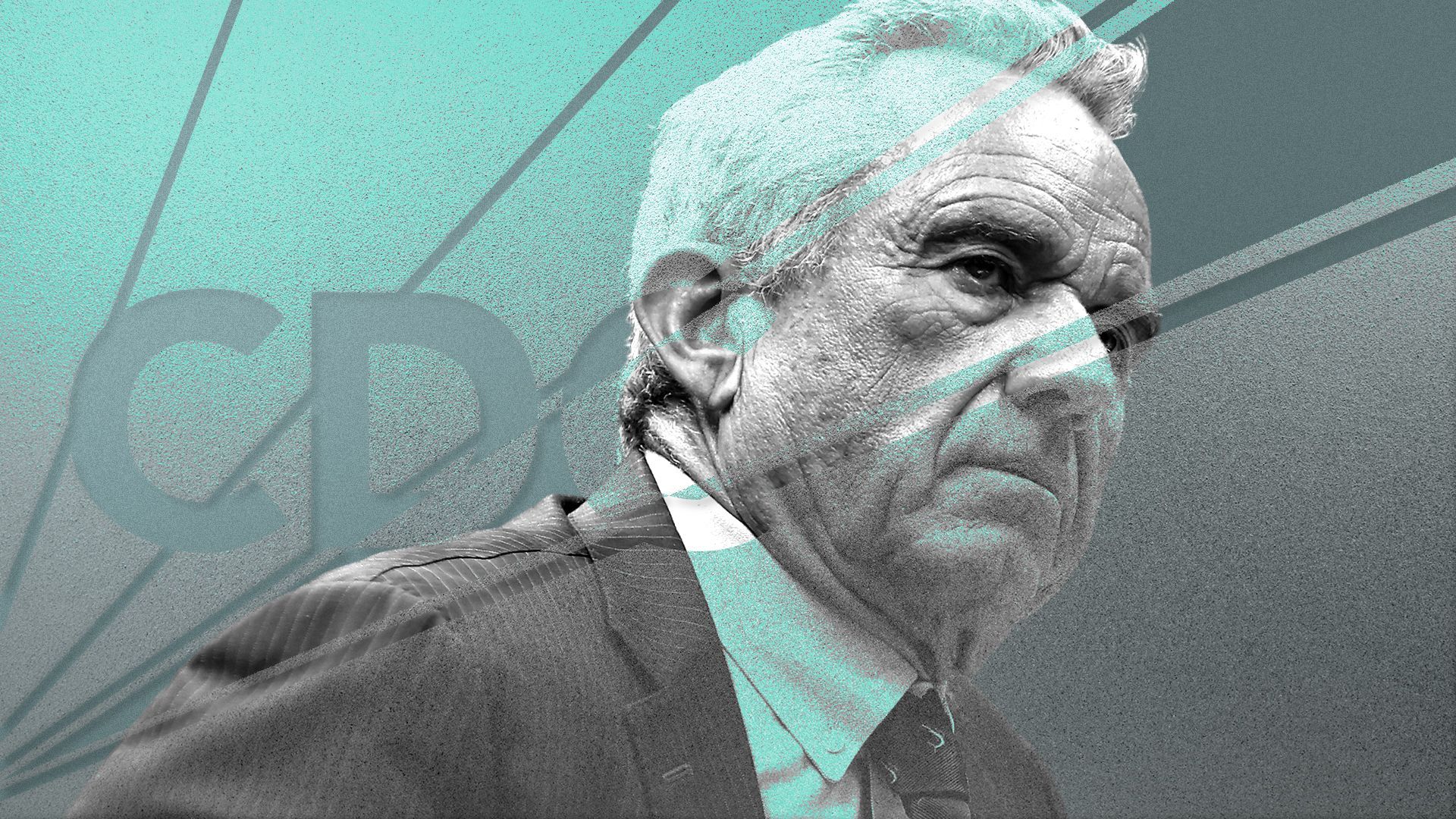
Confusion over shifting CDC COVID-19 vaccine recommendations are reigniting questions in the public health community over who's running the agency.
- The answer: no single person.
Why it matters: Almost six months into the Trump administration, the CDC is staring down threats like respiratory viruses, avian flu and foodborne diseases without a bona fide public health official or designated point person at the helm.
- That's left some decisions flowing straight up to HHS Secretary Robert F. Kennedy Jr.
What they're saying: "You want to make sure the agency is ready should there be a public health emergency," said Richard Besser, a former acting CDC director and now head of the Robert Wood Johnson Foundation.
State of play: Kennedy faced questions about the direction of the agency during a Senate hearing last month, telling Sen. Lisa Blunt Rochester (D-Del.) that Matthew Buzzelli, who's listed on the CDC website as chief of staff, is the acting director.
- Buzzelli, a former Justice Department trial lawyer and private sector executive, lists no public health experience on his biography on the CDC website.
- President Trump in March nominated then-acting CDC director Susan Monarez to be permanent head of the agency after he withdrew the nomination of his first choice, former Rep. Dave Weldon.
- But under the rules governing federal vacancies, Monarez couldn't continue serving as acting director. The Senate has yet to schedule a confirmation hearing.
HHS spokesperson Andrew Nixon said on Wednesday that Buzzelli is performing some director duties in the meantime.
CDC employees aren't sure who's in charge. Most external communications updates have to be approved by the office of the HHS assistant secretary for public affairs, which reports directly to Kennedy, according to one employee who spoke on the condition of anonymity out of fear of repercussions.
- The departure of midlevel leaders, like the reported resignation this week of a career CDC physician who led the COVID vaccine recommendation work group, adds an extra layer of concern.
2. 1 big number: Trump megabill coverage losses
The CBO projects that 10.9 million more people would be uninsured under President Trump's sweeping budget bill — mostly from the way it would overhaul Medicaid, including new work requirements.
Why it matters: That would amount to major coverage losses that are certain to fuel Democratic attacks on the measure, and put new pressure on vulnerable Republicans heading into the midterm election cycle, Peter Sullivan wrote first on Pro.
By the numbers: The CBO on Wednesday projected that 7.8 million more people would be uninsured due to the Medicaid changes, with the rest likely due to Affordable Care Act marketplace changes, including new barriers to signing up that are aimed at fighting fraud.
- The estimate includes 1.4 million people without verified citizenship "or satisfactory immigration status," a reference to undocumented immigrants that some states opt to cover with non-federal dollars in their Medicaid programs.
- The CBO was responding to a request from congressional Democrats about the number of uninsured people stemming from the package the House passed last month.
Republicans say the changes would ensure that Medicaid is targeted at beneficiaries deserving of coverage, and that taxpayer money should not be spent on healthy adults who are choosing not to work.
- Opponents say people who are working will be caught up in the red tape from the changes and could still lose coverage.
The CBO also said another 5.1 million would become uninsured if Congress opts to let Affordable Care Act premium tax credit subsidies expire next year.
If you need smart, quick intel on health care policy for your job, get Axios Pro Policy.
3. Hospital violence costs $18B a year: report

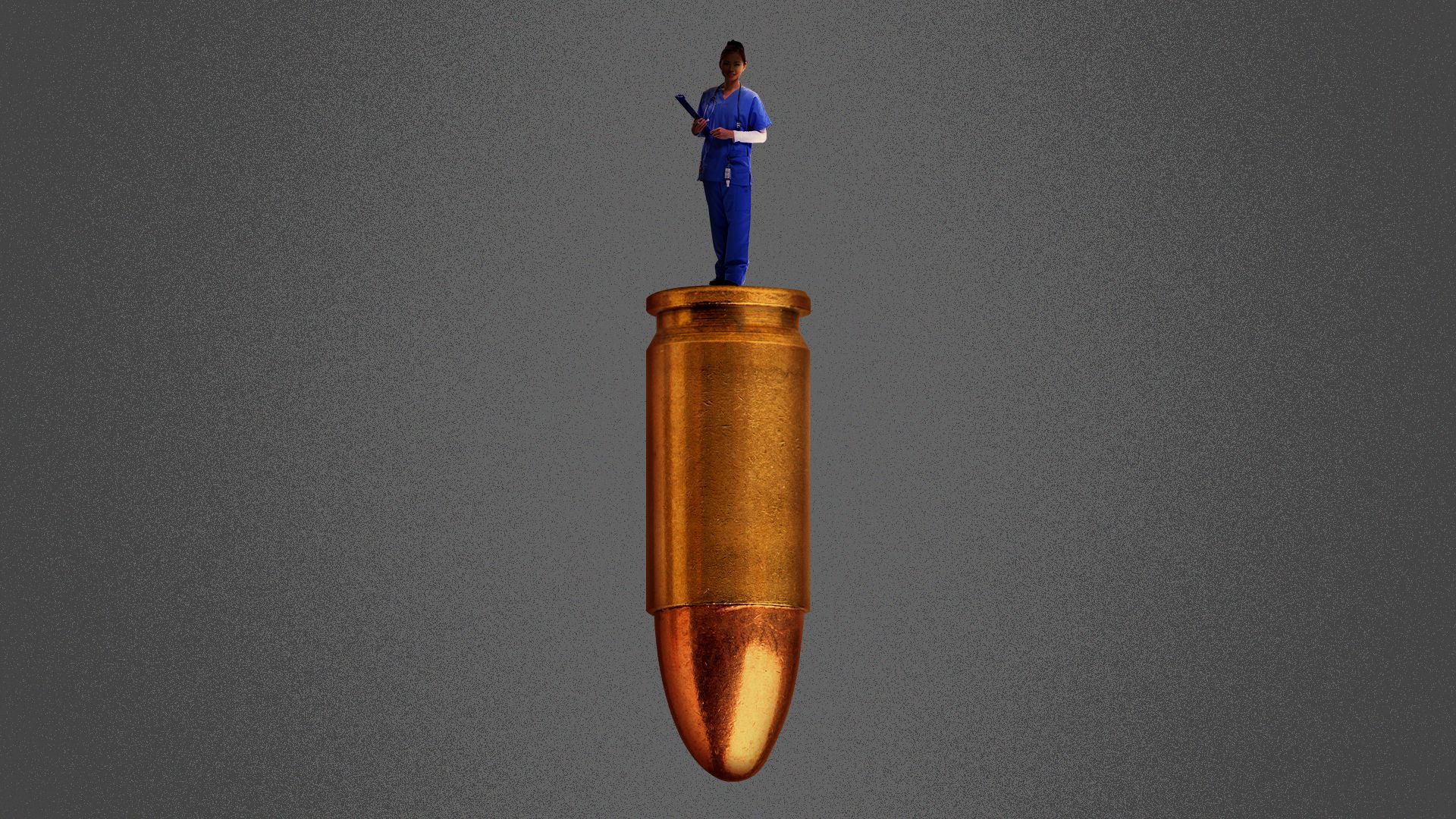
Assaults against health care workers are costing hospitals upward of $18 billion a year in added security, training, workers compensation and other expenses, including treating victims, according to a new industry report.
Why it matters: Attacks by patients and visitors in hospitals and clinics already were a problem before the pandemic and got worse with backlash against public health measures.
- The American Hospital Association says there's a human toll beyond the financial burden, with burnout, staff turnover, legal concerns and negative public perceptions all plaguing health systems.
By the numbers: The University of Washington report for the trade group found prevention measures like active shooter training, hiring more security and reinforcing entry points and creating designated safe areas cost health systems $3.6 billion a year.
- Caring for fatal and nonfatal injuries, along with lost productivity and the cost of replacing damaged equipment and repairing infrastructure, accounts for about $14.6 billion in annual costs. Health expenses for treating injuries alone account for more than $13 billion of that amount.
Violent incidents most often occur in psychiatric units, emergency departments, waiting rooms and geriatric units, with rural areas having higher prevalence than urban areas.
4. Trump, GOP target Biden's health
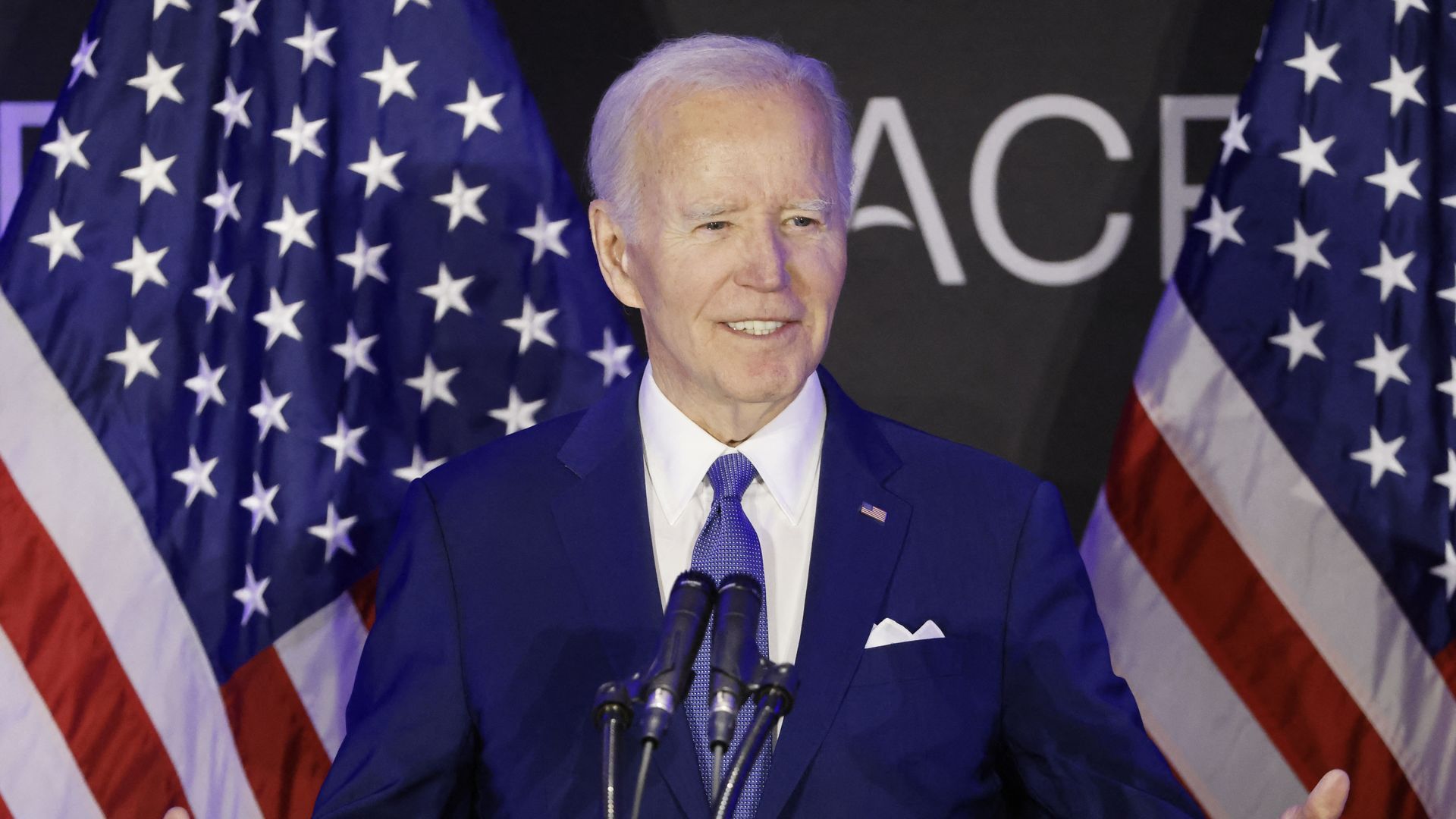
President Trump and House Republicans both took aim Wednesday at President Biden's physical and mental health while in office.
Why it matters: Their actions lay the groundwork for allegations of a cover-up that placed Biden's aides in inappropriate positions of authority.
- Trump directed administration officials to investigate Biden's use of an autopen to sign documents in an executive order that raised doubts about his predecessor's mental state.
- House Republicans expanded their probe into Biden's health with a new tranche of requests to interview top White House aides, including former chief of staff Ron Klain and senior adviser Anita Dunn.
Context: Axios' Alex Thompson and CNN's Jake Tapper, in their new book "Original Sin," implicate what they dub Biden's "politburo" in a coordinated campaign to hide details of Biden's deteriorating health from public view.
- Biden's spokespeople have pushed back on the claim that there was a cover-up around his health, arguing that he was mentally and physically capable of serving as president through the end of his term.
Trump ordered the counsel to the president and other officials to investigate "whether certain individuals conspired to deceive the public about Biden's mental state and unconstitutionally exercise the authorities and responsibilities of the President," per the order.
- The order alleges that Biden "suffered from serious cognitive decline" for years and that it became "increasingly apparent" in recent months that his "aides abused the power of Presidential signatures through the use of an autopen to conceal Biden's cognitive decline and assert ... authority."
House Oversight Committee Chair James Comer (R-Ky.), citing Axios' reporting, noted that Klain, Dunn and the other aides whose testimony he is seeking made up the ex-president's inner circle.
5. Catch up quick
🏥 Vermont is seeking salary caps for hospital executives. (Healthcare Brew)
💰 Some federal workers lost health coverage they had paid for. A Democrat wants answers. (NPR)
👉 An internal document shows how UnitedHealth executives prepared to tamp down investor unrest. (Stat)
Thanks for reading Axios Vitals, and to senior health care editor Adriel Bettelheim and copy editor Matt Piper. Please ask your friends and colleagues to sign up.