Axios Vitals

December 09, 2025



Happy Tuesday! Today's newsletter is 1,147 words or a 4.5-minute read.
⚡️ Join us on Wednesday at 8am ET in Washington, D.C., for an event looking at the state of care delivery, featuring conversations with Rep. David Schweikert (R-Ariz.), Sen. Sheldon Whitehouse (D-R.I.) and Health Transformation Strategies managing partner Elizabeth Fowler. RSVP here.
1 big thing: GOP plan leaves ACA subsidies behind
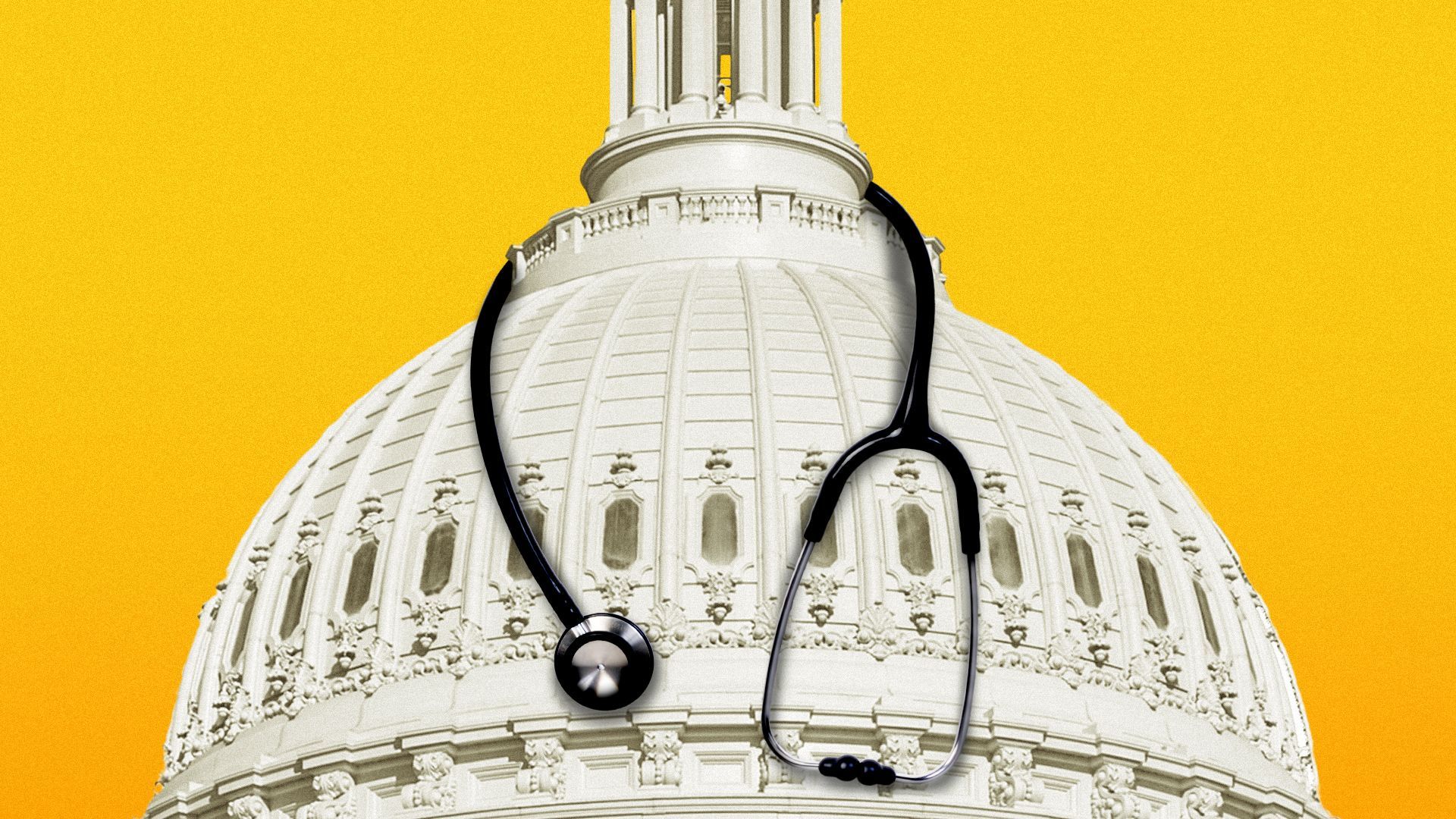
The outlines of a leading Senate Republican health care plan are coming into focus, and it wouldn't extend enhanced Affordable Care Act subsidies — increasing the likelihood that the assistance will expire in less than a month.
Why it matters: An expiration would expose millions of Americans to sharp increases in out-of-pocket premium costs that could lead some to go without insurance.
- But Republicans aren't in agreement on how to proceed and it's unclear whether the plan will even get a vote this week.
Driving the news: The plan from Senate Finance Chair Mike Crapo (R-Idaho) and his health committee counterpart Bill Cassidy (R-La.), first reported by Axios, proposes giving certain ACA enrollees $1,000 to $1,500 in a health savings account to help with medical costs, instead of the ACA subsidies.
- It's not the only idea being shopped around. Sens. Bernie Moreno (R-Ohio) and Susan Collins (R-Maine) are proposing to phase out the enhanced subsidies over two years while putting new income limits on eligibility and requiring recipients to make a minimum premium payment.
- Sen. Roger Marshall (R-Kan.) has a plan that would extend the subsidies for one year, then funnel the money into new HSA-like accounts.
Between the lines: Voting on any one of these would likely expose GOP divisions and open the party to charges it doesn't have a solution for an affordability crisis in health care.
- So it's possible that backers of the plans will instead make a range of unanimous consent requests to pass various policy changes, all of which would be blocked by Democrats.
- The Democrats will get their own vote this week on a three-year subsidy extension that's also set to fail in the face of near-unified GOP resistance.
The big picture: The net effect is none of the proposals will likely reach critical mass, and the subsidies will expire at the end of the year.
- But that may not be the end of the story.
2. China biotech curbs included in defense bill


Efforts to cut off taxpayer funding to certain Chinese biotech companies moved a step closer to reality when congressional negotiators included the Biosecure Act in the annual defense authorization bill.
Why it matters: The restrictions could affect the life sciences and drug development, because companies routinely use Chinese contract research firms for testing, ingredients and other services.
Driving the news: The compromise language unveiled on Sunday would bar federal agencies from contracting with unspecified "biotechnology companies of concern" to be designated by the Trump administration.
- It also would cut off federal contracts from U.S. companies that would use equipment or services from companies of concern in performance of the contract.
- Existing contract arrangements could remain in effect for five years, and federal agencies could issue waivers on a case-by-case basis.
The language doesn't name specific target companies. Earlier versions singled out firms like contract research giant WuXi AppTec, raising due process concerns.
- Backers say the compromise version still will restrict the flow of U.S. capital to companies with ties to the Chinese military and critical technology sectors.
What we're watching: Whether the administration pursues follow-on actions aimed at maintaining U.S. leadership in the life sciences and slowing down competition from China.
3. FDA delays abortion pill review: Report

The FDA is delaying a review of safety data for the widely used abortion drug mifepristone until after the midterm elections, according to a published report.
Why it matters: New restrictions on the drug, especially those addressing its widespread availability through telehealth, could severely limit access in states with abortion bans.
Driving the news: FDA commissioner Marty Makary has told agency officials to delay the safety review after he and HHS Secretary Robert F. Kennedy Jr. told lawmakers and state attorneys general for months that they are scrutinizing mifepristone, Bloomberg News reported, citing sources familiar.
- Any restrictions would be highly controversial and call into question President Trump's campaign pledge to leave abortion policy to the states. They could also hurt swing-district Republicans' chances of reelection — and the GOP's chances of keeping control of the House.
"Assertions that the FDA is slow walking this review for political purposes are baseless," HHS spokesperson Andrew Nixon told Axios. "FDA's comprehensive scientific reviews take the time necessary to get the science right."
Catch up quick: Kennedy and Makary wrote a group of Republican state attorneys general in September, saying "HHS will conduct a study of the safety of the current [safety protocol], in order to determine whether modifications are necessary."
- But the agency in early October approved another generic version of mifepristone, angering anti-abortion groups and lawmakers.
4. Slow mail hurts medication access: Study

Mail delivery slowdowns could leave people with asthma, diabetes and other chronic illnesses without needed medications, particularly in rural areas, a new report from the Brookings Institution concludes.
Why it matters: Prescription delivery improves the odds people stay on their treatments. Some 6% of all diabetes prescriptions in the U.S. are delivered through the mail, the report states, citing IQVIA data.
State of play: A 10-year strategic plan to improve the U.S. Postal Service is consolidating mail processing into regional hubs and reducing daily collections at post offices more than 50 miles away.
- The changes could downgrade services in much of the country, according to an advisory opinion earlier this year from the Postal Regulatory Commission.
What they found: About 6% of Americans — including 3.7 million Medicare enrollees — face the triple-whammy of living far away from a pharmacy, relying heavily on mail-order prescriptions and residing in areas affected by the USPS consolidation plan.
- Nearly half of Americans face at least one of those challenges.
The bottom line: The postal system is a key, but sometimes overlooked, part of the country's public health infrastructure.
- "When delivery slows or becomes uneven, the consequences are likely to ripple through medication adherence and chronic disease management," Elena Patel, co-director of the Urban-Brookings Tax Policy Center, wrote in an essay accompanying the report.
The other side: USPS believes the Brookings report misrepresents the impact of the consolidation and efficiency effort, and that it does not change delivery, a spokesperson told Axios.
5. Catch up quick
🚌 Children's mental health appointments fell sharply with the end of COVID-era school shutdowns, showing how the risks of prolonged closures were greater than policymakers understood. (NYT)
🔬 NIH grant cuts shut out hundreds of young scientists from funding to start their own labs. (Stat)
🏥 The country's biggest all-electric hospital is set to open in Orange County, California, in a sign of how climate change is influencing the way medical facilities are built. (LA Times)
Thanks for reading Axios Vitals, and to editors Adriel Bettelheim and David Nather and copy editor Matt Piper. Please ask your friends and colleagues to sign up.
Sign up for Axios Vitals