Axios Vitals

July 29, 2026


It's Wednesday. Today's newsletter is 1,124 words, a 4.5-minute read.
🔬 Situational awareness: The Trump administration released a policy to end "high-risk life sciences research" yesterday, including a ban on federal support for gain-of-function research.
- The policy was released as a Senate committee prepares to grill Anthony Fauci this morning over the origins of COVID.
- Gain-of-function research is a top focus of people who believe the lab-leak theory.
1 big thing: Cyclospora exposes food safety weak links
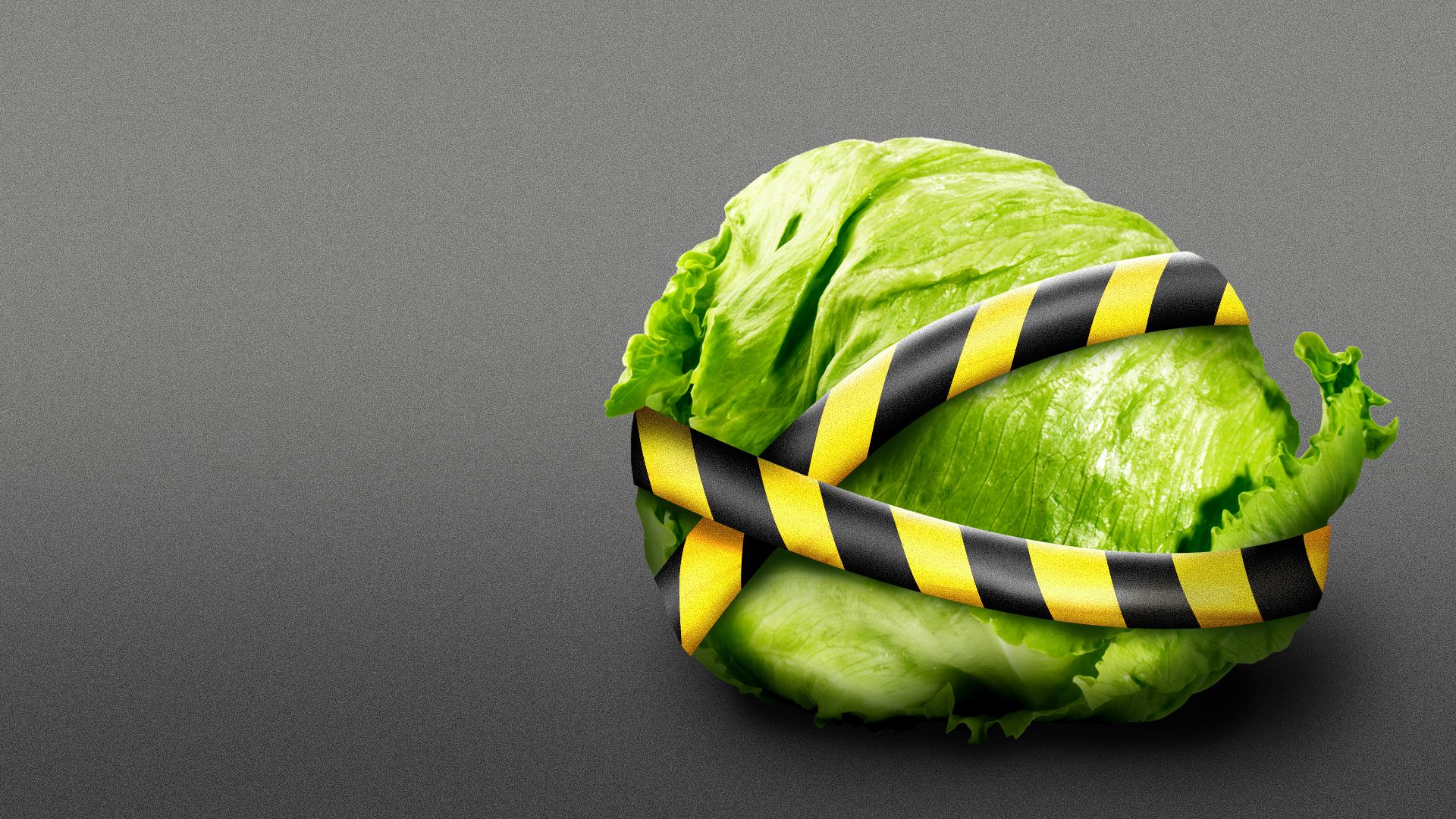
The nation's largest known cyclospora outbreak is straining Americans' trust in the food safety system — and could undermine the healthy-foods messaging from the Trump administration.
Why it matters: It arrives as the administration urges Americans to eat more whole foods, even as health experts say recent cuts have weakened the public health infrastructure responsible for detecting outbreaks.
The big picture: More than 11,000 confirmed or suspected cases of infection have been linked to the parasite across more than 40 states this summer, with investigators tying some — but not all — cases to contaminated iceberg lettuce.
- That raises a broader question among public health experts: Can the government convince Americans to eat more fresh produce if confidence in the food safety system is slipping?
- "If you want people to eat more whole foods, you have to make sure you've done everything possible to maintain public confidence in the system," said Jerold Mande, former deputy undersecretary at the Department of Agriculture.
That confidence has been tested in restaurants. While in Michigan last week, where there have been more than 9,600 suspected cases and 160 hospitalizations, Tina heard diners at multiple restaurants declining salads and lettuce on sandwiches because of the outbreak.
- Sandra Eskin, CEO of Stop Foodborne Illness, said investigators shouldn't stop looking for the outbreak's root cause simply because they've identified one likely source.
- "They should not give up because there are so many people who got sick," she said. "People are freaked out."
State of play: Experts interviewed by Tina pointed to several parts of the food safety system that have been weakened in recent months, including outbreak coordination, communications and staffing.
- They pointed to fewer communications staff at the FDA, reduced parasitic disease expertise at the CDC and strains on state and local health departments that investigate outbreaks.
- They also emphasized that many of those weaknesses predate the current administration and reflect years of underinvestment in public health.
The outbreak has underscored how nutrition policy depends on food safety policy.
- Public health officials have spent decades encouraging Americans to replace processed foods with fruits and vegetables — a message that has become central to Health Secretary Robert F. Kennedy Jr.'s Make America Healthy Again agenda.
- But outbreaks like this can push consumers in the opposite direction.
- "If I were running MAHA, I'd be working really hard to make sure people knew real food wasn't contaminated," said Megan Ranney, dean of the Yale School of Public Health.
The other side: "The Trump Administration has mounted a robust response — without interruption — to this outbreak, working closely with health departments in all 50 states and leading the public health response by promptly identifying known sources and providing Americans with the information they need to protect themselves," an HHS spokesperson told Axios in an email.
- HHS continues to encourage Americans to follow the dietary guidelines for Americans and "eat real food," including fruits and vegetables, she said.
Reality check: Richard Besser, former acting director of the CDC, said the outbreak serves as an early look at how the nation's food safety system performs under stress and how it might respond to a more dangerous threat.
- "It's saying to me that we would be pretty slow to pick up an outbreak of something, even if it was deadly," Besser said.
- Ranney pointed to the necessity of work like that done by Michigan's health department, whose painstaking interviews with patients helped identify lettuce as a likely source.
The bottom line: Consumers can't inspect fresh produce for invisible pathogens.
- "I don't have a lab in my house," Eskin said.
2. Where ACA enrollment dropped (and didn't)

Enrollment in the Affordable Care Act marketplaces dropped in every state except New Mexico between 2025 and this year, according to a KFF analysis.
Why it matters: States that have blunted the impact of the end of the enhanced premium tax credits have lost fewer people than other states that haven't compensated for the end of the credits.
Between the lines: Why didn't New Mexico lose people? Because it was the one state that fully replaced the enhanced credits with its own subsidies, per KFF.
- New Mexico's "effectuated enrollment" — the people who paid their premiums after signing up for a plan — grew 14% in 2026.
- The smallest losses were in Illinois, Connecticut, Pennsylvania, Idaho, the District of Columbia, Massachusetts, and Texas, where this year's enrollment either held steady or dropped by less than 5%. All except Texas run their own marketplaces.
- Nine states offer their own state-based subsidies, and all had enrollment rates above the national average, per KFF.
The bottom line: The 19.2 million Americans who are enrolled this year is still higher than any year before 2024 — but the losses this year show that premium subsidies matter.
3. Red Cross: Nation's blood supply is low

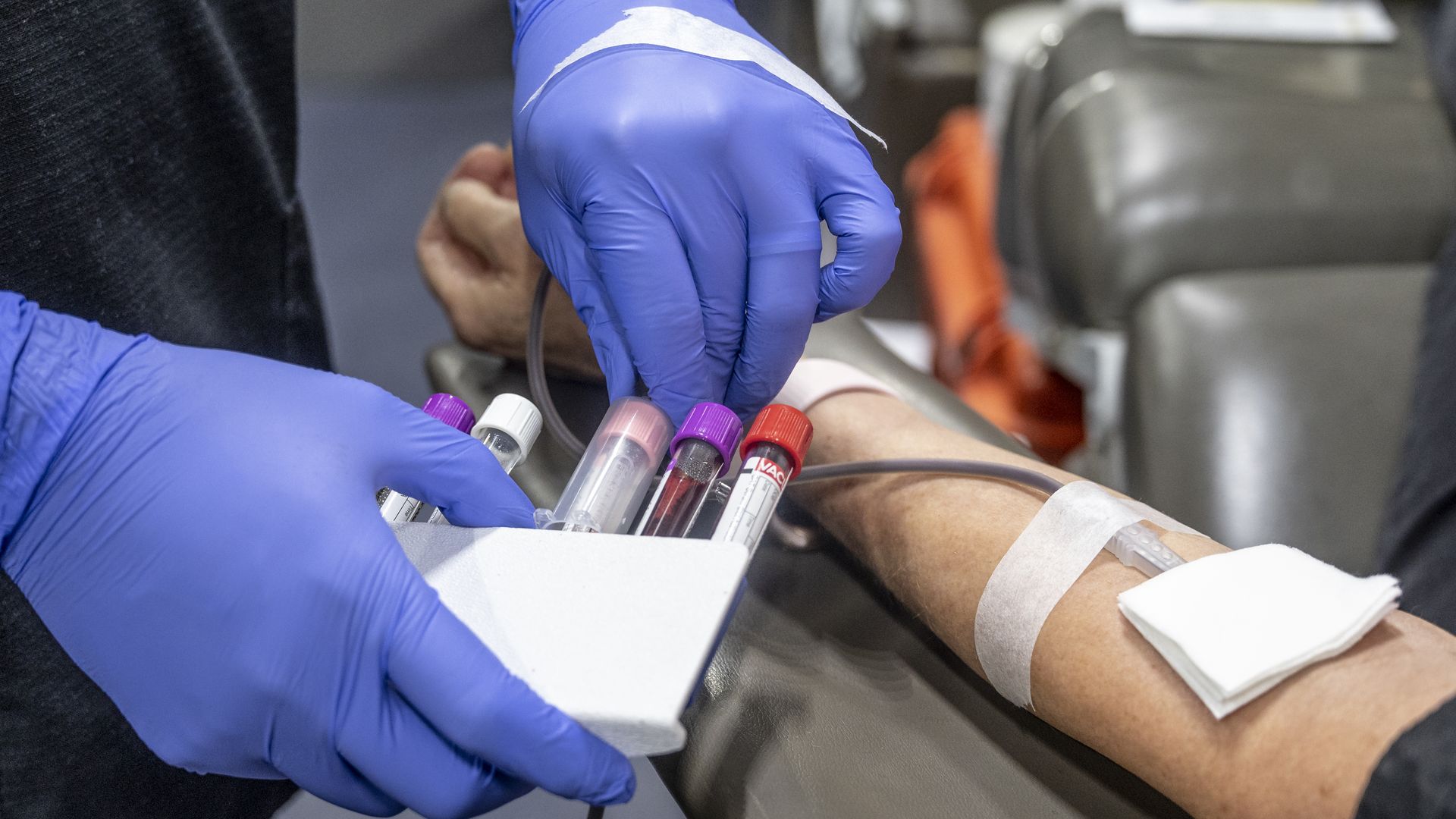
The U.S. blood supply has reached crisis levels, prompting the American Red Cross and the Surgeon General's Office to urge people to donate.
Why it matters: A prolonged blood shortage could delay surgeries, trauma care and other treatments that depend on timely blood transfusions.
- The Red Cross says it has "less than a one-day national supply of type O positive blood," which is the most commonly transfused blood type. Due to the shortage, the organization is limiting distribution of type O blood to hospitals.
Driving the news: Blood donations fell to a four-year summer low in 2026, the Red Cross said Monday.
- Current supply is not keeping up with the demand for blood, which increases during the summer, the Red Cross says.
- The Red Cross attributes the low turnout of donations to extreme heat, bad air quality and "widespread foodborne illnesses" hitting the country.
4. Catch up quick
💉 President Trump has been pushing Kennedy to do more to investigate the debunked link between vaccines and autism, and wants fewer shots for children. (WSJ)
🦠 Fauci's diary doesn't provide a smoking gun to back up Sen. Rand Paul's claims that he lied about the origins of COVID, but it does show how he wrestled with the issue as scientists' views changed. (NYT)
⛔️ The Trump administration is getting rid of subsidies that helped reduce premium increases for Medicare Part D. (WSJ)
🍷 Alcohol use during pregnancy increased between 2011 and 2024, according to a study by researchers at the Columbia University Mailman School of Public Health. (JAMA)
Thanks for reading Axios Vitals, and to editor David Nather and copy editor Matt Piper. Please ask your friends and colleagues to sign up.
Sign up for Axios Vitals