Axios Twin Cities

July 29, 2026

Welcome to Wednesday!
- High in the low 90s, NWS says. A sprinkle or two is possible.
🎷 Sounds like: "Relaxin' at Camarillo" as performed by local tenor sax legend Dave Karr, who died this month. He was 95. Read his obit
🎂 Happy birthday to our member Patricia Ann Stark!
Today's newsletter is 946 words — a 3.5-minute read.
1 big thing: Middle-age meltdown

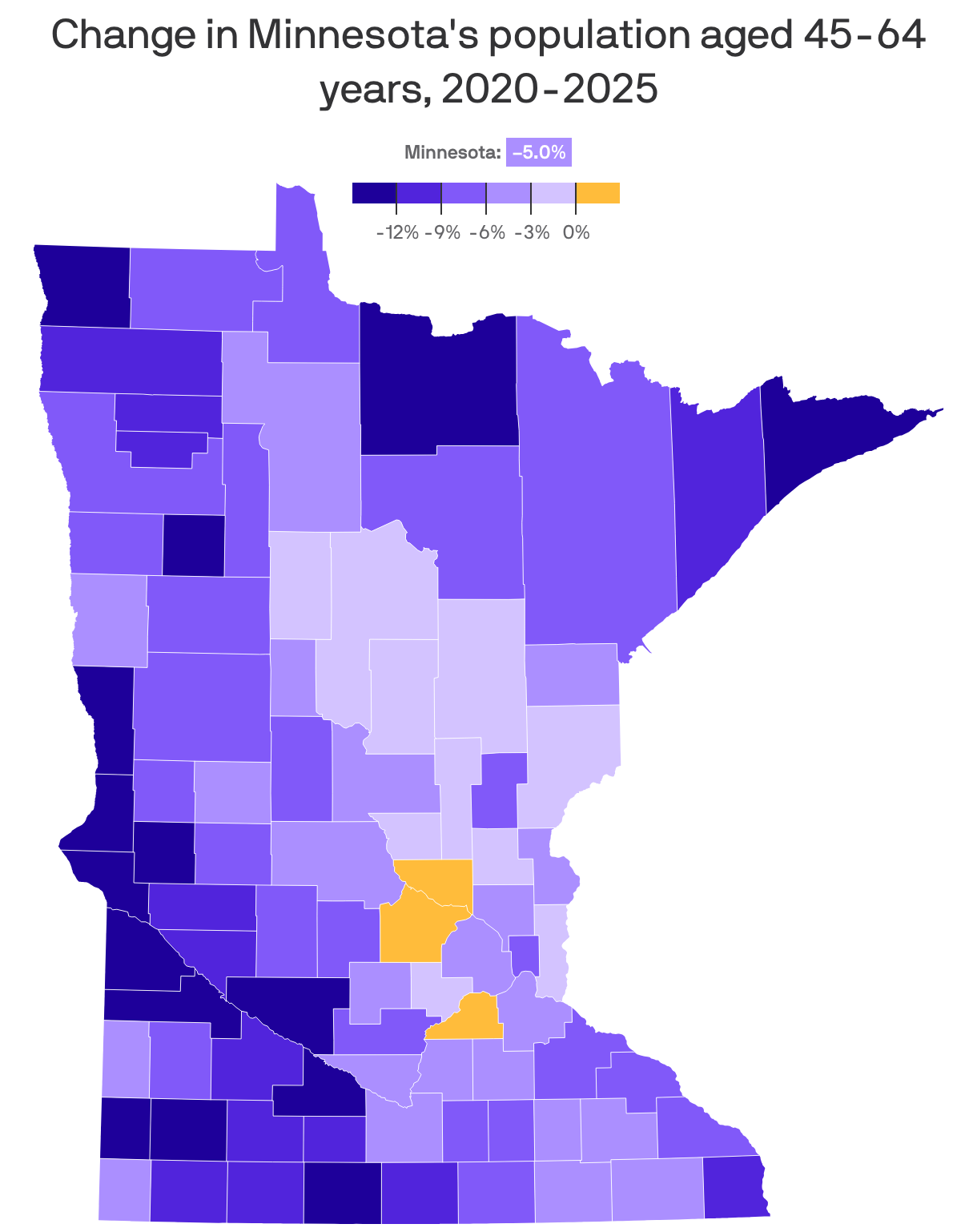
Minnesota has lost more than 71,000 people ages 45-64 since 2020 — a 5% decline in a group central to the state's workforce and tax base.
Why it matters: Like much of the U.S., Minnesota is losing experienced workers and caregivers just as its aging population needs more of both.
- It also means a drain of institutional knowledge, leadership experience and mentorship capacity for younger colleagues.
The big picture: "We're going to be an older state into the foreseeable future," state demographer Susan Brower told a webinar audience in February, "and need to have these systems, these organizations in place to help all of us as we age."
Between the lines: The 45-64 group isn't vanishing so much as it's aging up as younger baby boomers retire faster than Gen Xers can replace them.
- But Gen X is a smaller cohort. A "baby bust" in the 1960s and '70s was driven in part by wider availability of contraception.


By the numbers: Minnesota's 45-64 population decreased from about 1.43 million in April 2020 to 1.35 million in July 2025, according to an Axios analysis of newly released U.S. Census Bureau estimates.
- That's larger than the national decrease of 3.2% but smaller than the Midwest's 6.2% drop.
Zoom in: The 45-64 population is dropping both in the Twin Cities (–4.3%) and outside the metro (–5.3%), but the declines are most pronounced in rural western Minnesota: Traverse County's 18% drop was the steepest in the state.
- The trend is exacerbating a gap between rural areas — where the "prime working age" population (ages 16-64) is generally shrinking — and metro counties, where it's generally growing, according to state estimates.
- The only counties where the 45-64 population grew — Wright, Scott and Sherburne — include suburbs or exurbs of the Twin Cities.
What's next: This change will leave a much younger workforce at the helm of Minnesota's economy.
- By 2035, the state's 55-64 labor force will shrink by some 48,000 workers — a 9.4% drop — according to projections from Minnesota's Department of Employment and Economic Development.
2. Was the water tower's password… "password"?

A city water plant shutdown in Braham and similar water infrastructure hiccups elsewhere on Sunday and Monday were all the result of a coordinated statewide cyberattack, state officials announced yesterday.
Why it matters: Local and state governments have become hot targets for hackers.
- Public agencies statewide reported 269 cybersecurity incidents last year, including St. Paul, which spent more than $2.5 million to recover from an attack.
The latest: Over the course of 48 hours, "more than 30" community water systems statewide were targeted, prompting Minnesota IT Services to activate its cybersecurity incident response teams.
- South St. Paul, Plymouth and Maple Plain have publicly confirmed their water systems were attacked.
Threat level: No city currently believes its water is unsafe, the agency said.
3. The giant in our midst
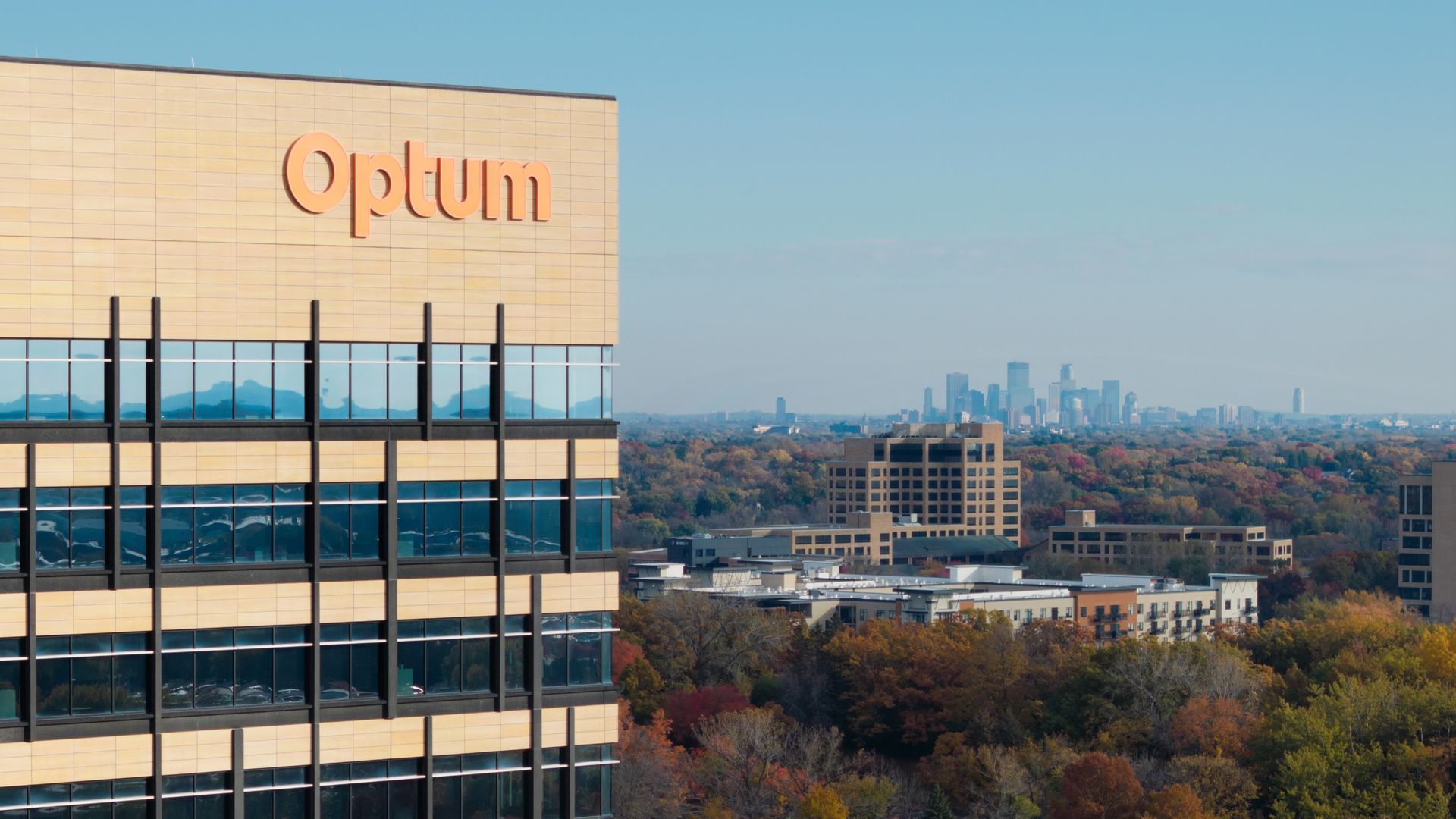
UnitedHealth Group is now the fourth-largest company in the world, according to the newly released Fortune Global 500.
Zoom in: Only Amazon, Walmart and China's state-owned utility bring in more revenue than UnitedHealth, which jumped three spots on this year's ranking.
- The Eden Prairie-based health care giant leapfrogged three oil companies, including Saudi Aramco, to claim the No. 4 spot.
By the numbers: UnitedHealth Group raked in $447.5 billion in revenues and $12 billion in profits, according to Fortune.
Zoom out: Four of Minnesota's 18 domestic Fortune 500 companies also made the global list: Target (rank: 96), U.S. Bancorp (373), Best Buy (385), and CHS (468).
4. The Spoon: Musk challenges deepfake porn ban

🤖 Elon Musk's AI company sued Minnesota over its novel ban on "AI nudification," which aims to block technology that produces deepfake videos and images of naked people without their consent. (MPR News)
- The new law is slated to take effect Aug. 1.
🔎 St. Paul has hired an outside law firm to investigate a complaint by police chief Axel Henry that Mayor Kaohly Her made inappropriate sexual comments toward Henry and other city employees. (Star Tribune)
- "The mayor has deep respect for city employees and regrets any unintended impact her action may have had," Her's spokesperson, Matt Wagenius, told the newspaper.
💹 Gov. Tim Walz signed an executive order warning state agency employees against using sensitive information they learn on the job to participate in prediction markets. (Fox 9)
🥓 Hormel Foods named current president John Ghingo as the company's next CEO. The maker of Spam and Skippy peanut butter has seen its stock price plunge 43% since 2021. (Star Tribune)
🇨🇦 New data showed Canadian travel to the U.S. dropped by 25% last year. Canadians account for half of Minnesota's international visitors. (Axios)
5. 🗳️ Pick the finalists in our local landmark bracket


Our quest to crown Minnesota's top roadside photo op is down to its final four — and each of the contenders is a big deal in their own right. Literally.
- Pelican Rapids' Pelican Pete is 15.5 feet tall.
- Bemidji's Paul Bunyan statue weighs 2.5 tons — in addition to being an actual tall tale.
- New Ulm's Hermann the German is 102 feet tall, if you count his cupola.
- Garrison's Wally declined to weigh in — but he's a walleye, so it'd probably be a fish tale anyway.
➡️ Click here to vote on which two will advance for the chance to be named Minnesota's best roadside attraction.
🤓 Kyle got new glasses.
👋 Torey is back from her sabbatical. Ping her to let her know what she missed!
Nick and Audrey are still on sabbatical.
Today's newsletter was edited by Larry Graham
Sign up for Axios Twin Cities