Axios Twin Cities

October 26, 2026

Good morning! We're back in your inbox with a special edition focused on how the midterms are playing out on Minnesota's largest college campus.
To get a better understanding of what's driving student votes this year, we've handed the keyboard to juniors and seniors in the In-Depth Reporting class at the University of Minnesota's Hubbard School of Journalism and Mass Communication.
- The stories, which student reporters pitched, reported and wrote, are based on interviews they conducted with over 80 peers, campus leaders and professors.
Today's newsletter is 1,299 words, a 5-minute read.
1 big thing: What (young) voters want
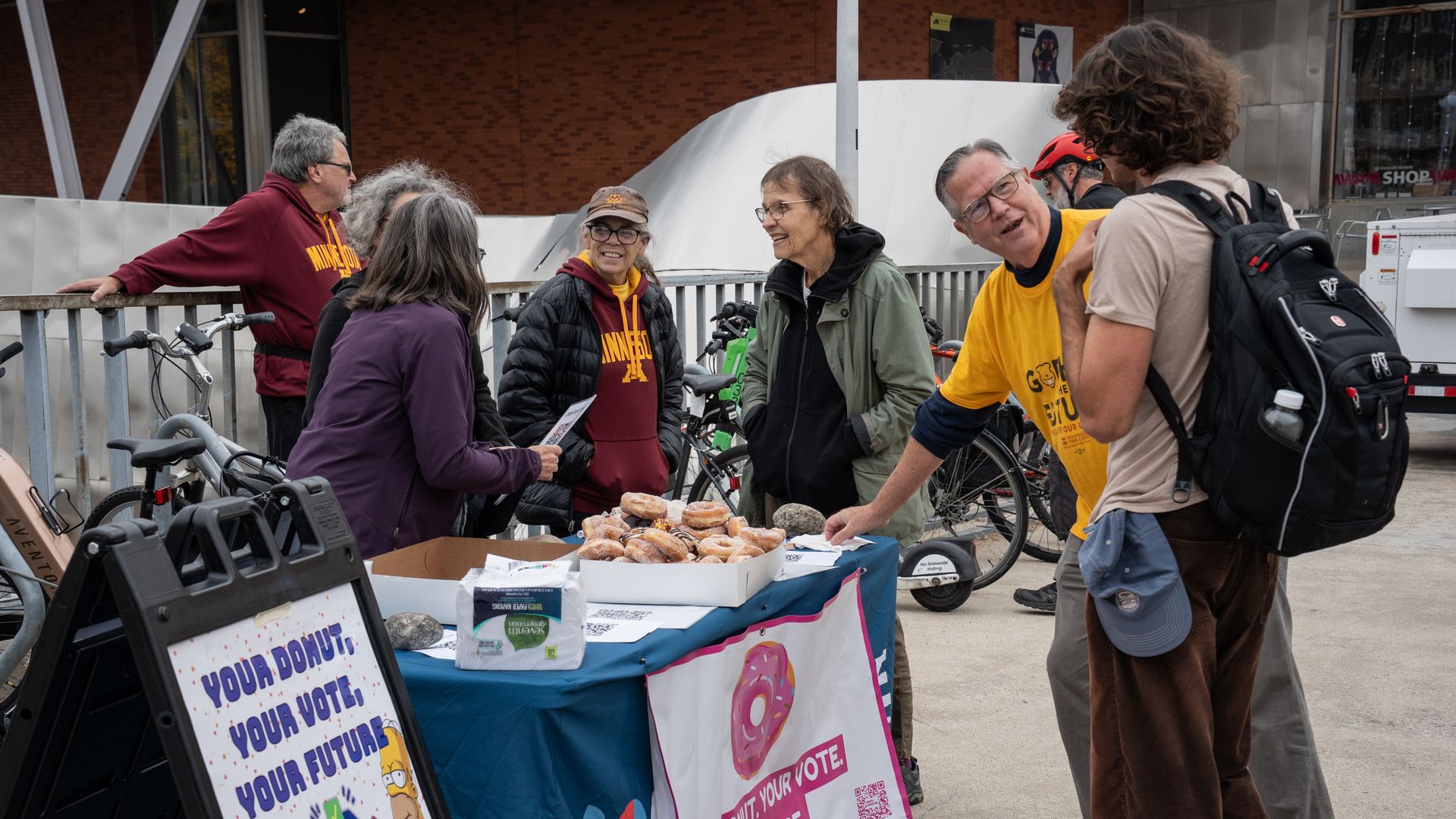
Affordability and ICEΒ are the top issues driving Gophers' votes in these midterms.
Why it matters: While young people make up a small share of the overall electorate, Minnesota regularly ranks top in the nation for college student turnout.
- That means students can make a difference in close races.
What we found: Operation Metro Surge is the biggest catalyst driving turnout among the students we encountered.
- Just over 21% of the 80 students we interviewed on or near campus cited the Trump administration's immigration crackdown β or immigration policy and ICE more generally β as one of their top midterm issues.
What they're saying: "There is a whole lot of students whose families and themselves have been impacted," university student government president Fatima Aden says.
- "They're feeling more motivated to use their civic duties to mobilize against the current administration."
πΈ Affordability and the economy were the second-most mentioned issues.
- "I'm working hard to try to survive. With tuition increases, gas price increases, the price of food, it's been more difficult lately," Enda Dallman, a 19-year-old Libertarian in the College of Science and Engineering, says.
Zoom in: Other issues motivating students to vote include:
π³οΈβπ Women's, LGBTQ and human rights: "Anything to do with women's rights or gay rights, and I don't like war. Those kinds of things come before economics," Ava Gilhoi, a left-leaning 23-year-old technical writing and communication major, says.
π Foreign affairs: "Because we're so globally integrated, it's really important that we're aware of what's happening in the places where we get our oil and obviously human rights issues," says Bridget Denton, an 18-year-old neuroscience major who leans Republican.
- Denton supports strong immigration laws, citing concerns about "open borders" in Europe, but criticized parts of the Trump administration's approach in Minnesota as "really terrible and really hurtful."
ποΈ Anti-Trump sentiment: Vince Freer, a 20-year-old psychology major who identifies as a Democrat, was among the many students who said they're motivated by stopping the president's agenda.
Plus: Concerns about data centers, the Gaza war, tuition rates, transportation and environmental protections also came up.
Yes, but: Over a dozen students said there's not one issue that drives their vote β and several said they remain unsure on whether to cast a ballot at all.
What they're hearing: A lot about the midterms on their social feeds β whether they want it or not.
- "Every other TikTok it'll be something about [the election]," Olivia Perkins, an 18-year-old electrical engineering student, says. "It spiked in the past like month."
Case in point: We created two Instagram accounts using typical college student demographics to see how long it would take for political content to pop up.
- β° It took less than 10 minutes.
Worth noting: About 75% of the students interviewed identified as Democrats or left-leaning β a share that's reflective of past election results in the legislative district surrounding campus.
- Just over 21% described themselves as independent or having no political affiliation.
π₯ VIDEO: Watch Gophers share their top issues β and whether they vote like their parentsβ via our Instagram.
β Booker Douglas, Morgan Heilman, Amanda Reed, Taylor Schiltgen, Samantha Siedow, Sara Hussein and Tyler Church
2. π΅ Age is more than just a number for Gen Z

Many Gophers we interviewed believe older candidates are out of touch with issues that affect young voters.
Between the lines: Students say they want to find the balance between a candidate young enough to understand their needs but experienced enough to be effective.
πͺ¦What they're saying: Some students worry older lawmakers won't live to see the long-term consequences of the policies they pass, such as the One Big Beautiful Bill Act.
- "If you're like one foot in the grave, I don't think that you're going to be the best person to lead the young people," human physiology student Saanvi Nagouda says.
By the numbers: DFL and GOP nominees running for statewide office this year range from their 30s to 70s.
- Their average age is 60 β old enough to be a college student's parent or grandparent.
- Just one β auditor candidate Zack Filipovich β is under 40.
β Jillian Stauffer
3. Zoom in: Turning Point's GOTV efforts
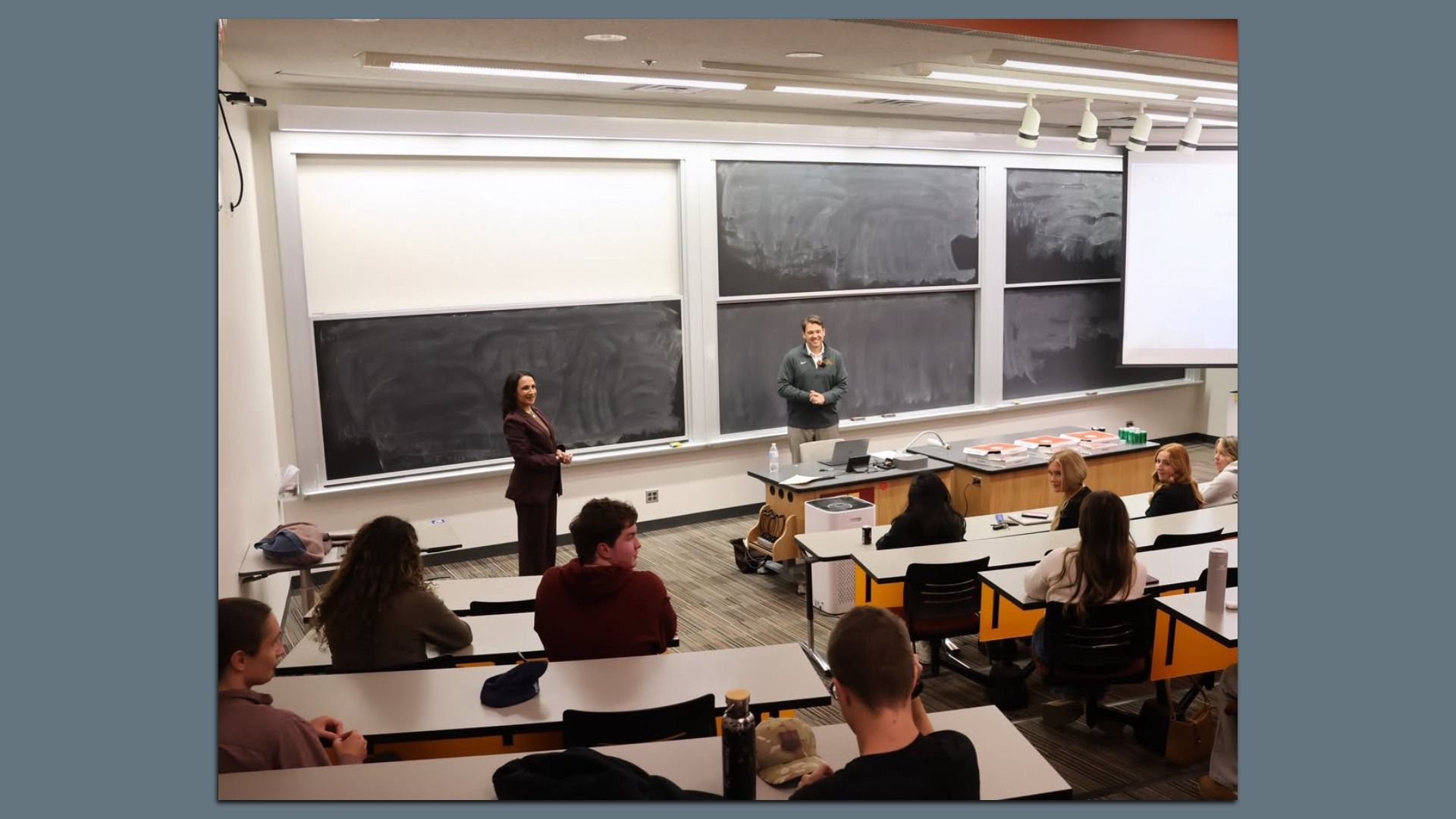
The U's Turning Point USA chapter is trying to turn its campus presence into increased political engagement β with mixed results.
The big picture: The conservative student organization is working to turn out low-propensity Republican voters across the nation this fall.
- Making inroads with young voters on the overwhelmingly blue campus here could help Republicans in close statewide races.
Zoom in: At the U, the group is using guest speakers, campus tabling and voter registration to encourage students to participate in the election.
What they're saying: Mia Milner, the chapter's political affairs chair, says the goal is to give conservative students a place to discuss their beliefs and connect with others who share their views.
- She hears concerns about affordability, public safety and what they see as a liberal campus environment.
What they're seeing: The chapter has seen increased interest since the September 2025 assassination of founder Charlie Kirk.
- Milner says attendance at meetings jumped to 30 or 40 following Kirk's death. Its Instagram following grew from roughly 500 to over 1,700.
- A recent event featuring conservative activist Riley Gaines drew about 80 students β and counterprotests.
Yes, but: Numbers have remained small for some pre-election events. Just a dozen students turned up to see GOP gubernatorial candidate Lisa Demuth on campus.
Milner's bottom line: Young voters should pay attention to fraud in government programs and consider how state leadership affects taxes and the cost of living.
β Dozie Osuji, Vivian Wilson and Trevor Dunning
4. Race to watch: Hennepin County attorney
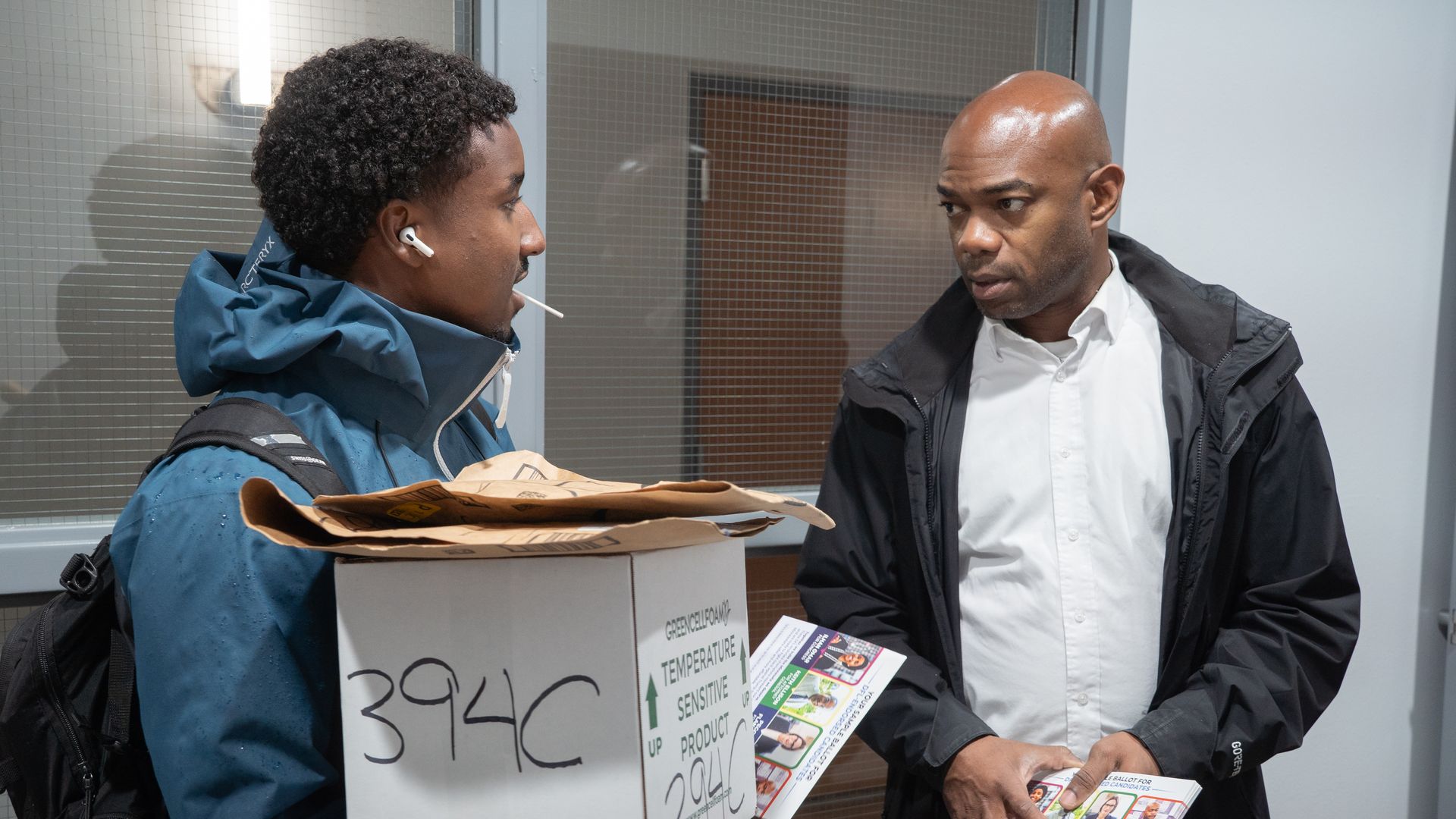
One midterm race that could directly impact students' lives is flying under the radar for many campus voters, our reporting found.
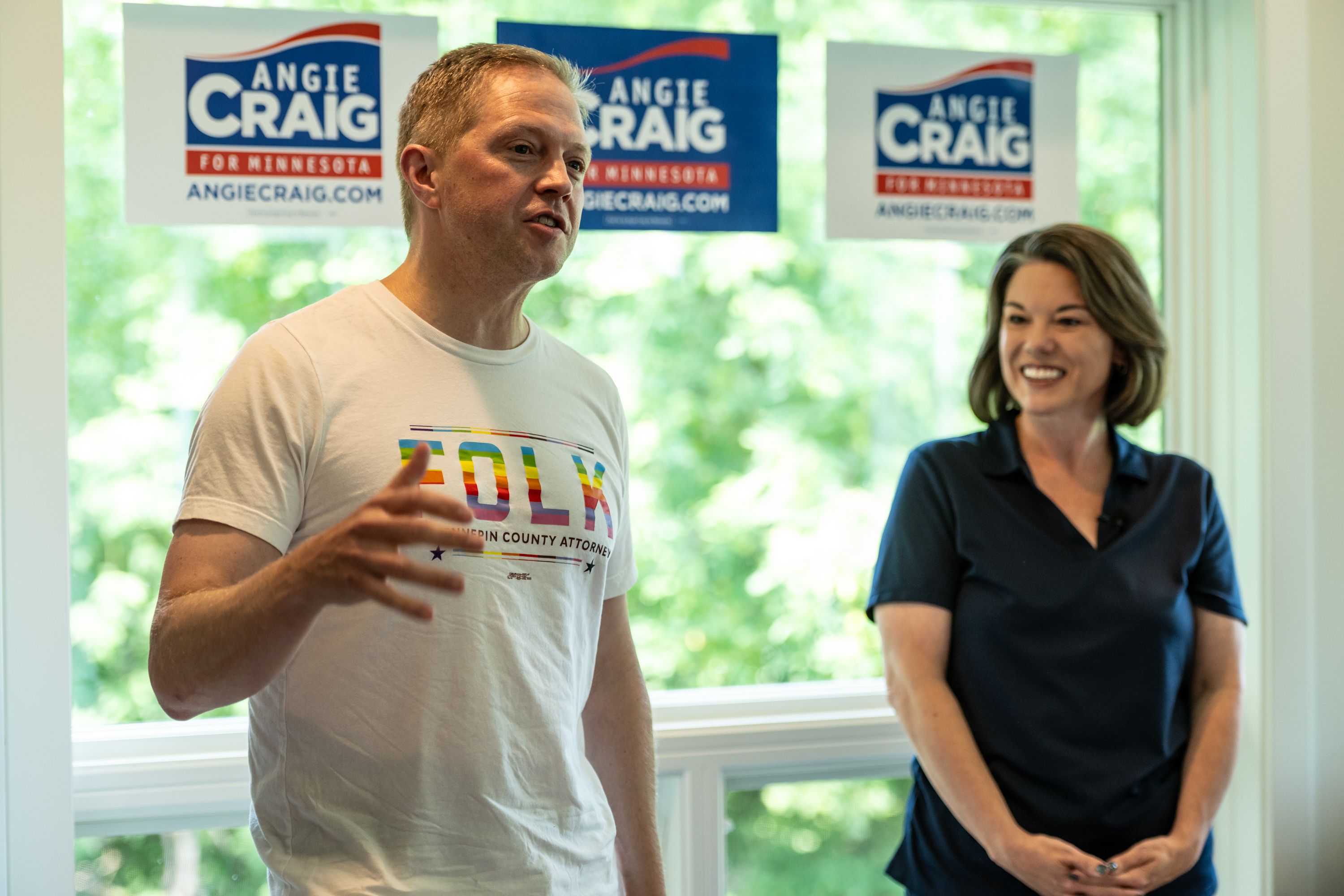
What's happening: Anders Folk and Cedrick Frazier are running to replace Mary Moriarty as Hennepin County attorney.
- Why it matters: The top prosecutor's approach could shape the response to crime around campus.
π What they're saying: Both candidates told us that addressing student safety concerns is a priority:
- Folk tells us to expect "much better communication with public safety leadership on campus." He also floated embedding prosecutors in the U's public safety department to "speed up the decision-making process" on cases.
- Frazier says he sees part of the role as "making sure I'm on campus, connecting with campus law enforcement," as well as "connecting with student groups to see what their concerns are."
β Aeden Evenson-McDermott, Maddie Mullikin and Nico Schaust
Go deeper on the county attorney race
5. π€ 1 quote to go: Political pal divide
"A lot of the friends within my friend group won't openly tell other people in our friend group that they're Republican or whatnot because of judgment."β Yared Soloman, a 21-year-old Democrat studying psychology, on whether he has friends on the other side of the aisle.
By the numbers: Just over half of the Gophers we interviewed about cross-party friendships said they have friends with opposing political views.
- But some told us they keep the peace by avoiding talking politics altogether.
Threat level: Political science professor Howard Lavine tells us that a fear of social othering can lead us not to talk about political opinions with friends we know we disagree with.
- That harmful desire for confirmation bias in friendships can actually increase polarization.
β Jo Larson and Valentina Contreras
π§£ Sara is deciding on whether to order cute fall outfits or actually buy winter essentials.
βΎοΈ Tyler is looking forward to watching the Brewers game with a beer in his hand.
π Jillian is on her third roll of tape while decorating for her Halloween party.
π Sam is obsessively reloading the refresh button on the MACC calendar, waiting to score a Fido Field Trip spot.
π° Morgan is trying to recover from her trip to Las Vegas.
π Jo is fretting, probably too much, about whether her Carrie Bradshaw Halloween costume will arrive in time for the weekend festivities.
πββ¬ Valentina is stressing about sending her cat to live with his grandparents since he is not getting along with her roommate's dog.
π§ Maddie is arguing with her twin sister about what colors look best on their Fancy Nancy-themed 21st birthday party invitations.
ποΈ Taylor is already nostalgic from her trip to Chicago.
π¦ Aeden is looking forward to Thanksgiving.
π Amanda is wondering what shoes will look best with her Michael Jackson Halloween costume.
β½οΈ Dozie spent yesterday watching El ClΓ‘sico (Real Madrid Vs Barcelona).
π’ Trevor is looking forward to going to Six Flags with Vivian's roommate Ritika.
π’ Vivian is looking forward to seeing Ritika and Trevor go to Six Flags.
ππ» Booker is wondering when homework will end and time for video games will begin.
Today's newsletter was edited by Larry Graham, Torey Van Oot, U of M students Maddie Mullikin and Jo Larson and U of M professor Scott Winter.
Sign up for Axios Twin Cities