Axios Space
July 20, 2021

Thanks for reading Axios Space. At 1,388 words, the newsletter is about a 5-minute read.
- This week, we focus on our new era of commercial spaceflight, and it's best read while listening to this song.
🌏 Situational awareness: Jeff Bezos says his flight today reinforced his commitment to combatting climate change and keeping Earth "as this beautiful gem of a planet that it is." Go deeper.
Please send your tips, questions and new astronaut definitions to [email protected], or if you received this as an email, just hit reply.
1 big thing: Deciding who counts as an astronaut
Illustration: Megan Robinson/Axios
Jeff Bezos went to space today, but whether that makes him an astronaut is open to interpretation.
Why it matters: Bezos and his billionaire rival Richard Branson are hoping to lure wealthy customers into space tourism, in part with the promise of becoming astronauts — but the definition of who is considered an astronaut isn't clear-cut.
- "There is going to be a segment of the population that's waiting in line to ride [these suborbital rockets] because they have dreamt of being an astronaut their entire lives, and to be told they're not an astronaut would ruin the experience for them," space historian Robert Pearlman told me.
How it works: The FAA, U.S. military and NASA all have different definitions of what it means to be designated an "astronaut," and none of them fit perfectly with the way Bezos' Blue Origin or Branson's Virgin Galactic are doing business.
- NASA and the military's definitions have specific criteria and are reserved for their employees.
- In order to receive commercial astronaut wings, you have to be an employee of the company performing the launch, certified by the FAA and be a crewmember performing some kind of job during the mission.
The intrigue: It's possible that, by that definition, Branson will receive FAA commercial astronaut wings, while Bezos won't.
- Virgin Galactic classified Branson as a crew member, whose job was to evaluate the astronaut experience. The Blue Origin vehicle that carried Bezos today, however, is autonomous — no one onboard needs to act as a pilot or flight crew.
- Oliver Daemen, the 18-year-old paying customer on the Blue Origin flight, definitely won't get official FAA wings, because he's paying for the trip.
Between the lines: Fewer than 600 people have flown to space in history, and most of them have been government employees paid to explore, but this new era of commercial spaceflight opens up that opportunity — to see Earth against the blackness of space — to many more people.
- Virgin Galactic uses the American-recognized boundary for defining where space begins — at 50 miles up. Blue Origin's vehicle will take its passengers past the Karman Line, the international boundary for where space begins, at about 62 miles above the planet.
- Virgin Galactic and Blue Origin awarded wings to their astronauts in public ceremonies after they came back down to Earth.
- Blue Origin referred to their crew today as "the world's newest astronauts."
What to watch: All of these questions about who qualifies as an astronaut could become moot if the market for space tourism truly takes off.
- If enough people fly and prices go down enough, it's possible that the term "astronaut" will go the way the term "aviator" did when commercial air travel became available to most members of the public.
- Today, "aviator" is reserved for a select group of people who are performing risky flights, pushing the bounds of what's possible. In the future, "astronaut" might become a similar designation, Pearlman said.
"No one had to step in and say, 'You're not an aviator,' and that's exactly what's going to happen with 'astronaut,'" Pearlman said. "When 'astronaut' is no longer a bragging status, then it will resume being used only by those people who are going into space for exploration or if it's their job."
2. Blue Origin takes flight
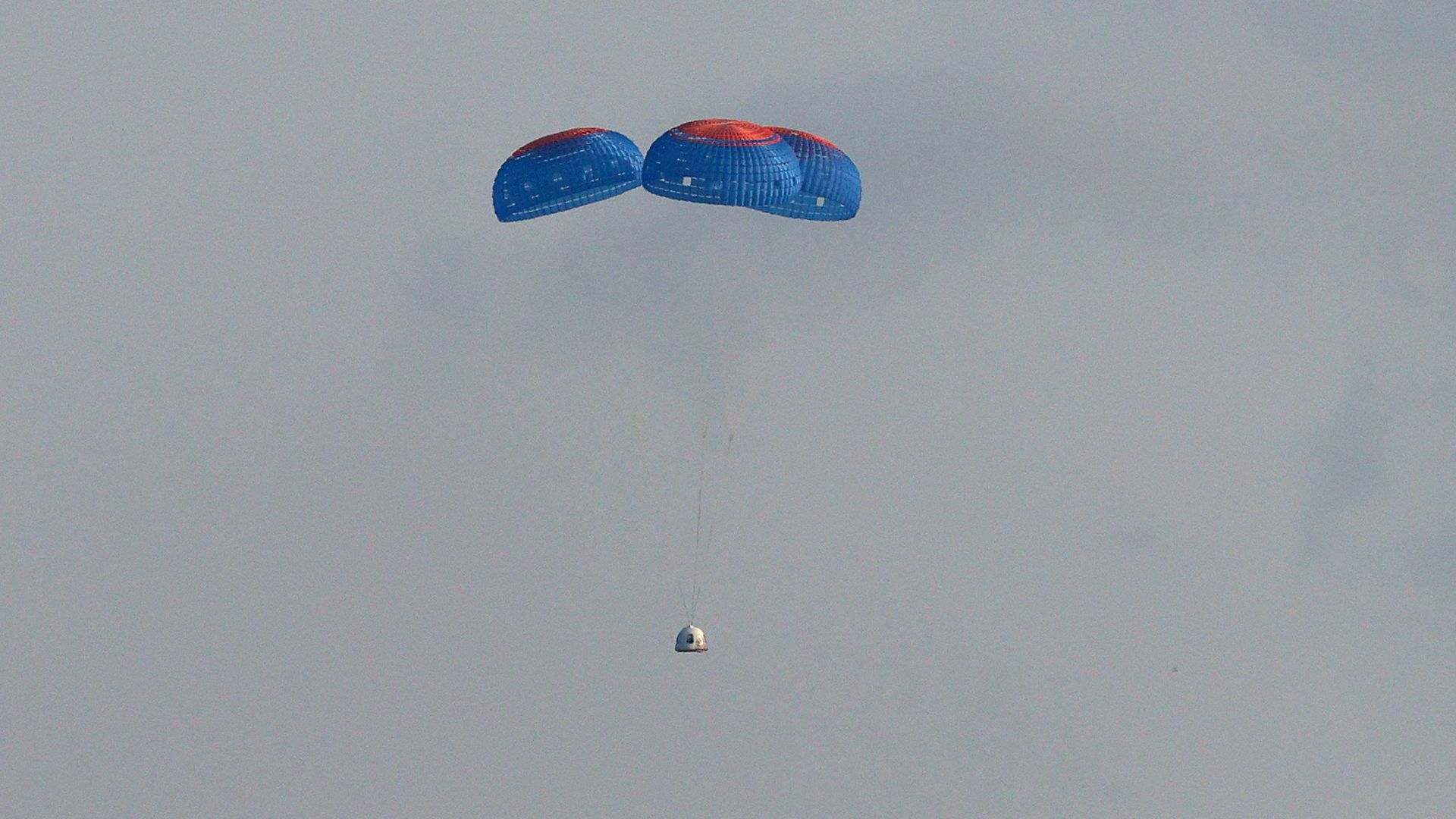
Blue Origin’s New Shepard capsule carrying passengers descends to Earth, July 20. Photo: Joe Raedle/Getty Images
This morning's launch marked Blue Origin's first human flight to space.
Why it matters: The mission was a major technical step for the company focused on bringing suborbital spaceflight to more people in the future.
What happened: The company's New Shepard capsule and rocket took flight at 9:11am ET, lofting the capsule high above the desert and bringing the crew about 62 miles into the air before descending back to Earth under parachutes.
- Bezos was joined by his brother Mark, the company's first paying customer Daemen, and pioneering aviator Wally Funk, one of the women who passed the Mercury astronaut tests in the 1960s. Funk is now the oldest person ever to fly to space and Daemen is the youngest.
- “It’s dark up here,” Funk was heard saying on the flight webcast before the crew came back down to Earth. “You have a very happy crew up here, I want you to know," Bezos said to mission control.
- Read a full play-by-play.
How it works: "We set out to design this vehicle for anybody — not professional astronauts — anybody with very little training, and that is a very hard problem," Gary Lai, the senior director of the New Shepard design team, said during the launch webcast.
- "And yes, we have succeeded, and I would put my own kids on that vehicle."
The big picture: It's been a pretty wild suborbital summer. Bezos' flight comes after Branson flew to suborbital space with his own company, Virgin Galactic.
- The two companies are now working to start flying more paying customers to space and back again.
- Yes, but: It's not clear how much of a market there is for these kinds of flights, and the two companies haven't yet revealed how much their tickets will cost.
3. The FAA's new way to track launches
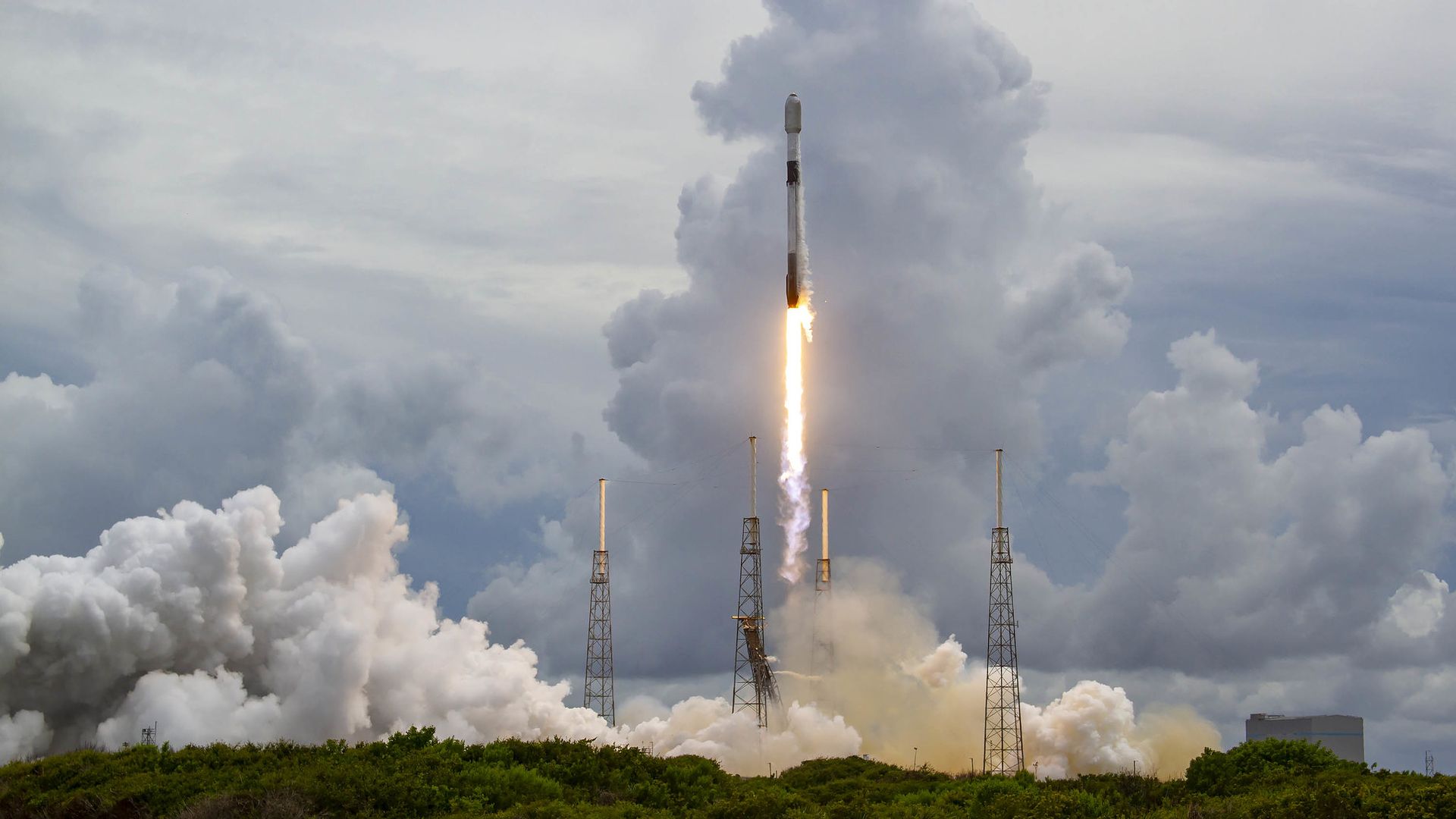
Photo: SpaceX
As private companies continue to launch more and more missions, the FAA is testing out new technology to help keep airspace clear and safe, my colleague Joann Muller writes.
Why it matters: Each time a satellite — or billionaire — is launched into space, the FAA has to close airspace to commercial airlines. That requires pilots to reroute and take less-efficient paths, often resulting in delays for airline passengers.
- And since many rockets are now reusable, pilots have to yield for spacecraft coming back to Earth, too.
What's happening: The FAA is rolling out a system that allows it to track a space launch or reentry vehicle in near-real time as it travels through the National Airspace System.
- The Space Data Integrator prototype automatically delivers data about a rocket's position, altitude and speed to the FAA's Air Traffic Control System Command Center.
- Knowing precisely where a rocket is — including whether it deviates from its expected flight path — allows air traffic controllers to better manage federal airspace.
- The system can also display and share "aircraft hazard areas" that may contain falling debris from a launch or reentry vehicle.
- Four commercial space companies — SpaceX, Blue Origin, Firefly and the Alaska Aerospace Corporation — have agreed to share data with the FAA.
Driving the news: The technology was first used on June 30 with the SpaceX Transporter 2 launch from Cape Canaveral in Florida.
- FAA officials say the initial results are promising, showing they can shorten airspace closures from an average of about four hours to two hours.
What they're saying: “This is a critical tool as the number of users of our already busy airspace increases,” said FAA administrator Steve Dickson.
- “With this capability, we will be able to safely reopen the airspace more quickly and reduce the number of aircraft and other airspace users affected by a launch or reentry.”
The bottom line: The cadence of space launches has been rapidly increasing, from once a year in 2011 to about once a month in 2016, and now roughly once a week.
- In 2020, the FAA safely managed 45 space launches and reentries into the National Airspace System, the most in the agency’s history. For 2021, that number could exceed 70.
4. Out of this world reading list
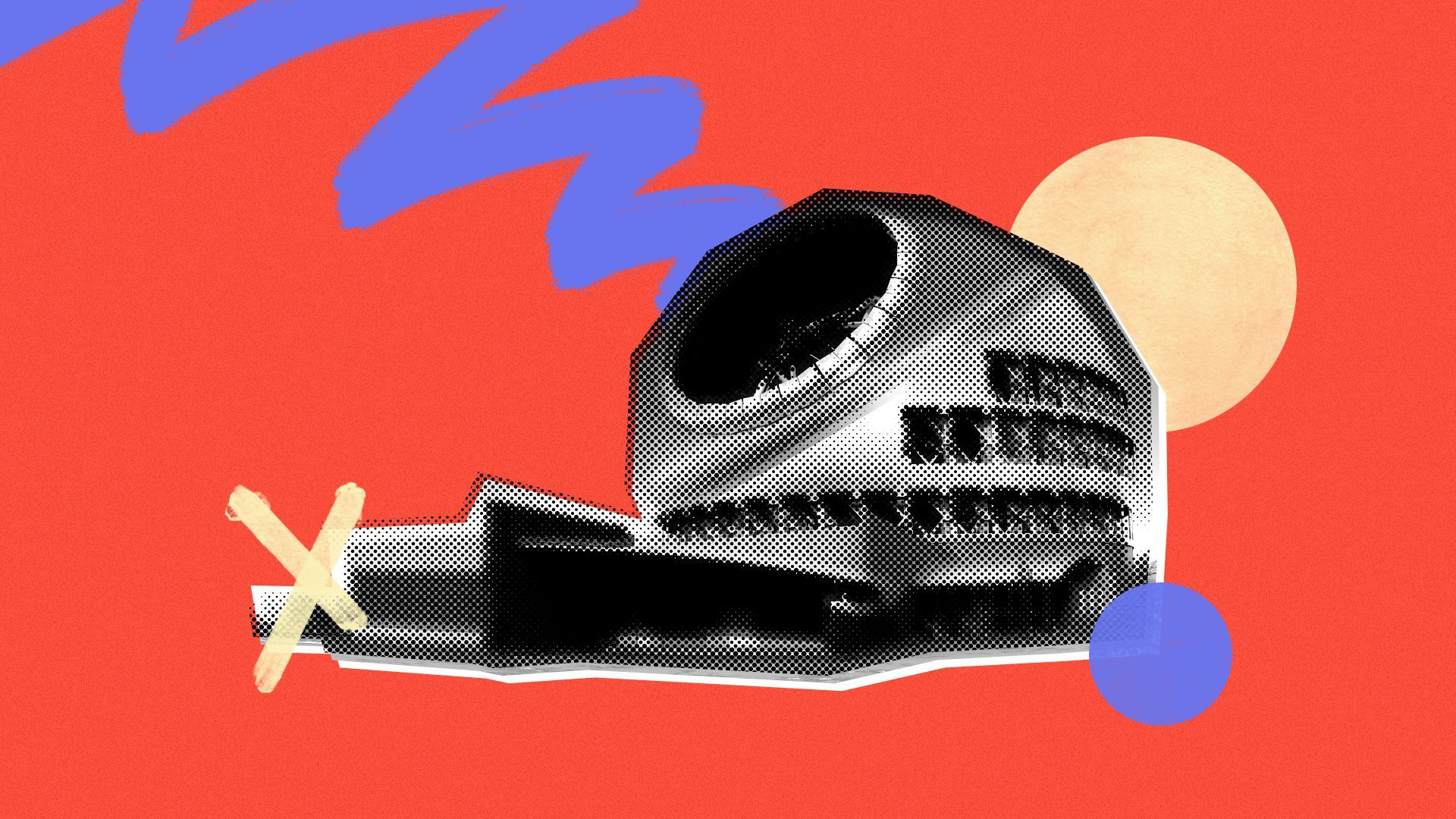
Photo illustration: Brendan Lynch/Axios, Telescope rendering: TMT International Observatory
The fight over the Thirty Meter Telescope reveals science's shortcomings (Nuria Marquez Martinez and me, Axios)
SpaceX test fires massive Super Heavy booster for Starship for 1st time (Tariq Malik, Space.com)
Rocket Lab identifies cause of Electron failure (Jeff Foust, SpaceNews)
SEC charges SPAC and merger target Momentus over false claims (Kia Kokalitcheva, Axios)
Moon "wobble" will cause dramatic increases in coastal flooding (Rebecca Falconer, Axios)
5. Weekly dose of awe: The return of the Hubble
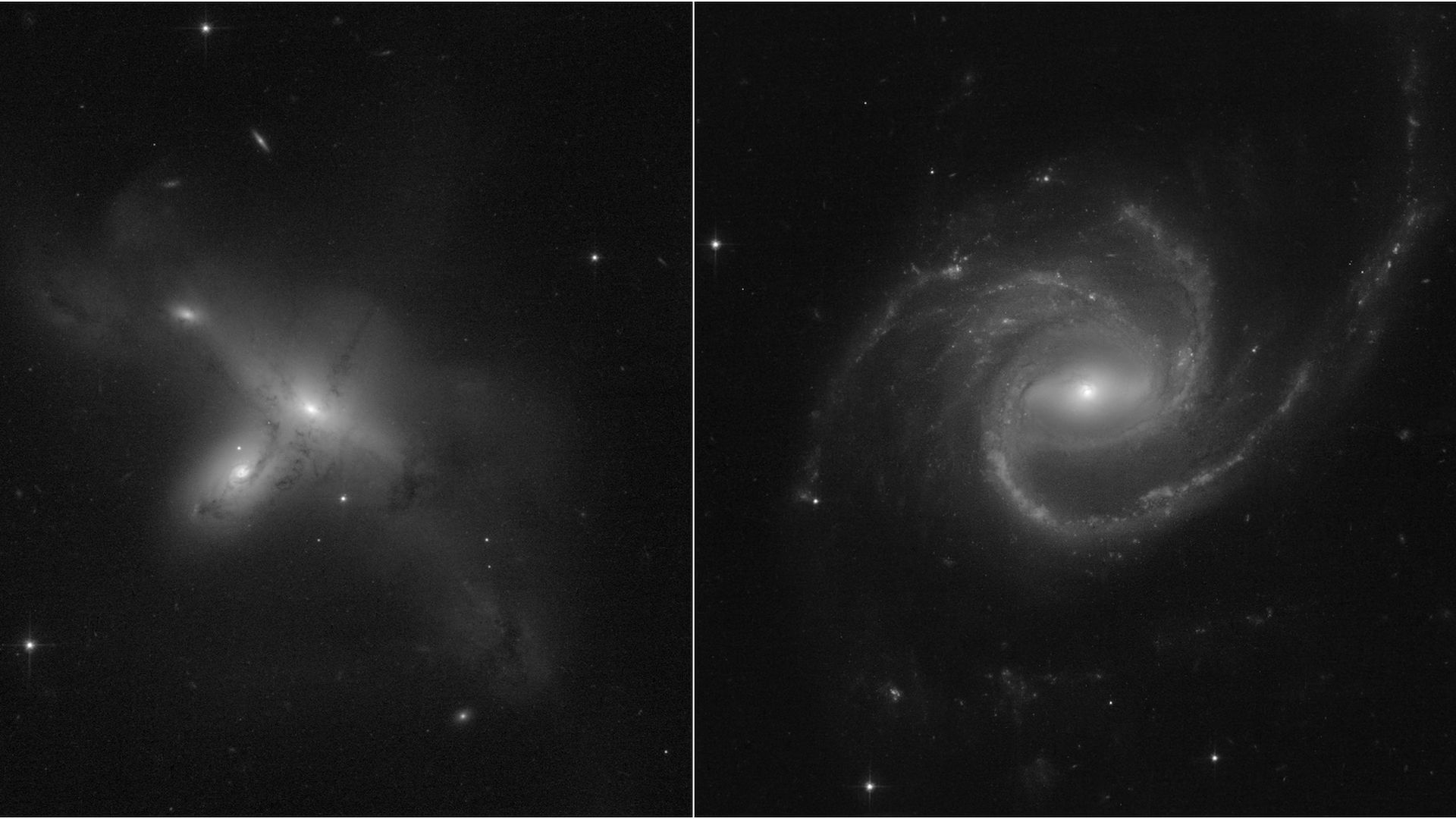
Photo: NASA/ESA/STScI/Julianne Dalcanton (UW)/Alyssa Pagan
The Hubble Space Telescope's mechanical eyes on the universe are open again, and the intrepid spacecraft has already caught sight of some strange galaxies in distant space.
- Mission managers got the Hubble back up and running on July 17 after a technical glitch left the telescope sidelined for weeks.
- These photos — taken not long after the Hubble's science restarted — show a pair of galaxies interacting 297 million light-years away (left) and a spiral galaxy with an odd, not even, number of arms 490 million light-years away.
Big thanks to Alison Snyder, Sam Baker, Zachary Basu and Sheryl Miller for editing this week’s edition and to Joann for writing. If this newsletter was forwarded to you, subscribe here. 🚀