Axios Space

March 16, 2021

Thanks for reading Axios Space. At 1,532 words, this week's newsletter is about a 6-minute read.
- Please send your tips, questions and new space conflicts to [email protected], or if you received this as an email, just hit reply.
1 big thing: The U.S.-Russia collaboration in space is fraying

Illustration: Aïda Amer/Axios
Russia, the United States' long-standing partner in space, is turning to China for its lunar ambitions.
Why it matters: The U.S. and Russia have been uneasy partners in orbit for decades, but as the two grow further apart in space, their rift could reshape the geopolitical landscape above Earth — and on it — for years to come.
- "We're not going to see the same level of cooperation between the United States and Russia, compared to what we saw in the 1990s ... when Russia was broke, going through an economic catastrophe after the collapse of the Soviet bloc and was desperate," space policy expert Bleddyn Bowen told me.
Driving the news: Last week, China and Russia signed an agreement to work together to develop a lunar research station on or orbiting the Moon, allying Russia with a nation many see to be in opposition to U.S. interests in space.
- The memorandum of understanding comes after Russia declined to sign NASA's Artemis Accords governing international cooperation and uses of the Moon, and after a Russian official criticized NASA's plans to build a small space station in lunar orbit.
- Russia was initially expected to provide an airlock for the small lunar space station, which is part of NASA's plans to land people on the Moon, but now "NASA will be pursuing other options for the provider of the airlock," NASA said in a statement.
The backstory: U.S.-Russia space relations began to sour in the early 2010s when Russia annexed Crimea.
- The two countries' space programs kept them talking via the International Space Station, but since then, Russia's public posture toward the U.S. on space issues changed, experts say.
- "We saw a marked change in how the Russians interacted in multilateral space forums," Brian Weeden of the Secure World Foundation told me. There was "a marked increase in the hostility of their language against pretty much anything the U.S. was proposing."
The intrigue: China's space program and industry are booming, with support from the government and a long-term vision of what the nation hopes to accomplish. Russia's star, on the other hand, is fading.
- Russia is losing a significant source of revenue as SpaceX flies astronauts to the space station, ending NASA's reliance on the Russian-made Soyuz rocket.
- This partnership with China will allow Russia to work with a nation on the rise when it comes to space, while China gets to take advantage of Russia's established technical acumen.
Just as important, if not more, the two powers together will wield geopolitical weight in forming international space policy.
- As Europe, Canada, Japan and others are already partnering with the U.S. on its Moon plans, the partnership between Russia and China could potentially pull in support from other nations — if they decide they want partners.
What to watch: It's not clear how high a priority the Russia-China lunar research station will have as China works to build its own space station orbiting Earth in the coming years.
- The division of labor for the two nations hasn't been laid out, and there isn't a clear funding source announced yet.
- And experts say that the door isn't necessarily closed for the U.S. and Russia to partner with one another in space in the future.
2. China's satellite internet plans
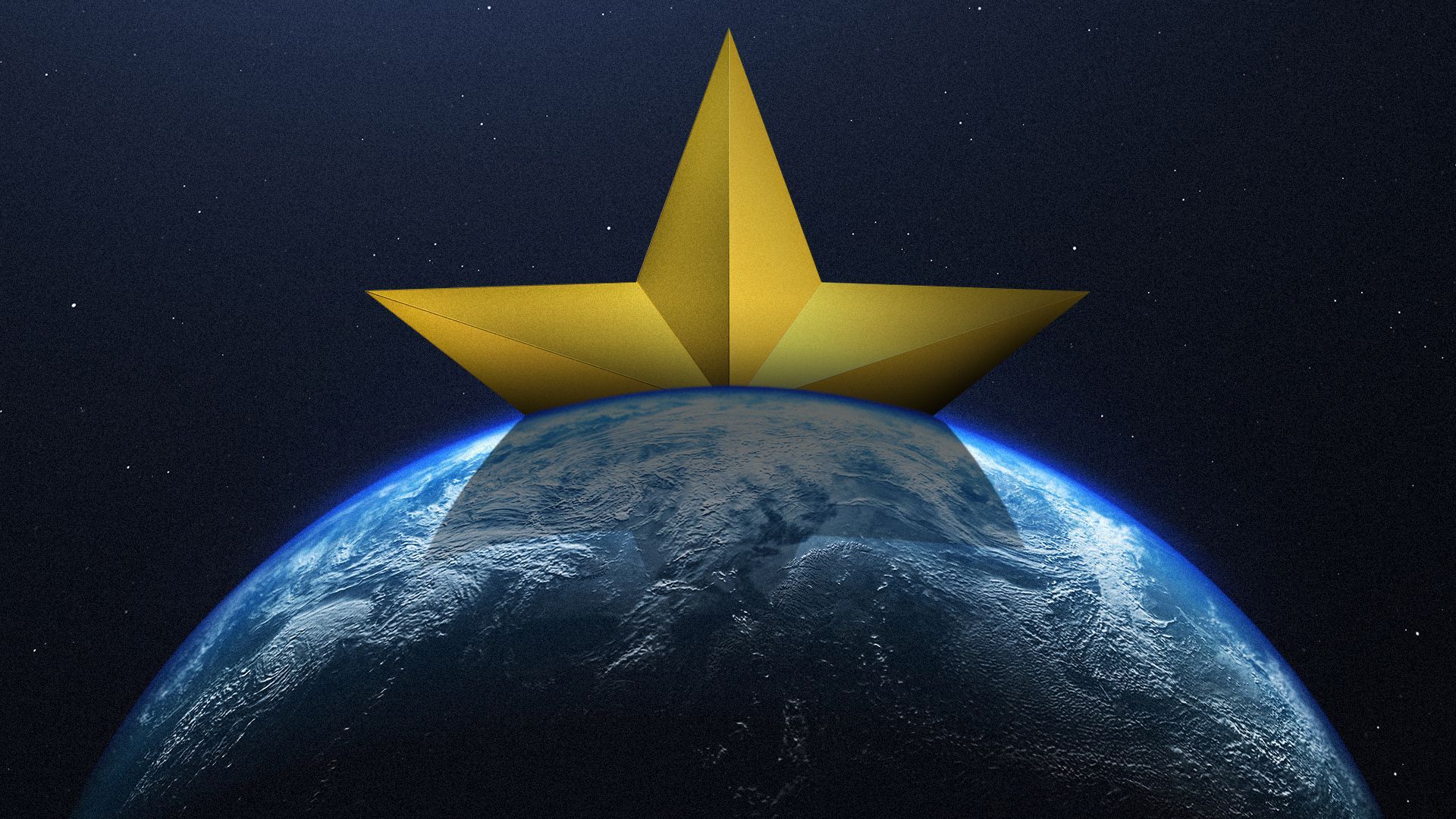
Illustration: Aïda Amer/Axios
China is ramping up plans for government-sponsored satellites to beam the internet from space, taking on U.S. rivals like SpaceX and Amazon in the race to own the next frontier of connectivity, Axios' Margaret Harding McGill reports.
Why it matters: There's growing concern China is trying to enter the space internet market with the same strategy it used on Earth with Huawei and 5G — a state-backed company to undercut competitors and spread global influence.
What's happening: China plans to launch 10,000 satellites in the next 5–10 years as part of its "StarNet" constellation, according to an Asia Times report that cites a publication run by the official China News Service.
- China intends to build a space infrastructure system for communications, navigation and remote sensing with global coverage as part of its latest five-year plan.
The big picture: Faster and cheaper technology has made satellite networks a more viable option for transmitting broadband.
- There's a huge demand for the service with 4 billion people worldwide lacking broadband access, many of them in hard-to-serve areas, spurring global interest in beaming the internet from space.
- SpaceX is leading the way with its Starlink service, while Amazon's Project Kuiper is another constellation of broadband satellites in the works.
- The U.K. government is backing satellite broadband provider OneWeb, and the European Union has announced plans for its own constellation.
Our thought bubble: Axios China expert Bethany Allen-Ebrahimian notes that China could potentially use such a satellite network for mass data collection and surveillance of internet traffic.
What to watch: China is behind on satellite broadband, but if the Chinese deploy the Huawei playbook of offering cheaper and reliable equipment abroad, the U.S. will need an answer, notes Ainikki Riikonen, a research assistant for the Technology and National Security Program at the Center for a New American Security.
- "It would have huge geopolitical benefits for China, especially if they can increase other countries' reliance on it to do installation and upkeep of information networks," Riikonen told Axios.
3. Sparking life from lightning
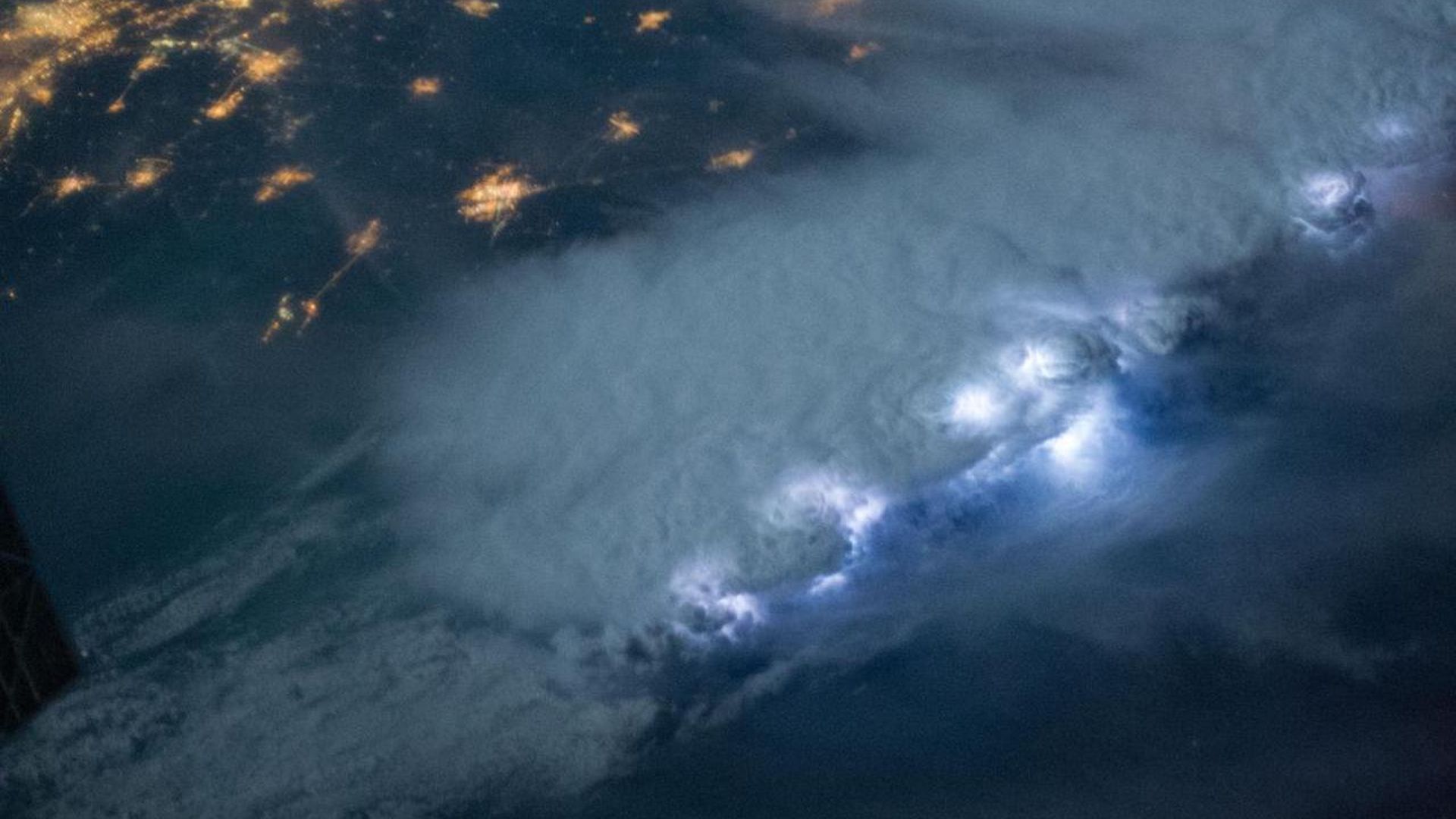
Photo: NASA
Lightning strikes on the early Earth over the course of 1 billion years could have been key to the formation of the first life on our planet, according to a new study.
The big question: What triggered the first forms of life to develop on Earth? This new study may help scientists find an answer to that enduring question.
What they found: The new study — in the journal Nature Communications — suggests trillions of lightning strikes spanning about 1 billion years helped create phosphorous, a key ingredient in the formation of life.
- During Earth's early days, more than 4 billion years ago, phosphorous — locked inside of minerals — wasn't easily available.
- Scientists have long thought meteorites rich in schreibersite — a soluble phosphorous mineral — may have crashed into Earth, allowing for the creation of life.
- Meteorites, however, don't fall to Earth at a consistent rate each year, making it harder to know just how much soluble phosphorous those space rocks could have created. But lightning is constant and can create glass containing soluble phosphorous as well, the authors of the study argue.
“This work helps us understand how life may have formed on Earth and how it could still be forming on other, Earth-like planets,” Benjamin Hess, an author of the new study, said in a statement.
Yes, but: Scientists aren't actually sure that the early Earth had much land at all. Some research today has pointed to the idea that our planet was once a world covered almost entirely in water.
- "The thing that gives me pause about this work is the assumption that there is plenty of land on the early Earth directly exposed to the air," Michael Wong, a researcher at the University of Washington who is unaffiliated with the new study, told me.
- "And even though there might have been some continental crust, that is not to be mistaken for land that is exposed to the air because you could have continental crust emerge completely underneath a very large ocean."
4. A planet's new atmosphere
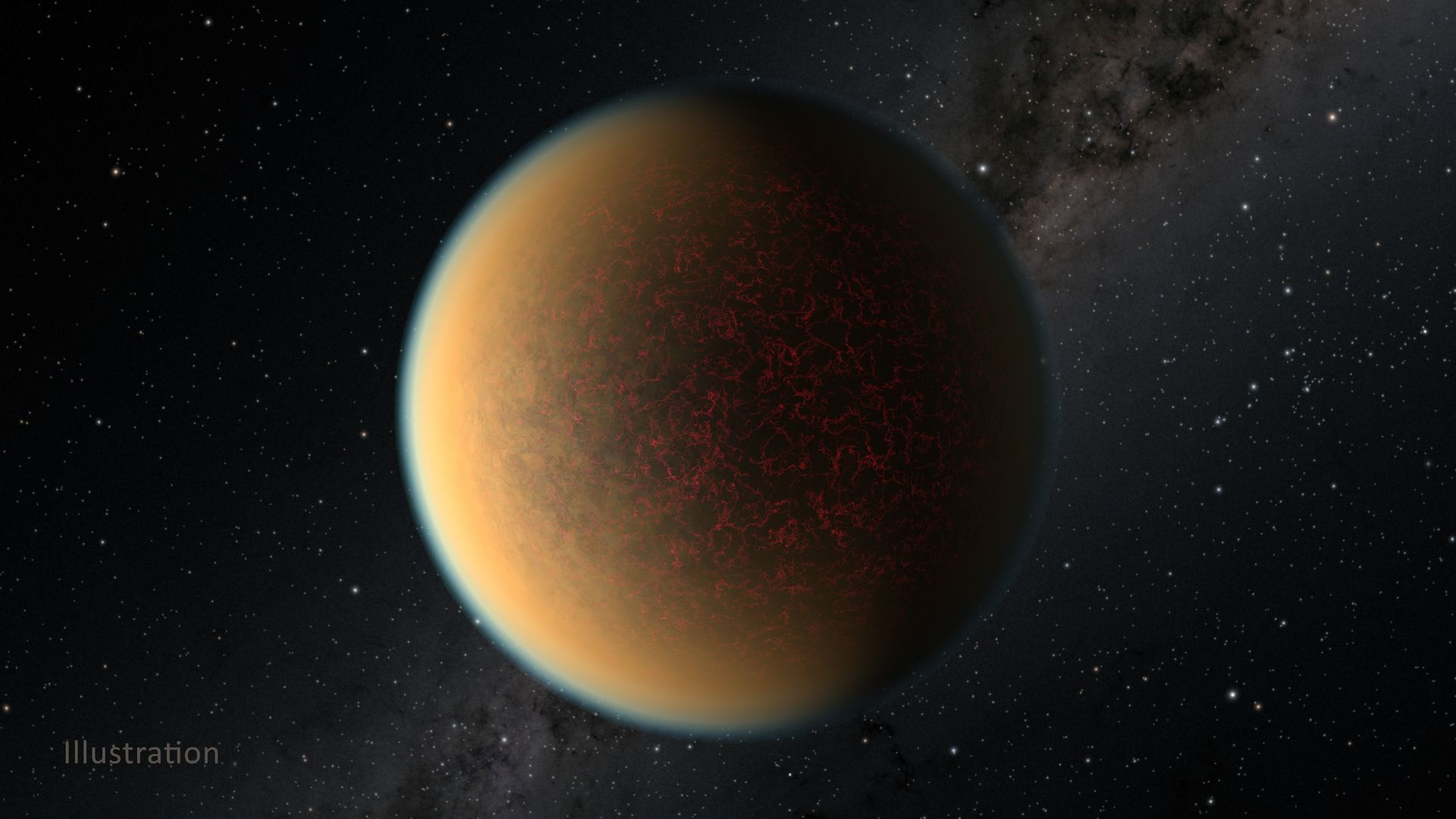
Artist's illustration of GJ 1132 b. Image: NASA/ESA/R. Hurt
A planet about 41 light-years from Earth lost one atmosphere but may have developed a new one.
Why it matters: Astronomers are increasingly finding that even distant planets whose features seem easy to explain are actually more complicated than initially expected, hinting at the vast diversity of planets in the universe.
Details: The planet — named GJ 1132 b — was once enveloped in a thick hydrogen atmosphere that was lost to space because of extreme radiation coming from its host star.
- But now, according to observations from the Hubble Space Telescope, the planet appears to have lost that thick atmosphere only to develop a new one thanks to volcanic eruptions.
- "We first thought that these highly irradiated planets could be pretty boring because we believed that they lost their atmospheres," Raissa Estrela, an author of a new study about the planet in The Astronomical Journal said in a statement.
- "But we looked at existing observations of this planet with Hubble and said, 'Oh no, there is an atmosphere there.'"
The big picture: GJ 1132 b and Earth have similar densities, ages and sizes, but the two planets are far from twins, according to NASA.
- The distant planet orbits very close to its relatively small red dwarf star, circling it once every 1.5 Earth days.
- The world's new atmosphere is also effectively poison — composed of hydrogen cyanide, methane and other gases.
5. Out of this world reading list
Photo: NASA/ESA/R. Humphreys
"Moon Registry" catalogs human heritage left behind on lunar surface (Robert Pearlman, Collectspace.com)
Relativity Space wins U.S. military contract for 2023 launch (Sandra Erwin, SpaceNews)
Who would kidnap a space telescope? (Marina Koren, The Atlantic)
Researchers propose plan to create lunar biological repository for humans (Bryan Walsh, Axios)
A giant star in deep space is obscured by dust (Axios)
6. Weekly dose of awe: Mars rocks
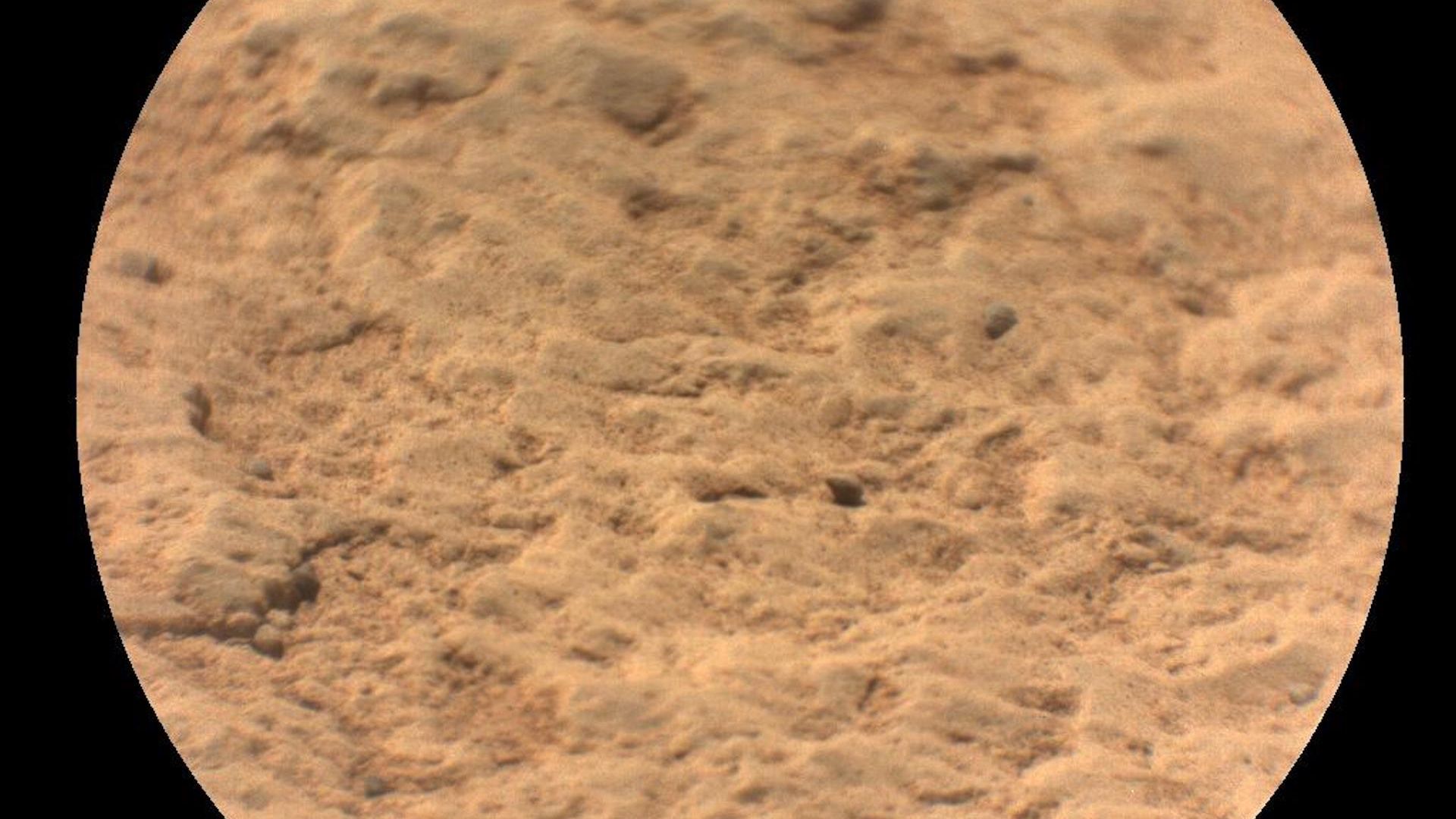
Photo: NASA/JPL-Caltech/LANL/CNES/CNRS
The Perseverance rover is already getting to work on Mars.
- The rover snapped this close-up photo using its SuperCam instrument of a rock target named "Máaz," the Navajo word for Mars.
- Perseverance was 10.4 feet from Máaz when this image was taken, and the field of view is about 2.3 inches in diameter, according to NASA.
- Analysis shows that Máaz "is either an igneous rock or consists of fine grains of igneous material that were cemented together in a watery environment," NASA said in a statement.
Go deeper: Listen to the SuperCam laser on Mars
Big thanks to Alison Snyder, David Nather and Sheryl Miller for editing this week’s edition and Margaret for contributing. And happy birthday to my little brother. If this email was forwarded to you, subscribe here. 🛰