Axios Seattle

March 19, 2026


It's Thursday! Spring is in the air — even if we were building snowmen just last week.
🌧️ Today's weather: Light rain, with a high of 55 and a low of 52.
Today's newsletter is 864 words, a 3.5-minute read.
1 big thing: 🌳 Cherry blossoms near peak bloom
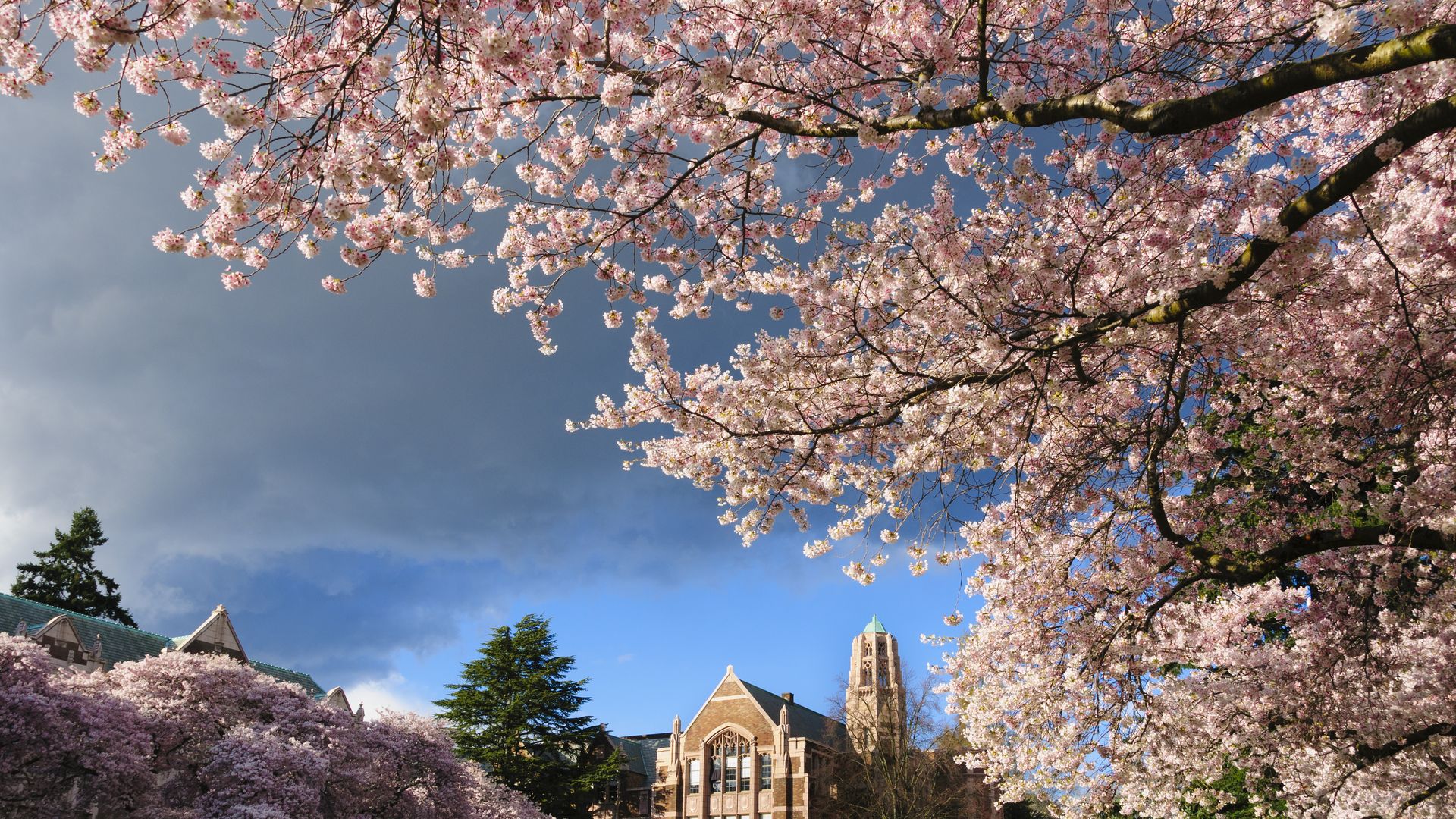
One of Seattle's most photogenic seasons is here — and if you time it right, you can catch cherry blossoms in bloom across much of the city over the next few weeks.
Why it matters: After a long, dark winter, the blossoms can feel like a citywide celebration — drawing people outside for pictures, picnics and a reminder that spring in Seattle is worth the wait.
The big picture: Cherry trees are blooming across Seattle right now, not just at the University of Washington but along boulevards, in parks and on residential blocks.
Zoom in: The Quad's iconic Yoshino trees are expected to reach peak bloom this weekend or early next week, when about 70% of blossoms are open, UW researcher Marlee Theil told Axios.
"This season has been unusual, with an exceptionally mild winter followed by a late cold snap and snow," Theil said. "Those temperature swings can slow bud development, and we're seeing that reflected in the trees now."
- If temperatures stay cool, the transition to full bloom could be gradual, while a stretch of warmer days could speed things up.
- "The blossoms are very sensitive to short-term weather," Theil told Axios, adding that real-time observations are now more reliable than early-season predictions.
Other species across the campus and city — including Kwanzan and Mt. Fuji cherries — typically bloom later, extending the season into April.
- Popular and less crowded alternatives to UW include Lake Washington Boulevard; Kobe Terrace (CID); Bellevue Downtown Park; Point Defiance (Tacoma) — plus quieter streets in Capitol Hill, Laurelhurst and beyond.
Between the lines: Recent UW research shows peak bloom has shifted about two days later per decade since the 1960s, a signal of climate change — but timing still varies year to year.
- Milder winters, like this one, can actually delay blooms because trees take longer to build up the cold they need before flowering.
The bottom line: You don't need perfect timing — or a trip to the Quad — to catch the show.
- The blossoms are popping across the city, and if you miss one wave, another isn't far behind — even if you're just watching online.
2. Delivery by bike

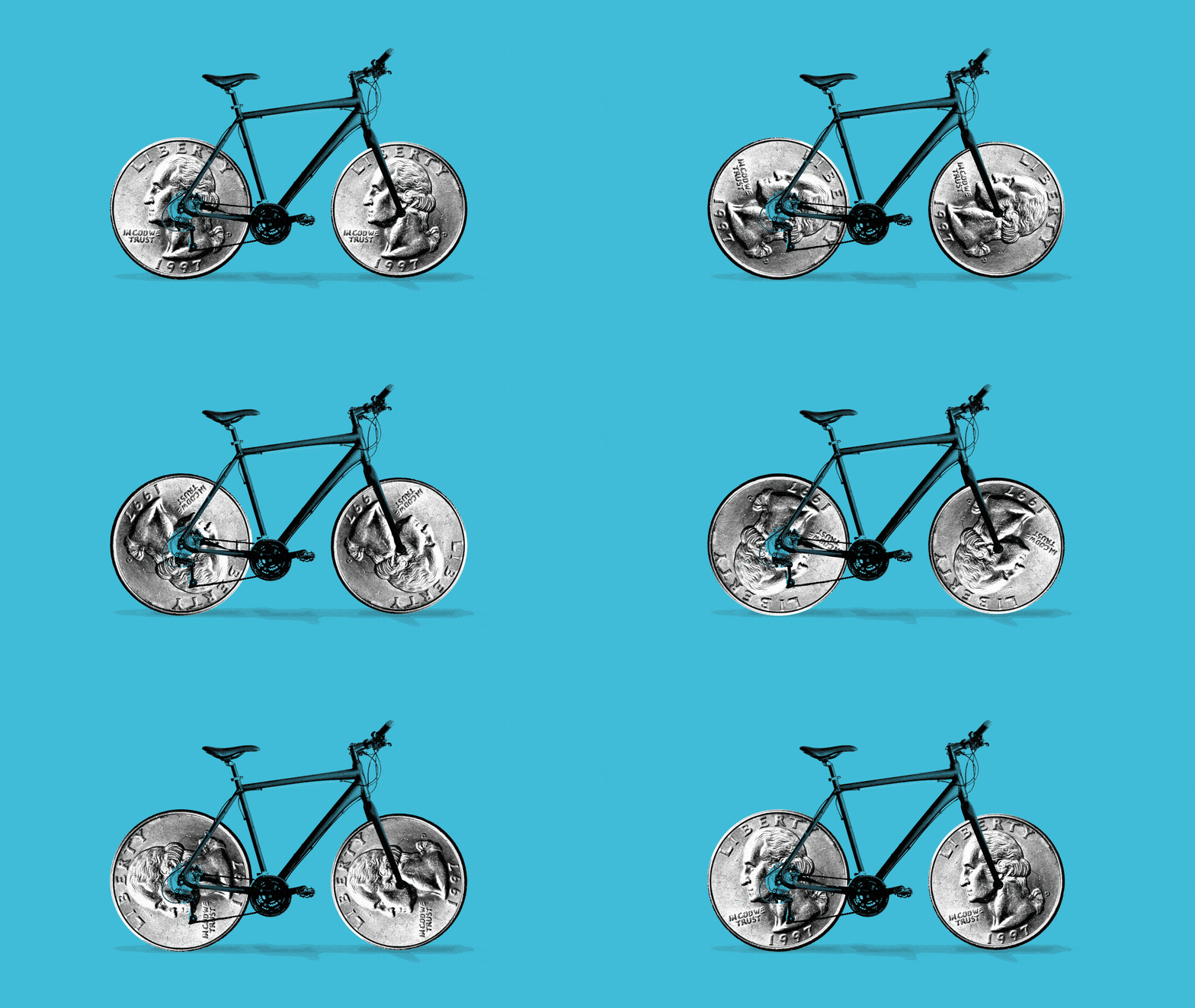
Seattle ranks among the top U.S. cities for DoorDash deliveries made with two-wheeled vehicles instead of cars.
Why it matters: Bikes, scooters and e-bikes are typically cleaner and quieter than cars — plus they don't contribute as much to road congestion.
- They also offer a lower cost of entry for people trying to earn a living or side-cash through gig work.
Zoom in: Among big U.S. cities in 2025, two-wheelers were used for the greatest shares of deliveries in San Francisco (72%), Seattle (66%) and San Jose (64%), per DoorDash's "2026 Two-Wheeled Progress Report."
- High bike use among gig workers in any given city can indicate good bike infrastructure.
3. Morning Buzz: 💥 Chihuly glass rampage

🚨 A person was arrested after allegedly smashing glass sculptures in the outside grounds of the Chihuly Garden and Glass museum, causing more than $240K in damage. (Seattle Times)
Gov. Bob Ferguson won't issue a proclamation recognizing César Chávez Day on March 31, following a New York Times report on allegations that the labor leader sexually abused two girls and fellow organizer Dolores Huerta.
- Seattle city officials say they will also consider renaming a park that bears Chávez's name. (KING 5)
🌆 Seattle ranks No. 3 among U.S. metros for AI growth in a new CoworkingCafe analysis of job postings, pay and industry concentration. (GeekWire)
🏒 After a 6-2 loss to the Lightning earlier this week, the Kraken are clinging to a Western Conference wild card spot heading into tonight's game against the Predators. (Yahoo News)
4. 🏞️ All hail, Olympic National Park

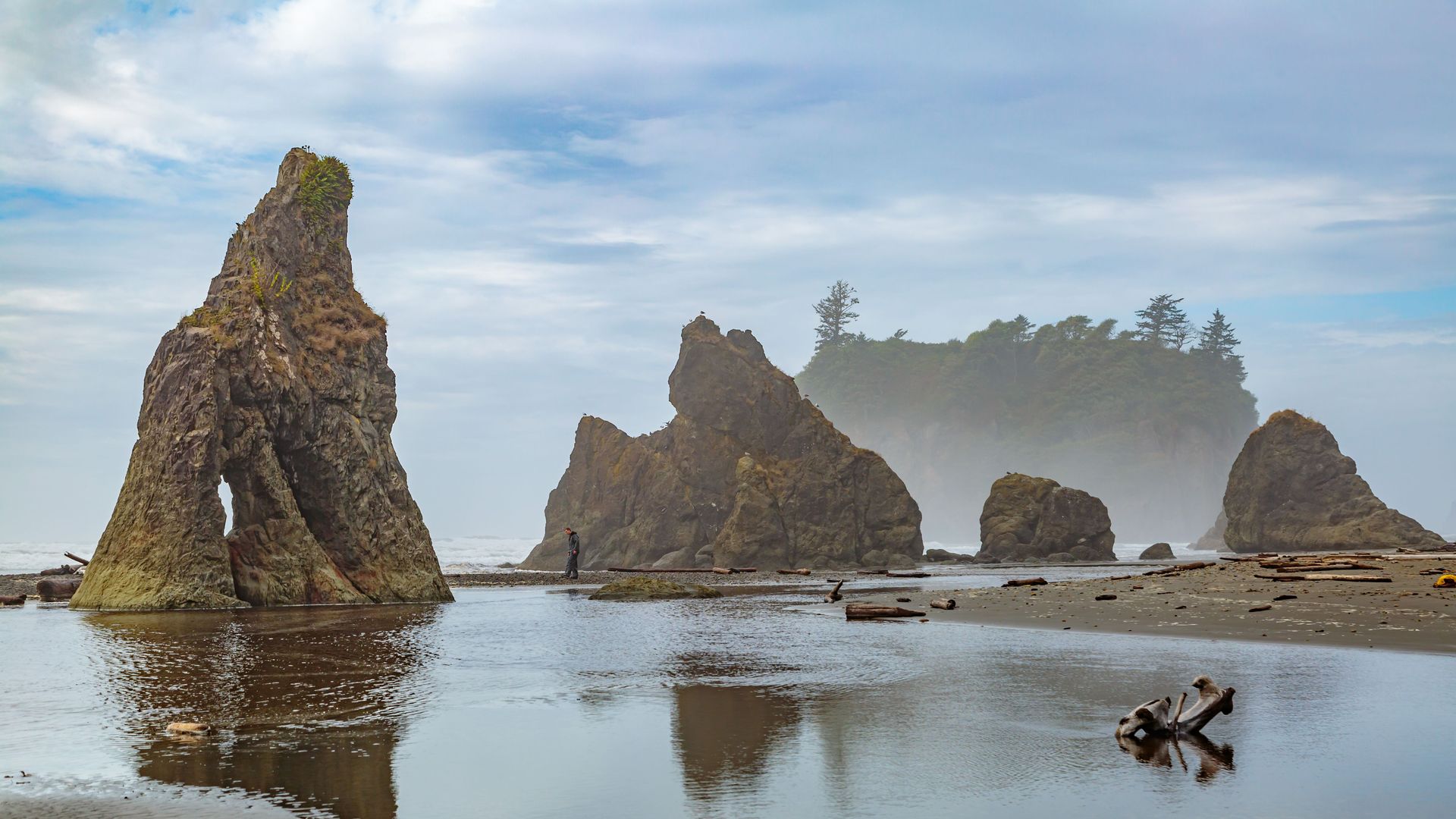
Olympic National Park again ranked among the 10 most visited national parks last year.
About 3.6 million visitors passed through the gates at Olympic National Park in 2025, a small decrease from the prior year, according to new National Park Service tallies.
- The slight drop in visitors may be related to last year's temporary closure of the Hoh Rain Forest, one of the park's main attractions.
- The Hoh area was closed from December 2024 to May 2025 after heavy rains washed out the sole access road to that part of the park.
The big picture: The top 10 national parks in 2025 were:
- Great Smoky Mountains National Park, Tennessee and North Carolina (11.5 million visitors)
- Zion National Park, Utah (4.9 million)
- Yellowstone National Park, Wyoming (4.7 million)
- Grand Canyon National Park, Arizona (4.4 million)
- Yosemite National Park, California (4.2 million)
- Rocky Mountain National Park (4.1 million)
- Acadia National Park, Maine (4 million)
- Grand Teton National Park, Wyoming (3.8 million)
- Olympic National Park, Washington (3.6 million)
- Glacier National Park, Montana (3.1 million)
🤞 Melissa is still trying to visit Olympic National Park, after her plans last year were thwarted by the Upper Hoh Road closure.
👩🏻🌾 Clarridge is making the most of the wet ground and getting some weeding done.
This newsletter was edited by Geoff Ziezulewicz, who found Olympic National Park's Mount Storm King hike to be the best (and toughest) he's ever done.
Sign up for Axios Seattle
