Axios San Francisco

February 19, 2025

👋 Thanks for joining us this Wednesday.
🌥️ Today's weather: Partly sunny. High around 60, low in mid 40s.
🎂 Happy birthday to our Axios San Francisco member Julie Richter!
Today's newsletter is 862 words— a 3.5-minute read.
1 big thing: 🍻More bars in downtown
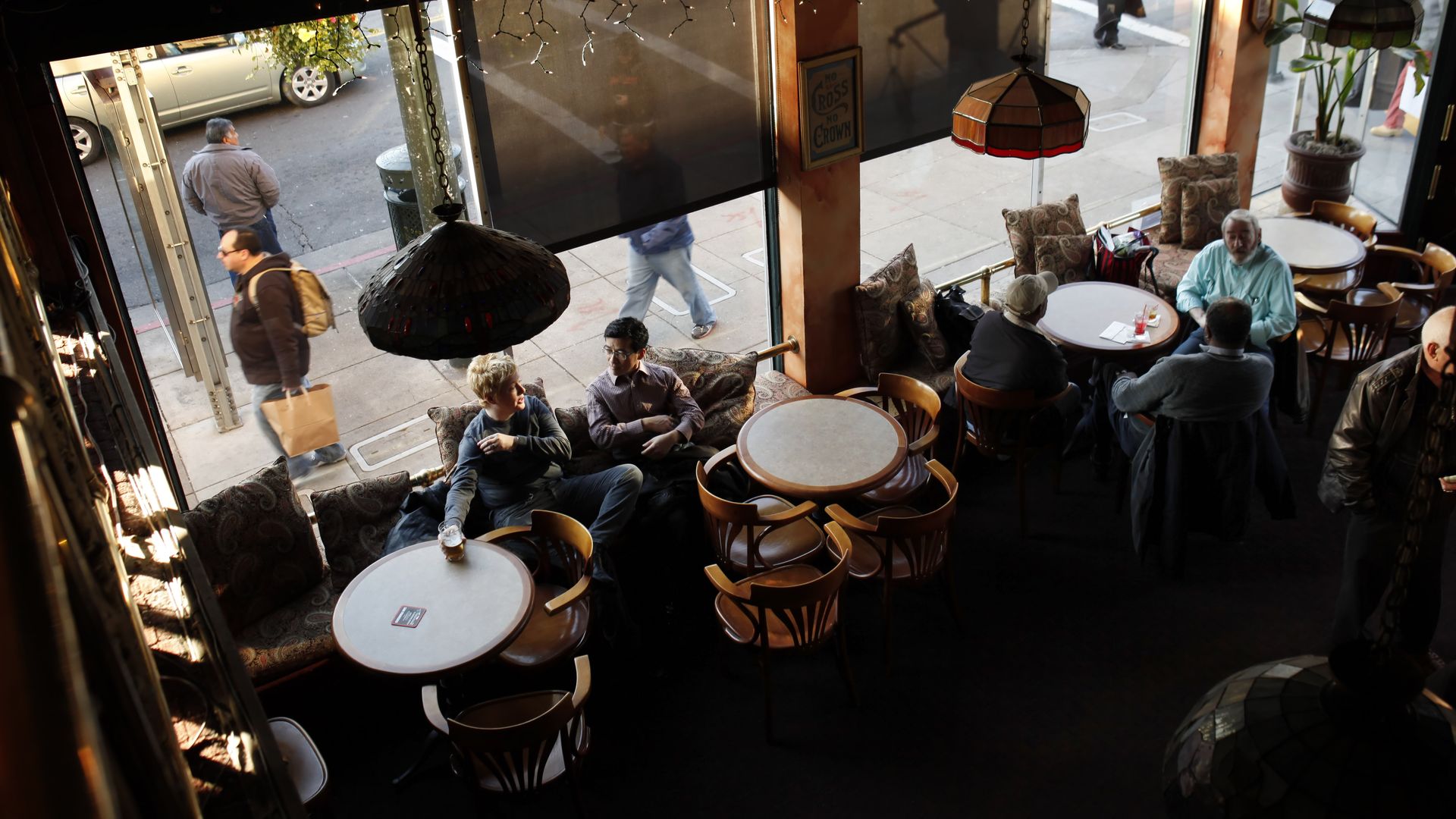
San Francisco leaders are hoping more restaurants and bars in the city's struggling tourist areas will help lead downtown's recovery.
Driving the news: Sen. Scott Wiener on Tuesday announced legislation that would create 20 new "low-cost" liquor licenses for hospitality zones in downtown SF around areas like the Moscone Center, Yerba Buena Gardens and Union Square.
Why it matters: Liquor licenses can be difficult to acquire in California because there is a per-county limit, creating fierce competition in the secondary market that can financially burden new businesses.
- Since a new business must purchase a liquor license from another license holder, costs can be as high as $200,000 or more, according to Wiener.
What they're saying: "We should be making it easier, not harder, for businesses to set up here," Mayor Daniel Lurie, who is partnering on the legislation, said on Tuesday.
- Amy Cleary, with the Golden Gate Restaurant Association, is supportive of efforts to encourage new restaurant openings, but added that it's also important to find ways to "support existing businesses who have made significant economic investments in San Francisco."
How it works: Senate Bill 395 would create a new type of liquor license with a one-time cost of $20,000 for businesses in specifically-designated areas that contain at least one million square feet of retail shopping space.
- Annual fees, and an application fee – which could cost up to $19,315 – must also be paid.
- Wiener's bill is partly modeled after a law passed in 2016 that created Type 87 licenses, which helped more businesses open in certain neighborhoods like Portola, Bayview and Outer Sunset where the licenses are restricted to.
Between the lines: The announcement follows what Wiener called a "very successful weekend" of events marked by a large celebratory Lunar New Year parade and NBA All-Star festivities that brought a $350 million economic boost and hundreds of thousands of people to the city.
- "We see that when you give people a reason to be downtown, they go downtown," Wiener said.
2. 🤒 Flu-related deaths on the rise

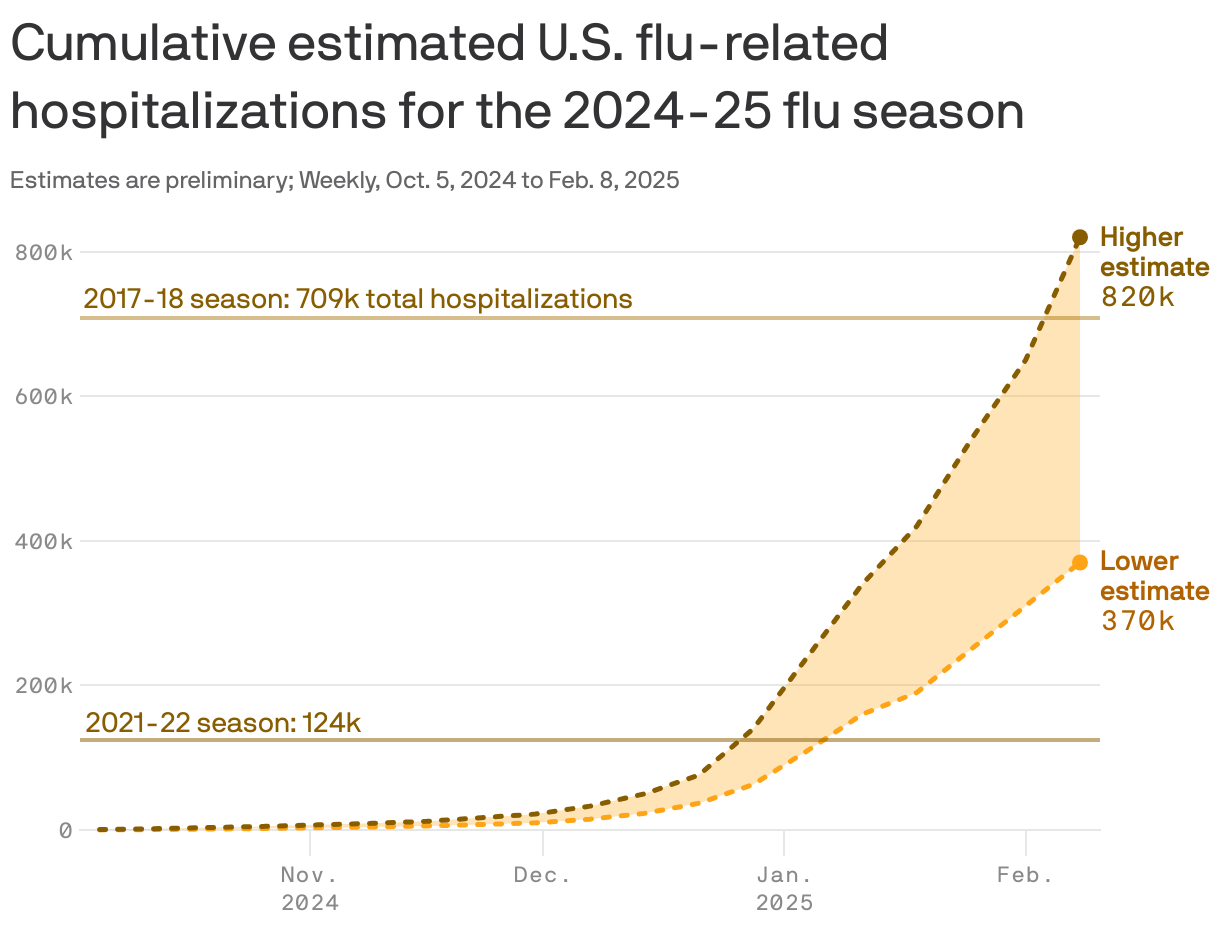
At least 11 children in California have died from flu-related illnesses this winter amid the nation's worst flu season in 15 years.
Why it matters: The virus is causing more severe complications and hitting young children especially hard. In California, it has also resulted in more hospitalizations than COVID-19 this winter for all age groups, per the state health department.
Zoom in: Flu test positivity here was "very high" for the week ending on Feb. 8, with the rate nearing 27%, the latest state data shows.
- California's rate of flu-related deaths, which had hovered around a peak of 1.5% in the four years prior, also shot up to more than 3% that week.
Yes, but: Fewer Californians have received the seasonal flu vaccine than in years past, CDPH notes.
The big picture: This flu activity is classified as a "high-severity" season, with estimates of at least 29 million cases, according to the latest CDC data.
The bottom line: Experts are urging those who haven't yet been vaccinated to do so as soon as possible.
3. The Wiggle:💰Homeless nonprofit cashes big check

🪧Hundreds of people marched in front of the Tesla Dealership on Van Ness Ave. on President's Day in protest of President Trump and billionaire Elon Musk's efforts to shrink the federal workforce. (SF Chronicle)
💰Former NBA star Charles Barkley will donate $250,000 to the GLIDE Foundation after previously criticizing the city. (ABC7)
🚍 Julie Kirschbaum was named the permanent director at the San Francisco Municipal Transportation Agency. She leads the agency amid a $322 million financial crisis and looming service cuts. (SF Standard)
4. 🔑 How long we rent


About 26% of San Francisco metro area renters have lived in their homes for at least 10 years, up from roughly 18% in 2013, according to a Redfin analysis of census data.
The big picture: Most U.S. renters move homes within five years, Redfin researchers found. But in 2023, roughly 34% lived in the same rental for longer than that — up from around 28% in 2013.
- In contrast, nearly 18% of renters in neighboring San José have lived in their homes for 10 or more years.
State of play: Renters moved less often than a decade ago in all of the 50 most populous U.S. metro areas, the analysis shows.
- Many are staying put in their rentals because of high homeownership costs.
- Others prefer the amenities or flexibility that apartments offer.
Between the lines: Homeowners are also hunkering down, with more than a third saying they'll never sell their houses, a recent Redfin survey shows.
The bottom line: Younger people are more likely to relocate on a regular basis than older people.

5. 🎾 For the calendar: Summer programs
Looking to involve your kids in a fun activity this summer?
Driving the news: The city is holding its annual Summer Resource Fair this Saturday at the County Fair Building, where you'll find representatives from 100 summer programs, camps and services for K-8 youth.
The latest: Exhibitors include capoeira arts center ABADÁ-Capoeira San Francisco, the Young Actors' Theater Camp, trampoline facility House of Air, science and nature summer camp Tree Frog Treks and Project Avary, a nonprofit that supports children with incarcerated parents.
If you go: Open from 11am-2pm at 1199 9th Ave.
😋 Shawna immensely enjoyed being a taste-tester for her younger sister's first go at homemade shaved ice.
✈️ Nadia is on vacation and returns next week!
😳 Claire is still thinking about the Boston Dynamics robots throwing basketballs into the crowd at the Chase Center last weekend.
This newsletter was edited by Ross Terrell.
Sign up for Axios San Francisco