Axios San Antonio

April 26, 2026

Happy Sunday, y'all.
โ๏ธ Today's weather: Mostly cloudy, with a high around 90.
๐ฉบ Programming note: This special edition of Axios San Antonio dives into the future of health care.
- Find these stories here.
Today's newsletter is 996 words โ a 4-minute read.
1 big thing: Lessons on AI in medicine
A San Antonio dual degree program focused on artificial intelligence in medicine is training the next generation of doctors.
Why it matters: AI hit the health care field fast, and practitioners are learning new applications for the technology every day. Exploring AI gives San Antonio students a leg up by the time they get to the job market.
Catch up quick: UT San Antonio and UT Health San Antonio announced the combined doctor of medicine and master of science in artificial intelligence program in 2023, before they merged. At the time it was the first known such degree in the nation.
What they're saying: "There is virtually no part of health care that is not touched in some way by the current AI technologies," Ron Rodriguez, director of the program and professor of medical education at UT Health San Antonio, the academic health center of UT San Antonio, tells Axios.
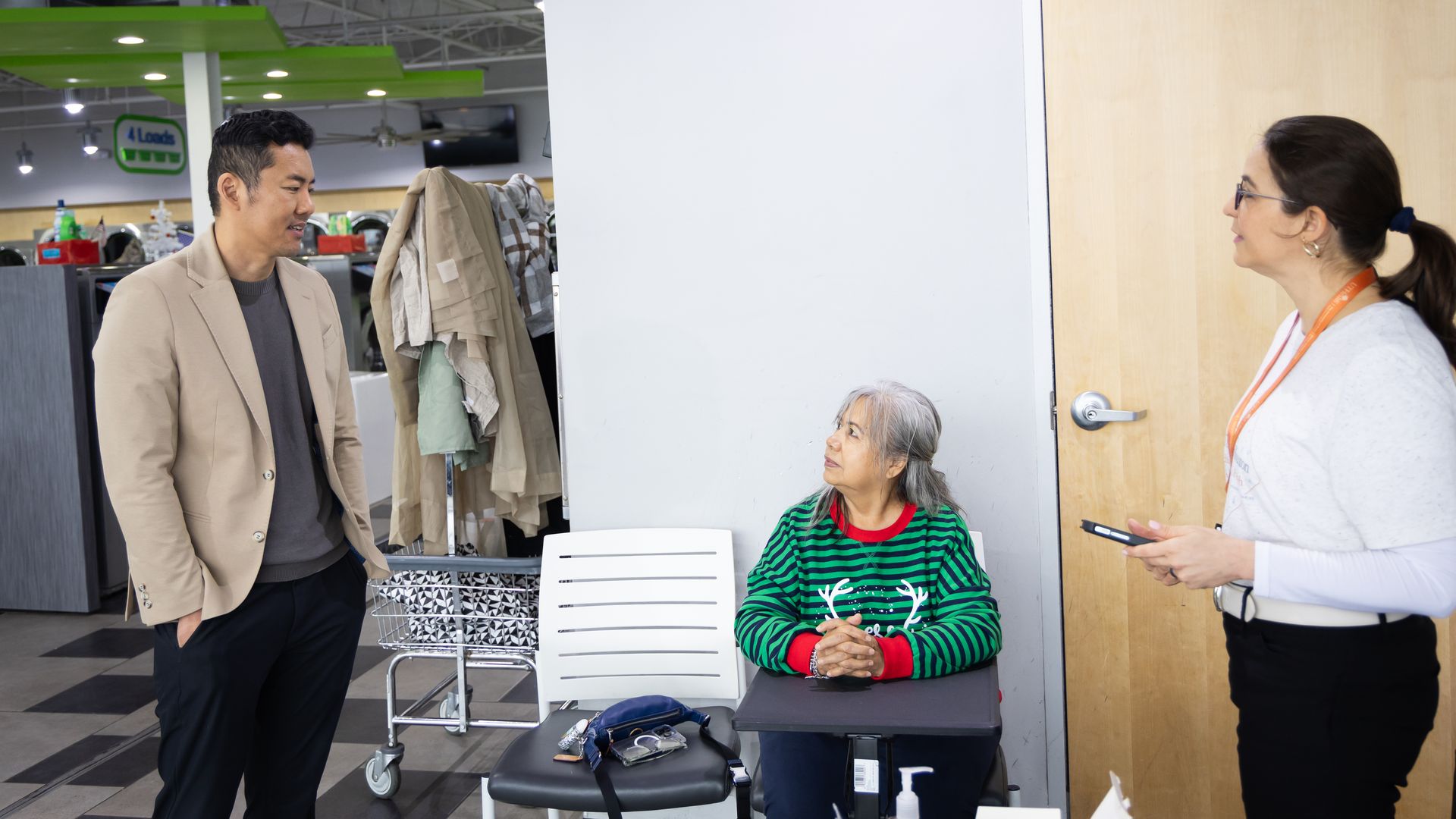
We spoke with student Chris Mao, who is set to graduate in May from the dual degree program.
- He's also an incoming internal medicine resident at UT Health San Antonio.
On what his degree has taught him about the ethics of using AI in medicine:
Mao says he's thinking about how much confidence AI bots have when they give false information (also known as hallucinations).
- "I think our generative AI course really hammered down on just how [confident] hallucinations occur, how these models are actually working behind the scenes, ways that we can help reduce these hallucinations."
- "And how these services are also not necessarily safe for you to put all the patient information" into.
On what he wishes people knew about AI use in medicine:
"I hope that they don't think that AI is making all the decisions behind the scenes. It is true that a lot of doctors and a lot of trainees are using AI โฆ But at the end of the day, we go through medical school and go through all of our training because we really want to understand the pathologies, help take care of our patients and really do what is best."
2. ๐งบ Health care at laundromats
A San Antonio program offering basic health screenings inside laundromats is expanding after landing $1.1 million to grow its reach.
Why it matters: Supporting Prevention in Neighborhoods (SPIN) meets people where they are to screen for conditions that often go untreated.
Driving the news: The Baptist Health Foundation of San Antonio awarded the grant to the UTHealth Houston School of Public Health to expand SPIN over the next three years.
- Jack Tsai, professor of public health at the school, has spent the past two years piloting pop-up clinics in San Antonio laundromats.
- Now, it's scaling from a few locations to about 12 across the city, with several launching in recent days.
- SPIN partners with SpinXpress and plans to expand to additional smaller laundromats across San Antonio.
How it works: Teams offer quick screenings for blood pressure, diabetes and mental health inside laundromats.
- Participants get results within minutes. If needed, patients are referred to low-cost or free care options across the city.
The latest: The next phase will also help people access care.
- "We will not only be doing health screenings but providing health education and then working closely with our partner, University Health, to navigate them to care with a specific focus on diabetes," Tsai tells Axios.
Threat level: During the pilot phase, researchers found participants had hypertension rates roughly twice as high as the broader Bexar County population, along with slightly higher rates of diabetes.
What they're saying: "We think the work is important because it engages underserved communities and catches them when they have idle time," Tsai says.
3. Tackling diabetes and dementia
Two new UT Health San Antonio initiatives are targeting Alzheimer's and diabetes with a focus on earlier detection and better treatment.
Catch up quick: UT Health San Antonio opened the Center for Brain Health last November โ a new facility housing the Glenn Biggs Institute for Alzheimer's and Neurodegenerative Diseases โ and launched the Center for Excellence in Diabetes in March.
Brain health
๐ง Researchers aim to detect dementia years before symptoms appear โ using blood tests, advanced imaging and other diagnostics โ while studying genetic drivers and potential treatments.
- Black Americans are about twice as likely as white Americans to develop Alzheimer's; Hispanics are about 1.5 times as likely, according to the Alzheimer's Association.
- In Bexar County, 13% of the 65-and-up population has Alzheimer's. In many border counties, that percentage is more than 16%, outpacing the national rate of 11%.
Diabetes
๐งช The new center focuses on improving care and expanding clinical trials for type 2 diabetes.
- 1 in 6 San Antonio adults has diabetes. Of those cases, more than 95% are diagnosed with type 2, per UT Health.
4. ๐ต How much health insurance costs Texans

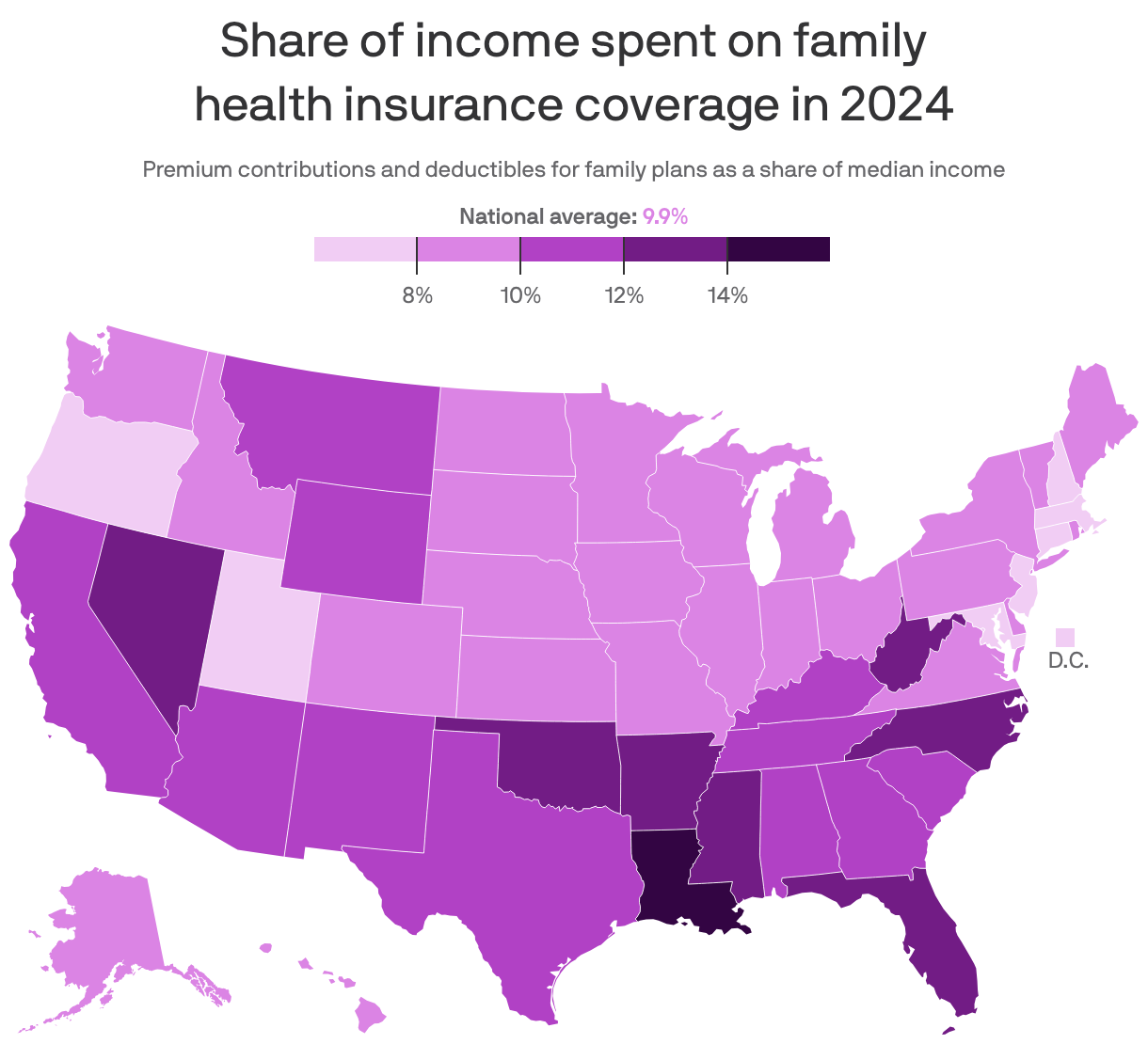
Health insurance costs ate up 10% or more of median family income in 19 states including Texas, according to a recent analysis.
Why it matters: The findings show how tough it can be to afford health care, even with insurance.
How it works: The state-by-state breakdown of federal data by the Commonwealth Fund looked at how much people spent on premiums โ their contribution to the cost of their insurance โ and on deductibles, their out-of-pocket costs before insurance starts to pay for medical services, in 2024.
What they found: Texans spent 11% of their income on premiums and deductibles.
The big picture: Health costs are expected to keep rising due to hospital consolidation, higher prices for medical services and supplies, GLP-1 drugs and more demand for behavioral health care, researchers said.
Thanks to our editors Astrid Galvรกn and Bob Gee.
โค๏ธโ๐ฉน Madalyn and Megan are stunned by this stat: Nearly 13 million Americans are providing unpaid care for someone with dementia.
- The value of that care tops $446 billion, more than 17 times McDonald's annual revenue.
Sign up for Axios San Antonio