Axios Salt Lake City
May 13, 2026

It's Tuesday and National Frog Jumping Day — a great time to revisit this cinematic gem. 🐸
- 🌧️ Today's weather: Partly sunny then slight chance of showers and thunderstorms, high of 90, low of 53.
Today's newsletter is 948 words — a 3.5-minute read.
1 big thing: No residence, no seat
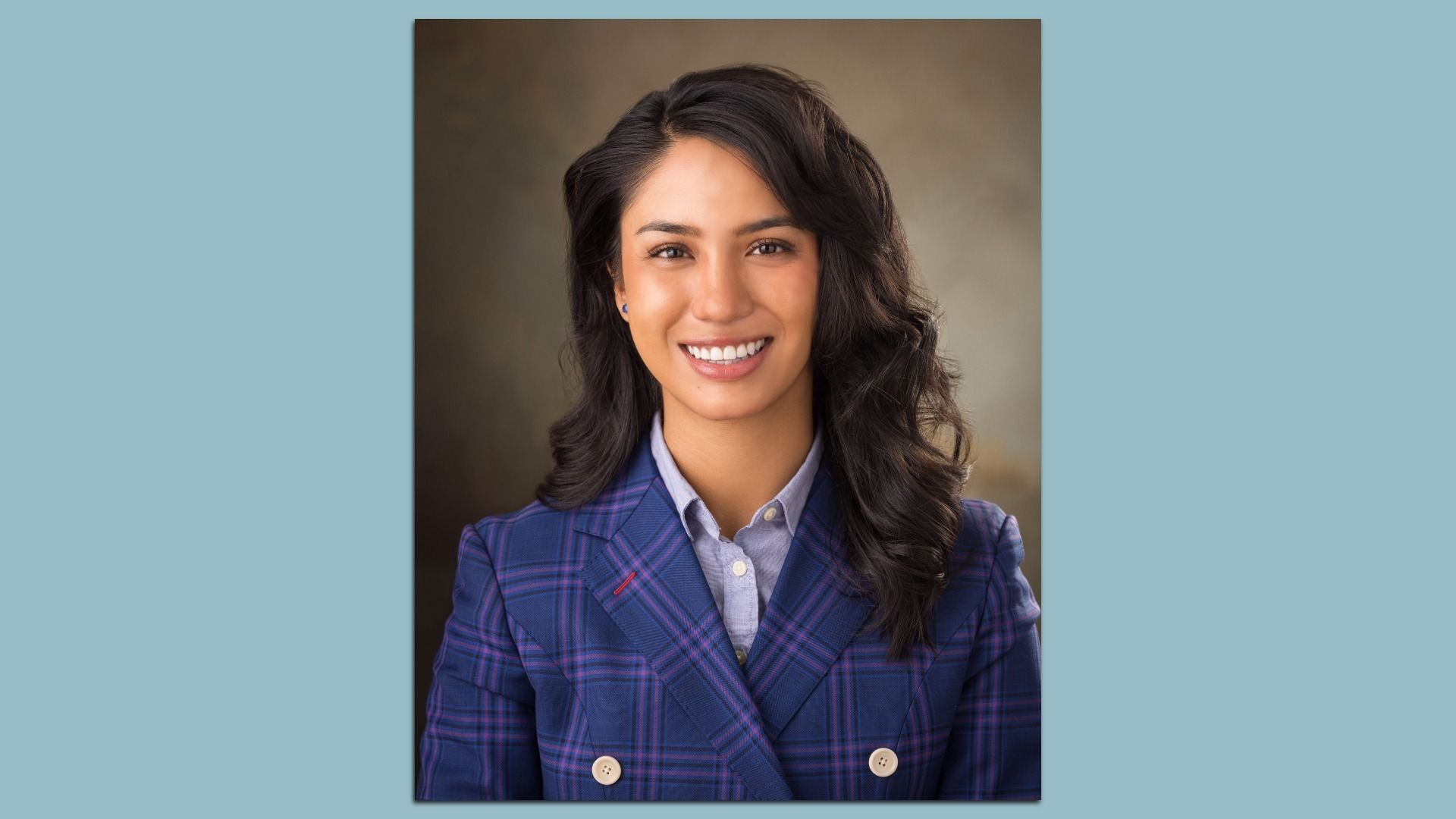
A city investigation released yesterday found that Salt Lake City Council Member Eva López Chávez does not live in her district, rendering her seat vacant.
State of play: The probe stemmed from a complaint filed last month by a constituent questioning whether López Chávez lived at the house she purchased last September in District 5 for $640,058.
- She was elected in 2023 to represent District 4, which encompasses downtown.
The big picture: The first-term council member faced heavy scrutiny after jumping into Utah's 1st Congressional District race. She failed to qualify for the ballot in that race last month.
- López Chávez was accused of sexual harassment by four people — including fellow City Council Member Victoria Petro — last month, according to reporting from the Salt Lake Tribune and KSL.
- The city launched a separate investigation into those allegations, which López Chávez has denied.
- It's unclear whether that investigation will continue.
How it works: State law and city ordinance require municipal officeholders to live in the district they represent.
The latest: Salt Lake City recorder Keith Reynolds said in an email to López Chávez yesterday that he determined she no longer lives in District 4 and instead has made the District 5 home her primary residence.
- Reynolds noted that López Chávez didn't respond to the city attorney until nearly a week after his May 1 query relaying the allegation.
The other side: According to the clerk's report, López Chávez, through lawyers, told the city attorney's office she moved out of her District 4 home last December and has not had a "principal place of residence" since then due to "unforeseen financial circumstances and the rigors of the congressional campaign."
- She said she split her time between multiple properties, including her campaign manager's home in District 4, the property she purchased in District 5, which served as her campaign headquarters, and her parents' and other friends' homes.
What they're saying: "I came into public service to stand up for working families, immigrants, small business owners, tenants, seniors, and communities too often left behind. That fight does not end with a title or a seat," she said in a statement to Axios.
- Her attorneys noted they disagreed with the city's findings and are "reviewing all available remedies."
What's next: The council has 30 days to fill the vacancy and is expected to accept applications and vote on an appointee
2. Old News: Keep out

In the early 1910s, Sugar House was booming — and racist.
- This is Old News, where we trace the maps of Utah's past.
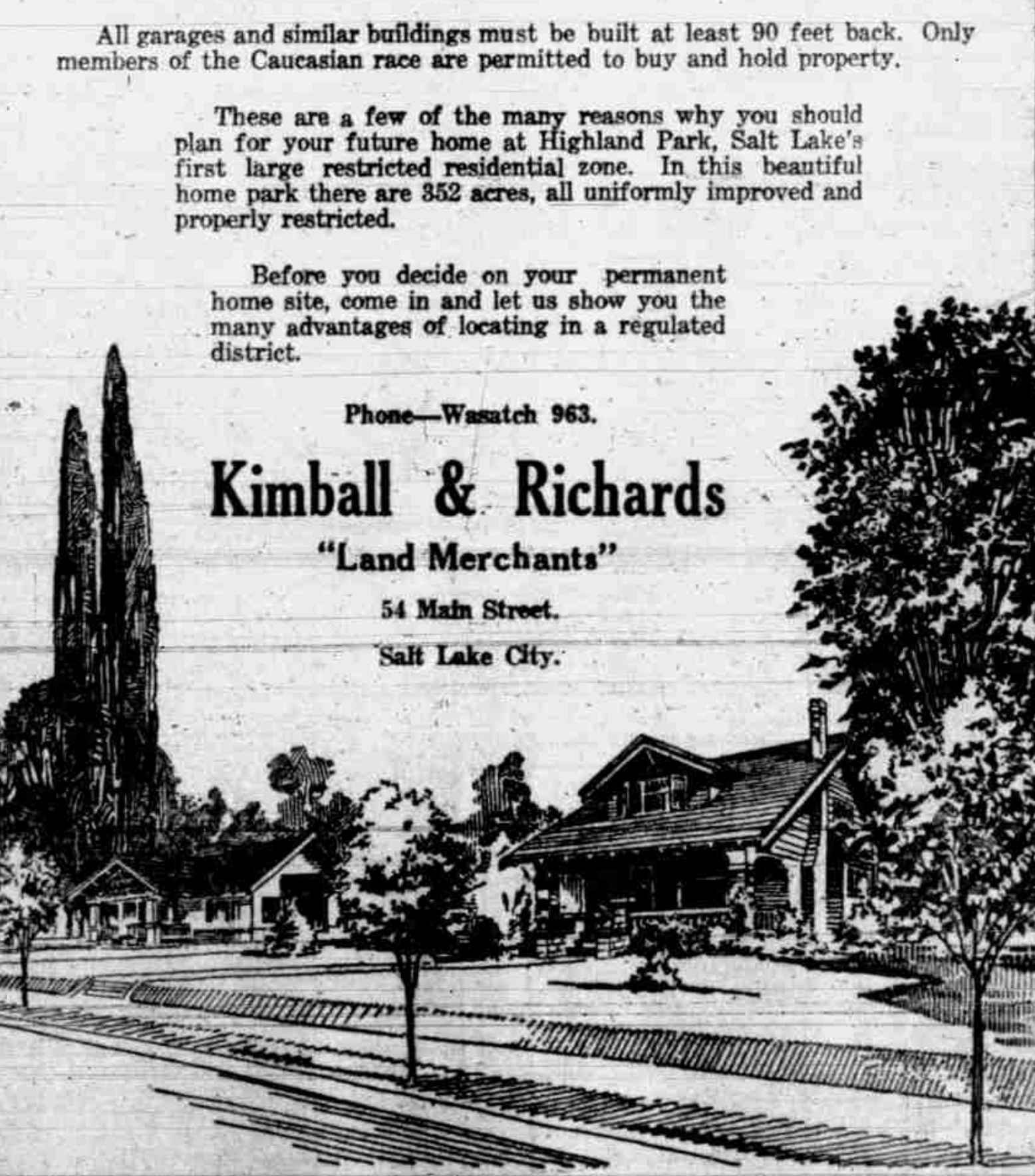
What drove the news: 113 years ago this week, housing developers began promoting whites-only housing contracts in Salt Lake.
- The developer of Westmoreland Place, now an affluent historic district near 1500 East and 1300 South, was the first to announce racist restrictions.
What they said: "This idea seems to be proving very satisfactory to would-be home builders," the Salt Lake Tribune reported in 1913. "This system of selling residence sites has been tried out in southern California with great success."
- Buyers gobbled up the lots in the following weeks, by what the newspaper described as "a better class of people."
Zoom out: The restrictions spread south, to Highland Park, where the developer Kimball & Richards bragged that such "building regulations protect your home."
The big picture: Once those contracts effectively segregated SLC neighborhoods, the city was "redlined" in the 1930s.
- The federal Home Owners' Loan Corp. drew up maps that labeled white neighborhoods "desirable" and others "hazardous" for lenders.
- That blocked families of color from homeownership and prevented investment in those communities, creating racial divides that persist today in many U.S. cities.
The latest: Racist housing covenants haven't been legally enforceable since the 1960s, but the language still appears on some property records.
- Lawmakers in 2021 created a mechanism for county recorders to revise the documents at homeowners' request.
3. Fry Sauce: Homelessness declines

🏘️ For the first time in recent history, the number of Utahns experiencing homelessness declined year-over-year, per state data. (Utah News Dispatch)
🚨 An Oregon police officer who previously worked in West Valley City was fired after body cam footage showed him making racist comments in a conversation with a former colleague in Utah. (FOX 13)
- The colleague, a Grantsville officer, is now under investigation in connection to the call, KUTV reports.
🎣 Utah wildlife officials are urging anglers to cast their lines now, warning that the state's ponds and lakes probably won't have enough water to support the usual number of fish this summer. (KUER)
4. 🥤 Chains jump on the dirty soda bandwagon
Many fast-food giants and coffee chains are drawing inspiration from Utah's dirty soda culture to reinvent their drink menus — betting beverages can drive visits all on their own.
Why it matters: Drinks are becoming one of the most profitable and fastest-growing parts of the restaurant business, as consumers look for small, affordable treats.
The latest: In recent weeks, major chains have rolled out drink-heavy strategies:
- McDonald's recently launched six specialty drinks, including refreshers with boba and crafted sodas like the Sprite Berry Blast — a lineup designed for "every mood and moment."
- Dunkin' debuted new refreshers, a dirty soda and frozen coffee drinks designed for "playful" customization.
- Wendy's also launched a lineup of watermelon drinks, including a lemonade, sparkling energy beverage and a Sprite-based option.
🎭 Erin loves it when actors in the ads for dumb phone games really give it their Laurence-Olivier best.
🍷 Kim went to Copper Common with old friends last night.
This newsletter was edited by Jessica Boehm.
Sign up for Axios Salt Lake City