Axios Pro Rata

March 02, 2026

🗓️ Save the date: Axios BFD returns to NYC on November 17. Can't wait to do it again!
Top of the Morning
Anthropic has raised more than $60 billion from over 200 "venture capital" investors, half of which came just last month.
- That massive investment is now at risk due to a contract dispute with the Pentagon that's become as much about ego as AI.
Catch up quick: Anthropic and the Defense Department on Friday failed to reach agreement on a long-term deal for the military to continue licensing Anthropic's AI models, as it has done in both the Venezuela and Iran operations.
- Axios first reported on the licensing dispute several weeks ago, saying that it centered on disagreements over fully autonomous weapons and mass surveillance.
- Anthropic CEO Dario Amodei last Thursday reiterated these concerns in a blog post. For weapons, he argued that AI wasn't yet up to the task. For surveillance, he argued that the law hadn't yet caught up to the tech.
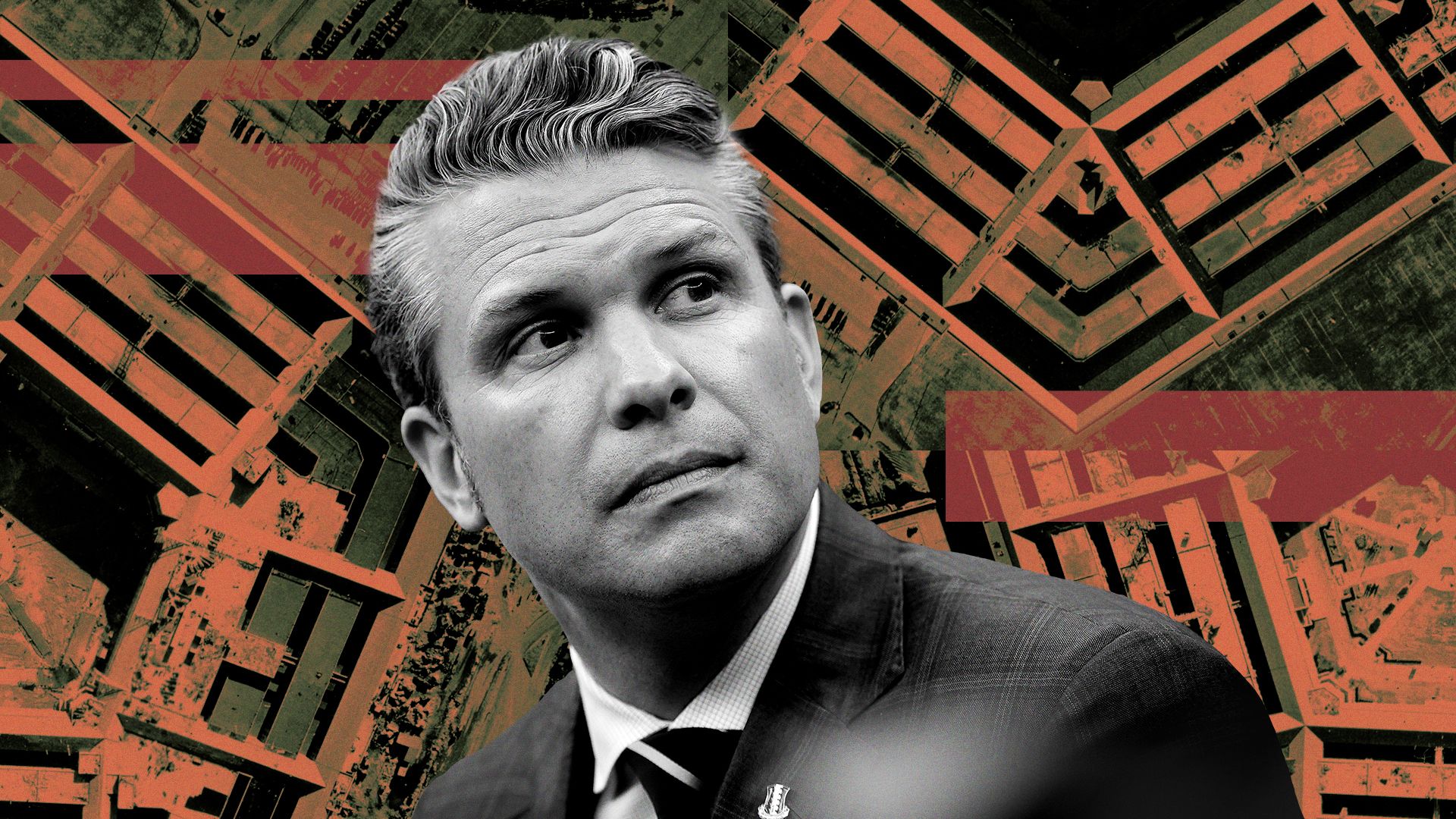
Driving the news: President Trump responded on Truth Social by directing every federal agency to cease using Anthropic technology, and Defense Secretary Pete Hegseth followed up by tweeting that he would define Anthropic as a supply chain risk to national security.
- Hegseth added: "Effective immediately, no contractor, supplier, or partner that does business with the United States military may conduct any commercial activity with Anthropic."
- Hours later, OpenAI signed the deal that Anthropic wouldn't.
Behind the scenes: Amodei's blog post is said to have infuriated Defense Dept officials, who believed he was trying to virtue signal to: (a) Anthropic employees upset about the Venezuela revelations, and (b) AI engineers at rival companies who might share similar concerns.
- The latter, they felt, could poison the well for future engagement with AI companies. Had Amodei just wanted to take his ball and go home, they felt, he should have done so more quietly.
The big picture: Designating a Silicon Valley company as a supply chain risk is unprecedented and a very blunt force tool, but arguably the best one DoD had to prevent other military contractors from deploying Claude in their applications.
- But what Hegseth tweeted went several steps beyond what that designation would require.
- For example, Nvidia does business with the U.S. military and also has commercial activities with Anthropic. Namely, it sells chips to Anthropic that are vital to the company's survival.
- DoD hasn't yet provided Anthropic with formal notice of the supply chain risk designation, which Anthropic has pledged to challenge in court, so the actual language could be much more limited than what Hegseth tweeted.
Zoom out: Venture capitalists historically avoided investing in tech startups that interacted deeply with government, outside of biotech, believing that the political and procurement variables were too volatile. In the past few years, however, many have thrown that caution to the wind.
- This situation may be chickens coming home to roost.
- Amodei stuck a finger in Trump's eye, and he responded with a series of uppercuts. It's not how U.S. presidents have historically responded to public criticism from a private company, but it's nonethess the current normal.
The bottom line: Anthropic has been at the heart of America's business narrative this year, introducing tools that could upend industries from cybersecurity to law and everything in between.
- But now it's under siege from its own government, and the fallout risks becoming an existential moment for all of American AI and its investors.
The BFD
EQT and BlackRock's Global Infrastructure Partners agreed to acquire Virginia-based power company AES Corp. (NYSE: AES).
- The equity value is $10.7 billion, or $15 per share, plus around $22.7 billion in assumed debt.
Why it's the BFD: Power demand from data centers, both current and expected, is driving investment demand.
Zoom in: CalPERS and Qatar Investment Authority are co-investors on the deal, which would see AES Indiana and AES Ohio remain locally operated and managed regulated utilities.
- Closing is expected late this year or in early 2027.
The bottom line: Private equity and its lenders are increasingly worried about what AI means for past software deals, but the industry hopes to stem some of those losses at the infrastructure level.
Venture Capital Deals
• Akave, an Austin-based enterprise cloud storage startup, raised $6.6m from Protocol Labs, No Limit Holdings, Blockchange, Lightshift, Blockchain Builders Fund, Big Brain Holdings, Avalanche Foundation, and the Filecoin Foundation. axios.link/3MGlTG9
• Inhouse, a property furnishing platform for vacation rentals, raised $5m in seed funding led by Bucketplace and New England Development. axios.link/3Ne1xEh
• Tangled, a GitHub alternative based in London and Helsinki, raised $4.5m. ByFounders led, joined by Bain Capital Crypto and insider Antler. axios.link/4r5LI0m
🚑 Outpost Bio, a developer of human microbiology models, raised $3.5m in pre-seed funding. Merantix Capital and Seedcamp led, joined by OpenSeed VC and Defined. axios.link/400pjGN
Private Equity Deals
• Bain Capital acquired Tingstad, a Swedish distributor of non-food consumables. axios.link/40DfS01
🚑 FutureLife, a European fertility group owned by CVC Capital Partners and Hartenberg, acquired U.K.-based Herts & Essex Fertility Centre. axios.link/4rJNuoW
• Macquarie Asset Management is weighing a bid for a 50% stake of SERV, an Australian land title registry from Super Aware at a A$4b enterprise value, per AFR. axios.link/4qZNKit
• Searchlight Capital Partners and Abry Partners agreed to acquire Kore (NYSE: KORE), an Atlanta-based IoT company, for $726m. axios.link/4r53ErQ
• Warburg Pincus agreed to invest up to $1b into Brazilian egg producer Global Eggs at around an $8b valuation. axios.link/4aYsyUd
🚑 Zenex Animal Health India, a portfolio company of Multiples PE, acquired a majority stake in Dutch animal nutrition company VievePharm. axios.link/3N8FVJu
Public Offerings
MiniMed, a diabetes management business being carved out of Medtronic (NYSE: MDT), is the only large U.S. IPO expected this week.
• Blackstone plans to launch a publicly traded fund for buying data centers, per Bloomberg. axios.link/3OFX39Y
• RMG ML Sports Holdings, a sports SPAC led by James Carpenter (Riverside Management), filed for a $261m IPO. axios.link/3OFXbpY
🚀 SpaceX could file confidential IPO paperwork by as early as this month, per Bloomberg. axios.link/474aLts
More M&A
• The FCC on Friday approved Charter Communications' (Nasdaq: CHTR) $34.5b acquisition of Cox Communications, which was announced last May.
• Magellan Financial Group (ASX: MFG) agreed to buy Australian investment bank Barrenjoey Capital Partners for A$1.62 billion, with sellers including Barclays. axios.link/46ziMXe
• Radiant, an AI infrastructure company formed by Brookfield Asset Management, is valued at $1.3b via after an acquisition of London-based cloud computing group Ori, per Reuters. Ori had raised nearly $300m from firms like Koro Capital, Capital Lab Ventures, Wa'ed Ventures, TedStaff Capital, Fortitude Capital, Telefónica, NextEra Energy, Atempo Growth, Service Ventures, and 6 Degrees Capital. axios.link/4r1aJcT
• Rapidus, a Japanese chipmaker, raised around $1.7b from Japan's government and companies like Canon, Development Bank of Japan, Fujitsu, NTT, SoftBank, and Sony Group. axios.link/4rLVs0Y
• Toyota (NYSE: TM) sweetened its takeover offer for Toyota Industries (Tokyo: 6201), satisfying activist investor Elliott Investment Management and setting up the largest-ever takeover of a Japanese company. axios.link/4cVXbvY
Fundraising
• Bregal Sagemount raised $3.5b for its fifth flagship PE fund. sagemount.com
It's Personnel
• Sverica Capital Management promoted Michael Dougherty to partner and Doug Patrican to principal. It also hired Matt Johnson (Archetype Holdings) as a principal. sverica.com
• Takeshi Tsubota stepped down as Apollo's head of institutional clients in Japan, per PEI. axios.link/4rRvU2C
Final Numbers


Warner Bros Discovery shares continue to trade at a double-digit discount to the $31 per share takeover price that was agreed to last week with Paramount Skydance.
- The best explanation is that some investors remain wary of regulators scuttling the deal — with lots of focus turning toward California.
- Some may also remain skeptical of Paramount's financing, despite the tight terms.
While we wait, Paramount on Friday did cut a $2.8 billion check to Netflix — covering WBD's termination fee.
- If the skeptics are correct about Paramount's deal faltering, it's theoretically possible that Netflix could return with the same (or lower) bid, plus $2.8 billion of Ellison cash in its bank account.
An alt scenario is that Netflix kicks tires on another studio like Lionsgate, although CEO Ted Sarandos called that "unlikely" in a portmortem Q&A with Bloomberg.
- Sarandos added, when asked if he expects Paramount to sell less content to Netflix: "If they are six or seven times levered, they need to make some money, and we're buyers. So I can't imagine that's going to be a problem."
📬 Thanks for reading Axios Pro Rata, and to copy editor Mickey Meece! Please ask your friends, colleagues, and AI engineers to sign up.
Sign up for Axios Pro Rata