Axios Pro Rata

January 29, 2022
Welcome to yet another Saturday—fancy seeing you here...
- 🚨 Reminder: Feel free to send me tips or comments by replying to this email or on Twitter @imkialikethecar.
Today’s Smart Brevity™ count 1,038 words ... 4 minutes.
1 big thing: The pirates are back
Illustration: Sarah Grillo/Axios
The pirates of Silicon Valley are back. This time they’re armed with digital tokens and blockchains — and the Bay Area address is optional.
Why it matters: The so-called “Web3” category of technologies is not only an opportunity to rebuild the internet, as its evangelists say. It's also an opportunity for the tech industry's VCs and entrepreneurs to reclaim their status as the underdogs after years of discomfort with being part of the new establishment.
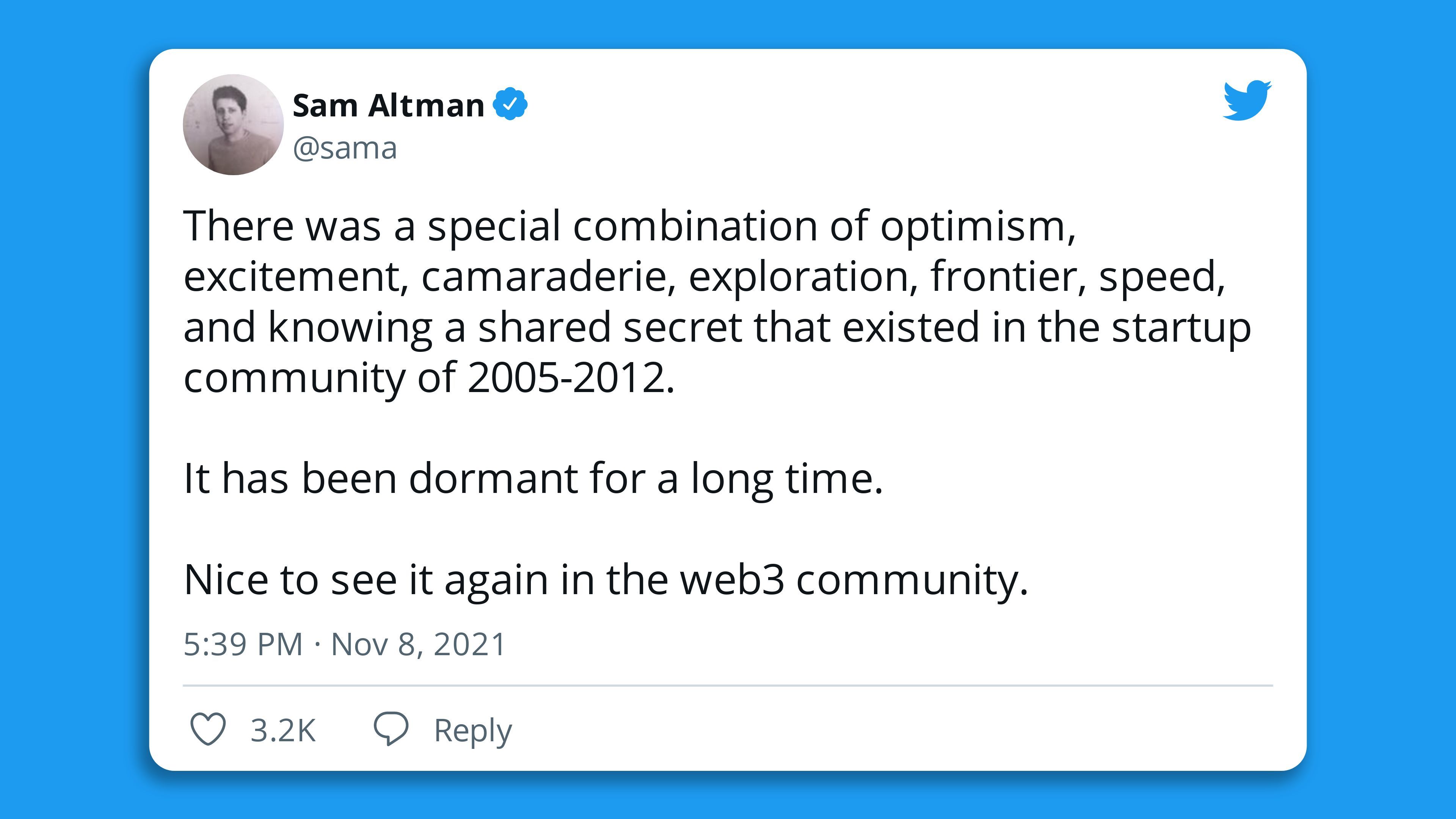
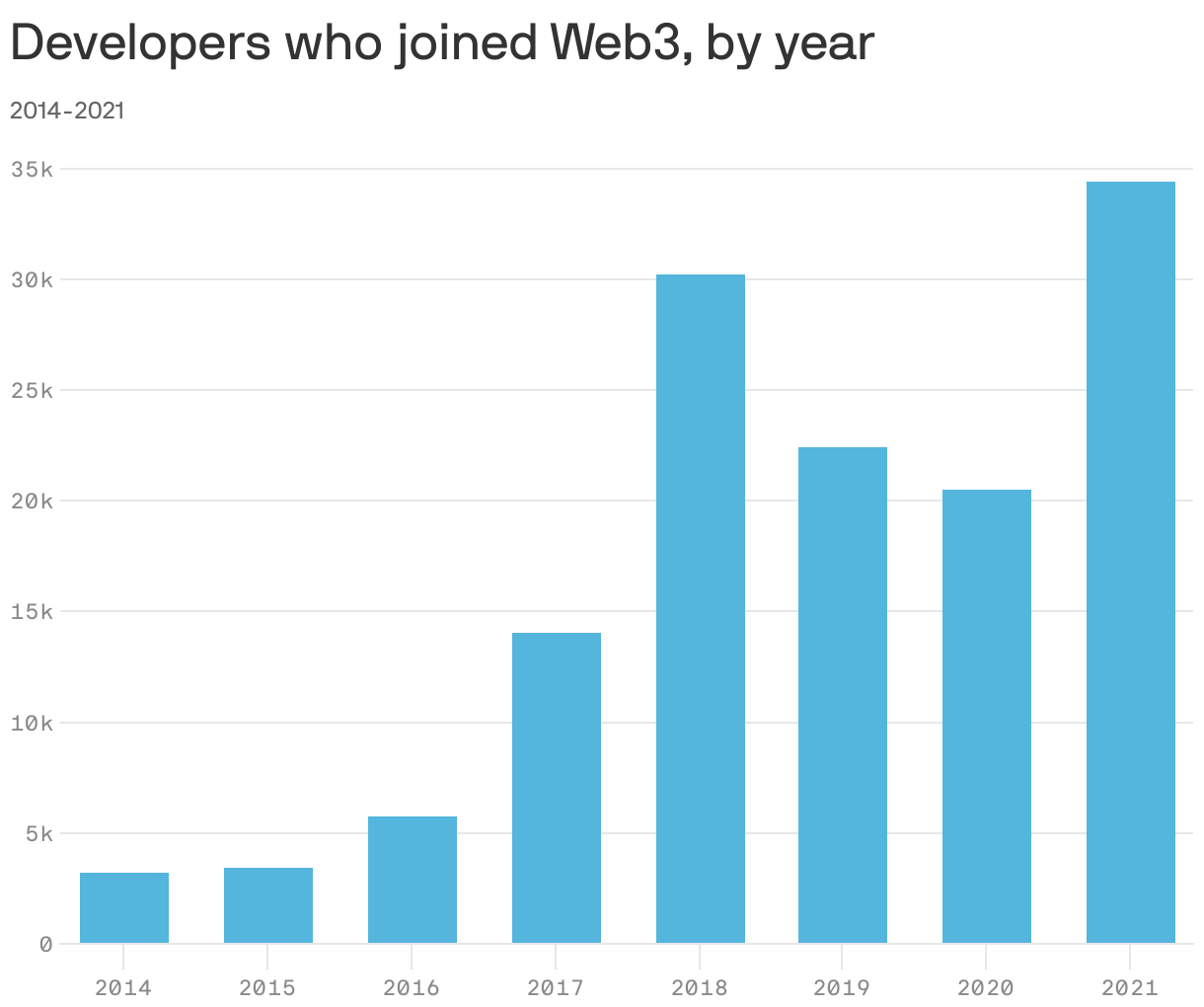
The big picture: While Bitcoin emerged over a decade ago, the recent explosion in new applications and advances in cryptocurrencies, protocols and digital assets has morphed into a new genre of projects and companies — which proponents say will shift how we interact with the internet. They call themselves “Web3.”
- These proponents see this as a remaking of business models and incentives and a shift of data ownership (from companies to users).
- Web developers and techies are moving their focus to Web3 as well, with many leaving jobs at companies from the prior era (like Facebook and Google) to join nascent startups. Just this week, YouTube gaming chief Ryan Wyatt announced his own such move.
Thought bubble: While evangelists are loudly voicing genuine criticisms of “Web2” and its tech, business models and practices, under the surface something else is also bothering them — Web2 companies have come to represent a seemingly unabating era of scrutiny, criticism and villainizing of the tech industry.
- Many, especially in the startup corner of the industry, seem to resent what they view as other institutions of power like the government scapegoating tech companies for society's problems.
- So while establishment Big Tech continues to face questions around content moderation, user privacy and business practices, Web3 offers an opportunity to develop new approaches to these problems, supporters argue.
Worth noting: Some prominent Web3 supporters are still intertwined with the prior era's Internet companies: VC Marc Andreessen is still on the board of Facebook, and Block CEO Jack Dorsey was until very recently also CEO of Twitter, just to name a couple.
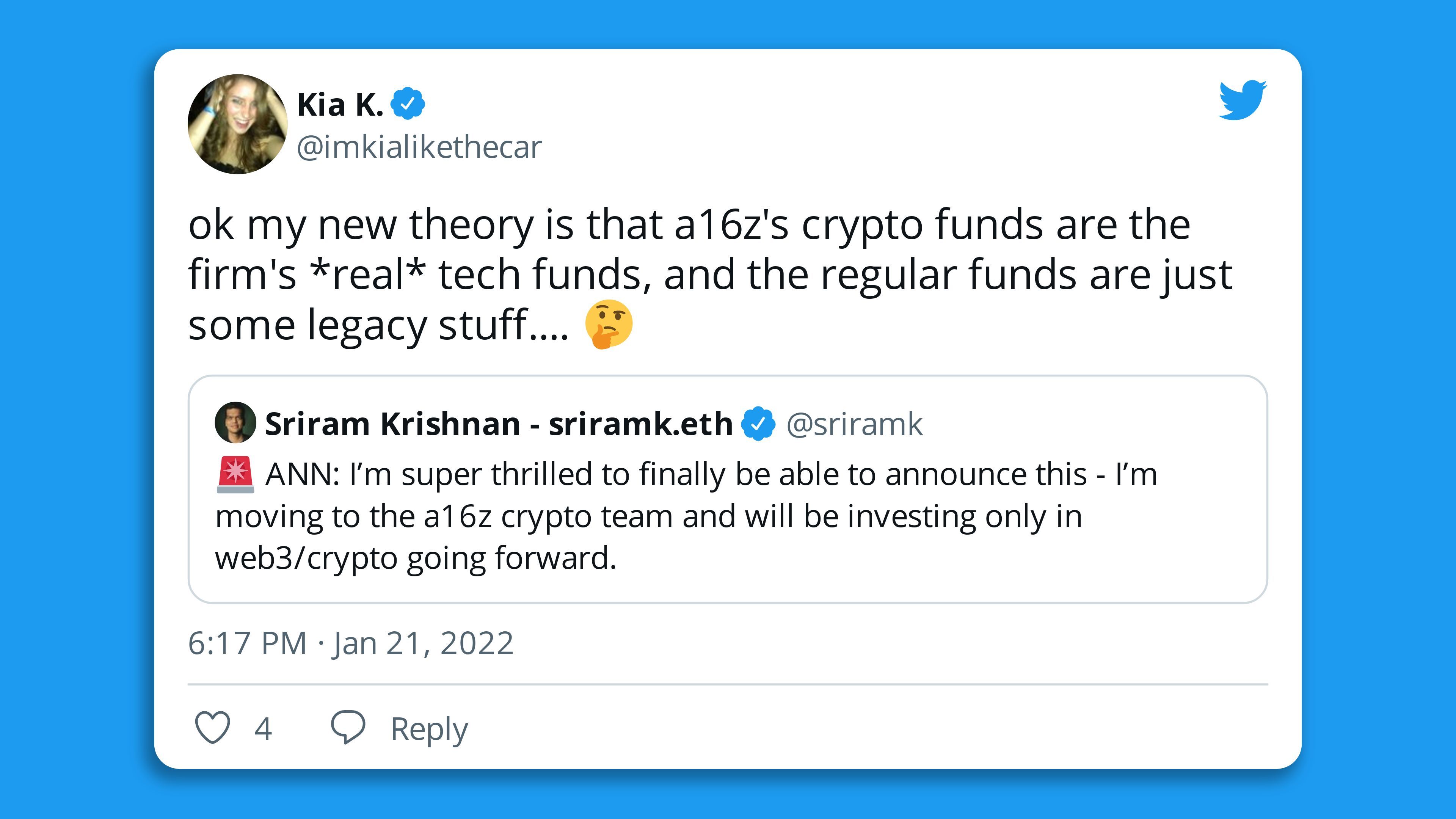
Zoom in: For VCs, investing in Web3 also means changes in practice.
- Many are now buying digital tokens (or promises of future tokens) instead of traditional equity.
- They’re interacting with entire communities of shareholders, who may reject them, instead of just a company’s founders.
- Their access to investment discounts is increasingly questioned (and even denied at times).
- And many are welcoming the humbling that these changes bring — it supports the idea that they're here to fund the future and are in service of the entrepreneurs building it.
The bottom line: To its more zealous supporters, Web3 represents much more than a technological evolution.
2. DAOs everywhere
Illustration: Gabriella Turrisi/Axios
Decentralized autonomous organizations (DAOs) are having a growth spurt — and companies that provide tools to set up and operate such groups are cropping up as well.
Why it matters: One major theme of the Web3 boom is the ability to decentralize authority and recreate a variety of organizations in a more democratic form.
Driving the news: Just this week, SuperDAO announced a $10.5 million seed round for its “DAO-in-a-box” suite, while Syndicate, an investment protocol, debuted its investing clubs product that lets participants pool resources and jointly invest.
- Meanwhile, on Monday, a group of more than a thousand alumni of startup accelerator program Y Combinator unveiled Orange DAO, which aims to find and back crypto and Web3 startups.
How it works: DAOs enable group participants to coordinate and make decisions via blockchain-based voting mechanisms, usually without a central authority (though many do elect a few leaders to manage certain administrative tasks).
Be smart: As with everything in crypto, how this interacts with current U.S. law is an important question.
State of play: Wyoming is the only state to legally recognize DAOs.
- According to SuperDAO CEO Yury Lifshits, a popular approach of DAOs is to set up one entity (often an LLC) whose members get to participate by acquiring an NFT issued by the organization. Membership then gives them a say in the group's decision-making.
- Separately, the DAO sets up a Delaware C-corp that can issue equity along with warrants for tokens (even if they don't exist yet) via traditional securities sales to accredited investors as a normal startup would sell equity to investors.
The impact: This way, the token tied to the organization's governance won't come with the expectation of profits (as a company share does) — which is a core element of how securities are defined in the U.S.
The bottom line: This is all extremely general. Each DAO's unique circumstances dictate how it needs to comply with securities laws — as every lawyer I contacted reminded me.
3. Diem no more
Illustration: Shoshana Gordon/Axios
Facebook is reportedly walking away from its in-house stablecoin project.
- The organization formally operating it, the Diem Association, plans to sell the assets to Silvergate Capital, a Calif.-based bank that works with cryptocurrency companies, for about $200 million, per the WSJ.
Why it matters: Diem was the highest-profile attempt by a Web2 company to hop on the crypto train.
- Unveiled in June 2019, the stablecoin was initially expected to launch the following year — but immediately encountered pushback from Washington.
- Since then, Facebook started using other stablecoins to test a digital wallet it created, while Diem's cryptocurrency has yet to debut. The Diem Association has also pivoted its approach more than once in response to regulatory pushback.
Meanwhile: The Fed's long-awaited report on a U.S. central bank digital currency finally came out a week ago, but disappointed some with its lack of clear stance on whether it should create one.
- And according to a new report in Decrypt, federal agencies and other officials are coordinating to push stablecoins toward established banks and regulation-friendly companies. Facebook's announcement in 2019, it argues, triggered a wave of Washington attention on stablecoins.
What to watch: President Biden is rumored to be preparing an executive action to task federal agencies with regulating digital currencies as a matter of national security, per Barron's.
📚 Due Diligence
- Electric Capital Developer Report (2021) (Medium)
- Facebook’s cryptocurrency failure came after internal conflict and regulatory pushback (Washington Post)
- Chris Lehane's new job in crypto (NY Times)
🧩 Trivia
Facebook began quietly working on digital currency at least a year before it unveiled the project.
- Question: What was Diem originally called?
🧮 Final Numbers

🙏Thanks for reading! See you Monday for Axios Pro Rata's weekday programming, and please ask your friends, colleagues and neighborhood pirates to sign up.
Trivia answer: When unveiled, it was called Libra.
Sign up for Axios Pro Rata

Dan Primack’s briefing on VC, PE & M&A for dealmakers.