Axios Pro Rata

December 04, 2021

Wow, it's already December! We're back in the cryptocurrency world this week — but fear not, this isn't becoming a crypto newsletter.
- Feel free to send me tips or comments by replying to this email or on Twitter @imkialikethecar.
Today’s Smart Brevity™ count is 691 words ... 2½ minutes.
1 big thing: Crypto finally gets a shot at going mainstream
Illustration: Aïda Amer, Sarah Grillo/Axios
Cryptocurrency companies are inking big sports deals, for everything from stadium naming rights to athlete and apparel partnerships.
Why it matters: If the crypto industry wants to move further mainstream, it needs to reach a broader audience.
The big picture: Since crypto exchange FTX announced its $135 million deal in April for naming rights to the Miami Heat's arena, it's also bought naming rights to UC Berkeley’s football stadium, agreed to sponsor most of the International Cricket Council's events in the next two years, and was ubiquitous during the Major League Baseball playoffs.
- Crypto.com paid a record amount for naming rights to the Staples Center in Los Angeles.
- Coinbase struck partnerships with the NBA and WNBA, esports group Team Liquid, and Adidas.
- FTX has taken investments from Tom Brady and Steph Curry, both of whom the company calls "brand ambassadors." Before going public, Coinbase investors included Kevin Durant and Serena Williams.
What they’re saying: "The fact that a major sports league and a team and the city are comfortable, a lot of opportunities opened up," Avi Dabir, FTX’s VP of business development, says of the Miami arena deal. He adds that FTX is now facing stiffer competition from peers for new sports deals.
Between the lines: Sports sponsorships can earn tons of eyeballs, minus most controversy.
- Part of this is brand awareness. Part is greater crypto industry exposure. "If people don’t know about crypto, then they won’t care about FTX," Dabir explains.
The bottom line: These deals were quickly mocked on Twitter, but they're being driven by a viable growth philosophy.
2. More FTX
Illustration: Shoshana Gordon/Axios
More from my conversation with FTX’s Avi Dabir:
Origin story: FTX jumped into the sports world after CEO Sam Bankman-Fried asked employees during a January 2021 all-hands meeting for ideas to "get our name out there," and someone suggested buying stadium name rights.
- From there, the company investigated potential options, eventually initiating conversations with three targets.
- "The Heat and the county [of Miami-Dade] were by far the most welcoming," says Dabir, who declined to name the other two stadiums.
U.S. branding: While FTX’s brand has become synonymous with cryptocurrency derivatives trading, its U.S. customers can't currently access a number of its products and features because of regulations.
- "Do you wait until you have all the right products and then attract customers? Our culture is: We don’t like to wait."
Most crypto-friendly: The NBA seems to have embraced the crypto industry more deeply than other major American sports leagues, something Dabir attributes to its early experience with Dapper Labs’ Topshot digital collectibles.
- Major League Baseball also quickly agreed to a deal with the company, he adds.
- Yes, but: While FTX is paying UC Berkeley in cryptocurrency, that's not the case for its Miami arena deal ('They definitely weren't that comfortable.").
3. By the numbers: Naming rights deals
Some new major naming rights deals over the last couple of years:
FTX Arena (Miami)
- $135 million, 19 years
- Prior rights holder: American Airlines ($42 million, 1999-2021)
Crypto.com Arena (Los Angeles)
- ~$700 million, 20 years
- Prior rights holder: Staples ($116 million, 1990-2021)
SoFi Stadium (Los Angeles)
- $625 million, 20 years
- Prior rights holder: none
Intuit Dome (Los Angeles)
- $500 million, 23 years
- Prior rights holder: none
Climate Pledge Arena (Seattle)
- $300-$400 million, unknown duration
- Prior rights holder: KeyCorp ($15.1 million, 1995-2020)
PayPal Park (San Jose, Calif.)
- ~$20 million, 10 years.
- Prior rights holder: Avaya ($20 million, 2015-2020; Earthquakes Stadium following Avaya bankruptcy)
Ball Arena (Denver)
- Details unknown
- Prior rights holder: PepsiCo ($68 million, 1999-2020)
Paycom Center (Oklahoma City)
- Reportedly under $100 million, 15 years
- Prior rights holder: Chesapeake Energy ($34 million, 2011-2021)
Highmark Stadium (Upstate N.Y.)
- Price unknown, reportedly for 10 years
- Prior rights holder: New Era Cap Co. ($35 million but later revised, 2016-2019)
📚 Due Diligence
- Naming-rights deals thrive (Sports Business Journal)
- Agent: NFL players investing in crypto is ‘only going to grow’ (Yahoo! Finance)
- How Crypto.com's dealmaking CEO turned a string of brash bets and lucky timing into the biggest stadium deal ever (Business Insider)
🧩 Trivia
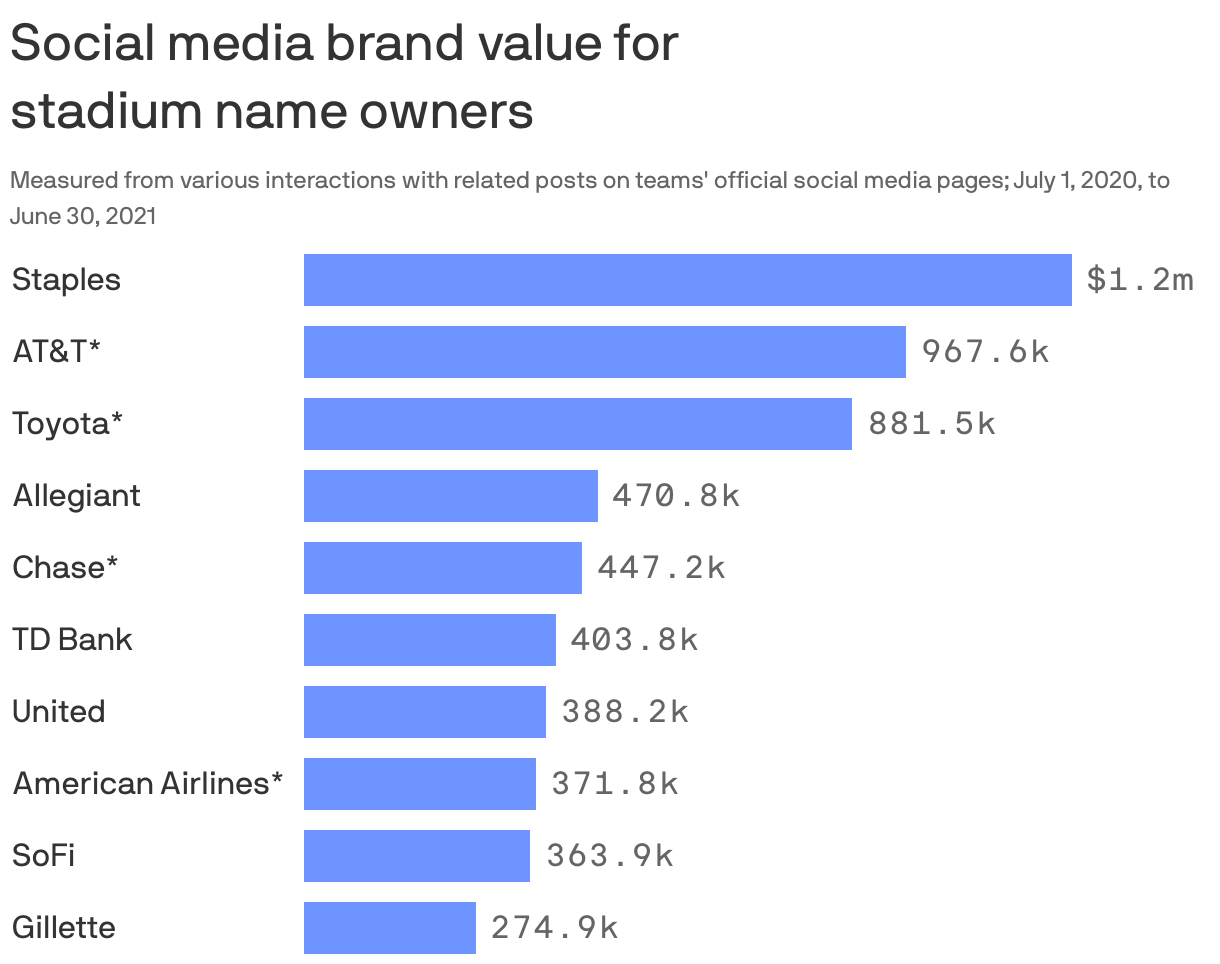
The crypto companies insist they'll be enduring businesses, but that hasn't always been the case for companies that have purchased stadium naming rights.
- Question: Which dot-com era company had to retreat before any games were played? (Answer at the bottom.)
🧮 Final Numbers
🙏 Thanks for reading! See you on Monday for Axios Pro Rata's weekday programming, and please ask your friends, colleagues and sports fans to sign up.
Trivia answer: CMGI, which acquired the rights to the New England Patriots' new stadium in 1999. Once the facility eventually opened, it was named for razor maker Gillette.
Sign up for Axios Pro Rata

Dan Primack’s briefing on VC, PE & M&A for dealmakers.