Axios Portland

June 09, 2026


🥧 It's Tuesday. And apparently it's also National Strawberry Rhubarb Pie Day. Conduct yourself accordingly.
🌧️ Today's weather: Light rain likely, high 66, low 49.
🌻 Help keep local journalism thriving by becoming a member today.
Today's newsletter is 1,114 words — a 4-minute read.
1 big thing: 📚 More than books
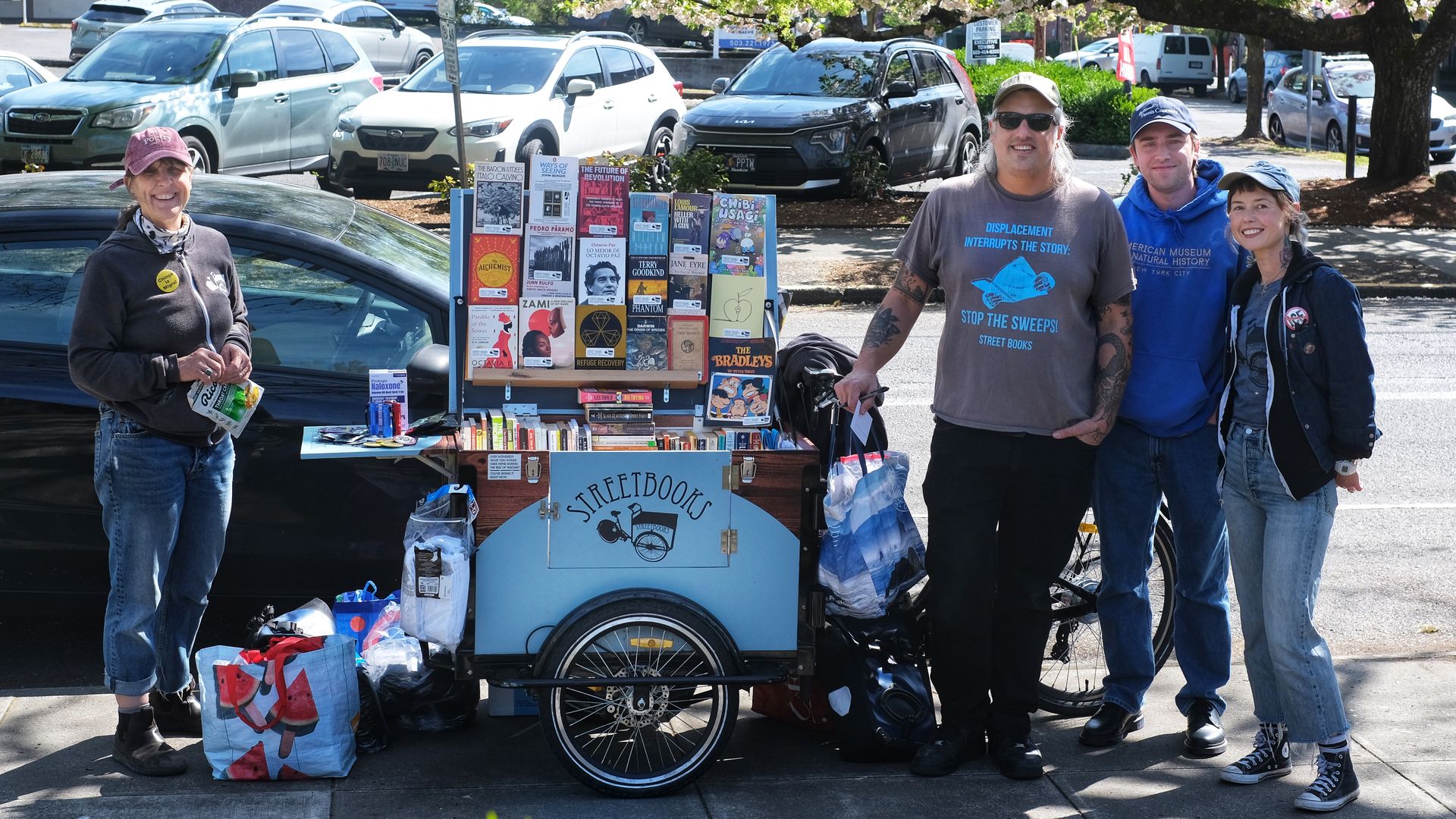
Street Books launched nearly 16 years ago as a mobile library for homeless Portlanders. But as the city's homelessness crisis grows, its librarians now distribute overdose-reversal medication, sanitary supplies and sleeping bags alongside novels.
Why it matters: The nonprofit is increasingly filling gaps far beyond its original mission statement — something its leaders say was inevitable.
- "It's really hard to read when you're starving, or when you are suffering from addiction, cold or smoke," Monica Beemer, Street Books co-director, told Axios.
Catch up quick: Founder Laura Moulton launched Street Books as a three-month summer project in 2011, pedaling around Portland on a makeshift bike library handing out books to people living on the street.
- She quickly realized the demand required more than a one-off experiment.
- With the help of funding from the Regional Arts & Culture Council and public donations, Street Books has grown into a year-round nonprofit with a dozen staff members and 16 regular service routes that distribute roughly 10,000 books annually.
"We have deep relationships with the people we serve," Beemer said. "To maintain those relationships, we also started to address other needs people were having."
- On each Street Books bike you'll find reading glasses in various strengths, hygiene items including wipes and bandages, water, flashlights and Narcan — at least while supplies last.
- Beemer said the staff is also trained in de-escalation techniques and can help refer patrons to housing, health and other social services.
Yes, but: Books remain at the forefront of what they do.
- While the vast majority of the books are donated, they also track requests, purchase used titles and can often get a book to it requester within a week.
Among the most requested books are those from LGBTQ+ authors, Beemer said.
- This prompted Street Books to launch its first-ever Queer Book Drive this month to expand its collection to include works from authors such as Rita Mae Brown, Jean Genet, James Baldwin, Audre Lorde and Virginia Woolf.
The bottom line: Beemer argues books are as critical to survival as supplies because they allow readers to see themselves reflected on the page.
- "Everyone deserves a rich life," she said.
2. ⚠️ Costly potholes

Two contractors agreed to pay $3.6 million to settle a lawsuit stemming from a Portland pothole that allegedly caused a driver's severe injuries, likely the highest payout over a hole in the road in the city's history, per the Oregonian.
Why it matters: The settlement underscores the financial costs of Portland's long-running struggle to maintain its streets.
Zoom in: Gillian Conroy was driving on Southwest Capitol Highway near Interstate 5 in 2022 when she struck a 6-inch-deep, 2-foot-wide hole in the roadway.
- Despite wearing a seatbelt, Conroy struck her head on her vehicle's roof, suffering a traumatic brain injury, tinnitus and a torn rotator cuff.
The intrigue: After the driver sued the city, Portland sued the two contractors, saying the pothole was caused by an asphalt patch that quickly deteriorated, the Oregonian reported.
- The pothole had been reported to the city two days earlier and had existed for roughly three weeks, within the city's stated 30-day repair window.
Zoom out: The state of Portland's streets has been of concern for years as the transportation bureau has struggled to keep up with — and pay for — a backlog of repairs.
- Last month, a cyclist who broke his hand in a pothole-related crash sued the city for $950,000.
- That's just one of nearly half a dozen lawsuits filed over potholes over the last decade, per an Oregonian analysis.
Yes, but: City councilors recently passed a new transportation utility fee to help fund street repairs.
- And the city fills many thousands of potholes per year.
- Still, a 2024 survey found street (dis) repair to be city government's biggest failure, at least in the eyes of its residents.
3. Rose City Rundown

🥫 Sunshine Division will open its new 20,000-square-foot food pantry and warehouse in Northwest Portland today, expanding access and capacity as demand for food assistance continues to rise across the region. (NW Examiner)
🚌 Transit advocates warn TriMet could enter a "doom loop" of service cuts and declining ridership without new investment and clearer priorities. (Willamette Week)
📖 Literary Arts received a major funding boost from a national organization to support its programming, annual book festival and writing workshops. (Portland Business Journal)
🌾 Grab your tissues: Portland has some of the highest grass pollen counts in the country — and few specialists available to help — according to a new report.(The Oregonian)
4. 🧑🧑🧒🧒 A troubling ranking

Oregon ranked 23rd in overall child wellbeing, according to a new report.
Why it matters: Children's wellbeing affects future workforce participation and economic growth, and researchers warn rising costs and safety-net reductions could further strain families.
How it works: The Annie E. Casey Foundation's 2026 Kids Count Data Book measures children's wellbeing across four categories: economic wellbeing, education, health and family and community.
- It examined data from 2019 through 2024 to assess the effects of safety-net investments, according to Leslie Boissiere, a spokesperson for the foundation.
By the numbers: Oregon ranked 6th in health, 10th in family and community, and 29th for economic wellbeing,
- Yes, but: Our overall score was dragged down significantly by Oregon's education ranking, where we came in 44th.
The bottom line: "Research shows that kids who are healthy, safe, fed, educated and surrounded by strong family relationships have a much better chance to thrive," Boissiere said.
5. 🥐 Pastry pilgrimage
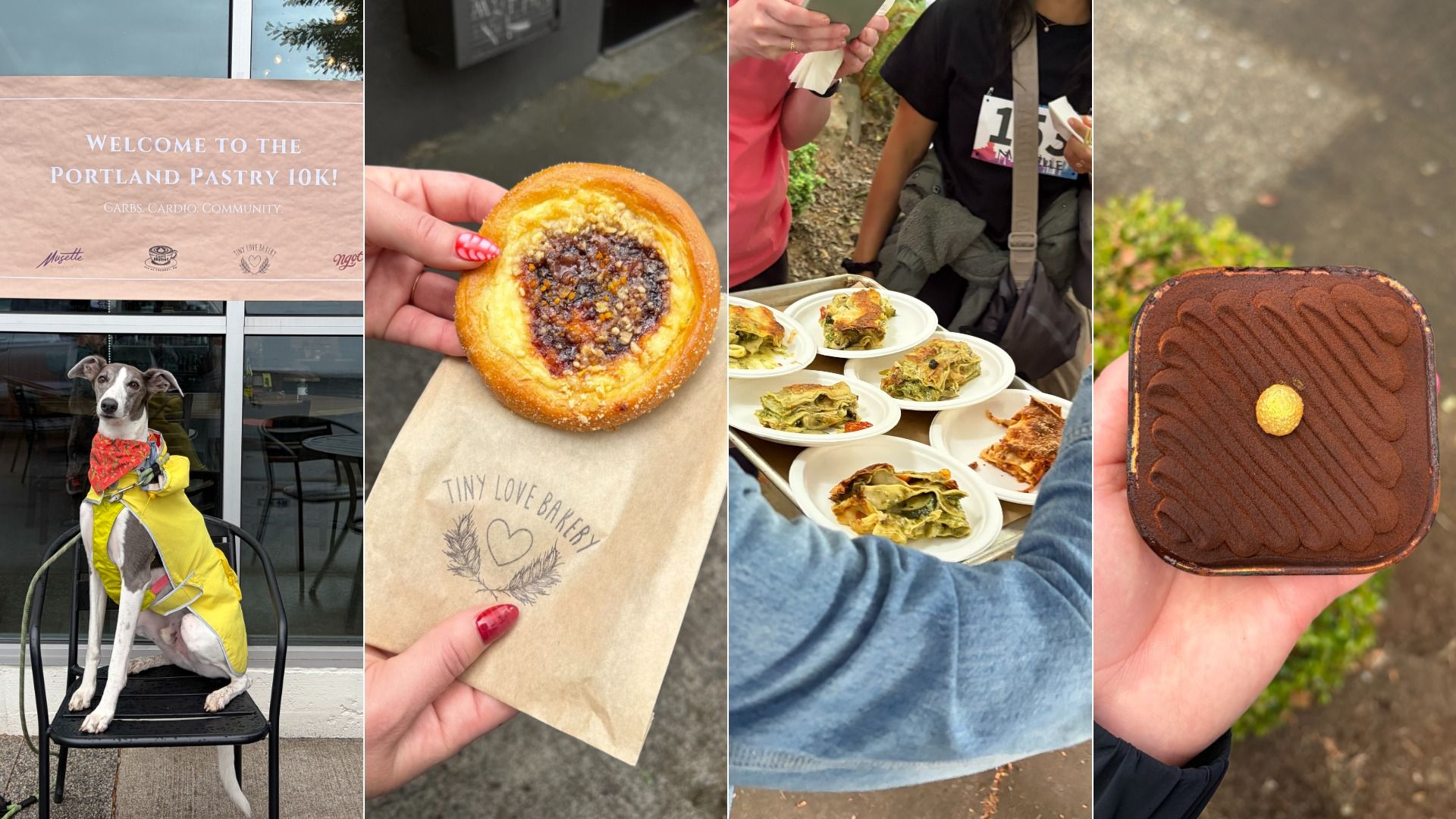
I walked the inaugural Portland Pastry 10k this past weekend and let me just say — the journey was made sweeter knowing there was a little treat around every corner.
- The walk was designed with not only pastries in mind, but beauty, organizer Marguerite Maguire told me.
- We zig-zagged across the Irvington and Alameda neighborhoods to snag treats from five different bakeries, pop-up and cafes — passing through public parks, front yard rose gardens and even a community orchard.
I talked to more than a dozen Portlanders along the way, and connected over little things like dogs, fly fishing, reality TV and what constitutes proper rain gear (I'm pro-umbrella).
- At the end of the 7.3-mile walk — yes, longer than a 10k — I felt closer to this city, which was Maguire's goal all along.
If you go: Maguire is planning two additional pastry 10ks in Sellwood and Southeast later this summer.
🌿 Kale is grateful to Mother Nature for taking over his garden water duties for a few days.
😎 Meira is looking ahead at the weekend forecast.
This newsletter was edited by Geoff Ziezulewicz.
Sign up for Axios Portland
