Axios Portland

February 02, 2026

👋 We're back at it, Monday.
Today's weather: Chance of rain, but mostly cloudy. High around 54, low near 41.
Situational awareness: Mayor Keith Wilson condemned the use of chemical munitions by federal agents during a protest at the U.S. Immigration and Customs Enforcement building in South Portland over the weekend, calling it unconstitutional violence that endangered children and residents.
- "Through your use of violence and the trampling of the Constitution, you have lost all legitimacy and replaced it with shame," he said in a statement.
Today's newsletter is 1,145 words — a 4.5-minute read.
1 big thing: ⛷️ An Oregonian's Olympic hopes

Before Olympic qualifiers, X Games podiums and a globe-spanning schedule, Hunter Hess built the foundation of his freestyle skiing career on Mount Bachelor.
Why it matters: This month, Hess will for the first time take the skills he honed in Oregon to the Olympic halfpipe in northern Italy.
Catch up quick: Born and raised in Bend, Hess grew up skiing Bachelor before the proliferation of big terrain parks.
- Instead, Bachelor's natural features — wind lips, rollers and side hits — provided the training ground where he first learned to catch air.
- "The natural terrain at Bachelor is quite unique," he told Axios last week from a training facility in Salt Lake City.
- Having to use the natural contours of the mountain "developed a really interesting and unique style in my skiing," Hess said.
Flashback: He spent much of his youth skiing with teammates in the Mount Bachelor Sports Education Foundation, building jumps off the Leeway and Outback runs where they could try new tricks into soft powder.
- "That was the best way to train back in the day," he said. "Building bigger jumps than you'd normally see in the park."
- After he joined the U.S. Ski Team in 2017, he spent summers skiing the park at Timberline, where the glacier offers one of the only places in the country to ride in the warmer months.
State of play: Hess, 27, is headed to his first Olympics this year after just missing his chance in the 2022 games in Beijing, China.
- A torn MCL sidelined him during qualifying, and appendicitis struck on the day he was cleared to return to snow leading up to the games.
- "It was not my year, to say the least," he said.
The latest: Hess earned bronze medals in the X Games halfpipe in 2024 and 2025 and has racked up podium finishes in World Cup events.
- The last few months have been what he called a "brutal" qualifying process, with events in Austria, China, Canada and Colorado before he headed back to Utah for rehab and training before traveling to Italy for the opening ceremonies.
2. 🌁 Get to know the Tilikum Crossing
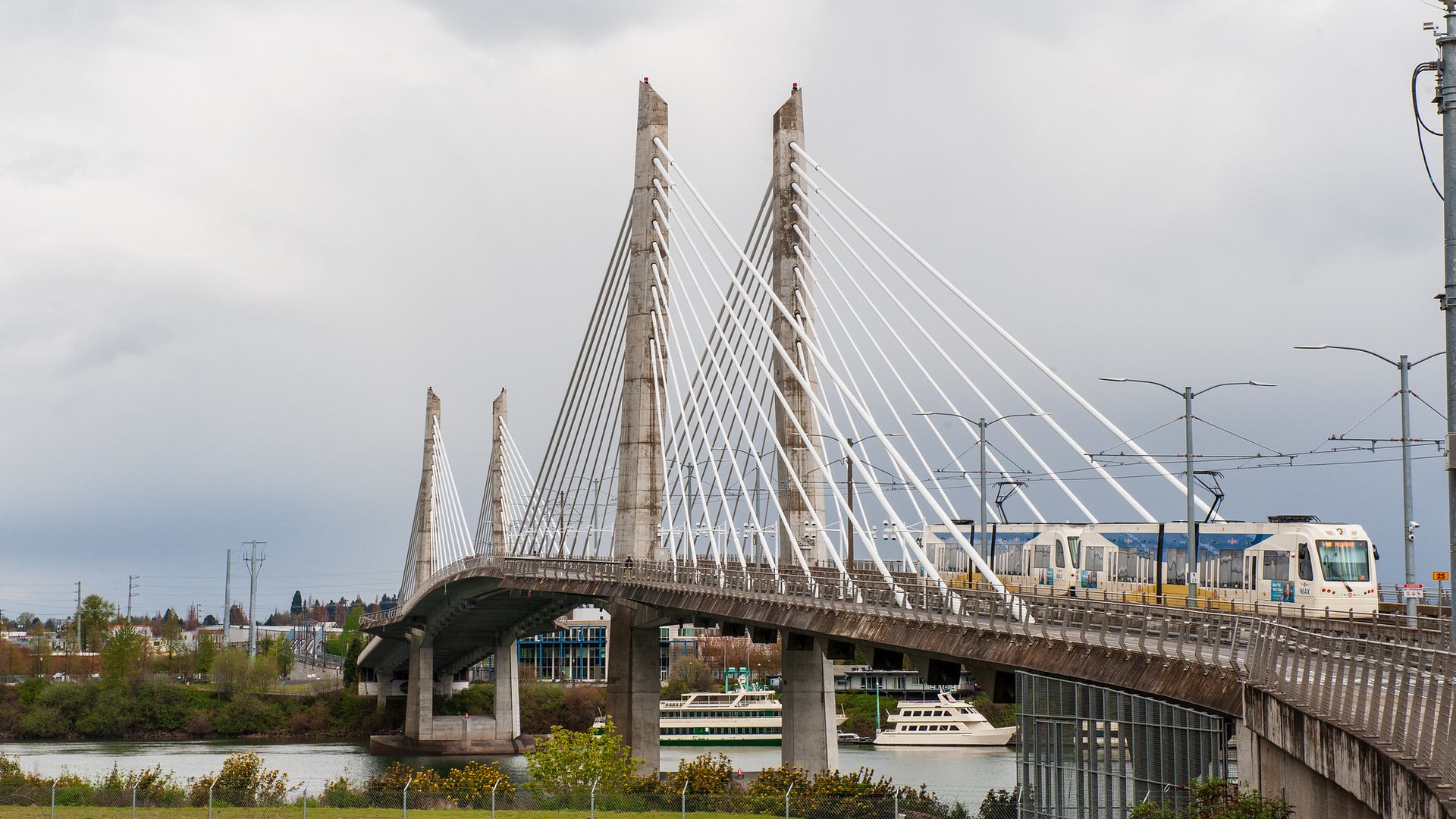
Portland's Tilikum Crossing bridge is the newbie of the bunch — the city's first bridge built since the Fremont in 1973 — and is a span unlike any of the others.
The big picture: Opened in 2015 after four years of construction, the Tilikum serves only pedestrians, cyclists and transit commuters, not vehicles, making it the largest car-free bridge in the nation.
- It carries four TriMet bus lines, the MAX Orange Line, and the Portland Streetcar and has dedicated cyclist and pedestrian lanes — moving tens of thousands of people per day.
Flashback: Restricting private vehicle use of the bridge was always the goal.
- Regional leaders wanted a way to link the South Waterfront District and the OHSU campus with the Central Eastside and OMSI without adding traffic while also advancing the city's climate-friendly infrastructure.
Zoom in: Designed by TriMet, HNTB and MacDonald Architects, the Tilikum is a four-pier, 1,720-foot cable-stayed bridge with two 180-foot towers and roughly 3.5 miles of cable.
- It's the only bridge in Portland that was built to sustain high levels of seismic activity with only moderate damage, but its approaches are not.
Follow the money: It cost nearly $135 million to build and was funded largely by federal transit dollars tied to the MAX Orange Line project.
The intrigue: The bridge's name comes from the Chinook Wawa language and means "friends," "relatives" or "common people" and was selected to reflect its human-centered purpose.
3. Rose City Rundown
🦪 Dan & Louis Oyster Bar, a fixture in Old Town for more than 100 years, was on the brink of closure last year but has seen a big spike in business after nearby Paris Theater reopened and foot traffic picked up. (KGW)
🌲 Counties will now receive more revenue from timber harvests — 75% compared to 50% previously — due to changes to a federal law that mandates sustainable harvest on federal lands. (OPB)
🛍️ Hawthorne Boulevard is the city's No. 1 shopping corridor, attracting 1.6 million visitors during the last quarter of 2025, according to a new real estate report. (Portland Business Journal)
✈️ The Tillamook Air Museum is fundraising to save an historic World War II-era hangar, originally built to house blimps, after it was damaged in storms late last year. (KGW)
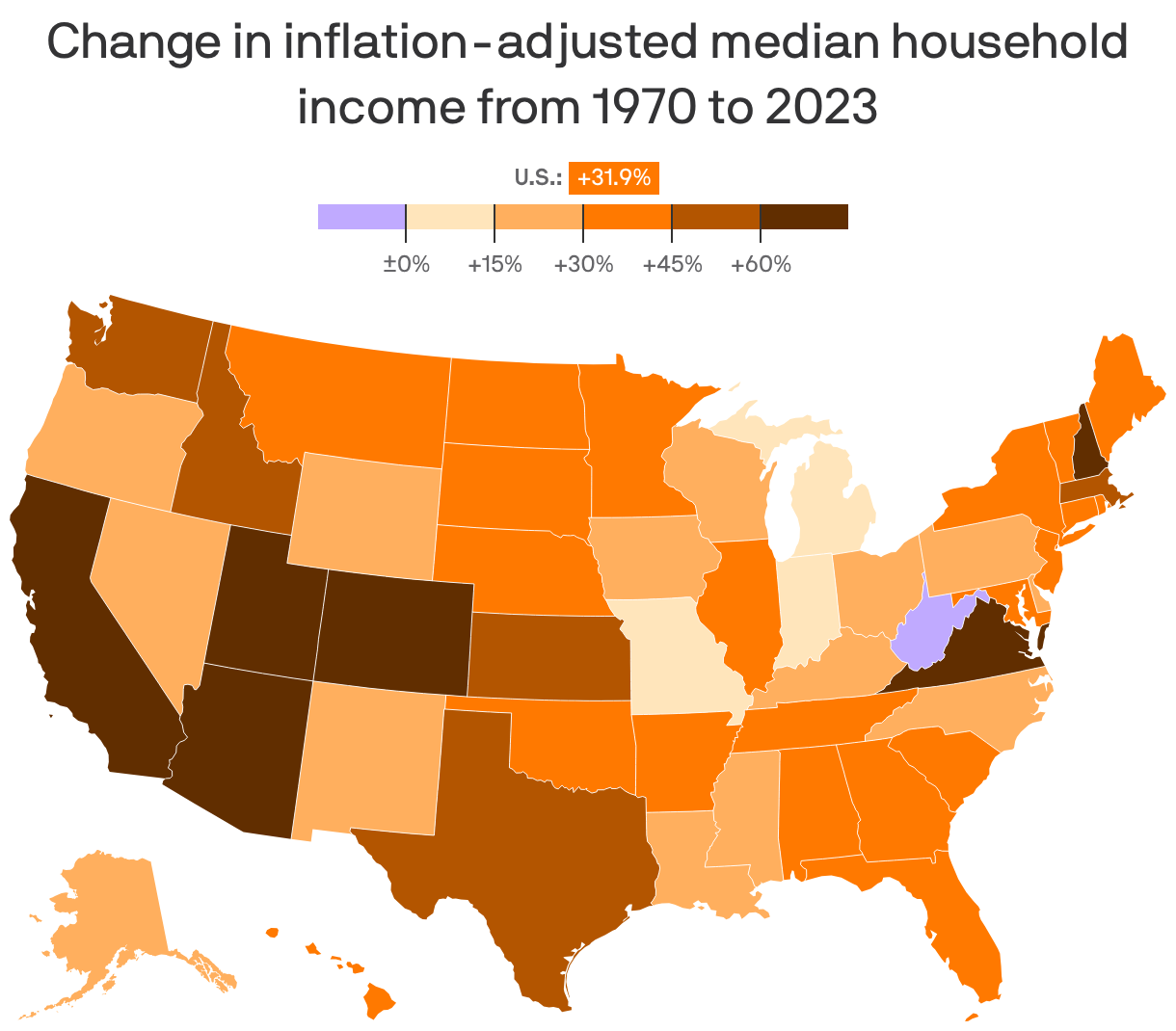
4. 💸 Map du jour: Laggy income

Oregonians' incomes increased just over 26% in the past five decades but trailed the gains seen nationally, according to data from a new Urban Institute analysis.
Why it matters: Lagging income growth can make it harder for Oregon to attract and retain workers, especially younger professionals with more geographic flexibility.
By the numbers: After adjusting for inflation, Oregon's median household income rose from $63,280 in 1970 to $80,160 in 2023.
- The national median increased by nearly 32% over that period, from $58,930 to $77,719.
The big picture: Oregon's growth ranks among the 15 lowest in the nation.
- Meanwhile, our West Coast neighbors, Washington and California, saw significant wage growth over the last five decades, at 46% and 61%, respectively.
State of play: Income alone does not determine a family's prosperity, the think tank said in its report, but it does offer a snapshot of economic growth.
Support Axios Portland

Axios Portland delivers clear, trustworthy reporting that helps you make sense of what's happening in your area.
By becoming a member, you directly support your newsroom and help keep it focused on what matters most in your community.
We appreciate your support.
5. 🏛️ Time starts now
Oregon state lawmakers only have 35 days to tackle a wide range of priorities during this year's short legislative session, which begins today.
The big picture: Priorities include closing a roughly $63 million two-year budget deficit tied to federal cuts, taking another whack at keeping the Department of Transportation afloat and pushing policies aimed at limiting cooperation with federal immigration enforcement.
- Legislators have until March 8 to either find new sources of revenue, trim agency spending or agree to tap into the state's reserve money to balance the general fund.
- Either way, lawmakers won't have a lot of wiggle room for new initiatives, Senate President Rob Wagner told reporters, per the Oregonian.
What we're watching: It's an election year, and with Gov. Tina Kotek up for reelection — and one Republican in each chamber running against her — be prepared for some political theater.
🗼 Meira is finally watching "Skyscraper Live" and all she can think about is how much it would suck to be that guy's wife.
🤕 Kale is nursing a bad case of old man back.
This newsletter was edited by Geoff Ziezulewicz.
Sign up for Axios Portland