Axios Pittsburgh

August 12, 2026

🏃 Hit your Wednesday stride.
- Registration for the 2027 Pittsburgh Marathon opens today at 10am.
🌦️ Today's weather: Partly sunny, chance of showers, high near 82.
🎧 Sounds like: "Running on Empty," by Jackson Browne.
Today's newsletter is 999 words, a 4-minute read.
1 big thing: Report says Clairton blast could have been prevented
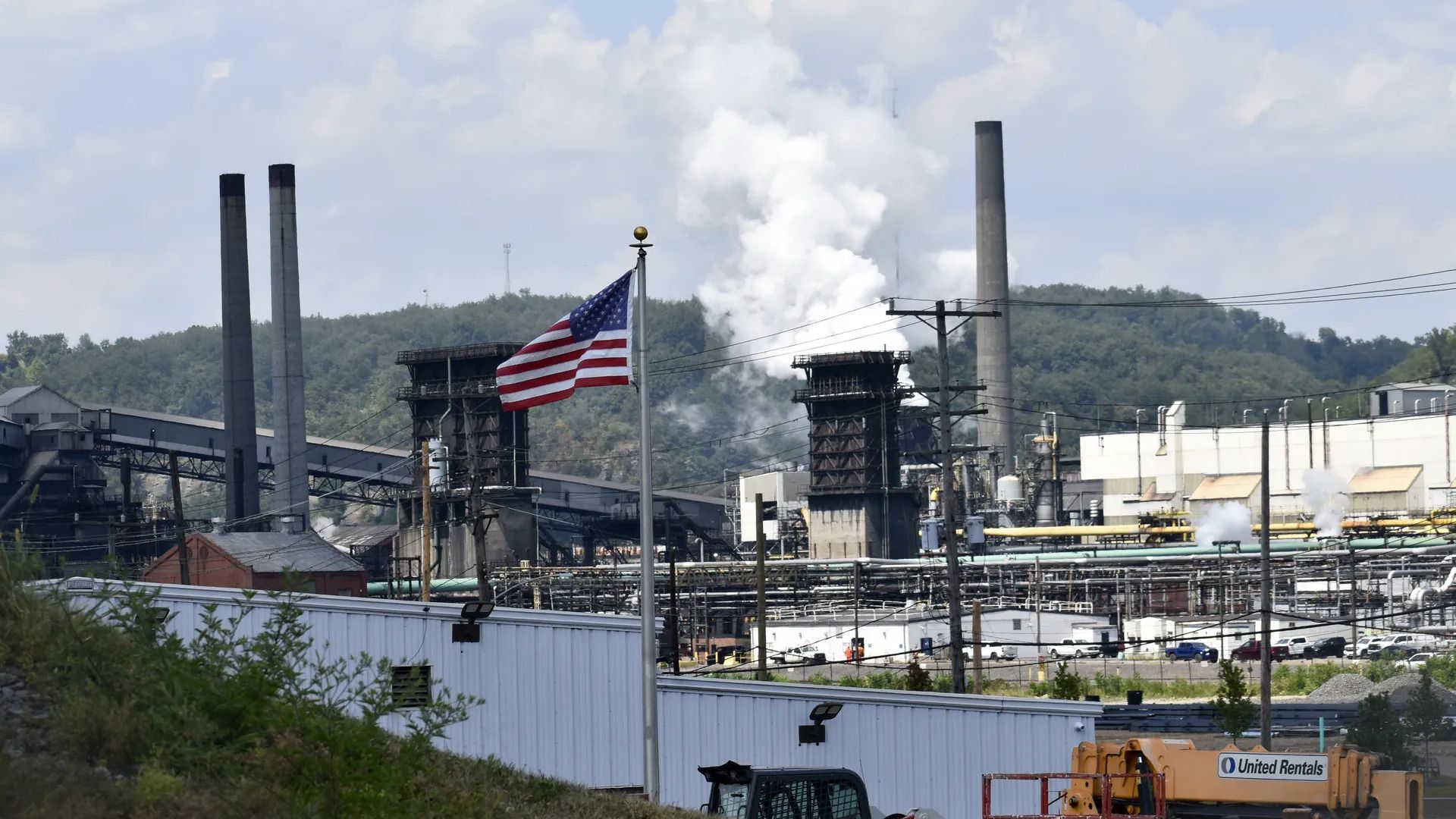
Federal investigators say last year’s deadly explosion at U.S. Steel’s Clairton Coke Works “could have been prevented or reduced in severity.”
Why it matters: A year after the explosion killed two workers, injured 11 and caused more than $52 million in damage, the U.S. Chemical Safety and Hazard Investigation Board recommended U.S. Steel strengthen its safety procedures at the plant in a final report released this week.
What they’re saying: “This deadly incident was the result of an ad hoc informal procedure, poor facility siting and an ineffective process safety management system at the Clairton facility,” CSB chairperson Steve Owens said in a public statement. “It should never have happened.”
U.S. Steel, in a statement shared with Axios, said it has bolstered safety measures, established best practices for cleaning industrial valves and improved how it reviews changes to workplace procedures since the explosion. The company said employees have been trained on the updates. U.S. Steel is evaluating CSB’s recommendations.
- “Safety is our core value and shapes every part of our business, influences how we lead and anchors our responsibility to ensure that every employee returns home safely, every single day,” U.S. Steel said in the statement.
Zoom in: Investigators said workers used pressurized water to wash a large cast-iron gas valve during maintenance; the valve ruptured, releasing highly flammable gas that ignited within 24 seconds of an evacuation order.
- The company had used the washing method for years without a formal written safety procedure, per the report.
The report also found that several buildings in the “transfer area,” where the explosion occurred, were routinely occupied by workers and sat less than 20 feet above the gas piping system. Those buildings were not designed to withstand an explosion, per the report.
- The two workers who died were in separate control rooms, while two seriously injured workers were in a break room directly above the explosion.
- The report says U.S. Steel had several opportunities to identify the potential hazards of gas piping near occupied buildings, particularly after a July 2010 explosion injured more than a dozen workers.
By the numbers: The company is facing lawsuits as well as more than $118,000 in OSHA fines related to the 2025 explosion.
2. Study: AHN blood test detects colon cancer
Allegheny Health Network (AHN) says it developed a new test that can detect colon cancer while avoiding an invasive colonoscopy.
Why it matters: Colorectal cancer — which originates in the colon or rectum — is one of the deadliest cancers in the U.S., with over 55,000 deaths expected this year, per the National Cancer Institute.
The latest: A blood-based test from researchers at AHN detected about 90% of colorectal cancers, according to a recent study published in the peer-reviewed medical journal The Lancet Gastroenterology & Hepatology.
Zoom in: The blood tests also detected about 81% of advanced adenomas, or high-risk polyps, that can lead to colorectal cancer.
Zoom out: Colonoscopy remains the most effective screening tool, but some patients avoid it due to preparation or discomfort, per AHN.
The big picture: AHN officials believe this new blood test could improve screening rates among those wary patients.
- About two-thirds of adults ages 45 or older stay up to date on screenings, below the target rate of 80%, according to the American Cancer Society.
Between the lines: Many colorectal cancer patients only find the disease after it has progressed, and earlier screenings could help treat and prevent it, said Ali H. Zaidi, medical director of aerodigestive research at the AHN Cancer Center.
The bottom line: The new blood test is still being studied and shouldn’t be used as a replacement for colonoscopies, and patients should continue to follow recommended screening guidelines from their physicians, per AHN.
3. The Bridge: DOJ drops bid for UPMC records
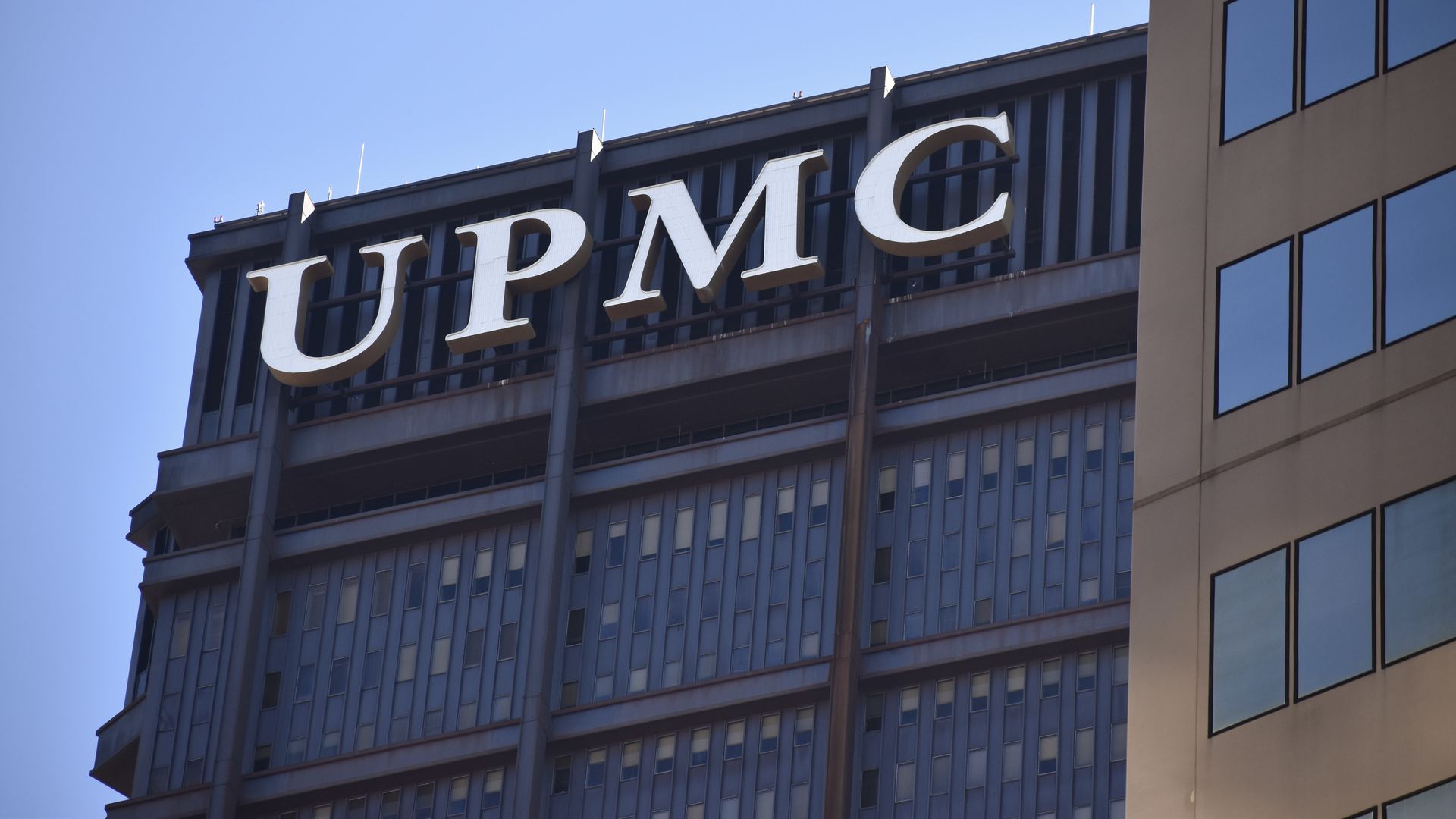
⚖️ The U.S. Department of Justice is dropping its appeal after a judge blocked its subpoena for UPMC medical records of minors who received gender-affirming care.
- Federal judges in Pennsylvania and other states have ruled that the agency lacks authority to obtain such records. (WESA)
📱 Pennsylvania Attorney General Dave Sunday filed a lawsuit against TikTok in Allegheny County, saying the social media company uses addictive design features that harm youth mental health. (WPXI)
🏫 Special education enrollment is rising across the region, driven by better diagnoses, reduced stigma and lingering effects of the pandemic. Districts are adding programs and staff, but face increasingly tight budgets and worker shortages.
- Pennsylvania boosted special education funding by $55 million in July, though some districts say it still falls short of rising costs. (🔐 Post-Gazette)
4. 📈 1 chart to go: Labor market holds steady

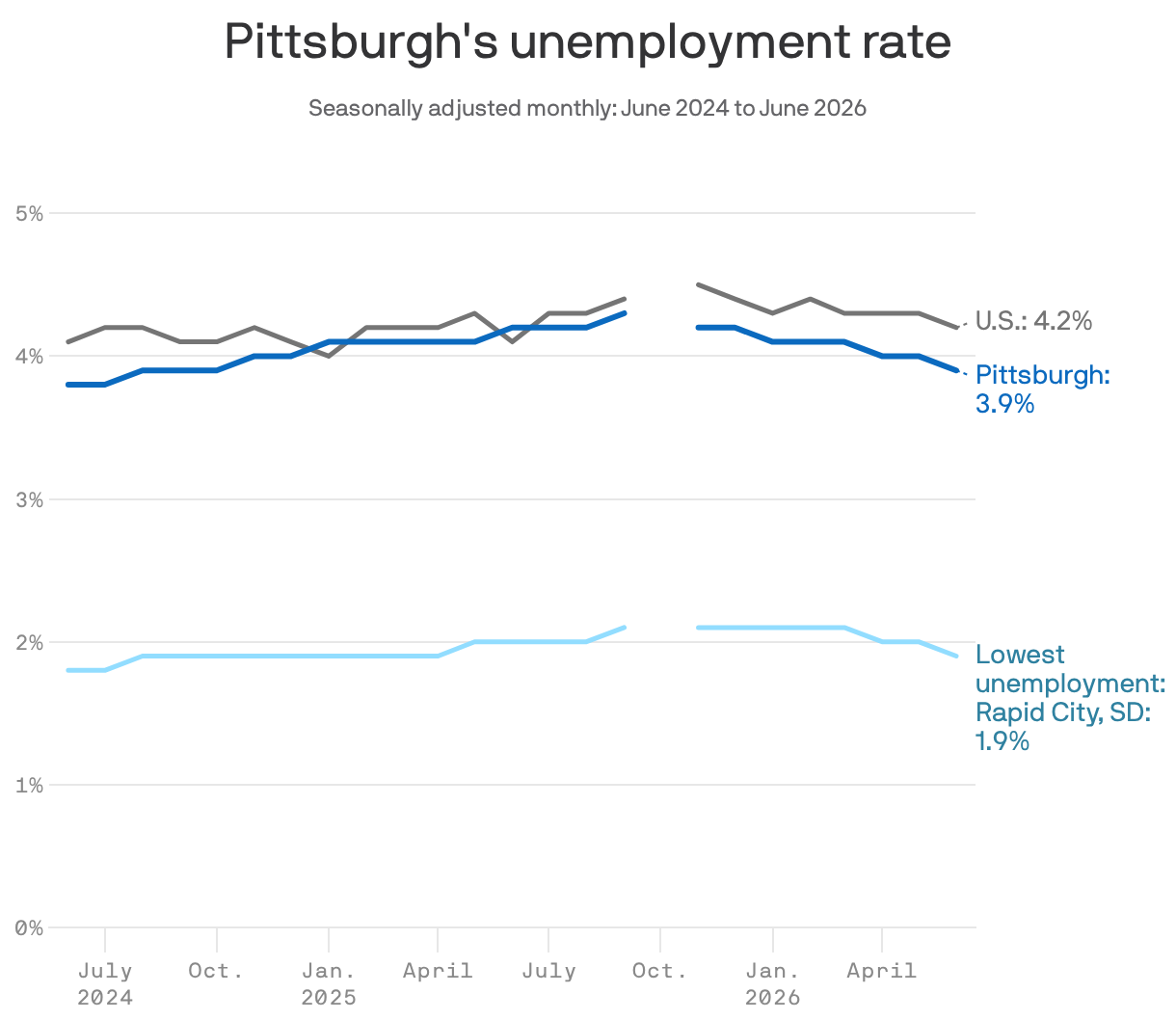
Metro Pittsburgh's unemployment rate edged lower in June — in line with the nation — dropping the area's jobless rate to a seasonally adjusted 3.9%, new federal data shows.
Why it matters: While nearly half of the cities and metro areas tracked in the U.S. Bureau of Labor Statistics jobs report posted higher unemployment rates, metro Pittsburgh's slightly lower figure suggests its labor market remains solid.
By the numbers: Our unemployment rate is 0.3 percentage points below the national average.
- It's also lower than 55% of the areas surveyed by the BLS.
Context: The area added 700 jobs since last June. The state added 47,900 jobs during the same period.
The big picture: The lowest rate in the nation was Rapid City, South Dakota, which ticked just below 2%.
- The highest was Southern California's El Centro at just under 19%, while Visalia, California, also topped 10%.
The bottom line: A stable local employment picture can be welcome news, but it doesn't necessarily translate into relief for household budgets.
📸 Chrissy logged into her high school Photobucket and is horrified.
🥫 Ryan made a tomato soup cake, a 1920s throwback, and it was a hit at a cake party.
Thanks to Chloe Gonzales for editing this newsletter.
Sign up for Axios Pittsburgh