Axios Markets

January 13, 2024
In the future, everyone will be a plagiarist for 15 minutes. That seems to be one natural endpoint of Bill Ackman's latest campaign, a small part of which I write about below.
- Also: Where Americans are safest, and a look at BlackRock's recent voting record. All in 1,543 words, a 6-minute read.
1 big thing: Safety first
Illustration: Natalie Peeples/Axios
Last Friday, January 5, the day a door plug flew off an Alaska Airlines airplane in mid-flight, was a day in which approximately 120 Americans died in motor vehicle crashes. Roughly 136 died from opioids. Perhaps 150 died as hospital inpatients due to preventable medical errors. About 230 died of COVID-19. And zero died in aircraft accidents.
Why it matters: Air travel is the one part of American daily life where the general public has zero tolerance for any kind of safety lapse.
- As we saw so vividly, the aviation industry is far from perfect in that regard. But it's still astonishingly good.
Where it stands: Journalist James Fallows calls air travel's safety record "an under-appreciated miracle of modern society."
- "On a statistical basis, being aboard a North American or Western European airliner is about the safest thing you can do with your time," he writes, "compared even with taking a walk or sitting in a chair."
How it works: Precisely because flying is so inherently dangerous, the industry has developed an obsession with safety, as epitomized in the famous reports painstakingly put together after every incident.
- Writes the NYT's Zeynep Tufekci: "A National Transportation Safety Board investigation report reads like a how-to book for pulling off miracles and achieving seemingly incredible levels of safety. These reports renew one's faith in what humanity can achieve if we apply our brainpower and resources to it."
- A "but" follows, of course: "these exceptional levels of commercial airline safety require eternal vigilance against the usual foes."
Reality check: Nothing remotely similar exists with regard to auto safety. As David Zipper reports for Slate, auto manufacturers such as Tesla self-certify their vehicles as safe, and the National Highway Traffic Safety Administration needs to launch and conclude an in-depth investigation before it can intervene and ask for a recall.
Between the lines: Buy-in from the public is crucial. When hundreds of planes were grounded in the wake of the Alaska Airlines incident, causing thousands of flights to be canceled, there were surely grumbles but there was no real opposition, like there was to seatbelt laws or safer streets or mask mandates. No one called loudly for the flights to be reinstated immediately, saying that safety culture had gone too far.
- Public attitudes toward Boeing track the manufacturer's safety record — unlike, say, attitudes toward Tesla, which has a pretty dismal safety record for both employees and drivers but whose reputation in the public mind is mostly a function of what people think about the company's technology and CEO.
Be smart: The public is so accepting of safety protocols in aviation mainly because flyers want all the reassurance they can get.
- No one considers banks, say, to be physically dangerous. As a result, if a bank headquarters construction project ends up killing a worker, as recently happened at JPMorgan, there's almost no hit to the institution's reputation.
- Similarly, working from home is not something people are afraid of. It might well end up causing a significant number of musculoskeletal injuries, but those injuries won't generally redound on employers' reputations.
The bottom line: Americans are broadly OK with a society where thousands of people are injured or killed daily in preventable ways. Aviation is the honorable exception.
2. The doyen of workplace safety
Photo: Jonathan Fickies/Bloomberg via Getty Images
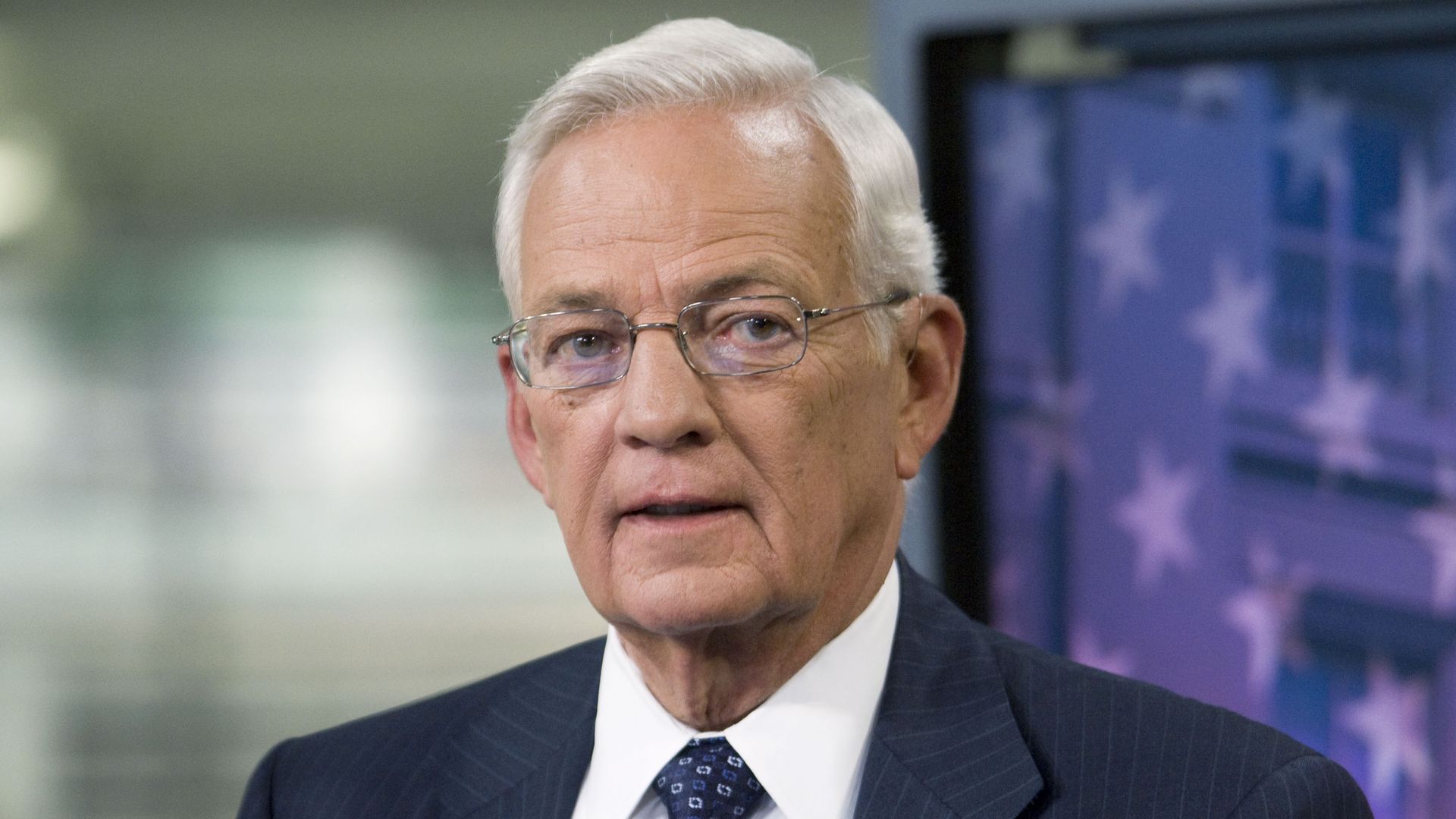
Former Treasury secretary Paul O'Neill transformed Alcoa during his tenure as CEO by concentrating on safety above everything else.
The logic: As Michael Lewis explained in a 2002 profile, O'Neill's first day as CEO included a speech — "the greatest CEO speech of the 20th century," per one account — saying that worker safety had to be a higher priority than profits and that anybody found cutting corners on safety would be fired.
- The idea was, in part, that the focus on safety would demonstrate to the company's workers that it actually cared about them, which in turn would persuade those workers to cooperate in necessary cost-cutting measures.
- O'Neill's strategy worked: Alcoa's profits rose from $4.8 million in 1993 to $1.5 billion in 2000.
Lewis writes: "To give you an idea of what he achieved, Treasury Department employees, most of whom don't do much but sit at desks, missed work because of injury 20 times as often as Alcoa employees, most of whom work with molten lava and man-eating machinery."
Between the lines: As O'Neill himself put it, a safety-first culture is one in which, "when a group of people are going down a stairway and there's a handrail, and you're going with the CEO, if the CEO doesn't hold the handrail, you pull on his sleeve or her sleeve and say, hold the handrail. That's what we do here. We all do it."
The bottom line: There's a good chance your CEO has said at some point that in your organization, safety comes first. Almost certainly, that wasn't true.
3. When woke capitalism takes a nap

The European lead in terms of ESG investing has widened substantially over the past two years, according to a new analysis by ShareAction that echoes similar findings from Morningstar.
Why it matters: The U.S. is home to the largest fund managers in the world — none more so than BlackRock, a company that turns out to have largely stopped voting for ESG resolutions over the past two years.
Context: After being attacked for being the face of "woke capitalism," BlackRock CEO Larry Fink has said he's not going to even use the term "ESG" any more. (It stands for environmental, social, and governance.) Now it seems he's unwilling even to vote for ESG resolutions.
Between the lines: Fink has said clearly that "climate risk is investment risk" and, as a member of GFANZ, is committed to accelerating the transition to a net-zero global economy.
- The catch: Most of BlackRock's assets are passively invested, meaning that the company can't divest from companies that are failing to adequately address the climate emergency or other important issues.
- Its only real recourse in such situations is to vote its shares in favor of ESG resolutions.
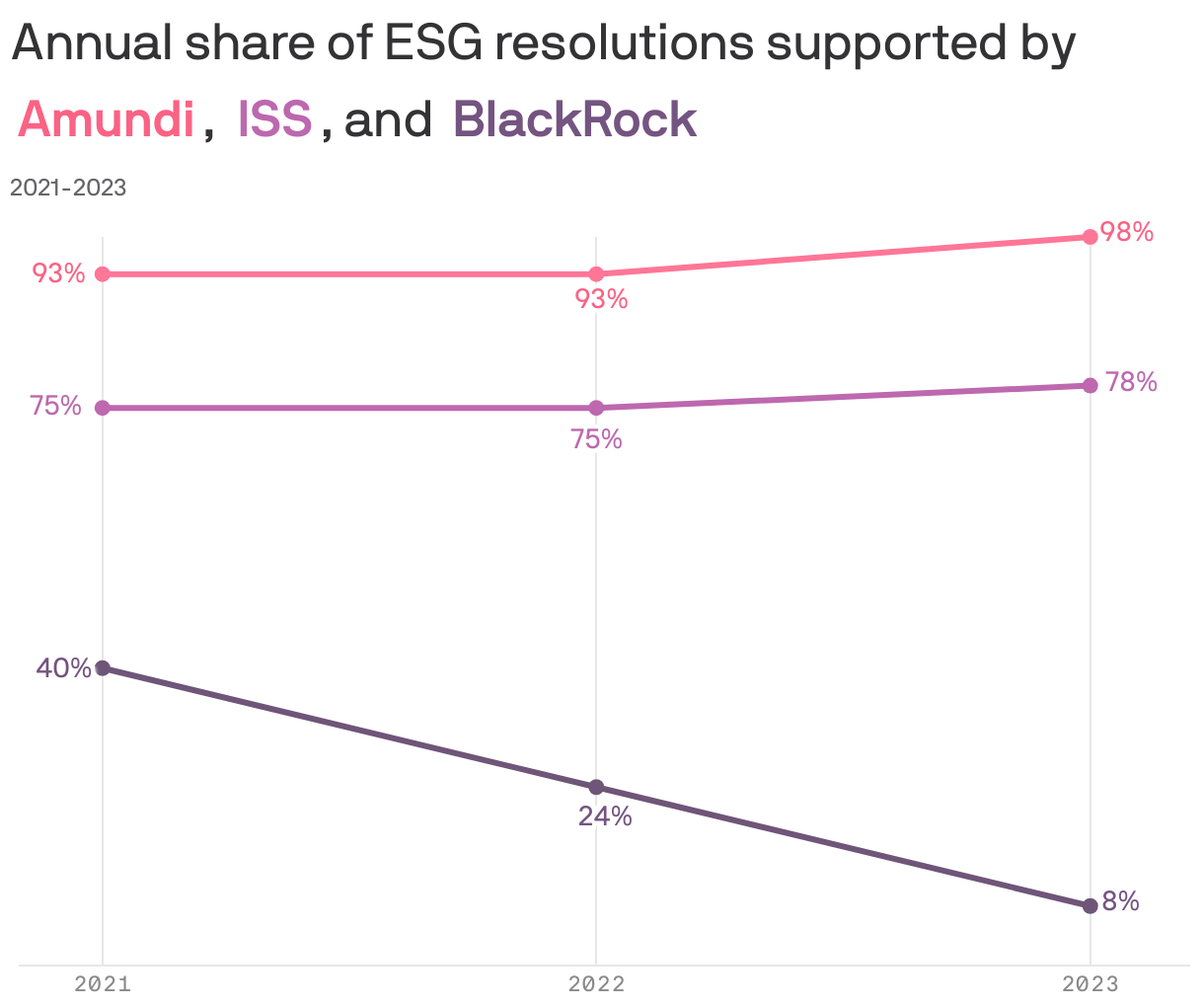
- That's something European managers such as Amundi do nearly all the time, and that ISS, the leading proxy voting advisor, recommends doing roughly 75% of the time.
By the numbers: BlackRock voted in favor of ESG resolutions 40% of the time in 2021, per ShareAction — but just 8% of the time in 2023.
The intrigue: Although the decline at BlackRock is particularly dramatic, a similar trend can be seen at substantially all of the major U.S. fund managers — including Pioneer, which is owned by Amundi, the largest investor in Europe.
- Looking at what Morningstar considers "key ESG resolutions," Pioneer, which operates under a separate local voting policy, voted for 99% of them in 2021, but just 35% in 2023.
For the record: "In 2023, because so many proposals were over-reaching, lacking economic merit, or simply redundant, they were unlikely to help promote long-term shareholder value," said BlackRock in a statement.
- "The majority of these proposals failed to recognize that companies are already meeting their asks," writes Joud Abdel Majeid, BlackRock's head of investment stewardship.
My thought bubble: If that were the case, one would expect a similar decline from ISS. But, in fact, ISS support actually increased over the two years in question.
The bottom line: While BlackRock is adamant that anti-ESG campaigning within the Republican Party isn't affecting its votes, its behavior is at least consistent with a more conciliatory stance toward such critics.
4. How to bully a media company
Photo: Scott Eells/Bloomberg via Getty Images
Bill Ackman, a hard-charging hedge fund manager, is reasonably typical in terms of how he behaves upon publication of a story he doesn't like. Where he's not typical is in his willingness to be open about what he did:
When the "Neri Oxman admits to plagiarism story" broke, I reached out to a board member I knew at BI, and to its controlling shareholders, the co-ceos of KKR, and to Mathias Döpfner, the Chairman and CEO of Axel Springer. I assumed that with a call or two, I would be able to convince BI or AS to suspend the stories.
Between the lines: BI is Business Insider, a publication that reported accurately that Ackman's wife, Neri Oxman, admitted to instances of plagiarism in her doctoral dissertation. KKR is a major shareholder in Axel Springer (AS), which owns BI.
- Ackman's assumption was that because Springer owns BI, he could bully them into taking down the story, overriding BI's editor-in-chief.
Reality check: While it's true that hedge fund managers often find it easier to talk to CEOs than to editors, it's incredibly rare for a CEO to override an editor.
- Tom Glocer, a former CEO of Thomson Reuters, tells Axios that "I was contacted multiple times (by disgruntled hedge fund managers in particular) when Reuters wrote something less than the adoring hagiography they sought."
- "My standard playbook was to refer the complaint directly to the editor in chief, to let the EIC call the complainant directly, and to remind that person of our separation of church and state."
The bottom line: Ackman was not being realistic in his assumptions. But he had something of a tailwind because he's Jewish; he was accusing BI of anti-semitism; and Springer is strongly and explicitly pro-Israel.
- In the end, Ackman got further than the hedge fund managers who complained to Glocer — Springer said they'd look into what had happened.
Thanks to Kate Marino for editing this newsletter, and to Jay Bennett for copy editing it.
Sign up for Axios Markets

Stay on top of the latest market trends and economic insights