
Axios Markets

January 06, 2026

⬆️ The Dow Jones Industrial Average hit a record as investors shrugged off geopolitical risks while buying into energy stocks.
- Today: The American companies that could benefit from Venezuela.
- Plus: How Venezuelan rare earth minerals could affect the AI trade.
Let's get into it. All in 1,100 words in 4 minutes.
1 big thing: How Venezuela could benefit U.S. firms
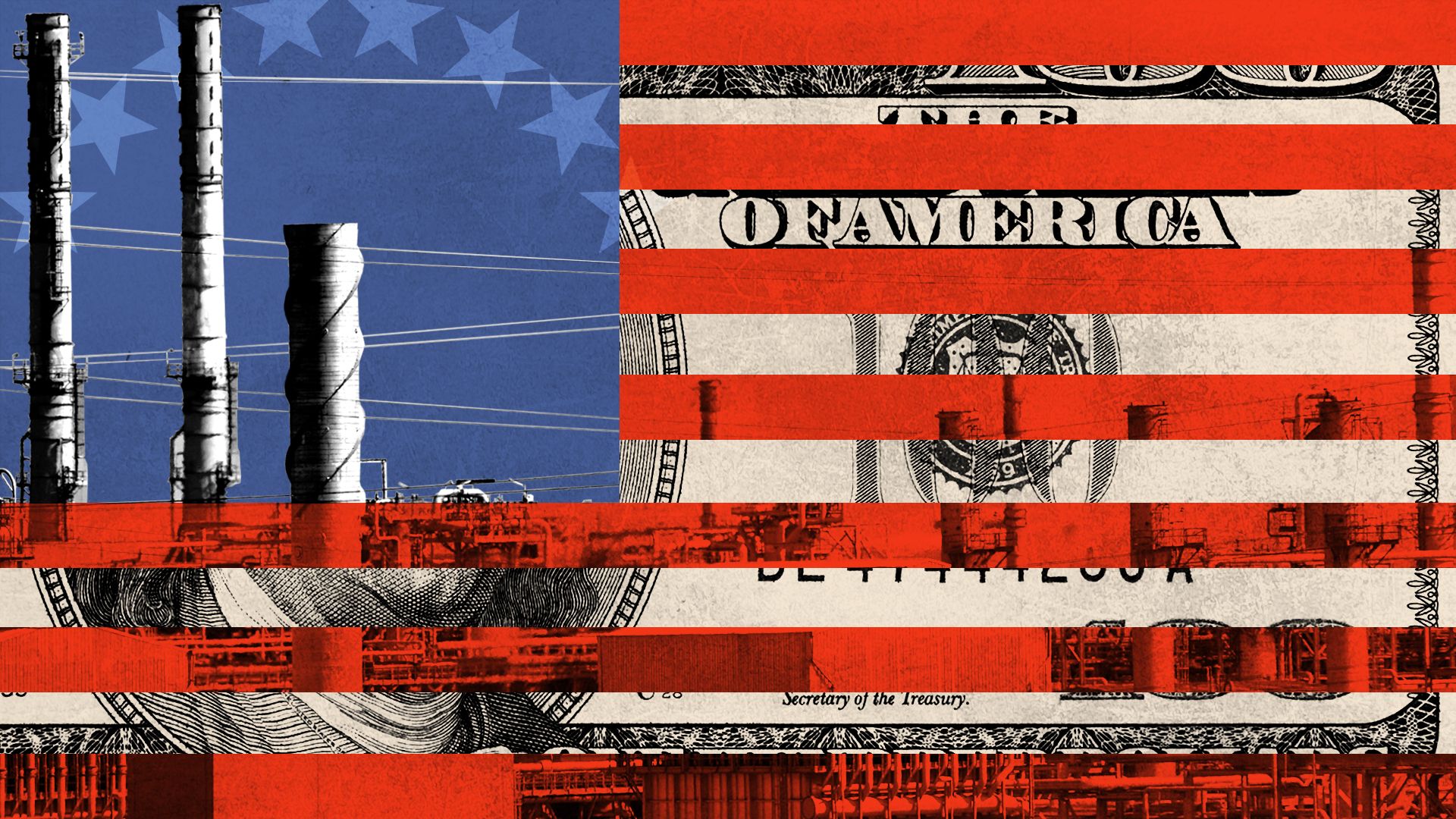
Investors never let a crisis go to waste, one chief investment officer wrote following the seizure of Venezuelan President Nicolás Maduro.
Why it matters: Wall Street has already drafted a list of winners and losers, diving into energy stocks and oil before the companies themselves have said whether they're interested. That could lead to disappointment.
What they're saying: "People piling into some of these names on the energy side, I don't want to say regret, but I'm not sure it's going to continue to be a great way to think about things," Jay Pelosky, the founder of TPW Advisory, tells Axios.
- "I'm very skeptical as to the idea that this is going to lead to a big surge of U.S. oil," he adds.
- Oil prices rallied 1% yesterday, even though any revitalization effort from U.S. oil companies in Venezuela would be expensive and could take years.
Follow the money: Who are the potential winners then?
- Oil service firms: Halliburton, for instance, was up almost 8% yesterday.
- Refiners: Marathon Petroleum and Valero Energy, which rose nearly 6% and 9% respectively, could benefit from access to Venezuelan crude oil.
- Chevron: The only U.S. oil company maintaining operations in Venezuela is "arguably best positioned to scale up production if conditions warrant," Morgan Stanley notes to clients. Chevron shares rose 7.8%.
- EM investors: Emerging market stocks and bonds had hugely successful runs in 2025, with the iShares Latin America 40 ETF up over 48%. While it critically does not include Venezuela exposure, the ETF is a proxy measure for growth in the region, which some investors anticipate as a result of U.S. involvement.
- AI companies: Venezuela sits atop critical minerals used in semiconductors that power AI data centers. If the U.S. can tap Venezuela for these materials instead of relying on China, it could have a leg up in the AI race. (But this is a very big if. More on that below.)
- Precious metals: Venezuela has gold and silver as well.
- Defense stocks: The sector could rally amid heightened U.S. military involvement, according to Morgan Stanley.
The other side: Who are the potential losers?
- Oil investors: Experts flag that most Venezuelan oil isn't profitable at current prices (around $60 a barrel), tossing cold water on hopes for a resurgence in supply, especially given the upfront investment required.
- Congress: Investors can "expect a smaller role for Congress in market-relevant policy developments, translating to elevated levels of political uncertainty and higher risk premia across the board," Morgan Stanley notes.
- U.S. dollar: The longer-term impact could be dollar-negative, as this is the latest example of the U.S. "doing whatever it wants," Pelosky says.
- Trade optimists: Anyone who thought the trade war was over, as action in Venezuela will likely ratchet up tensions between the U.S. and China.
The bottom line: President Trump's focus on regional dominance will continue to heighten both risks and opportunities for investors.
2. Minerals in Venezuela spark a new play for AI

The United States has its eyes on the prize in Venezuela, and it's not just oil but the critical minerals in the ground that can power AI and defense tech.
Why it matters: If developed, the vast mineral riches in Venezuela could help stabilize the country's finances and benefit the U.S. as it seeks to blunt China's global stranglehold on some of the precious resources.
Driving the news: Aboard Air Force One on Sunday, Commerce Secretary Howard Lutnick referenced the underdeveloped mining opportunities in Venezuela.
- "You have steel, you have minerals, all the critical minerals. They have great mining history that's gone rusty," he told reporters.
The big picture: The U.S. interest to secure critical minerals, in Venezuela and elsewhere, is as much about dominance in weaponry as it is in AI, which is an increasingly large contributor to U.S. economic growth and the stock market.
- Right now, the U.S. is reliant on China, which has roughly 90% of the global supply of rare earths. Beijing knows this, and has used it to its advantage in the trade war, ratcheting up export controls on rare earths.
What they're saying: "It's an affirmation that countries and regions need to have their own sources of supply," Pelosky tells Axios.
- It reinforces China's interest in becoming independent of the U.S. tech stack and vice versa, particularly as the two nations compete to win the AI race.
State of play: The U.S. involvement in Venezuela is likely to have significant implications for the ongoing trade war with China. If the U.S. can gain access to Venezuelan rare earths, it has a potential leg up in the tariff war.
- But if not, China can continue to use rare earths as a point of leverage by cutting off access, which would hurt the market and the economy, says Peter Tchir, head of macro strategy at Academy Securities.
Reality check: "The refining of all the commodities other than oil is done in China," Marko Papic of BCA Research tells Axios, adding that refining rare earths is the problem, not supply, and China has the dominant expertise.
- Even if the U.S. could handle the refining, would it then ship technology products back to China for manufacturing?
The bottom line: The U.S. could access more rare earths via Venezuela, but the refining and manufacturing process required for AI companies to benefit from that could take years to play out.
3. Copper prices surge to first record since July


Copper prices hit a fresh record yesterday. Already this new year, copper is up more than 5% after a 41% rise in 2025.
The big picture: Continued demand, lingering supply and tariff concerns are driving copper higher amid a broader boom for precious metals fueled in part by the AI trade.
Zoom in: Copper is used across the AI revolution, for data centers, power grids, EVs and more.
- The broad AI boom is increasing demand while supply is limited amid challenges at copper mines and a deadly mudslide at the second-largest mine in the world.
The bottom line: The rise in copper is the latest example of an asset class swept up in the AI boom, as the metal is used in building out data centers, renewables, EVs and more.
Got tips? Email me at [email protected]. I would love to hear from you about anything that may be of interest for our investor audience.
Thanks to Jeffrey Cane for editing and to Anjelica Tan for copy editing. See you tomorrow!
Sign up for Axios Markets