Axios Markets

February 03, 2026

👾 SpaceX acquired xAI ahead of what's expected to be a massive IPO. Stocks and metals rose to kick off the month.
- Today: How dip buyers stopped selloffs.
- And: The AI buildout is running low on cash.
Let's get into it. All in 949 words in 3 minutes.
1 big thing: Dip buyers stop selloffs in their tracks

Several asset classes kicked off the week under pressure, with metals and crypto down alongside stocks. That changed as investors bought the dip.
Why it matters: It's indicative of how much the dip buying mentality may be thwarting bigger, and more painful, selloffs.
What they're saying: "Without dip buyers, this market is kinda toast," Steve Sosnick, chief strategist at Interactive Brokers, a platform that caters to everyday investors, told Axios.
- When an asset recovers without a clear catalyst, that may be a signal that investors consider the "bargain" price a buying opportunity.
State of play: Just in the last week, investors have bought the dip several times when there was no clear fundamental change indicating a reason to buy.
- The Philadelphia Semiconductor Index, a basket of chip stocks, fell 5% heading into the weekend, then rallied 2.6% yesterday.
- Silver had its worst selloff since the 1980s, and gold also slumped Friday. Retail came in to buy the dip over the weekend, according to Interactive Brokers. Over the last six months, retail has been a larger participant in silver and gold markets as a share of total volumes.
- Michael Saylor, former CEO of MicroStrategy, has made buying the bitcoin dip his core business strategy, purchasing the digital currency even as it hit its lowest levels since Liberation Day.
- Microsoft's stock fell nearly 12% after earnings. Retail dip buyers emerged on the same day, making it the second-most-bought Magnificent 7 stock among the novice trading crowd for the week, according to JPMorgan.
Zoom in: Dip buyers are typically retail investors, as institutional investors are typically paid to deliver uncorrelated returns and have risk limits and other requirements that can prevent them from buying into selloffs.
- Hedge funds, in particular, may be forced to reduce exposure during periods of volatility, rather than add to it.
- Individual investors have smaller trades, use less leverage and face fewer formal constraints, giving them more flexibility to buy when prices fall.
Threat level: Retail-led dip buying can blunt drawdowns in the short term, but it isn't guaranteed to last.
- If losses deepen, volatility spikes or confidence cracks, those same investors can quickly step back or become sellers themselves.
- That raises the risk that future selloffs, without fresh buyers stepping in, could move faster and cut deeper.
The bottom line: For now, dip buyers are acting as a shock absorber for markets.
- But the markets' resilience increasingly depends on investors who don't have to buy — and can just as easily walk away.
2. The AI buildout is getting cash strapped
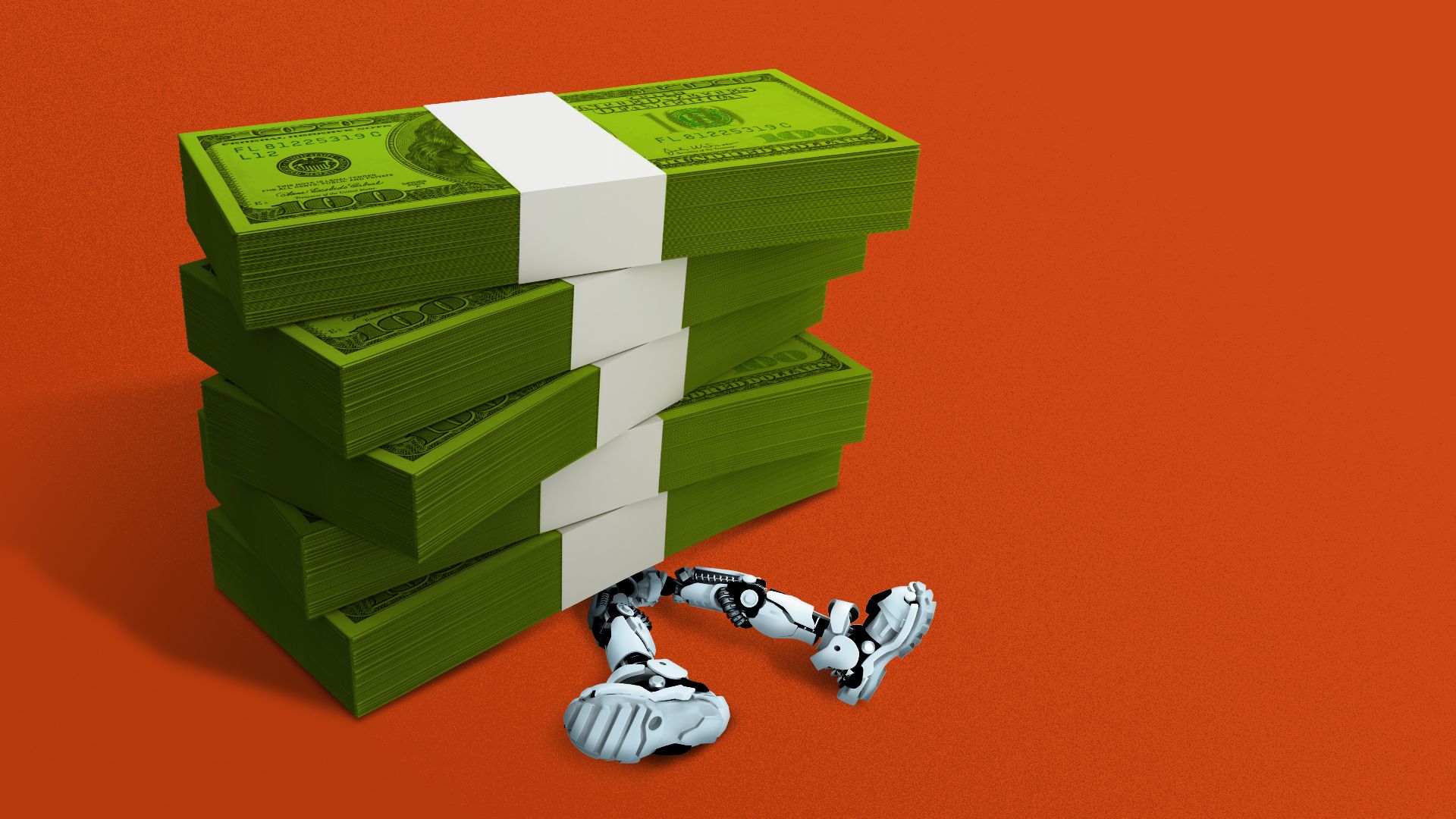
The biggest tech companies are increasingly getting creative with their balance sheets as they finance their AI ambitions.
Why it matters: The AI race is looking strapped for cash.
Driving the news: SpaceX is merging with xAI.
- Oracle is issuing more debt and equity to fund its AI buildout.
- All the major tech companies that have reported earnings so far have also signaled plans to spend more money to keep up in the AI race.
What they're saying: AI companies are transitioning from "asset-light to infrastructure-heavy business models," Morgan Stanley analysts wrote in a recent note to clients.
- There's a risk that Oracle could need additional debt, Morgan Stanley notes, and its cash flow is expected to turn negative amid its AI data center construction efforts, according to Bloomberg.
- SpaceX and xAI are merging because the latter needs capital to compete more directly with the likes of Google and Meta in the AI race, Gil Luria, head of technology research at DA Davidson, told Axios.
- Microsoft's capital expenditure hit $37 billion for its most recent quarter, a 65% annual jump, leading to one of the biggest selloffs in the stock's history. (Meta's capex also increased, but all was forgiven by Wall Street because its AI-driven ad revenue also rose.)
Zoom out: Broadly, Big Tech companies are transitioning from low to high capex "with limited disclosure" about financial details, which could mean the expense of the AI buildout is being miscalculated, Morgan Stanley notes.
- Financial statements from the Big Tech companies don't always clearly show their increased spending habits, in part due to varied accounting practices for things like the depreciation timeline for chips and data centers.
- Michael Burry, of "Big Short" fame, called out depreciation as "one of the more common frauds of the modern era."
- According to his calculations, Oracle is overstating forward earnings by nearly 27% and Meta by nearly 21%.
Threat level: Investors are meant to value stocks based on their earnings, both current and future.
- That math breaks down when the underlying numbers can't be trusted in the first place.
The bottom line: AI capex estimates vary, but are expected to hit $5 trillion by 2030 according to McKinsey.
- For that math to work, the Big Tech companies have to find a way to make AI, or some other part of their businesses, profitable and fast.
3. Bitcoin's slump gets slightly less slumpy


Bitcoin rose over 2% yesterday. The slight recovery came after a selloff that left the digital currency down 10% year-to-date.
Why it matters: Bitcoin hasn't been the same since the flash crash in October of 2025, Steve Sosnick, chief strategist at Interactive Brokers, tells Axios.
- If liquidity can't improve, it will be hard for the asset to recover.
Got tips? Email me at [email protected]. I would love to hear from you about anything that may be of interest for our investor audience.
Thanks to Christine Wang for editing and to Carolyn DiPaolo for copy editing. See you tomorrow!
Sign up for Axios Markets
