Axios Markets

November 26, 2025

🦃 Stocks twisted and turned yesterday before ending with decent gains. And even amid the Nvidia angst, the tech-focused Nasdaq 100 closed in the green.
- Today: Is this a turning point for the Nvidia/OpenAI duopoly?
- Plus: What the shale boom tells us about artificial intelligence.
🗓️ Programming note: Markets will be off tomorrow and Friday, as we hope you will be, for the Thanksgiving holiday. We'll be back with you Monday!
Let's get into it. All in 1,120 words in 4 minutes.
1 big thing: Google makes a splash in the AI race


Wall Street loves a story, and the one saying Nvidia's chips alone would lead the AI revolution has been utterly compelling. This is why the plot twist of Google emerging as a title contender in AI chips has been so jarring.
Why it matters: Assessing the road ahead for AI has just gotten more difficult for investors, as Nvidia's dominance — and that of OpenAI — no longer seems to be quite so inevitable.
- The question is whether this is just another DeepSeek-like moment in the market that invites investors to buy any dip in Nvidia.
Catch up quick: Google recently released Gemini 3, which has been hailed as superior in performance to OpenAI's ChatGPT. Gemini is powered by Google's own AI chips, known as tensor processing units, or TPUs.
- Facebook owner Meta, a major Nvidia customer, is now in talks with Google over supplying TPUs for its data centers, The Information reported. Google has previously kept its AI chips for its own data centers.
- Given how much expectation is baked into Nvidia's stock, any suggestion of an erosion in its dominant market share can rattle shareholders.
By the numbers: Shares of Nvidia tumbled as much as 4% yesterday before closing down 2.6%, while shares of Google parent Alphabet ended up 1.5%, nearing Nvidia in the $4 trillion market cap club.
- Alphabet shares were already on a roll: Ever since a federal judge ruled in September that the company would not have to hive off Google Chrome as part of a landmark antitrust case, the shares have risen more than 50%.
Zoom out: Nvidia, meanwhile, is under a spotlight.
- Michael Burry of "The Big Short" fame and other investors have raised questions about share buybacks and the company's accounting.
- Nvidia sent Wall Street analysts a note last weekend seeking to address the criticisms, Barron's reported. "Unlike Enron, NVIDIA does not use Special Purpose Entities to hide debt and inflate revenue," the memo said.
What they're saying: "We're delighted by Google's success — they've made great advances in AI and we continue to supply to Google," Nvidia said on X. "NVIDIA is a generation ahead of the industry — it's the only platform that runs every AI model and does it everywhere computing is done."
Reality check: As Nvidia suggested, it will take immense amounts of capital, innovation and time to seize the crown, even for a cash-rich giant like Google.
- Still, the push on TPUs is a great flex by Google, dispelling any lingering doubts that it was a laggard in the AI transformation.
The bottom line: "For now, Nvidia remains the leader, but as more companies like Google and others develop competing solutions, the landscape will likely become more fragmented," said Florian Ielpo, head of macro at Lombard Odier Investment Managers, per Bloomberg.

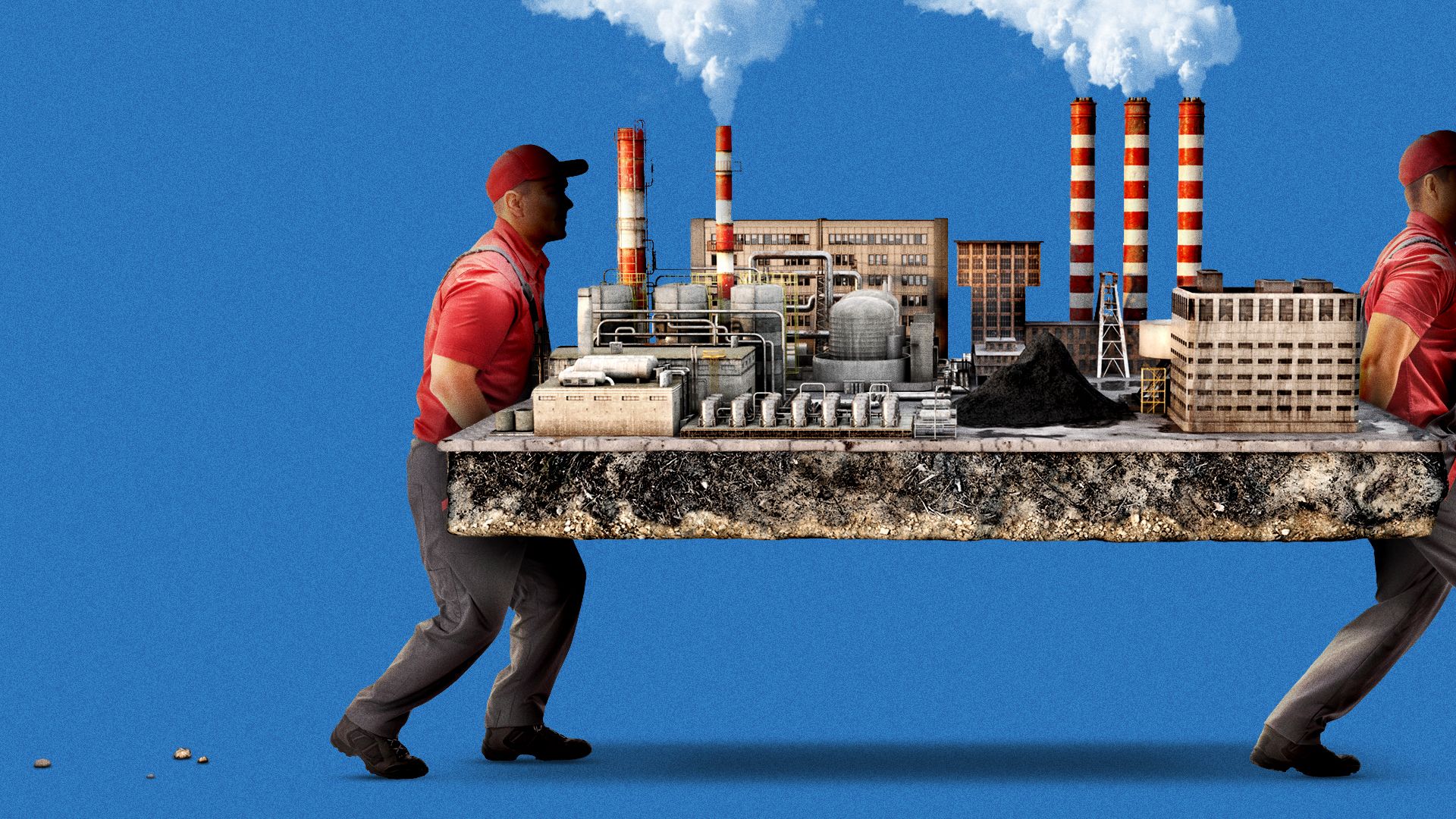
2. The 2010s oil bust could tell us the future of AI
To understand whether AI is in a bubble, and what could happen next, you have to think of it like railroads. Or maybe fiber-optic cable. Or perhaps oil drilling?
Why it matters: Everyone in the business world is anxiously trying to figure out which historical boom-and-bust comparison is the right one so they can be ready for what they fear comes next.
Case in point: In recent essays, two industry observers — Carlyle analyst Jeff Currie and Henry Gladwyn of early-stage tech investor OMERS Ventures — sought to compare what is happening in AI now and what happened in oil exploration 10 to 15 years ago.
The big picture: In the mid 2010s, the shale boom — named for the supplies trapped in rock formations unlocked by fracking — turned the U.S. into the world's largest oil and gas producer.
- It was a painful road for industry and investors because they invested heavily on growth and got hammered when Saudi-led OPEC looked to reclaim market share in late 2014 and prices collapsed.
- Some think there is a parallel and that AI could be on the same path.
How it works: The output of data centers is so power-intensive that their computing is measured in dollars per hour, the same way energy is priced by the megawatt-hour or barrel. That carries risk.
- "Big Tech AI is now producing a physical commodity with a supply and demand balance just like an energy company," Currie notes.
- "If, analogously, we replace low-cost Saudi Arabian oil supplies with low-cost Chinese AI compute technologies combined with cheaper foreign providers then the narrative could look eerily similar."
Reality check: The analogy has plenty of limits, like oil companies serving a market where demand is largely known and growing incrementally, rather than exponentially.
The bottom line: "The shale revolution did not fail. It succeeded so completely that it reshaped the global energy order," Gladwyn writes. "Yet many investors in shale were ruined."
3. How the Trump tariffs are playing out in Ohio
The global tariffs imposed by the Trump administration are already having an impact on manufacturing in a major, and politically important, industrial state — Ohio — a new report finds.
Why it matters: Manufacturing accounts for over 17% of Ohio GDP, and even small swings in costs can have ripple effects across supply chains in the state.
Zoom in: 266 manufacturing leaders, representing 31,000 employees in Ohio, responded to a survey between August and October conducted by Magnet, a nonprofit consulting group that focuses on manufacturing growth.
- The percentage of those who said that raw material costs are "significantly hampering growth" jumped to 10.9% this year from 7.7% in 2023.
- Tariffs have had a mixed impact on sales for a third of the manufacturers surveyed: 18% report losing sales, while 15% say sales increased.
Zoom out: Most of those surveyed have annual revenue of under $50 million. Small and midsize businesses, as Axios has reported, often lack the leverage and flexibility that large companies have to cope with tariff policy changes.
Reality check: Suppliers of custom components for larger manufacturers reported growth as U.S. companies pivot to sourcing more domestically.
What they're saying: "The gains are uneven and the path uncertain, yet manufacturers remain stubbornly optimistic that new opportunity will emerge from the disruption," Magnet CEO Ethan Karp said in a statement.
👀 Got tips? Email me at [email protected]. I would love to hear from you about anything that may be of interest for our investor audience.
Thanks to Ben Berkowitz for editing and Anjelica Tan for copy editing. See you on Monday!
Sign up for Axios Markets