Axios Markets

January 05, 2026

🇻🇪 The U.S. military action in Venezuela presents a new risk for investors to weigh as trading in the new year gets underway. On Friday, stocks eked out their first gain of 2026. This morning, stock futures and oil are slightly up.
- Today: How the markets react to Venezuela may depend on China.
- Plus: Investors reposition to prep for a year of active stock picking.
Let's get into it. All in 1,090 words in 4 minutes.
1 big thing: China may be a bigger risk than Venezuela
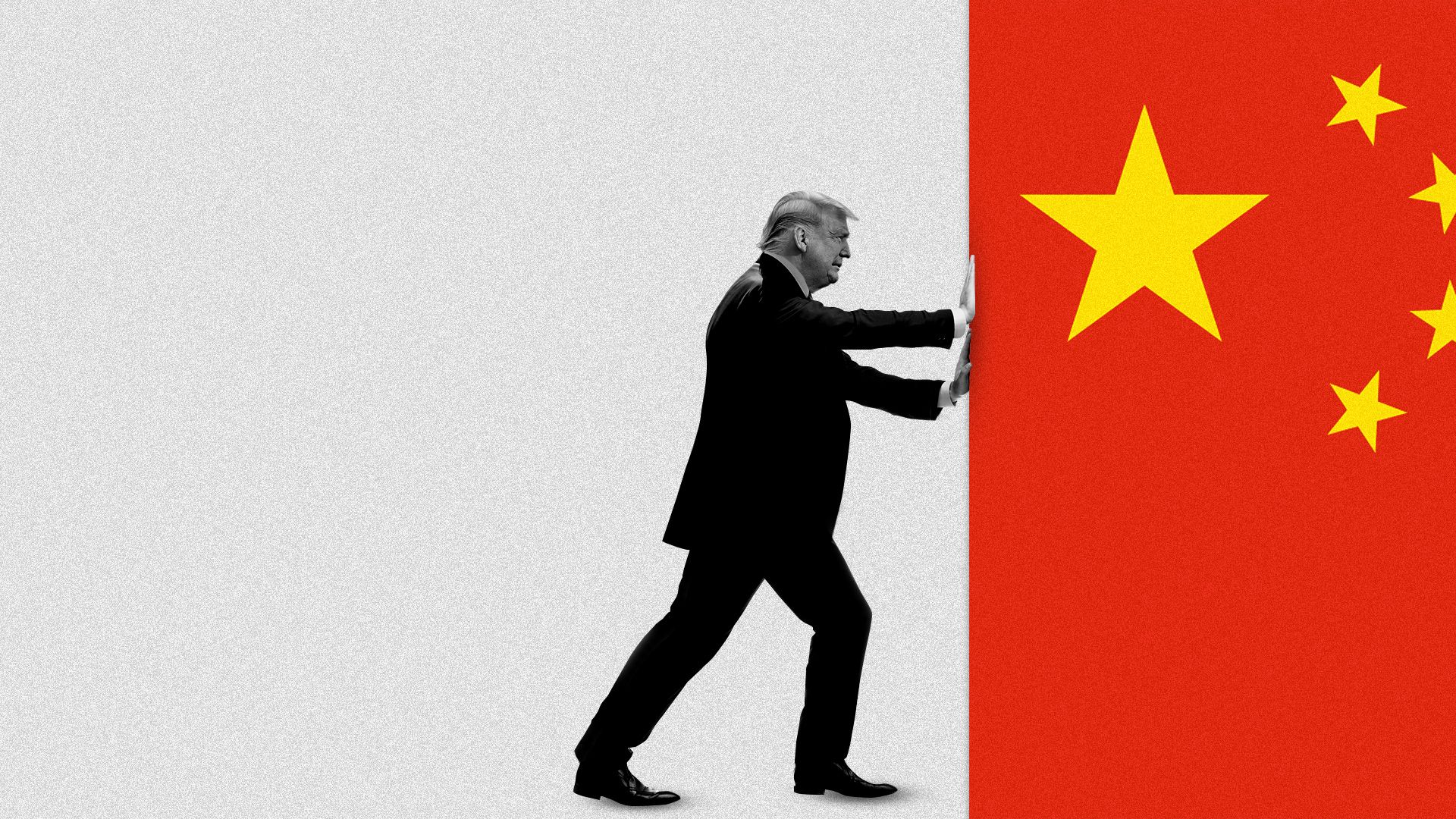
The bigger market risk for investors to watch in the wake of the U.S. military action in Venezuela won't be Caracas, but Beijing, a market strategist says.
Why it matters: If China moves to protect its oil interests in Venezuela — especially by tightening rare earth exports critical to the AI trade — markets could turn lower quickly.
What they're saying: "I think the real wild card is China," says Peter Tchir, the head of macro strategy at Academy Securities, an investment bank owned and operated by veterans.
- If China decides to retaliate, that "would be bad for markets," he tells Axios, adding that Beijing would likely focus on ratcheting up export controls on rare earth minerals, which are used in chips that power everything from electrical vehicles to data centers.
Catch up quick: What does China have to do with Venezuela and the U.S.?
- Venezuela has among the largest heavy crude oil reserves in the world, but the country lacks the infrastructure to exploit them.
- China has been providing loans to rebuild that infrastructure and update Venezuelan refineries, becoming the country's primary oil buyer amid U.S. sanctions and getting cheap access to heavy crude in return.
- If the U.S. takes hold of Venezuelan oil, China may lose its access to it.
Between the lines: It is unlikely that China would be willing to just walk away, so Beijing may decide to retaliate against the U.S.
- The market has already reacted negatively to headlines about rare earth export controls, given how critical they are to the AI trade that is defines the stock market right now.
- If China does not react with export curbs, we could see a slight lift to markets.
- Tchir says that export controls from China are a more likely outcome here than an invasion of Taiwan, which is another risk that investors have been weighing, as the U.S. involvement in Venezuela may embolden Beijing on its claims to the island.
Threat level: If China cuts off access to its rarest critical minerals, "I think that very quickly hurts the economy," Tchir says.
- That would become a challenge for the Trump administration, particularly ahead of the midterm elections this year.
Zoom in: The Trump administration has several stated and implied goals with its action in Venezuela, ranging from drug trafficking concerns to interests in regional oil reserves.
- But Venezuela is also thought to potentially have rare earths. If the U.S. could gain access to those minerals, it would soften its reliance on China.
The bottom line: The stock market has looked past geopolitical tensions in recent years, including the U.S. bombing of Iran.
- But relations with China pack a bigger punch, making the next moves by Beijing the key thing to watch for investors.
2. What the market needs from the AI trade this year
If you invested in the AI narrative — through Big Tech stocks, exposure to China, or even allocation to the precious metals that may benefit from the technology's expansion — you struck gold in 2025.
Why it matters: Investors are betting that the AI bubble won't pop in 2026, and stocks tied to the narrative can still rally.
- But if they are wrong, the entire stock market is at risk, thanks to its overconcentration in a basket of tech heavyweights.
What they're saying: "To feel comfortable allocating capital to stocks, we must feel confident that we are not about to see a bubble burst," JPMorgan notes in its 2026 outlook.
- Investing in stocks today requires a belief in the success of AI, and a close monitor of whether or not the boom is about to become a bursted bubble.
Follow the money: What to watch to determine whether a bubble is coming:
🎉 Exuberance: If everyone is bullish, that historically is a negative indicator. Beware of groupthink positivity on Wall Street.
💳 Credit standards: Bubbles grow when cheap credit is used to "magnify gains and obscure risks," according to JPMorgan.
💸 Cash flows: Investors want to see companies be responsible with their balance sheets even as they fight to win the AI race.
The bottom line: Despite the risks, somehow everyone is largely bullish, according to the latest global fund manager survey by Bank of America.
- That may be in part because if you were bearish over the last three years, you lost money, and probably credibility with clients.
- The question for 2026 is whether the continued bullishness is warranted.
3. Exclusive: Investors reposition ahead of unknowns

Retail investors turned into net sellers in December, ending a three-month winning streak against the S&P 500, per Charles Schwab's Trading Activity Index, which tracks the retail trading activity of millions of customers.
The big picture: The selling was modest, which suggests that investors were repositioning to wrap 2025 rather than turning bearish and setting up for a year of active stock picking as the AI trade gets messier.
What they're saying: 2026 will be more of an active "stock-picker type market" and less of investors buying a sector or broader indexes, Joe Mazzola, the head trading and derivatives strategist at Charles Schwab, tells Axios.
- Among the top five performing stocks of the S&P 500 for 2025, none were members of the Magnificent 7, and only two of those stocks outperformed the broader index.
- There has also been significant multiple expansion not just among tech stocks, but also in other corners of the market. Mazzola points to Costco shares trading at 50 times earnings at one point in 2025.
Zoom in: The information technology sector flipped from the biggest net buy in November to the biggest net sell in December, according to Schwab.
- Consumer discretionary, health care, industrials and energy were other sectors marked by net selling last month.
- Stocks sold included Tesla, Palantir, Intel, Rivian and Warner Bros.
- Stock buys included Netflix, Nvidia, Broadcom, Amazon and Alphabet.
The bottom line: Investors must work harder to find corners of the market with more room to run since so many stocks have already rallied to records.
Got tips? Email me at [email protected]. I would love to hear from you about anything that may be of interest for our investor audience.
Thanks to Jeffrey Cane for editing and to Anjelica Tan for copy editing. See you tomorrow!
Sign up for Axios Markets