Axios Markets
September 30, 2025
🗓️ We made it to the last trading day of the quarter without the seasonal September gloom coming for the stock market just yet. Knock on wood.
- Today: Saudi investment in Electronic Arts is part of a growing trend.
- Plus: As income inequality increases, even the rich have a wealth gap.
Let's get into it. All in 1,220 words in 4-minutes.
1 big thing: Saudi Arabia has a bro-vestment strategy
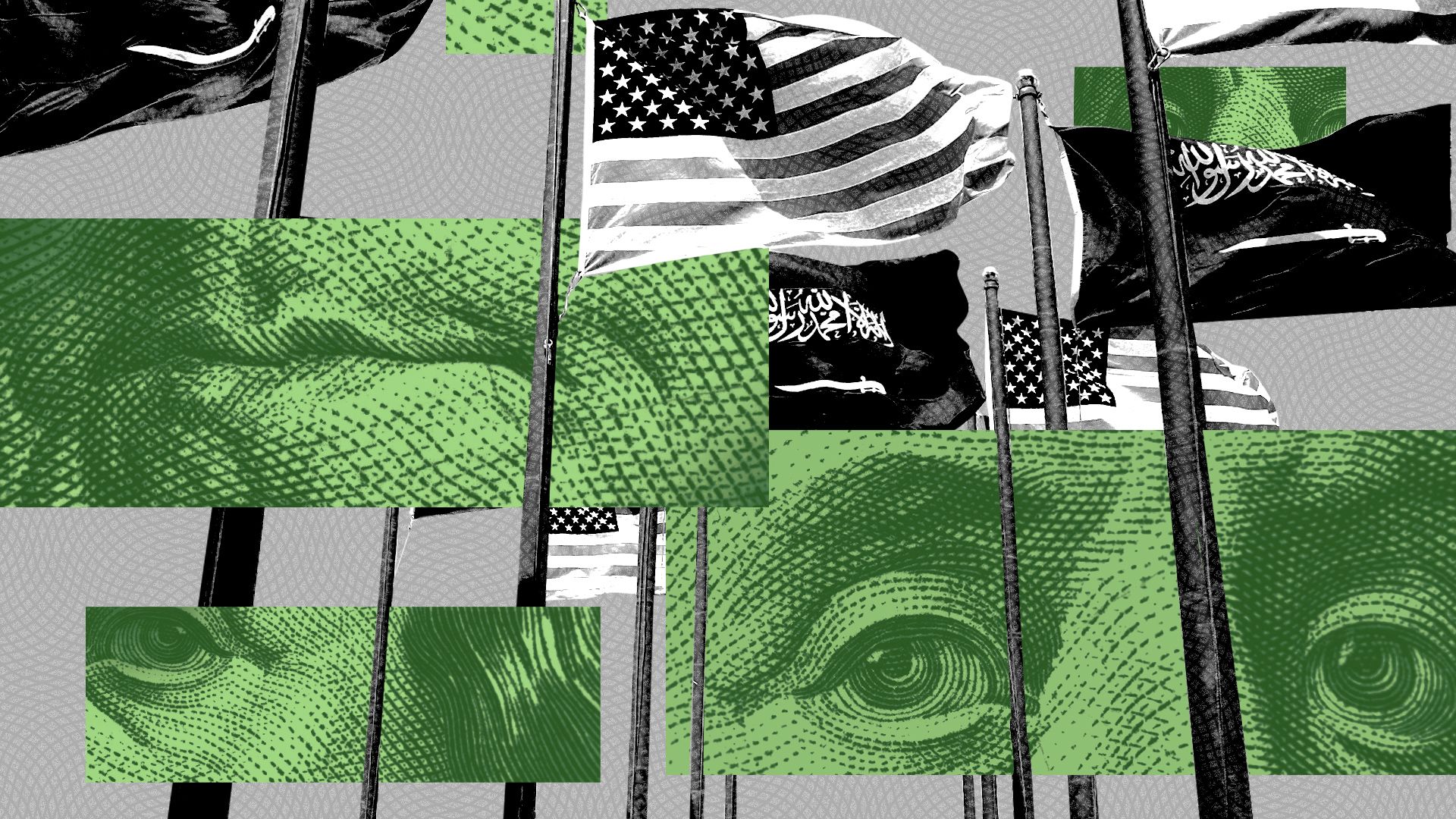
Saudi Arabia's $925 billion Public Investment Fund is backing the largest buyout ever, in a deal that speaks to the kingdom's renewed ambitions to become a cultural powerhouse.
Why it matters: The deal, for video game maker Electronic Arts, marks the latest U.S. entry point for Riyadh, as the oil-rich nation aims to diversify its economy, largely by investing in industries with outsized male audiences, ranging from console gaming to combat sports.
Zoom out: Just as the sovereign wealth fund is directing huge amounts of capital into global entertainment, Saudi Arabia is mounting a high-profile cultural push with its first Riyadh Comedy Festival from Sept. 26 to Oct. 9.
- The festival has drawn a star-studded lineup: Dave Chappelle, Kevin Hart, Bill Burr, Aziz Ansari, Pete Davidson, Jimmy Carr, Louis C.K. and others.
- But it's also sparked fierce backlash. Critics argue it's a form of "comedy-washing" by deploying high-paid entertainers to gloss over the Saudi regime's record on repression, censorship and human rights abuses.
Zoom in: Many of the kingdom's investments have mirrored the apparent interests of Saudi Crown Prince Mohammed bin Salman and his top aides in gaming, sports, anime and technology.
- Gaming and esports: Savvy Gaming Group, which is owned by the Public Investment Fund, has acquired esports tournament organizers ESL and FACEIT for $1.5 billion and mobile developer Scopely for $4.9 billion.
- Combat sports: The Saudis have shelled out hundreds of millions of dollars to put on major events in boxing, including a historic superfight on Netflix this month. UFC and WWE are transforming Riyadh into a top destination for their events, while parent company TKO just inked a media rights deal with Paramount for a new Saudi-backed boxing promotion.
- Entertainment: Billions of dollars have flowed into U.S. films, events and big-ticket sponsorships of WWE shows staged in Saudi Arabia.
- Soccer: Saudi Arabia is set to host the World Cup in 2034. PIF led the $415 million takeover of Newcastle United in 2021, securing an 80% stake. Stars like Cristiano Ronaldo have accepted enormous contracts to play in Saudi Arabia and become ambassadors for the Saudi tourism industry.
- Golf: PIF bankrolled LIV Golf and struck a 2023 framework agreement with the PGA Tour to merge commercial operations under a new for-profit entity.
- Tech: PIF remains the largest backer of EV startup Lucid Motors, holding over 60% of the stock, and is looking to expand its reach into the AI race.
Yes, but: "At the end of the day, money is the main driver" of the investment strategy, Michael Maudell, president of the Sovereign Wealth Fund Institute, tells Axios. It's about "trying to get away from fossil fuels and diversify."
- The Saudis also want to have their hand in the AI race and see the U.S. as the best place to capitalize on that business interest, he says.
The big picture: Saudi Arabia enjoys warm relations with the Trump administration and family.
- President Trump took his first foreign trip of his second term to Saudi Arabia, where the administration said it had secured $600 billion in investment commitments.
- Jared Kushner is part of the consortium acquiring Electronic Arts.
What's next: After a big deal like the Electronic Arts takeover, Maudell notes that historically the PIF pulls back a bit. Still, he sees investment growing as the kingdom looks to get in on the AI race.
- "I think the Middle East has become sort of like the Switzerland…China, Russia, the U.S., Europe…everyone's doing business in that part of the world," he says.
Flashback: That's a far cry from the protests and backlash U.S. officials and companies faced after the 2018 murder of journalist Jamal Khashoggi.
- Back then, companies distanced themselves from Riyadh, but many have since returned, lured by the Saudi sovereign wealth fund's deep pockets.
- "Businesses are loyal to one thing: shareholders…and money," Maudell says.
For the record: The PIF did not respond to requests for comment from Axios.
2. The richest people in the world have a wealth gap

The super wealthy — people with at least $30 million — grew to about 1% of the global millionaire population by the middle of 2025, says Altrata, a wealth data firm. This top cohort now holds 32% of the wealth among the ultra-rich.
Why it matters: Yes, there is a wealth gap even among the rich, as the richest of them all keep gathering a higher percentage of overall wealth.
By the numbers: The number of ultra-high-net-worth individuals rose to more than 500,000 by the middle of this year. This group makes up just 1% of the wealth population, but still accounts for over a third of millionaire wealth.
- The richest groups in North America are growing, accounting for around 41% of the ultra-high-net-worth population, with $24 trillion in wealth.
- New York is home to the largest share of these super wealthy, followed by Hong Kong and Los Angeles. Seven of the top 10 cities the richest people live in are in the U.S. A fifth of the global ultra-rich live in those 10 cities.
The big picture: This concentration of wealth in the top 1% of the top 1% mirrors the wealth gap playing out more broadly in the current K-shaped economic recovery in the U.S.
- The top 10% of earners make up about half of consumer spending, per Moody's, obscuring the spending habits of middle- and lower-income consumers.
- Corporations seek to profit off this, with credit card companies offering more expensive annual memberships and airlines catering to wealthier travelers.
Zoom out: The wealth gap among the rich is affecting the luxury goods sector.
- The ultra-rich accounted for over 20% of consumer spending on luxury goods in 2024, spending $290 billion, equivalent to 1% of U.S. GDP.
- The general luxury consumer base is declining after a decade of growth, making the ultra wealthy "increasingly critical to luxury brands' quest for growth," Altrata notes.
Zoom out: The wealth effect, or the impact of rising stock and home prices making people feel richer, is helping the richest of the rich feel even richer.
- The ultra-high-net-worth class of individuals has about $30 trillion of investable assets, the equivalent to 10% of investable global assets.
3. Cannabis stocks rip after Trump CBD endorsement
President Trump shared a video on Sunday promoting Medicare coverage of cannabidiol, which led to a swift rally in cannabis stocks yesterday.
Why it matters: Cannabis investors have been anxiously awaiting clarity around the Trump administration's regulatory approach to marijuana.
- Trump floated reclassifying marijuana as a less dangerous drug in August.
- Congress, however, is weighing tighter hemp rules that could restrict CBD.
By the numbers: Tilray surged 50% on the day, while Aurora closed up 28%.
- Amplify Alternative Harvest ETF soared 26%. Canopy Growth rose 17%.
The bottom line: All that rallying from a repost of a video leaves us watching for policy changes that would substantiate these stock spikes.
👀 Got tips? Email me at [email protected]. I would love to hear from you about anything that may be of interest for our investor audience.
Thanks to Jeffrey Cane for editing and to Anjelica Tan for copy editing. See you tomorrow!
Sign up for Axios Markets