Axios Markets

September 03, 2025

🏆 Investors back from summer vacation were met with a cruel reality that tariff uncertainty remains and tech stocks are still too expensive. Stocks and bonds fell to start the month, though dip buyers came in to prevent a broader selloff, and gold hit a new record.
- Today: Will companies ask this administration for tariff refunds?
- Plus: The record gold rally has room to run as an anti-dollar trade.
Let's get into it. All in 900 words in 3 minutes.
1 big thing: Potential for tariff refunds if ruling sticks

Corporate America may be due for a multibillion-dollar refund after a federal appeals court ruled President Trump's sweeping global tariffs are unlawful.
Why it matters: The case will likely go to the Supreme Court, but if the ruling stands, corporations could be primed for billions in back pay, if they're willing to ask for it.
State of play: "Depending on what happens with the court cases, there may be an opportunity to get some of those tariffs refunded," says Everett Eissenstat, former deputy director of the National Economic Council in the first Trump administration and now a partner at the law firm Squire Patton Boggs.
- Companies should carefully their track tariff payments in the event of any potential refund opportunities, Eissenstat tells Axios.
- He notes the administration will aggressively enforce tariff payments, so recordkeeping is critical regardless of the court decision.
Zoom out: Legal uncertainty is not the only hurdle. Many large companies may also want to avoid sticking their necks out.
- "There may be a risk in companies doing that. As individuals, they may not like the exposure," Eisenstatt says.
Flashback: In April, Amazon had to quickly deny reports that it was going to display tariff-related prices on its site.
- The commotion ended with Jeff Bezos and Trump speaking by phone, and Amazon did not display tariff-related prices.
- This is just one example of how corporations have assimilated to the rules of doing business under the Trump administration.
Yes, but: "Not every company is an Amazon," Eisenstatt says. "If it's an existential issue, I'm sure they're going to want to get those refunds back, especially if they were, if the court deems they were, collected unlawfully."
Follow the money: Companies wary of going it alone could pursue refunds via class-action lawsuits or through trade associations.
The bottom line: Trump's tariff program generates about $30 billion a month for the government. If the Supreme Court strikes it down, that's a huge tab for corporate America to get back from Washington.
2. Gold, "anti-dollar asset," could have room to run
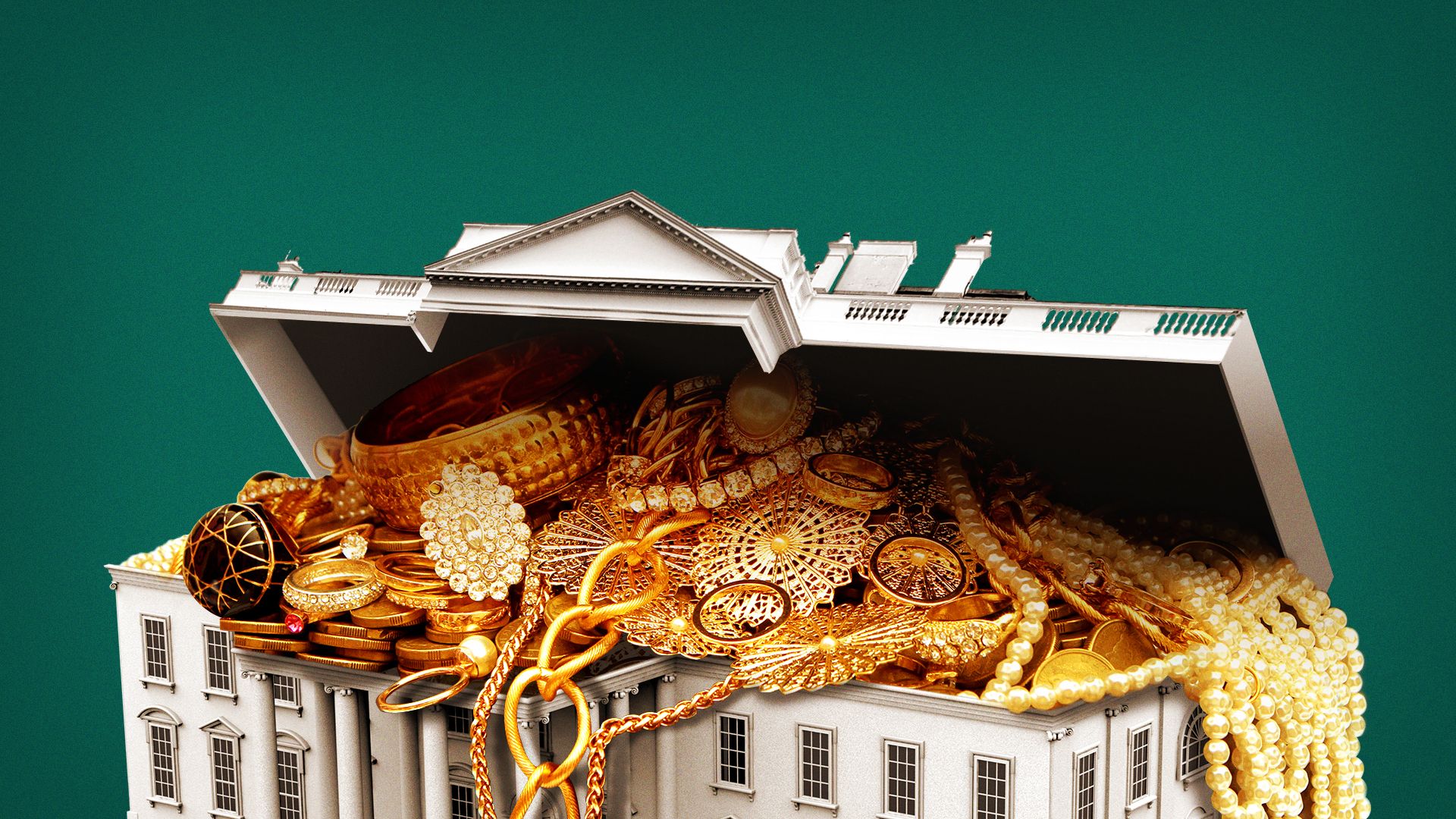
Gold surged to a fresh record high as stocks and bonds sold off to kickstart September.
Why it matters: Gold is not just a safe-haven asset. It's also not the U.S. dollar. Its rally reflects growing doubts among global investors about the greenback's long-term dominance.
What they're saying: "Gold is the carpenter on the sailboat — helpful in a leak, dead weight otherwise," writes Mark Malek, chief investment officer at Muriel Siebert & Co.
- When stocks and bonds sell off, as they are now, investors want to own gold.
- The precious metal's momentum comes from its role as "an anti-dollar or alternative dollar asset," Aakash Doshi, the head of gold strategy at State Street Investment Management, tells Axios.
Catch up quick: The catalysts driving declines in the dollar, down nearly 10% this year, aren't on track to go away any time soon.
- U.S. growth has cooled, with "not as much exceptionalism anymore," Doshi says. Tariff uncertainty is also clouding the role of the dollar as the world's reserve currency.
- The Trump administration hasn't pushed back against a weaker dollar, since it can make U.S. exports more competitive.
Between the lines: Several forces could keep propelling gold higher.
- Markets are pricing in an interest rate cut this month, lowering money-market yields and making gold more appealing.
- Threats to Federal Reserve independence favor gold over the dollar.
- A deeper equity selloff could spark demand for gold as a hedge.
- Central banks continue to buy aggressively, fueling physical demand.
- That buying reflects a "multidecade trend" of diversifying away from the dollar amid concerns about U.S. deficits.
Thought bubble: Gold and crypto have been rising in tandem as the dollar falls, a signal that central banks and investors may be looking to diversify away from fiat currencies altogether.
The bottom line: These dynamics could push gold toward $4,000 an ounce by year end, Doshi says.
3. Ray Dalio warns against 1930s-style autocracy
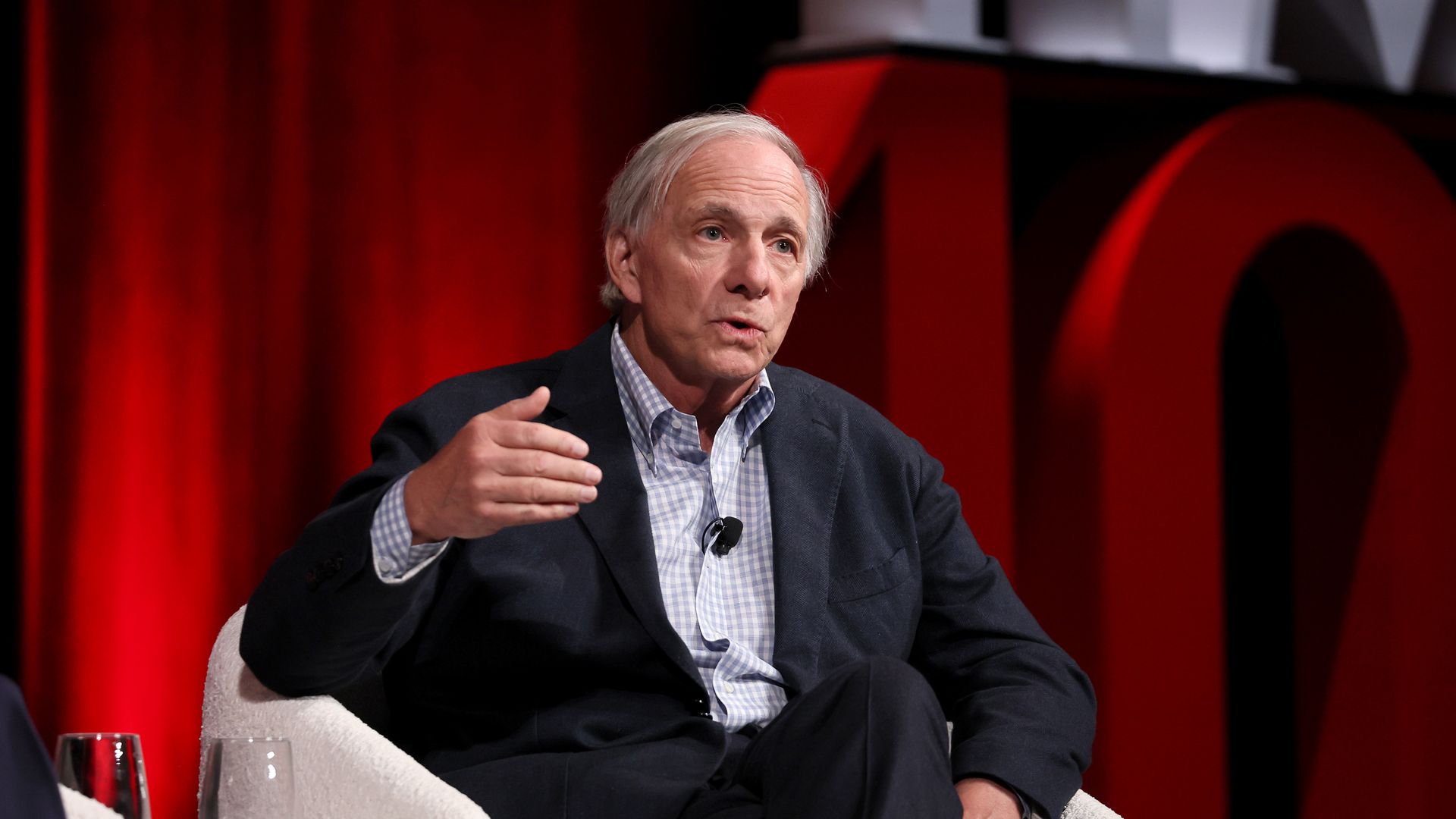
Billionaire hedge fund manager Ray Dalio warned that Trump administration policies mirror 1930s-style autocratic politics, during an interview with the Financial Times, though he stopped short of labeling the administration authoritarian.
Why it matters: You don't hear of many billionaires warning against the administration's policies these days.
What he's saying: "If those who shape policies don't change policies, there will be a debt service problem coupled with a debt supply-and-demand problem that will cause a debt-induced economic heart attack," Dalio said.
- He added that governments are "increasingly taking control of businesses and the economy" in response to a question about the U.S. taking a 10% stake in Intel.
The bottom line: Big debt, political, geopolitical, climate and technology problems, as well as changes, define this cycle, in Dalio's view.
- Prepare for "unimaginable changes" in the five years ahead, he said.
👀 Got tips? Email me at [email protected]. I would love to hear from you about anything that may be of interest for our investor audience.
Thanks to Jeffrey Cane for editing and Anjelica Tan for copy editing. See you tomorrow!
Sign up for Axios Markets