Axios Markets

June 09, 2021
Good morning! Today's newsletter is a quick 1,110 words, 4 minutes.
Send tips, or feedback to [email protected] or hit me up on Twitter @AjaWMoore.
👀 On 6/14, we’re launching What’s Next, a new newsletter covering the future of cities, autonomous vehicles, work, and more. Sign up now.
1 big thing: Why we can't have cheap houses

Illustration: Shoshana Gordon/Axios
Home construction is a deeply inefficient business. But the implosion of Katerra, a startup into which investors plowed some $1.9 billion, proves that disrupting it won't be easy, Axios chief financial correspondent Felix Salmon writes.
Why it matters: The high cost of housing is inextricably linked to the high cost of building new homes. If they could be designed and built using assembly-line technology, that would mean more, cheaper houses in a country that desperately needs them.
The big picture: Automated homebuilding is nothing new. Prefabricated construction dates back to at least 1624, and Sears kit homes remain desirable to this day — as do the mass-produced houses of Levittown.
- Such businesses tend not to last, however. Pulte Homes, for instance, closed down its high-tech in-house prefabrication plant in early 2007, declaring it "economically unviable."
How it works: Houses are expensive because the incentive at every level, from developer to contractor to sub-contractor to sub-sub-contractor and so on, is to pad costs rather than cut them. Successful builders learn to expect unexpected costs — and to incorporate them into their quotes.
- By vertically integrating everything from design and materials to building and construction into a single company, Katerra promised not only economies of scale but also an unprecedented degree of control over costs.
The catch: Large factories require substantial and predictable demand, while the construction industry is notoriously cyclical. And while some things can be automated, others, like navigating local permitting processes, cannot.
What they're saying: "Solo attempts by any organization to single-handedly disrupt residential real estate and construction will go the way of Katerra," writes John McManus of The Builder's Daily.
- "The future of housing," if it's ever to arrive, necessarily requires close collaboration among multiple stakeholders.
- The holy grail of affordable new housing will realistically always require government subsidy, too.
The bottom line: Obstacles to new construction are invariably deliberate, placed there by existing residents in an attempt to maximize their own property values. When all building codes are local, it's impossible to confront them in a formulaic and centralized manner.
2. Catch up quick
President Biden has pulled the plug on infrastructure talks with leading Senate Republicans, and will instead attempt to work out a deal with a separate bipartisan group of centrist senators. (NYT)
El Salvador's legislature voted early Wednesday to make bitcoin legal tender. It will become the first country to formally adopt the digital currency once President Nayib Bukele signs the legislation into law. (Axios)
The European Central Bank has reason to keep its loose-money policies in place when board members meet on Thursday — thanks to signals from the Federal Reserve. (Bloomberg)
Unlicensed decentralized finance (DeFi) markets in the U.S. — like those for derivative instruments and futures contracts — may be illegal, one top commodities regulator said Tuesday. (Coindesk)
3. Lordstown faces the music
Photo: Dustin Franz/Getty Images
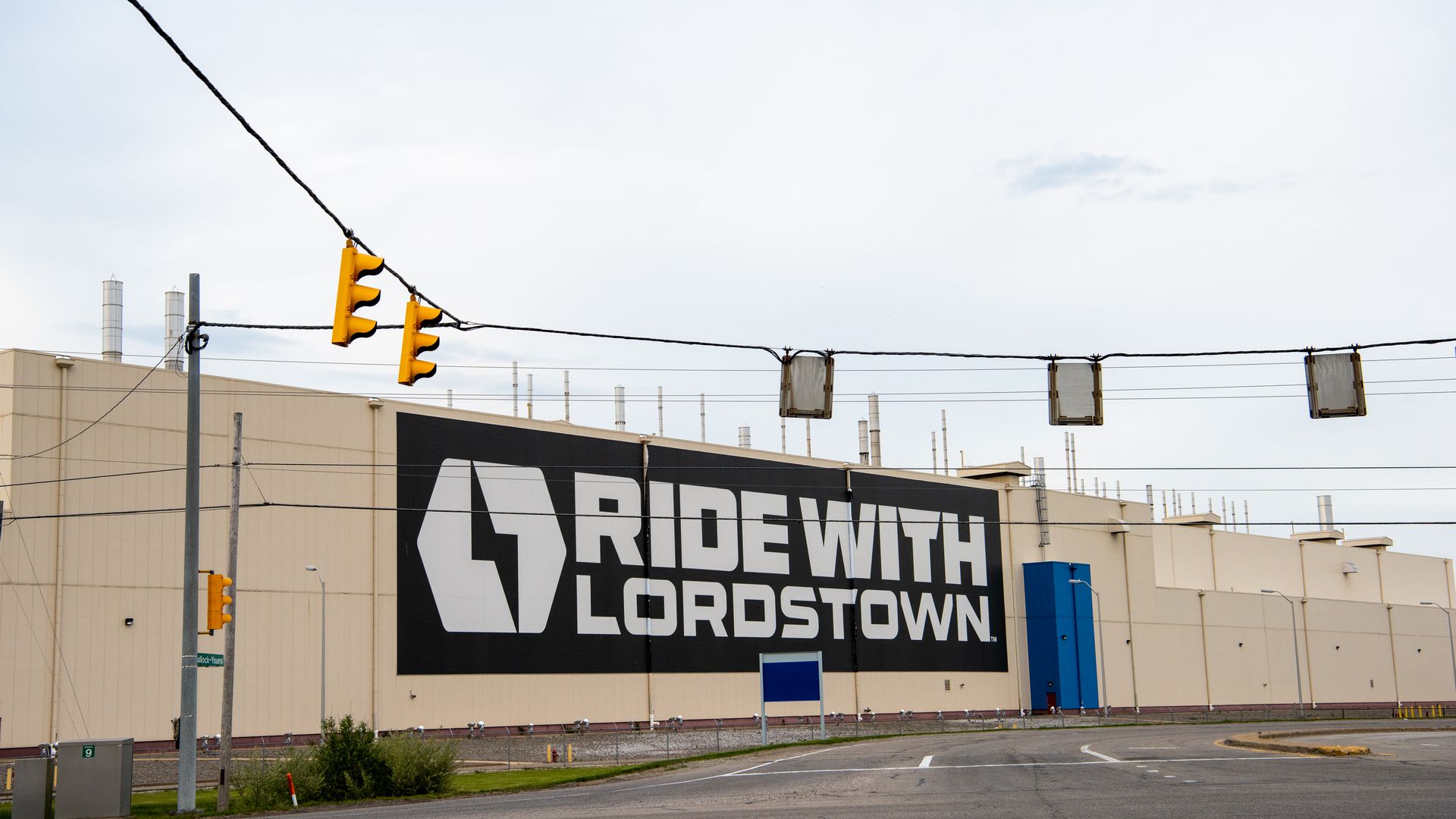
Lordstown Motors had plans to build its first electric pickup trucks this year, but the company revealed in a regulatory filing Tuesday that it doesn't have enough cash to begin production, writes Axios' Hope King.
- The company's stock dropped more than 16% on the news.
Why it matters: Lordstown is one of several pre-revenue EV companies that public market investors have begun to view more critically after they went through SPAC (special purpose acquisition) mergers last year.
- Its troubles play into the hands of SPAC skeptics, as well as the legacy automakers that say their own long histories of production would win out in a new EV-dominant future.
The details: In the filing, Lordstown highlighted its limited operating history, ability to secure purchase orders, and expectations regarding its ability to obtain and maintain intellectual property protection as other risk factors to its business.
- The company said it may not be able to get the financing it needs, and that its auditors have doubts about its ability to continue as a going concern.
Flashback: Lordstown said in March that the SEC was opening an investigation after accusations by a short-seller that the company used "fake" orders to raise capital.
The big picture: At least 30 EV-related companies have merged with SPACs since March 2020. But investors have somewhat soured on the space as scrutiny of speculative projections has grown, and legacy automakers make a play for their piece of the pie, Hope previously reported.
Go deeper into how the EV makers have fared in the public markets.
4. Bloomberg takes on globalization, Davos
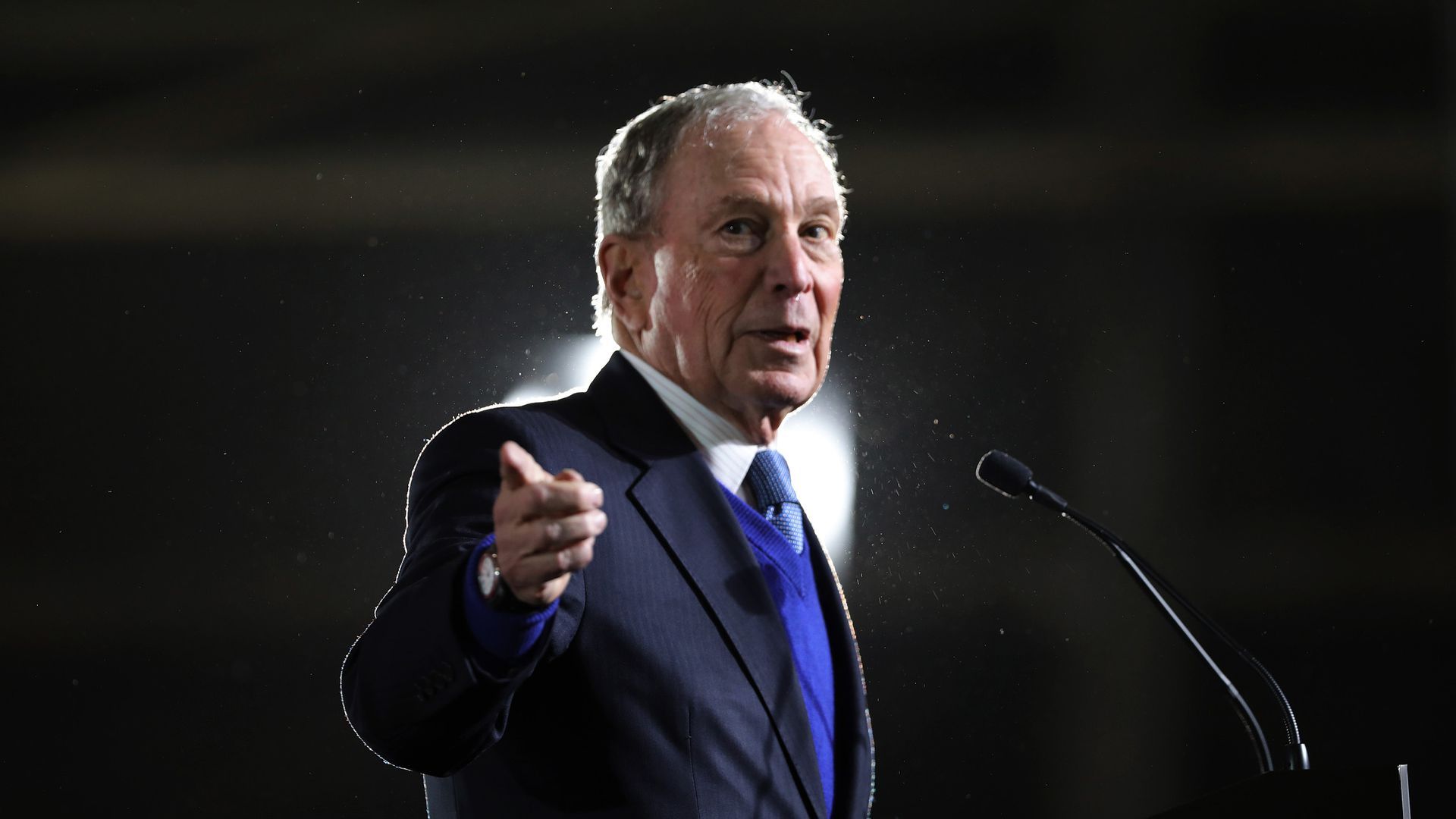
Photo: Joe Raedle/Getty Images
As the world grapples with the pandemic's impact on globalization, Michael Bloomberg on Wednesday is unveiling the inaugural members of a new group to focus on solving its biggest problems.
Why it matters: COVID-19 spread globally — in an instant, shutting borders, disrupting trade and eventually leaving millions dead or sick. What comes next as emerging economies prepare for recovery, will also impact the rest of the world.
What’s happening: Members of the first Bloomberg New Economy Catalysts cohort span six continents and are focused on technology and policy in emerging economies.
- The group will assemble virtually for a kick-off event on June 30 and also participate in this year’s Bloomberg New Economy Forum set for Nov. 16-19 in Singapore.
Between the lines: Bloomberg's efforts take aim at turf previously dominated by the World Economic Forum's annual V.I.P. event for business and political leaders in Davos. It was canceled this year after several attempts to set up shop in Singapore this summer.
The big picture: The pandemic didn't send globalization back to the dark ages of the financial crisis as initially feared, noted a Harvard Business Review report in March.
- Aside from the unprecedented collapse in the movement of people to and from, trade has rebounded, along with flows of capital and digital information.
The bottom line: "We certainly are in favor of an open global economy," Andy Browne, the editorial director of the Bloomberg New Economy Forum, tells Axios.
- "What we’ve seen this year is this really retrograde tendency towards closing borders, towards vaccine nationalism, migrant workers going home and in a sense, we feel that the counterforce to that is technology," Browne says.
5. Small businesses adjust to reopening normal


Small business owners' optimism pulled back slightly during May, writes Axios' Kate Marino.
Why it matters: Small businesses were hit hard during the pandemic, but optimism had grown in each of the prior three months. The slight pullback last month appears to stem largely from hiring challenges —offering yet another data point on how labor issues are playing out across the country.
The details: The NFIB Small Business Optimism Index eased by 0.2 points in May, to 99.6, from April.
- The index is up from a reading of 95 in January, but down from 104 in the fall.
- The reading is about 2 points above the historical average.
What they’re saying: "This tells me that overall small business sentiment is still elevated, and we continue to see increases in consumer activity as things are opening up and spending gains,” Sharon Miller, head of small business at Bank of America, tells Axios.
Yes, but: Finding quality employees continues to be challenging.
- About 93% of those trying to hire reported few or no "qualified" applicants for the positions they were trying to fill.
- A net 34% of owners reported raising compensation in May, up 3 points from April. That’s the highest level of the past 12 months.
The bottom line: As the economy strengthens, small businesses are still forging ahead with their growth and reopening plans.
- About 27% plan to make capital outlays, steady from the prior month.
- And 27% plan to make hires, up from 21%.
Sign up for Axios Markets

Stay on top of the latest market trends and economic insights