Axios Macro

January 28, 2026


Shortly after this newsletter sends, Neil will make his way across the frozen tundra of Washington, D.C., to the Federal Reserve, where a monetary policy announcement is due out at 2pm ET and Fed chair Jerome Powell will take (potentially spicy!) questions from the media at 2:30pm. 🙋♂️
- But first, we examine the global significance of a falling U.S. dollar. Plus, another historic U.S. ally cozies up to China. 🇬🇧
Today's newsletter, edited by Jeffrey Cane and copy edited by Katie Lewis, is 830 words, a 3-minute read.
1 big thing: The economy's pressure relief valve
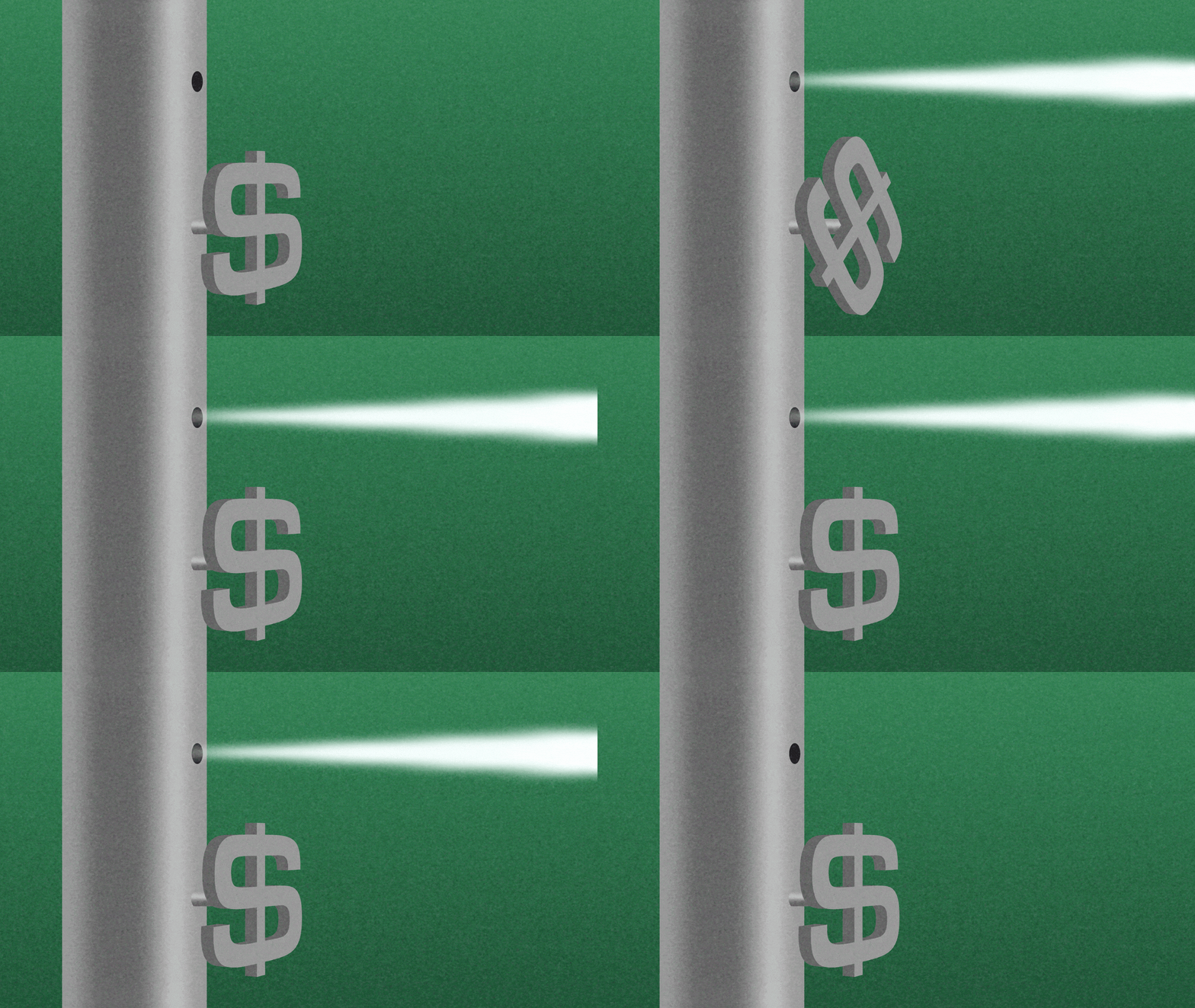
Massive fiscal deficits as far as the eye can see. The prospect of easy monetary policy even amid elevated inflation. America's role in the world is in flux. Something has to give, and that something is the U.S. dollar.
The big picture: A drop in the value of the dollar against other major currencies — underway for the past year, with a new leg down in the last couple of weeks — is the market manifestation of a shifting economic landscape.
- With strong economic growth and the AI boom, the stock market has remained robust. The prospect of additional Fed rate cuts has kept Treasury bond prices stable.
- But on the currency markets, the dollar has been falling — with specific recent words and actions by the Trump administration, as well as a broader sense of the U.S. retrenching from its role in the world fueling the moves.
By the numbers: The U.S. dollar index, which tracks its value against six other major currencies, is down 3.2% since Jan. 16 and down 10.4% since Inauguration Day a year ago.
- Those are huge moves for the currency that is central to world trade and financial flows.
Driving the news: Yesterday, President Trump was asked whether he was concerned about the dollar's decline. "No, I think it's great," Trump responded before a speech in Iowa. "I think the value of the dollar — look at the business we're doing. The dollar's doing great."
- That seeming acceptance of the falling dollar fueled further declines, although this morning Treasury Secretary Scott Bessent offered something of a corrective.
- "The U.S. always has a strong dollar policy," Bessent said on CNBC, adding, "but that means setting the right fundamentals." The dollar index rebounded slightly on those comments.
- Bessent also denied that the Treasury is intervening in currency markets to prop up the Japanese yen, which traders have seen hints of in recent days. Acting to strengthen the yen would, by definition, correspond with a weaker dollar.
Between the lines: The Trump administration has been ambiguous in its dollar policy. It champions a capital spending boom helped by its tax and deregulatory policies, and is demanding that other countries invest in the U.S. on a vast scale, which would tend to drive up the currency.
- At the same time, Trump aims to reduce the trade deficit and bolster U.S. manufacturing and demands lower interest rates from the Fed, all while the government is running wide fiscal deficits. Those point to a weaker dollar.
- Moreover, a volatile trade and foreign policy — imposing huge, ever-changing tariffs on allies, demanding territorial conquest of Greenland and much more — has fueled a global sense that the dollar is less of a port in the storm than it has been historically.
Of note: Tellingly, other assets that are historic rivals of the dollar as a safe haven are rallying: The Swiss franc is up 4.4% since mid-January, and gold is up 15% in that time.
What they're saying: "Aggressive fiscal expansion, unpredictable trade policy and sudden political interventions create uncertainty over growth, inflation and capital flows," deVere Group CEO Nigel Green wrote in a note.
- "Currencies price risk immediately, and, as we're seeing in real-time, the dollar is paying the price," he added.
2. Walking a new trade tightrope

Trump wants America to be less economically dependent on China. The world is not following his lead.
Driving the news: U.K. Prime Minister Keir Starmer is meeting with officials in Beijing this week, the second G7 leader to visit China in 2026.
- Canadian Prime Minister Mark Carney met with Chinese leader Xi Jinping earlier this month — a visit that led to some lower trade barriers between the two nations.
Why it matters: This is the new trade-war irritant — and a tightrope for global leaders in the Trump era.
- U.S. trade partners are looking for other markets to sell their goods, but the result might be gnarlier trade tensions with the U.S.
- Already, Trump has threatened to hit back at Canada, in the form of an additional 100% tariff on its U.S.-bound goods, if it lands a trade deal with China.
What they're saying: "I'm often invited to simply choose between countries. ... I don't do that," Starmer, the first U.K. leader to visit China in eight years, told Bloomberg, referring to the U.S. and China.
The intrigue: At least one nation has threatened to copy Trump-style trade crackdowns.
- Late last year, France threatened to impose tariffs on China over the European Union's enormous trade deficit with the country.
Sign up for Axios Macro