Axios Macro

December 05, 2022

1 big thing — First look: CEO optimism is fading
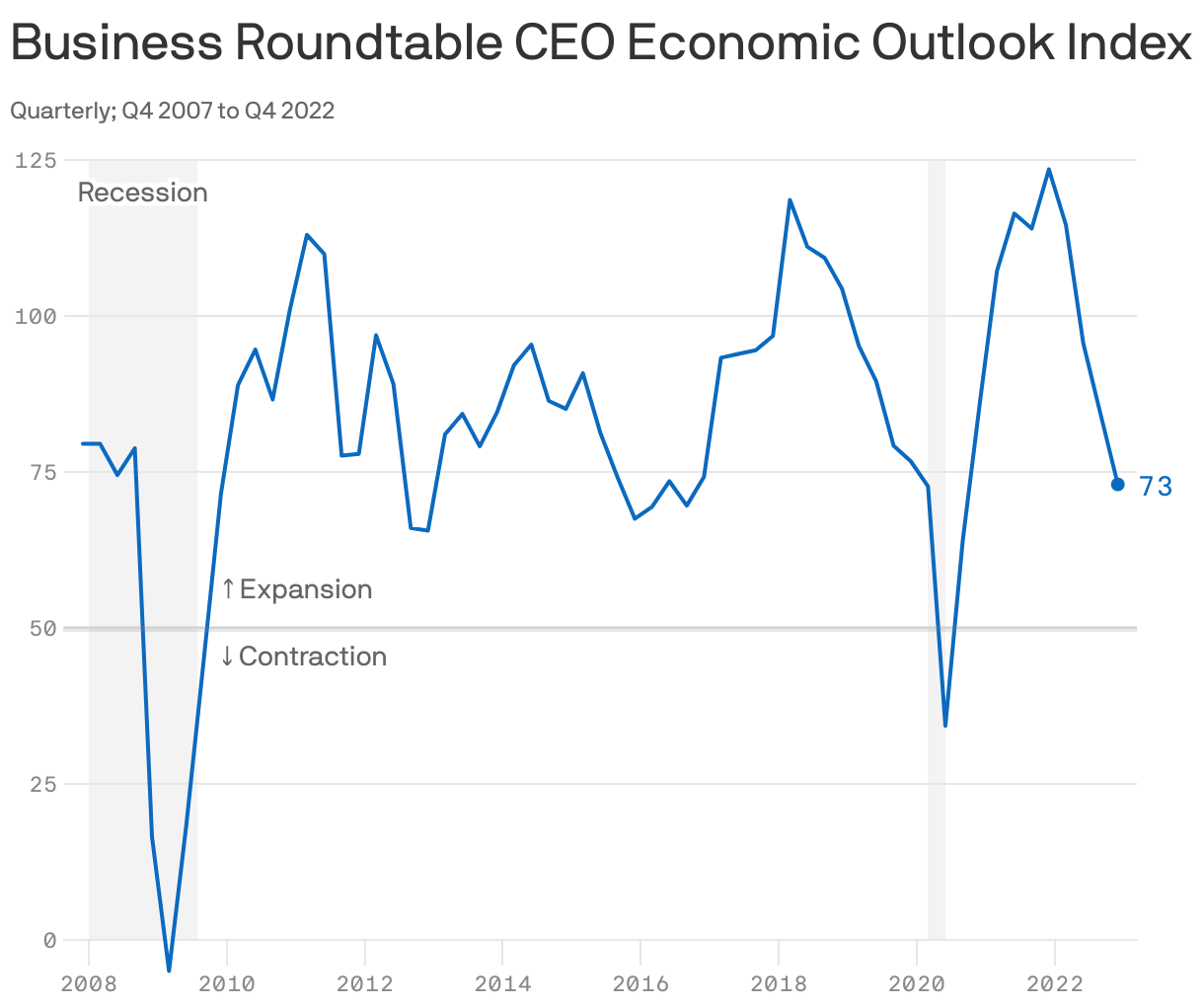
The chief executives of America's biggest companies are downgrading their views of the economy, which is not as gloomy as in prior recessions.
Why it matters: Economic jitters have not sent CEO confidence diving off a cliff. Their plans for hiring and capital spending are more consistent with growth slowdown than outright economic contraction.
Driving the news: The latest CEO economic outlook index from the Business Roundtable declined 11 points, continuing the steady slide that's happened every single quarter this year.
- It's the first time since 2020 that the index has fallen below its long-run average of 84.
- The level, however, is similar to that reached in past episodes. It reflects a soft patch, but not a full-blown U.S. recession, like the Eurozone crisis in 2012 and a period of global economic softening in late 2015.
What they're saying: "With continued supply chain challenges and inflation uncertainty, many CEOs remain cautious about domestic plans and expectations for the next six months," General Motors CEO Mary Barra, who chairs the Business Roundtable, said in a statement.
Where it stands: The 142 CEOs of major U.S. companies surveyed still have relatively upbeat plans for sales growth, hiring and capital spending. Those expectations, however, have come down from last year's nosebleed levels.
The big picture: "The Fed has been pumping the brakes to rein in inflation, and the survey results are unsurprising in that context," Business Roundtable CEO Josh Bolten said in a statement.
Between the lines: The results of the survey have pointed to the Fed's desired outcome in working to cool inflation — a slowing of economic activity, without a deep recession accompanied by widespread joblessness.
- The November jobs report showed wages rising swiftly alongside strong jobs growth — the latest indicator to suggest that demand is still too strong for the Fed's liking. If sustained, it may push the Fed to act even more aggressively to squash demand.
The big question in the months ahead is whether — and to what degree — wage costs get passed along to consumers.
2. The oil crisis averted

An oil refinery in France. Photo: Benjamin Girette/Bloomberg via Getty Images
Axios Macro

Stay ahead of the curve on the most important economic developments with reporting and analysis on how business, policy, and markets collide.