Axios Macro
September 03, 2026


Today, we look at new comments from top Federal Reserve officials tapping the brakes on expectations of an imminent interest rate hike. 🛑
- Plus, some encouraging signals from private-sector jobs data ahead of tomorrow's government release.
Situational awareness: Former Treasury secretaries Hank Paulson and Bob Rubin are out with a new op-ed describing the grave global risks from frontier AI models. 😱
- They call for Presidents Trump and Xi Jinping of China to work toward an AI cooperation treaty modeled after the SALT nuclear agreements between the U.S. and the Soviet Union "that averted the mutual destruction both feared."
Today's newsletter, edited by Jeffrey Cane and copy edited by Katie Lewis, is 950 words, a 3.5-minute read.
1 big thing: Not so fast on rate hikes
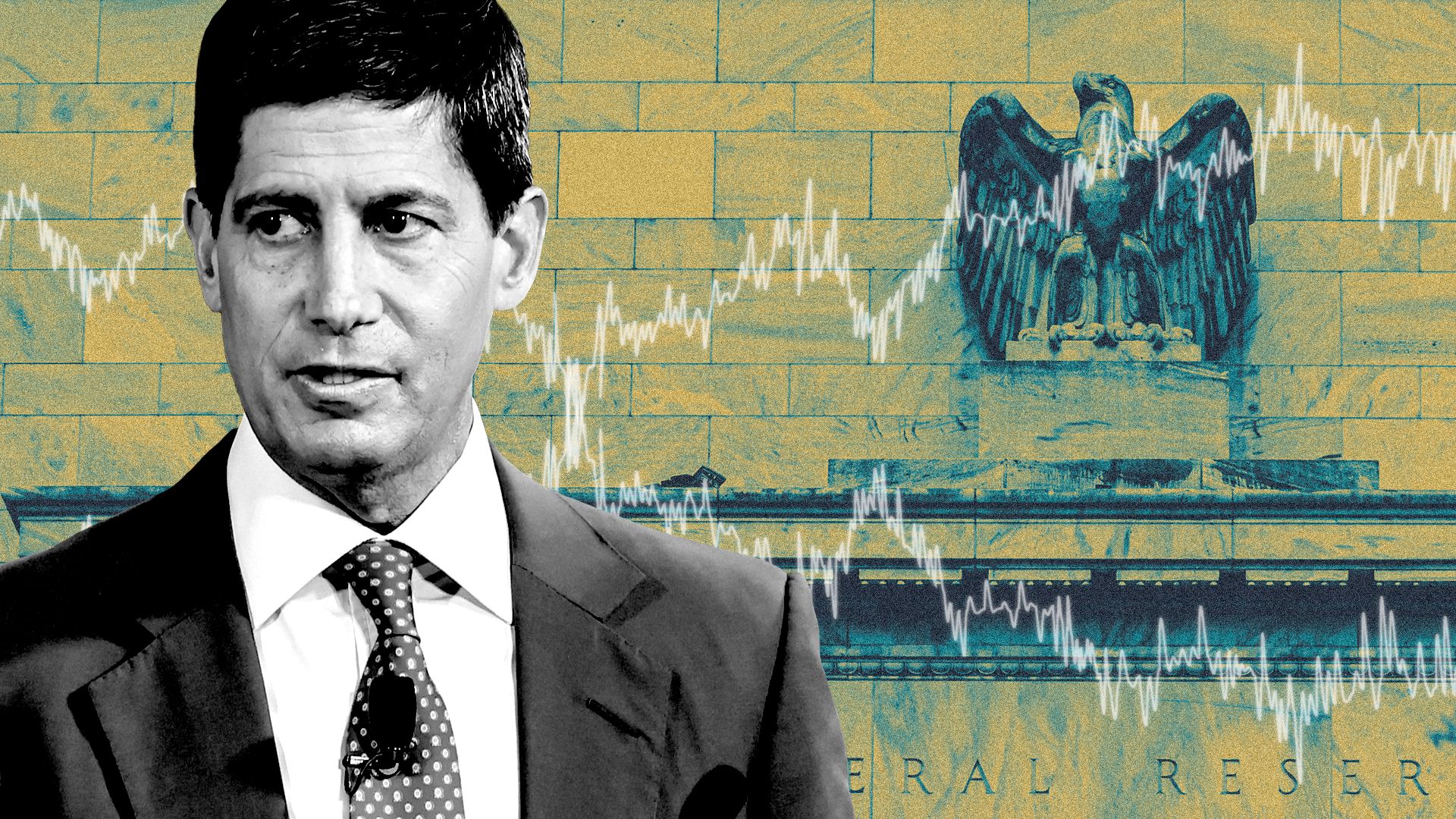
After Fed chairman Kevin Warsh's speech in Jackson Hole six days ago, the markets penciled in an interest rate hike for the central bank's mid-September meeting. Comments from two influential officials now throw those expectations into question.
The big picture: With August jobs and inflation data due out before a policy meeting in two weeks, the decision of whether to tighten policy appears to be on a knife-edge.
- A meaningful contingent of Fed leadership is eager to raise interest rates to address stubbornly high inflation, while another, as Fed governor Christopher Waller put it this morning, channeling John Lennon, is willing to "give disinflation a chance."
- It's a close enough call that Warsh will likely be able to steer a decision whichever way he prefers.
Driving the news: At a Reuters newsmaker event this morning, Waller noted two consecutive months of improving inflation data. If it continues in August reports over the coming days, he said, "I would be inclined to support" holding rates steady.
- But if the incoming data shows "improvement has been fleeting," he is open to a rate hike, Waller added.
- Yesterday, New York Fed president John Williams told CNBC that "I think we have to wait and see" whether an interest rate increase is needed.
- "There's no clear signs right now whether monetary policy is currently sufficient to make sure we bring inflation back to target in the next year or two, or whether you need to see further action to do that."
State of play: Their comments come after Warsh said that the Fed "must be confident that underlying inflation is moving to our objective, clearly and at sufficient speed," or else they "have work to do."
- That leaves room for a judgment call on whether that bar has been reached. Warsh has resisted hanging policy decisions on the fine details of each incoming data release, as Waller seems inclined to do.
- CME's FedWatch tool now puts the odds of a rate hike at the meeting concluding Sept. 16 as essentially a coin flip, whereas yesterday, the futures market-based odds favored an increase.
Zoom in: The New York Fed president is vice chair of the policy-setting Federal Open Market Committee and has traditionally acted as part of a leadership troika, with the chairman and vice chair of the Board of Governors.
- Traditionally, governors like Waller are reluctant to dissent from policy decisions, though that norm has dissolved in the last couple of years.
- Three reserve bank presidents, meanwhile, dissented at the late July meeting favoring a rate hike, implying that Warsh will face internal disagreement — the "good family fight" he often speaks of — no matter which way he ultimately leans.
Of note: Waller has offered none-too-subtle criticisms of Warsh's reticent communication style. Warsh has said he wants markets to react to "the ball" of incoming data, not "the ref," or how the Fed may react to it.
- This morning, Waller made his own addendum to that metaphor.
- "I view myself as a home plate umpire in baseball," he said. Both the pitcher and the batter "want to play the ball, but they cannot do that until they know the umpire's strike zone," which is essentially the umpire's reaction function.
- "If the ball goes here, it's a strike; if it goes there, it's a ball. The players don't expect the umpire to have a perfect strike zone — they just need a rough idea of its parameters and some guarantee that it won't change much on every pitch."
2. Labor's lower-rung rebound
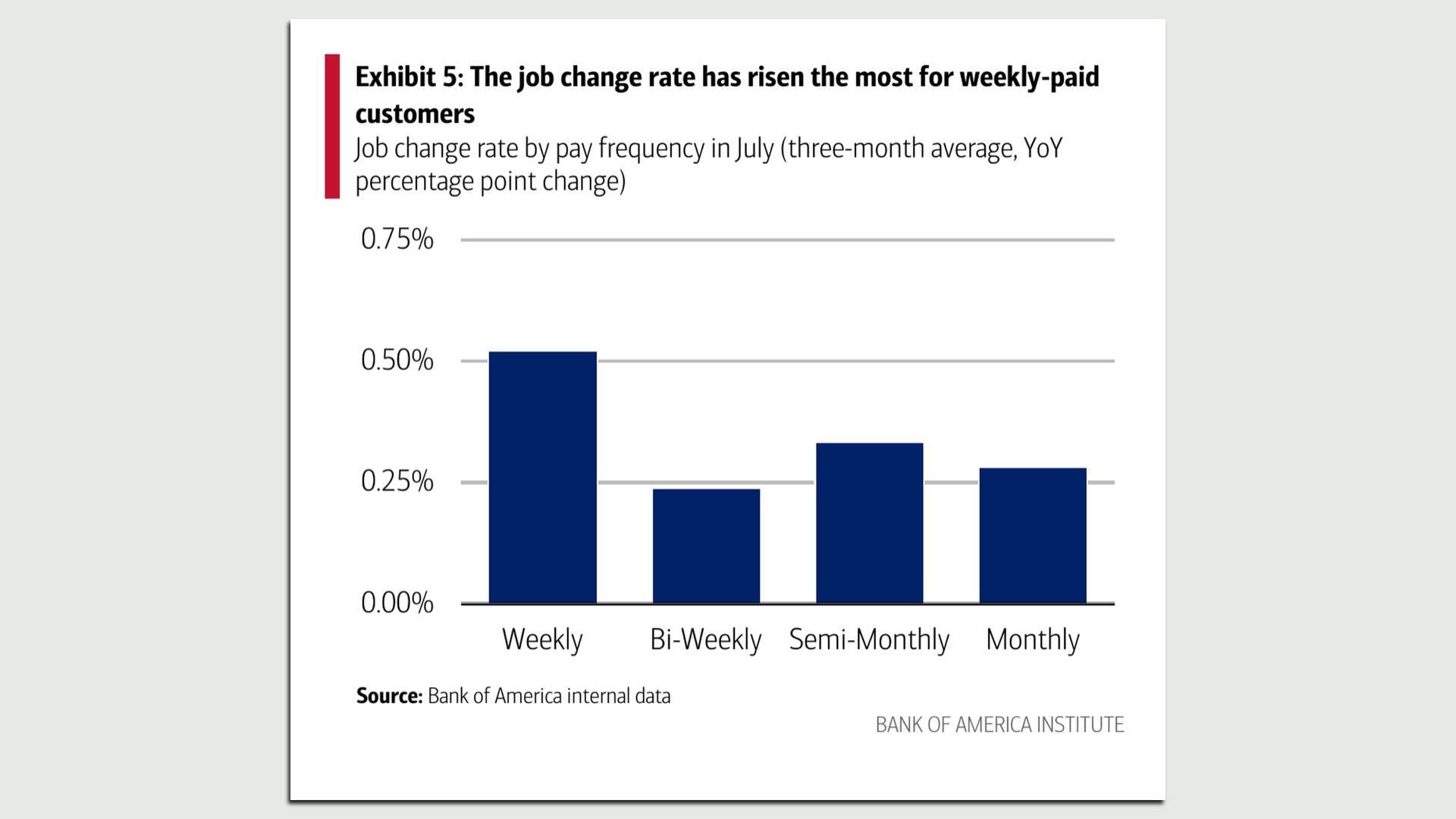
There is a bright spot in a labor market that private-sector reports suggest cooled last month. Lower-paid workers are switching jobs more often and getting bigger raises when they do.
Why it matters: Lower-paid workers are typically among the first to feel a cooling labor market. But now the quirks of the economic cycle — including the AI investment boom — may be helping cushion the blow.
By the numbers: Bank of America Institute estimates payroll growth slowed to 1.5% year over year in August, from 1.8% in July, based on anonymized customer account data.
- After-tax wage growth was 4.7% for lower-income households, compared with the 3.5% gain for higher-income households — extending a reversal of the K-shape divide in wage growth.
The intrigue: Job switching has picked up particularly among weekly-paid workers, who tend to hold lower-paid, hourly jobs.
- The typical raise associated with changing jobs reached 12.5% in July, the highest in more than three years.
- "You don't move jobs, obviously, if you're fearful of the labor market," David Tinsley, a senior economist at the Bank of America Institute, told reporters this morning.
Zoom in: Tinsley pointed to construction, where data center development is supporting nonresidential activity just as the workforce faces a labor supply squeeze.
- Roughly 60% of construction workers are paid weekly, he said.
Yes, but: Lower tax withholding under the GOP tax law is also boosting after-tax pay, especially for lower- and middle-income households.
- Tinsley sees both the tax boost and "some genuine tightening at the bottom end" of the labor market.
Sign up for Axios Macro