Axios Macro

October 24, 2022

The Philadelphia Phillies are in the World Series, and that could portend bad things for the economy. Their last championship was in 2008 (the onset of the global financial crisis); before that, 1980 (a deep recession); and before that, the Philadelphia Athletics won it all in 1929 and 1930 (the Great Depression). ⚾️ 📉
- Today, we look at the possibility that deflationary forces are emerging, and what a new British prime minister means for economic policy. 🇬🇧
Today's newsletter, edited by Javier E. David and copy edited by Katie Lewis, is 654 words, a 2½-minute read.
1 big thing: Deflationary forces loom
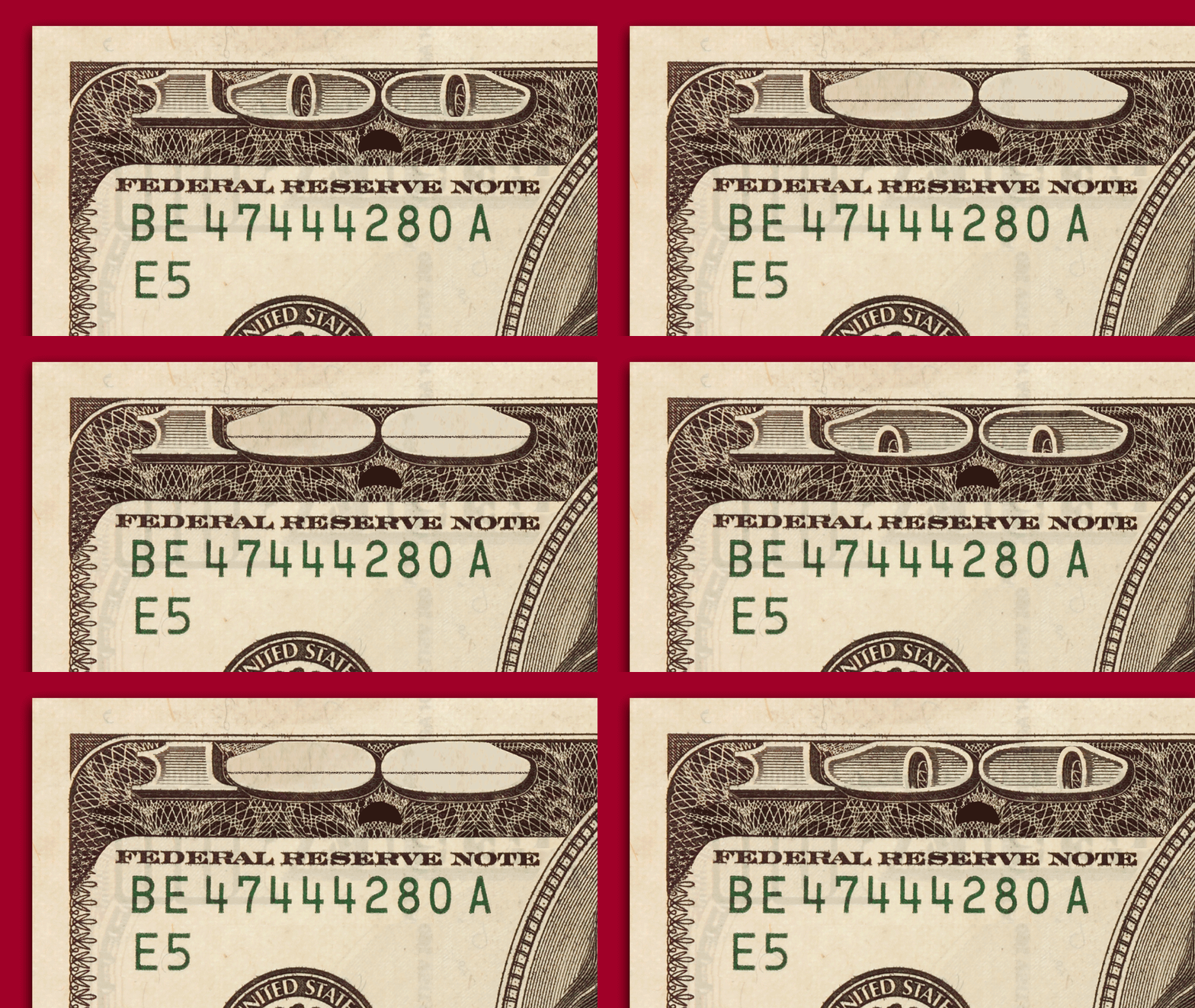
Illustration: Annelise Capossela/Axios
In the here and now, inflation is high and broad-based. But there are notable signs that downward pressures on prices are emerging, especially in sectors that have defined the economy's pandemic-era inflation burst.
Why it matters: If sustained, these forces bolster the argument that the Federal Reserve should slow its interest rate hikes, the full effects of which will hit in the months ahead — possibly at a time when inflation has already begun to recede.
- The Fed, after being late to recognize the seriousness of the problem in 2021 and early 2022, is determined to reverse course only when actual reported inflation rates have come down.
- That creates the risk of an upside-down moment for the economy next year, with Fed policy calibrated to fight the inflationary forces of 2022 — throttling demand and the job market — in an environment where prices are in retreat.
Notably, there are real signals the housing mania that sent prices to nosebleed levels has come to a halt, even if it hasn't fed through to official data yet.
- Mortgage rates are soaring alongside still-steep home prices, creating an affordability shock that's pushed demand off a cliff.
- Private sector data from various housing platforms, including Realtor.com, show rent prices are falling. Median asking rent fell $12 to $1,759 last month — down $22 from its peak level in July, the site said.
It's not just housing. Congestion at America's busiest ports has cleared up, one sign that supply chain issues are starting to unclog. The Port of Los Angeles, for example, unloaded 27% fewer imported cargo containers in September than a year earlier.
- International shipping prices are down 67% over the last year, according to the Drewry World Container Index.
- Retailers are stuck with a glut of inventory that will push them to lower prices to get stock off the shelves.
- Commodity prices are trending lower. Oil, for one, has fallen more than 20% since the most recent peak in June.
Yes, but: There remain countervailing inflationary pressures, including demand from still-flush consumers, which could keep overall inflation relatively high, even as those deflationary forces play out.
Between the lines: The Fed wants to signal an unrelenting stance on bringing prices down. Yet softening up risks sending the wrong message to households that could push up inflation expectations.
The bottom line: Price pressures easing now doesn't mean they won't reappear later because of unforeseen circumstances or events. But for now, there are a decent number of factors signaling a slightly cooler inflationary outlook.
2. Austerity ahead under new U.K. leadership
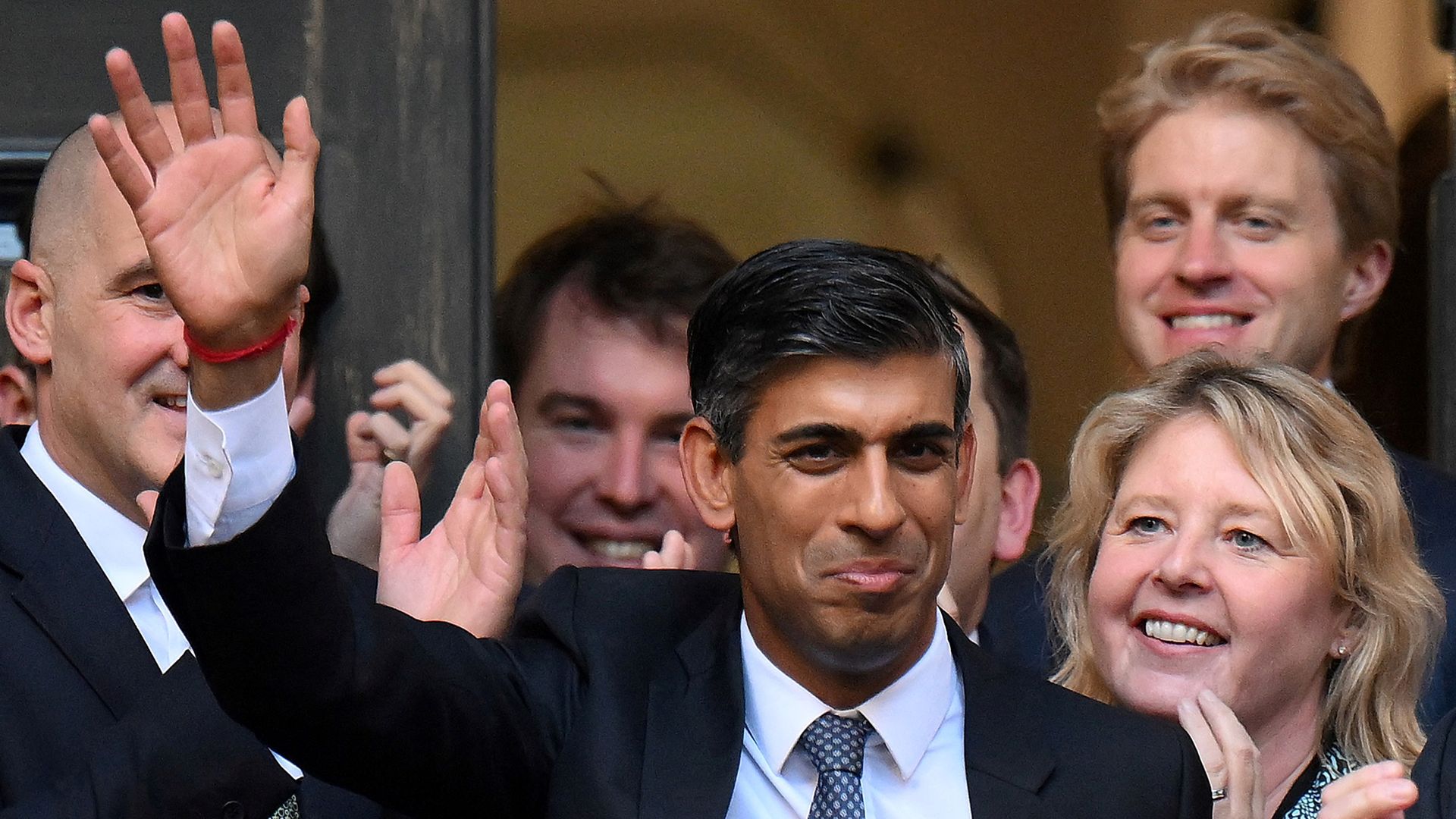
Rishi Sunak, soon-to-be the new U.K. prime minister. Photo: Daniel LEAL / AFP
Rishi Sunak is on track for the unenviable task of being Britain's next prime minister. The former chancellor of the exchequer is expected to have a distinctly different approach to fiscal policy than his predecessor, Liz Truss.
- Whereas Truss advanced a policy agenda seemingly unconstrained by budget deficits — she supported both big tax cuts and energy subsidies — Sunak favors a more austere approach to public spending.
Why it matters: It's an early signal the era of high inflation and jittery global bond markets will lead one of the world's major economies toward spending cuts.
- That's good news for owners of British government bonds. The yield on 30-year gilts is down 0.28 percentage points today, and is now back to roughly where it was before the Truss government's profligate budget created a crisis environment.
- It's bad news for Britons who don't wish to see cuts to public services. Those on the political left who watched gleefully as the markets rejected the Truss plan could find they like the Sunak approach even less.
What they're saying: "The pandemic spending spree is well and truly over and the former chancellor will take the top job in the guise of a strict and austere headteacher," said Susannah Streeter, senior analyst at Hargreaves Lansdown, in a note.
- "He will be determined not to see the bond market run amok again, threatening the country's financial stability," she said.
Sign up for Axios Macro

Stay ahead of the curve on the most important economic developments with reporting and analysis on how business, policy, and markets collide.