Axios Macro
May 15, 2025


Walmart is warning about consumer price increases from tariffs. Meanwhile, the latest retail sales and inflation were benign. The tension between hard data and anecdata remains unresolved. More below.
- Plus, an update from Fed chair Jerome Powell on the central bank's monetary policy framework rethink. 🧐
Today's newsletter, edited by Ben Berkowitz and copy edited by Katie Lewis, is 742 word, a 3-minute read.
1 big thing: The anecdote economy
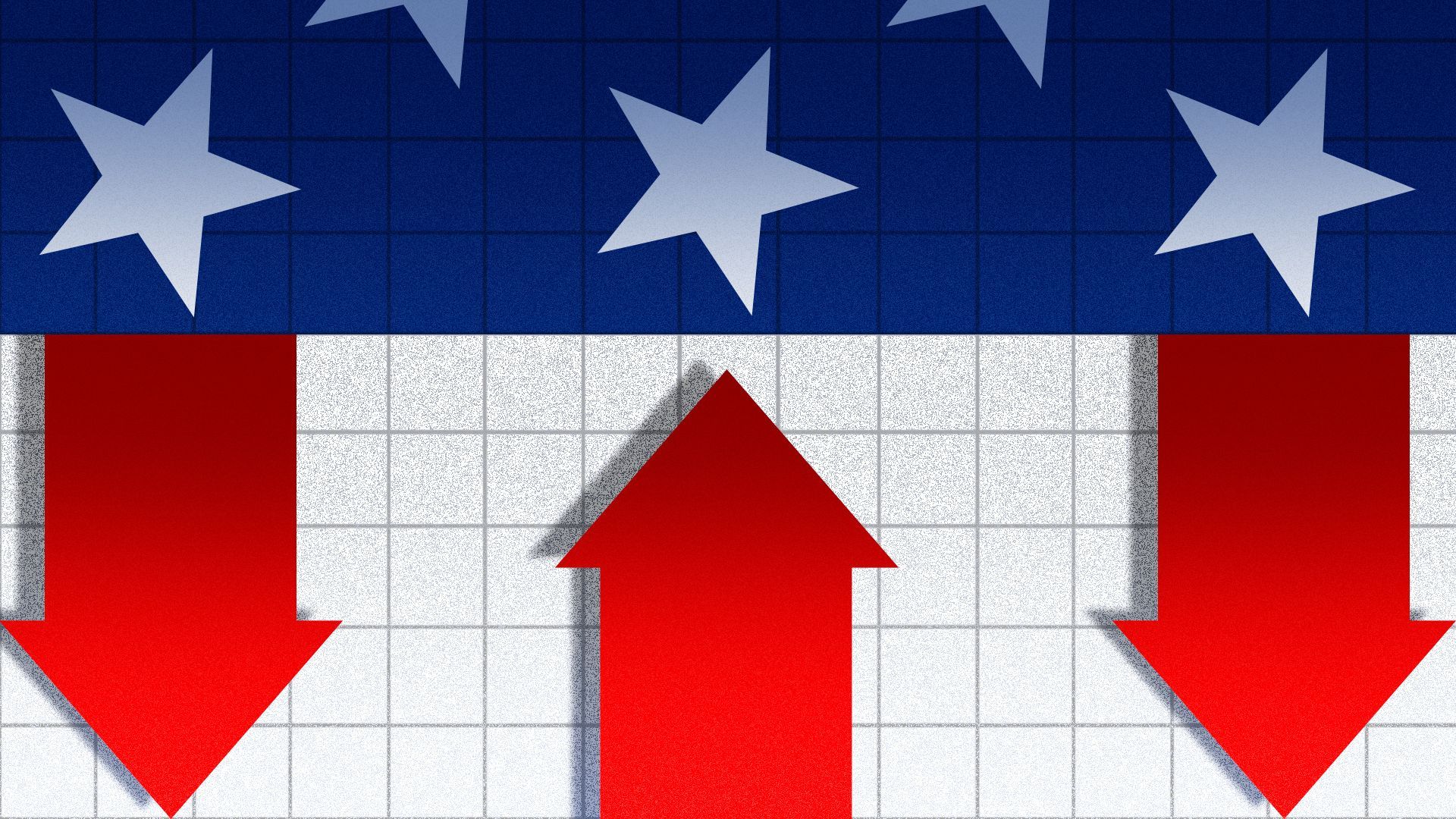
With major indicators from April — the month of peak tariff uncertainty — now in, none show the kinds of recessionary or inflationary conditions implied by business and consumer surveys.
Why it matters: Warnings and anecdotes are taking on greater importance as signs of how tariffs are working their way through the economy.
The big picture: New data out today showed steady retail sales and a surprising drop in wholesale prices in April. So far, so good.
- But also this morning, the country's largest retailer warned that it will not be able to absorb tariff-related price increases — even considering the trade war pullback announced earlier this week.
- Walmart, known for its low prices, will pass some of those costs onto the consumer. If Walmart can't hold the line, it's hard to see how other retailers might be able to.
What they're saying: "We're wired for everyday low prices, but the magnitude of these increases is more than any retailer can absorb," Walmart CFO John David Rainey told CNBC today.
- "It's more than any supplier can absorb. And so I'm concerned that consumer is going to start seeing higher prices. You'll begin to see that, likely towards the tail end of this month, and then certainly much more in June."
By the numbers: Retail sales rose by 0.1% in April, after a massive spending surge that was even stronger than initially reported. The control group, used to calculate personal consumption expenditures in GDP, fell by 0.2%.
- Retail sales rose by 1.7% in March, revised up by 0.2 percentage point. It was the biggest gain in two years as consumers rushed to purchase autos and other goods before tariff-related price increases.
- The result was a pullback in most goods categories this month. Even so, there is some evidence that spending on services kept pace. Spending at restaurants and bars, among the few service-sector categories in the retail sales report, rose by 1.2% in April.
Between the lines: The Producer Price Index, a gauge of wholesale prices, showed little sign of tariff-related price pressures that businesses have warned about.
- PPI fell by 0.5% in April after a flat reading in March, rounding out an upbeat inflation snapshot after the index's consumer counterpart released Tuesday.
- Goods prices were flat last month after falling almost a full percentage point in March. Services prices fell by 0.7%, the biggest drop since the index began in 2009.
The bottom line: "There is little evidence, so far, that tariffs are inflationary and instead profit margins are being squeezed. But as Walmart suggested this morning, that is a situation that may not last long," ING chief international economist James Knightley wrote in a note.
2. The Fed's framework reset
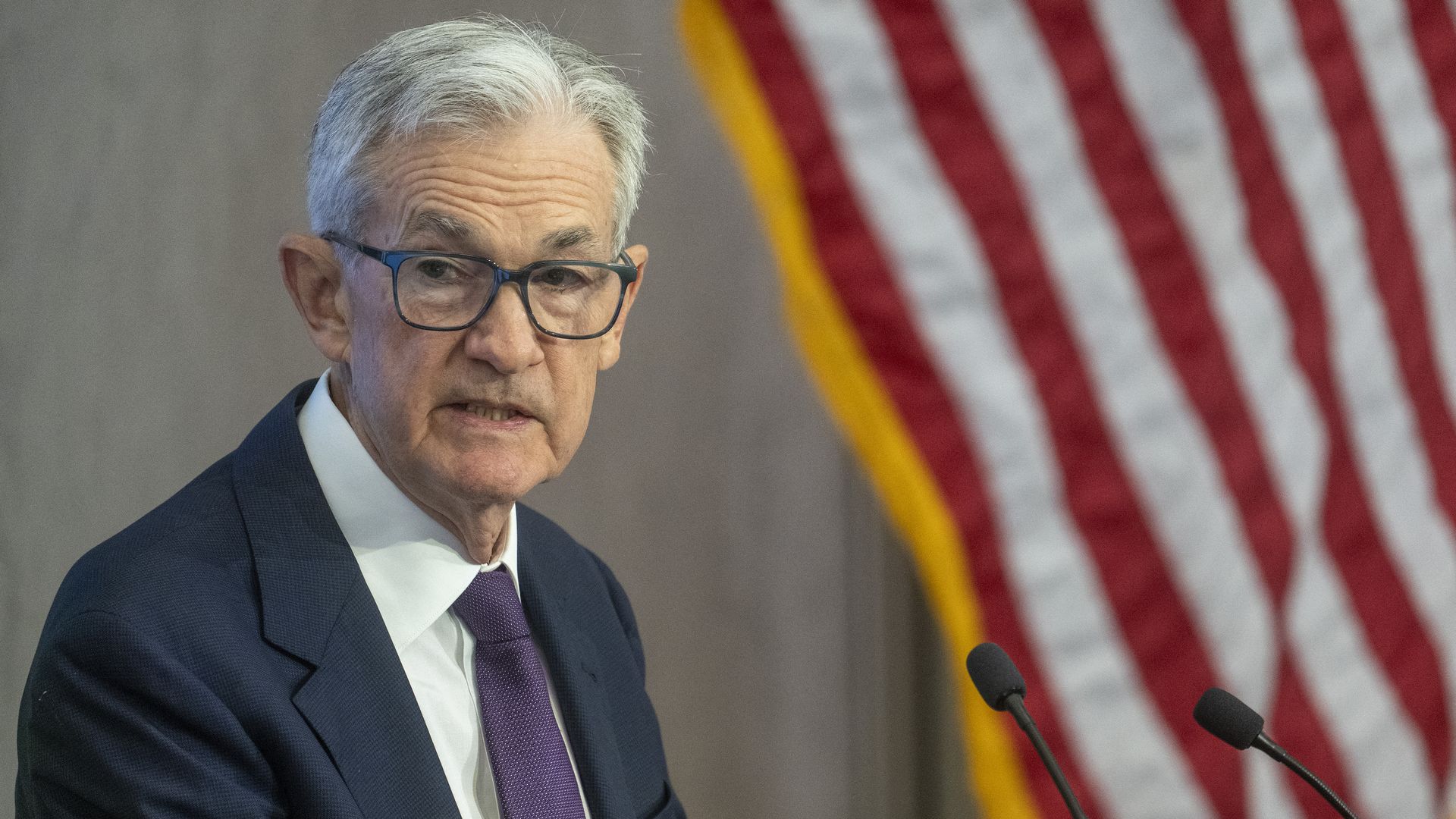
The Fed is reviewing its monetary policy framework — the goals and methods it uses to set interest rate policy and communicate it to the public — for the first time since 2020.
- And it sure looks like two key components of that framework are on the chopping block.
The big picture: The Fed is looking to incorporate the lessons of the 2021 inflation surge and subsequent reset of global interest rates higher. The current framework arguably contributed to the Fed's slowness to react to that inflation burst.
State of play: In a speech this morning, chair Jerome Powell indicated that the central bank's leaders want to "reconsider" the idea of seeking to address shortfalls in employment and using flexible average inflation targeting.
- These were both tools aimed at dealing with 2010s-style monetary conditions — interest rates stuck near zero, inflation persistently below target, and a job market with seemingly endless slack.
What they're saying: "In the current review," the Fed's policy committee "is engaged in discussions about what we have learned from the experience of the past five years," Powell said at a Fed conference this morning.
- "We are paying particular attention to the 2020 changes as we consider discrete but important updates reflecting what we have learned about the economy, and the way those changes were interpreted by the public," he said.
- The Fed policymakers "will also consider potential enhancements to our formal policy communications, particularly regarding the role of forecasts and uncertainty," he added.
What's next: The last time the Fed reviewed its framework in 2020, Powell teed it up with his August Jackson Hole speech and the policy committee formally issued it in September.
- He said this morning that policymakers will complete revisions "in coming months," which would align with that timing.
Sign up for Axios Macro