Axios Macro
July 21, 2025


1 big thing: Why the Fed is running big losses


Most of the time, the Fed makes a profit — creating money out of thin air is a pretty lucrative business — and hands its earnings over to the U.S. Treasury.
- Not lately.
The big picture: The Fed has had a cumulative net loss of $192 billion over the last two years. It is primarily due to the reality that just as printing money is profitable, sucking money out of the economy to fight inflation can be expensive.
- Central banks generally view "seigniorage," the earnings that come from money creation, as a side effect of operations rather than the goal.
- Over the last two years, the Fed has essentially experienced reverse seigniorage, as it has hiked interest rates and shrunk its balance sheet to reduce inflation.
- This has been oft-mentioned in the Trump administration's attacks on the central bank and its leader, Jerome Powell.
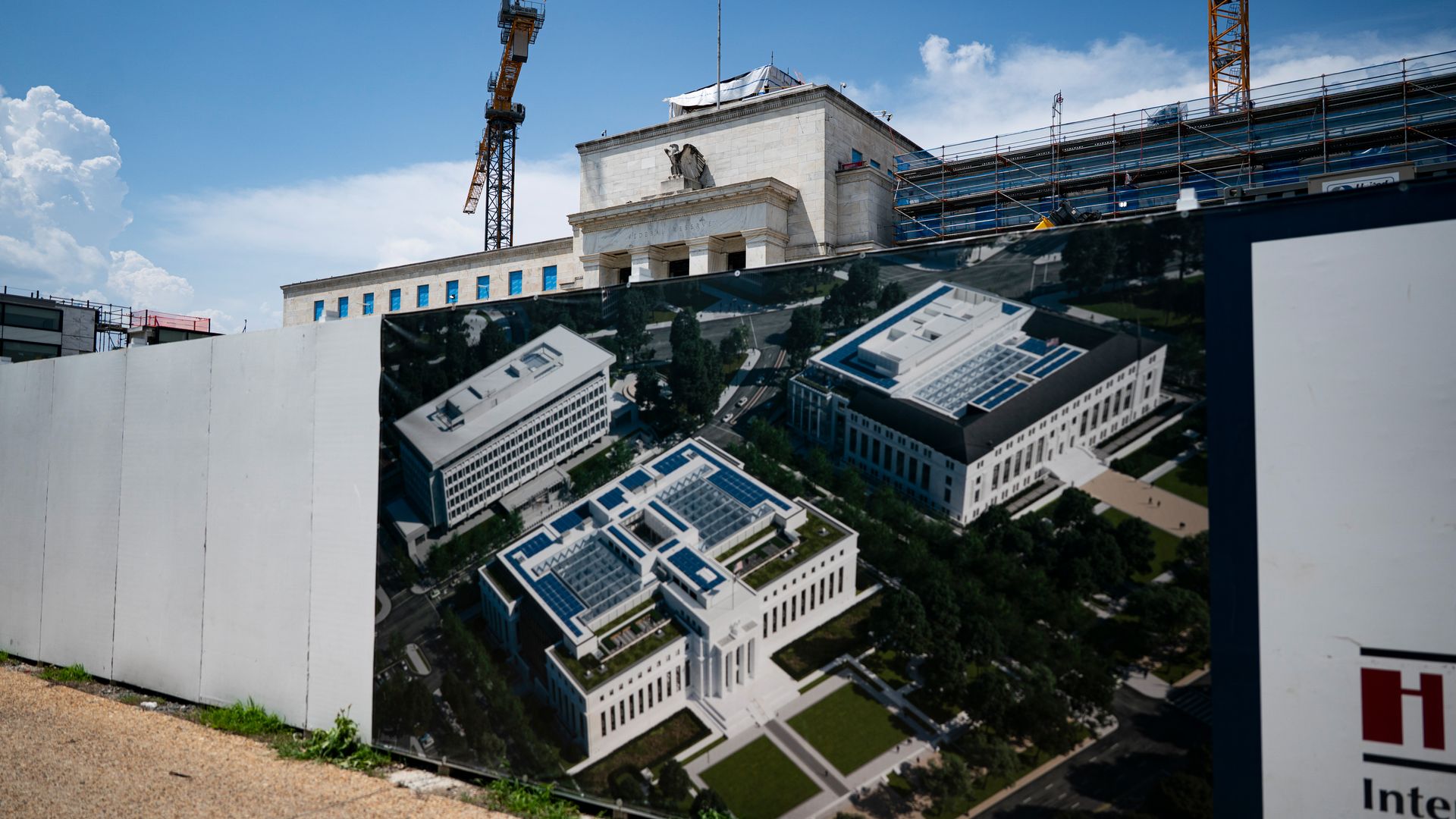
What they're saying: "While continuing to run a deficit since FY23 (the first time in the Fed's history), the Fed is way over budget on the renovation of its headquarters," said Office of Management and Budget director Russ Vought on X earlier this month.
- "Instead of attempting to right the Fed's fiscal ship, you have plowed ahead" with the building project, Vought said in a letter to Powell.
Reality check: The Fed's finances are overwhelmingly driven not by operational expenses like buildings or employee salaries, but by its work carrying out monetary policy.
- The Fed's aggressive efforts to stimulate the economy in 2020 and 2021 were wildly profitable, resulting in sky-high remittances to the Treasury, while the monetary tightening of the last two years acted in reverse.
How it works: In 2021, the Fed was buying massive quantities of longer-term bonds under its stimulative quantitative easing program. Those bonds paid interest, resulting in $122 billion in interest income, up from $103 billion in 2019.
- Meanwhile, the Fed pays interest to banks and other entities in order to maintain short-term interest rates at its target level.
- In 2021, that target rate was near zero, so the Fed incurred a mere $5.7 billion in interest expense.
- The gap between those numbers is why the Fed could funnel $109 billion in profit to the Treasury that year.
By the numbers: Since 2022, the Fed has been fighting inflation with a high target interest rate, raising it from near-zero to almost 5.5% before cutting late last year.
- That translated into $281 billion in interest expense in 2023 and $227 billion in 2024. Hence, remittances to the Treasury of negative $116 billion in 2023 and negative $79.1 billion in 2024.
- Operating expenses are a comparatively minor part of the story, accounting for a total of $9.9 billion in 2024.
Of note: The negative remittances do not reflect actual cash transfers from the Treasury to the Fed, but rather are an accounting entry.
- However, the Fed will not resume transfers until future earnings fill the hole left by the 2023 and 2024 losses.
The bottom line: The Fed's paper losses over the last couple of years have been driven not by marble buildings, but by the interest rate arithmetic of inflation-fighting.
2. Why the Fed's headquarters is so expensive
Axios Macro