Axios Macro
January 13, 2025


We wrote this morning about how President-elect Trump might go about implementing his aggressive trade agenda. Below, we share more reporting on the potential fallout around the world.
- Plus, the economic profession looks inward and wonders what's the point of anything anymore.
Situational awareness: The latest New York Fed Survey of Consumer Expectations shows that respondents' inflation expectations are stable now, rose for the three-year horizon but interestingly fell for the five-year period.
Today's newsletter, edited by Ben Berkowitz and copy edited by Katie Lewis, is 794 words, a 3-minute read.
1 big thing: Trump trade copycat effect
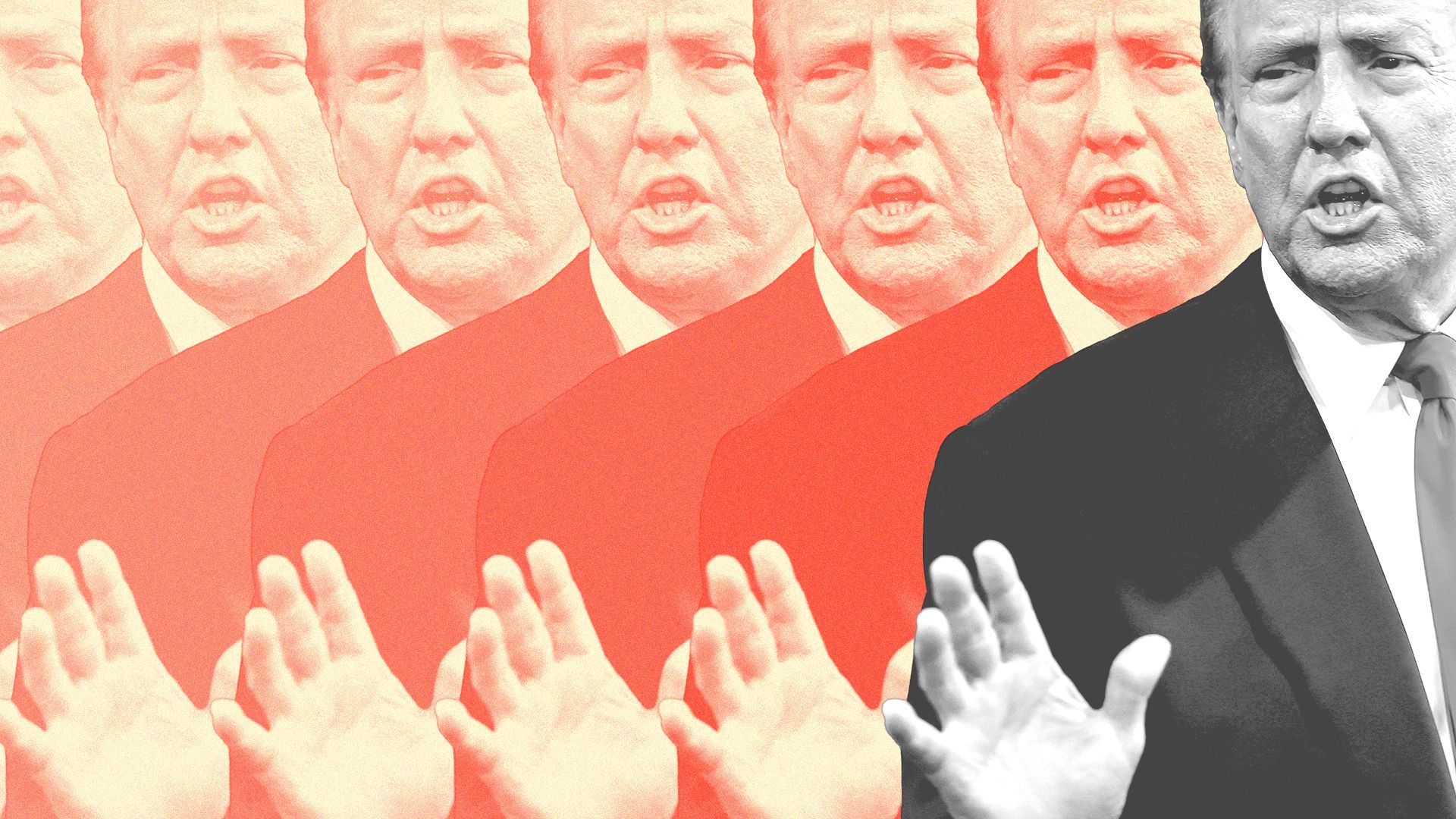
The big and broad tariffs promised by Trump could permanently shift trade norms that have shaped the global economy for decades.
Why it matters: Even if Trump-era trade wars recede, the effects might live on. Global leaders might follow the country's lead and weaponize tariffs more often to extract demands from trading partners.
What they're saying: Other countries are "coming to the conclusion that if the U.S. is willing and able to impose tariffs in an arbitrary way from a trade-law perspective, they can, too," Michael Froman, president of the Council on Foreign Relations and a former U.S. trade representative, tells Axios.
- "Every government around the world is under protectionist pressure," Froman adds. "They all have domestic interests and would rather not compete with imports from other other countries."
The intrigue: This copycat effect is already underway. Trump's return to the White House could supercharge it.
- The U.S. has increasingly imposed trade restrictions on the grounds of national security, invoking an exception to World Trade Organization rules. Other countries, including Mexico, have followed suit.
- "This used to be an exception that was rarely used. Now it is used more freely," Froman says.
The big picture: When in office, Trump will have to decide whether to turn to the tried-and-true tools to implement tariffs he used when he was last in office — which are powerful but take time and care to enact — or rip up the playbook.
- In a disruption scenario, Trump could declare a national economic emergency, which gives the president wide latitude over international economic policy.
- Then he could move quickly on tariffs. But he'd face blowback in the form of higher consumer prices, a slumping stock market, angry CEOs and congressional Republicans, retaliation from trade partners, and legal challenges.
What to watch: Speedier tariffs could also mean speedier retaliation from major allies that might take a huge toll on domestic producers. If U.S. tariffs are broad-based, retaliation might follow suit.
- Canadian officials are already readying tariffs as high as 25% on nearly everything America sends to its neighbor to the north, Bloomberg first reported last week.
- "We are ready to respond with tariffs as necessary," outgoing Canadian Prime Minister Justin Trudeau told MSNBC this weekend.
- "We are the No. 1 export partner of about 35 different U.S. states," Trudeau added. "Anything that thickens the border between us ends up costing American citizens and American jobs."
The bottom line: Similar across-the-board responses from other major economies would make the 2018 trade war look tiny as global leaders embrace the new protectionist world.
- In 2018, countries hit back with tariffs that aimed to hit Trump where it would hurt: red-state economies that export products like soybeans and bourbon whiskey.
2. It's not the economists' hour
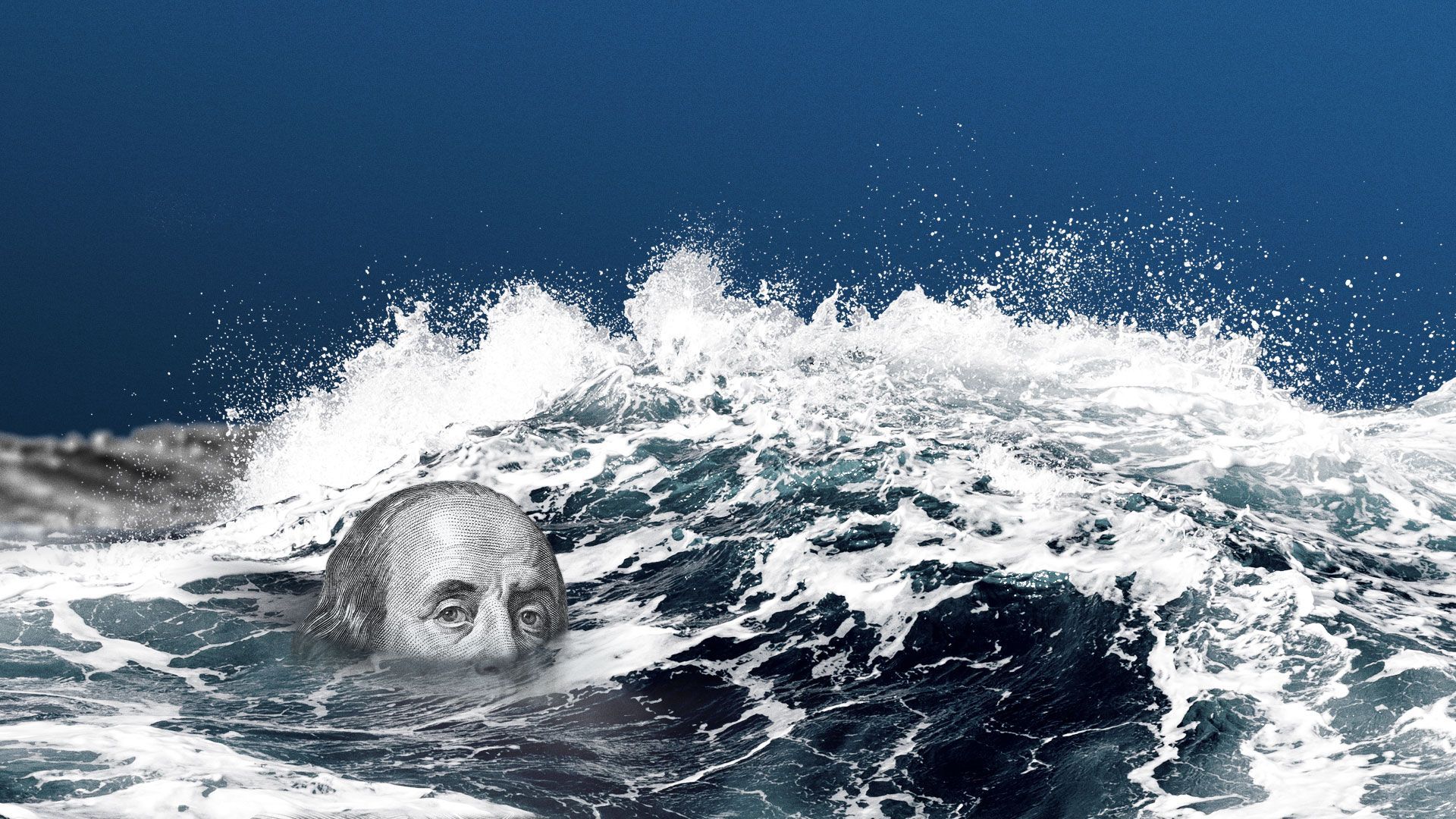
The New York Times' Ben Casselman roamed the hallways of the biggest annual gathering of economists earlier this month and found a distinct thread of ennui.
The big picture: The Biden administration has discarded economic orthodoxy in many key areas, and the incoming Trump administration is likely to further reject academic expertise.
- Voters think the economy is terrible despite low unemployment and inflation, and elected officials in both parties have embraced tariffs. Economists' warnings about the risks of high budget deficits are largely ignored.
- It's enough to make a properly credentialed economist (and, um, economics writers) feel a little adrift. Without purpose. Unanchored.
What they're saying: Casselman writes, "[W]hen economists gathered in San Francisco this month for the annual meeting of the American Economic Association, there was a sense that their famous confidence — critics would say arrogance — had been, if not shattered, certainly dealt a body blow."
- "What was the point of their careful data-gathering, their complex models, their intricate theories if no one was going to listen to their advice anyway?" he wrote.
- "I do wonder all the time if it matters," economist Aaron Sojourner told Casselman.
Between the lines: The Times' Binyamin Appelbaum wrote a terrific book in 2019 called "The Economists' Hour," which showed how the field of economics had come to dominate policymaking. Now we're seeing the reverse.
- Two of the last three chairs of the White House Council of Economic Advisers have not had a Ph.D. in economics. Current occupant Jared Bernstein has a doctorate in social welfare, and Trump's last CEA chair, Tyler Goodspeed, has a doctorate in history.
- The world's two most important monetary policymakers, the heads of the Federal Reserve and the European Central Bank (Jerome Powell and Christine Lagarde), are both lawyers by training, not economists.
Yes, but: The economist class may have itself to blame. "If what you have been doing is not working, you cannot retain credibility and expect good outcomes simply by continuing to do it," heterodox economist Oren Cass told Casselman.
Go deeper: Casselman's full story is here.
Sign up for Axios Macro