Axios Macro

June 24, 2024


1 big thing: Trump vs. Biden debt math
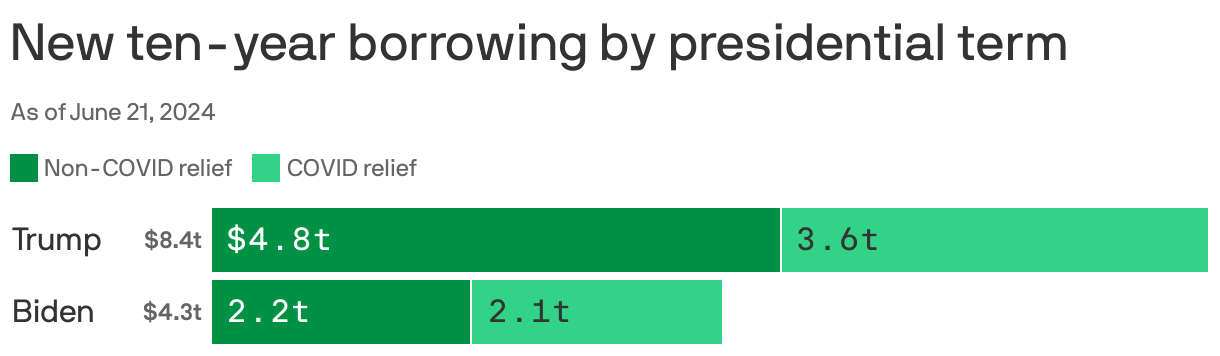
Trump ran up the national debt by about twice as much as Biden, according to a new analysis of their fiscal track records.
Why it matters: The winner of November's election faces a gloomy fiscal outlook, with rapidly rising debt levels at a time when interest rates are already high and demographic pressure on retirement programs is rising.
- Both candidates bear a share of the responsibility, as each added trillions to that tally while in office.
- But Trump's contribution was significantly higher, according to the fiscal watchdogs at the Committee for a Responsible Federal Budget, thanks to both tax cuts and spending deals struck in his four years in the White House.
By the numbers: Trump added $8.4 trillion in borrowing over a 10-year window, the CRFB finds in a report out this morning.
- Biden's figure clocks in at $4.3 trillion with seven months remaining in his term.
- If you exclude COVID relief spending from the tally, the numbers are $4.8 trillion for Trump and $2.2 trillion for Biden.
State of play: For Trump, the biggest non-COVID drivers of higher public debt were his signature tax cuts enacted in 2017 (causing $1.9 trillion in additional borrowing) and bipartisan spending packages (which added $2.1 trillion).
- For Biden, major non-COVID factors include 2022 and 2023 spending bills ($1.4 trillion), student debt relief ($620 billion) and legislation to support health care for veterans ($520 billion).
- Biden deficits have also swelled, according to the CRFB's analysis, due to executive actions that changed the way food stamp benefits are calculated, expanded Medicaid benefits, and other changes that total $548 billion.
Between the lines: Deficit politics may return to the forefront of U.S. policy debates next year.
- Much of Trump's tax law is set to expire at the end of 2025, and the Congressional Budget Office has estimated that fully extending it would increase deficits by $4.6 trillion over the next decade.
- High interest rates make the taxpayer burden of both existing and new debt higher than it was during the era of near-zero interest rates.
- And the Social Security trust fund is rapidly hurtling toward depletion in 2033, which would trigger huge cuts in the retirement benefits absent Congressional action.
What they're saying: "The next president will face huge fiscal challenges," CRFB president Maya MacGuineas tells Axios.
- "Yet both candidates have track records of approving trillions in new borrowing even setting aside the justified borrowing for COVID, and neither has proposed a comprehensive and credible plan to get the debt under control," she said.
- "No president is fully responsible for the fiscal challenges that come along, but they need to use the bully pulpit to set the stage for making some hard choices," MacGuineas said.
2. The case for inflation optimism
Axios Macro