
Axios Macro

October 09, 2026

🚨 The White House announced a new formal inquiry into Federal Reserve governor Lisa Cook's mortgage applications, the latest step in President Trump's effort to fire her for cause in a way that will pass muster with the courts.
- More below. But first, the gold-standard survey for measuring long-term changes in Americans' financial well-being is out this morning, with surprising findings about income inequality in the post-pandemic years.
Situational awareness: Judy Shelton, who came thisclose to becoming a Federal Reserve governor during President Trump's first term, has joined the Treasury Department as a counselor to the secretary. She will advise on currency policy with a particular focus on China, the department said.
Today's newsletter, edited by Jeffrey Cane and copy edited by Katie Lewis, is 1,062 words, a 4-minute read.
1 big thing: The surprising post-pandemic drop in income inequality


Middle- and lower-earners' inflation-adjusted incomes rose during the Biden years — but high earners saw their incomes fall.
- That's a surprising finding from one of the most thorough datasets on American household finances, released this morning by the Federal Reserve.
Why it matters: The data sheds granular new information on a much-contested question: What happened to Americans' real incomes during the post-pandemic period? It featured an exceptionally tight job market and the highest inflation in decades, followed by aggressive Fed rate hikes.
- The median American family's income rose 7% in inflation-adjusted terms between 2021 and 2024. But that masked significant differences among income brackets.
- The average real income of families in the top 10% of earners fell 14%, to $652,000 from $757,000 (both figures are 2025 dollars).
- That implies, contrary to a common narrative about the K-shaped economy, that income inequality fell during the post-pandemic period.
Yes, but: The story for wealth is very different. Families that were already wealthy — and tend to own stocks, houses and other assets — became much richer from 2022 to 2025.
- Among families in the top 10% of income, median net worth rose a whopping 31% from 2022 to 2025, compared with a 2% rise in net worth for the median family.
- Families in the bottom 40% of income actually saw their net worth decline slightly in that span.
The intrigue: The data, from the Survey of Consumer Finances, is collected and released every three years. This morning's release is the 2025 survey — but questions about income cover the preceding calendar year.
- As such, the income numbers compare 2024 with 2021 — conveniently capturing the change from the early part of the Biden administration to near its end.
Between the lines: While the compression in income inequality seen in this data may seem surprising, it aligns with other evidence that blue-collar workers saw bigger raises during the super-tight job market and inflationary episode of 2021 and 2022 than did higher-earning white-collar professionals.
- Moreover, in a footnote, the Fed researchers note that top earners tend to have income from volatile sources, mainly capital gains and business income.
- Big swings in those income sources among the highest earners can create outsized movement in the averages.
Of note: The survey also sheds light on how the Fed's aggressive interest rate hikes in 2022 and 2023, meant to bring inflation under control, hammered borrowers.
- The median debt payment-to-income ratio rose 2 percentage points from 2022 to 2025, reaching 15.4%.
- The share of families with debt payment-to-income ratios above 40%, a threshold for high debt obligations, increased to 8.6% from 6.5%, reaching a level last seen in the 2013 survey.
The bottom line: Low earners saw bigger percentage gains in their incomes' purchasing power amid the post-pandemic inflation than did high earners — but the rich got a lot richer at the same time.
2. New effort to oust Cook
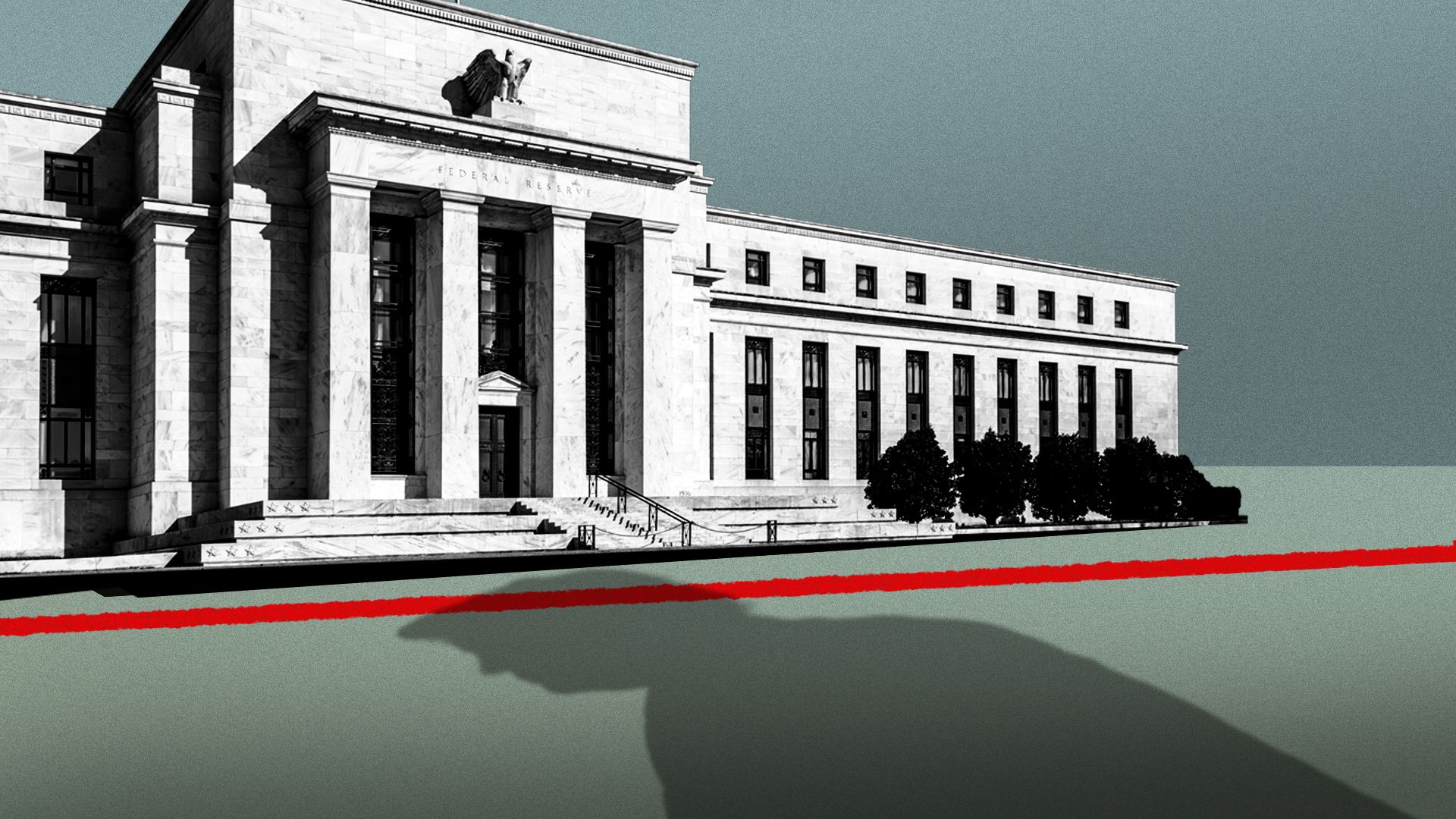
The Supreme Court said President Trump could not fire Fed governor Cook without first giving her a chance to defend herself.
- In recent months, Trump has been putting a formal process in place to address that procedural shortcoming.
The latest: A new memo shows that Trump is establishing a three-person committee to investigate the allegations against Cook and hold a hearing next month.
Why it matters: Trump is reviving his effort to remove the central bank official — potentially setting up another legal showdown over a question the Supreme Court left unresolved: whether the allegations against her constitute sufficient grounds for dismissal.
Zoom in: The committee will investigate the allegations against Cook and determine whether there is "cause" for her removal.
- The three-person committee will include White House economic adviser Kevin Hassett, Equal Employment Opportunity Commission chair Andrea Lucas and acting Office of Government Ethics director Keith Sonderling.
What to watch: The memo says that Cook must appear at a closed-door hearing on Nov. 5 to present evidence and respond to questions.
- Cook has an opportunity to submit a final written response by Nov. 10, the memo says. Then the group will recommend to Trump whether there are grounds to fire her.
The other side: Lawyers for Cook said in a statement today to Axios that "in light of the President's repeated statements that he has already decided to fire Governor Cook — regardless of the facts and evidence — we have grave doubts that this 'hearing' is a legitimate one that would conform to the law."
- "We have engaged with the White House to evaluate whether the process proposed has a possibility of being a genuine one and not simply a box checking exercise."
Flashback: Trump moved to fire Cook last summer over allegations that she misrepresented information on mortgage applications, an unprecedented attempt to remove a Fed official that escalated to the Supreme Court.
- Cook denied wrongdoing and challenged her dismissal in court, arguing that the president lacked legal grounds to remove her.
Since then, the administration sent her a letter formally notifying her that Trump was considering her removal, giving her 21 days to respond to the allegations.
- Cook submitted a response denying the allegations and arguing there was no legal basis to fire her.
The bottom line: The outcome could have implications well beyond Cook, testing the limits of presidential power over an independent central bank.
- Trump has also renewed calls for former Fed chair Jerome Powell to resign from the Fed board, despite an independent watchdog report finding no criminal wrongdoing in the Fed's costly headquarters renovation.
- The Justice Department said last week it would not reopen its investigation.
🗓️ Programming note: There's no newsletter Monday, as Axios observes Indigenous Peoples Day. We will be back in your inbox on Tuesday.
Sign up for Axios Macro