Axios Macro
August 08, 2022

1 big thing: Inflation expectations are tumbling


Americans' expectations for future inflation plunged in July, at least according to one closely watched survey out this morning. That's great news for anyone who doesn't want current prices to become the new normal.
Driving the news: The Federal Reserve Bank of New York's Survey of Consumer Expectations showed steep drops in how high respondents expected inflation to be across a variety of time horizons.
Why it matters: The higher people expect inflation to be, the more likely it is to materialize as businesses feel more comfortable raising prices and workers demand steeper wages.
- In that sense, falling inflation expectations are a welcome sign that the high inflation of the last year is not causing a long-lasting shift in Americans' psychology around money.
Yes, but: Inflation expectations in this survey remain far above the levels that prevailed in the years before the pandemic, and above the 2% inflation rate the Fed is targeting.
By the numbers: Survey respondents expected inflation of 6.2% over the next year, down from 6.8% in June. That was the steepest one-month drop in that number in the survey's nine-year history.
- Expectations over the next three years fell to 3.2% from 3.6%, and five-year expectations to 2.3% from 2.8%
- The drop was most pronounced among survey respondents making less than $50,000, perhaps reflecting that those most pinched by soaring gas prices saw some relief last month.
Between the lines: Fed chair Jerome Powell mentioned the New York Fed's results as a reason to pivot toward more aggressive rate increases at the June policy meeting. So the numbers receding some will likely give comfort to the central bank.
Meanwhile, the survey also showed that Americans' expectations for their own wages remain stable. Survey respondents expected their earnings to rise 3% over the next year, as they have for seven straight months.
- Americans remained generally optimistic about the labor market, despite the bumpy economic environment: The average perceived probability of losing one's job over the next year edged down to 11.8%.
The bottom line: The signs are pointing toward Americans viewing high inflation as a temporary aberration, not simply the way things will always be.
2. More hawkish talk from the Fed
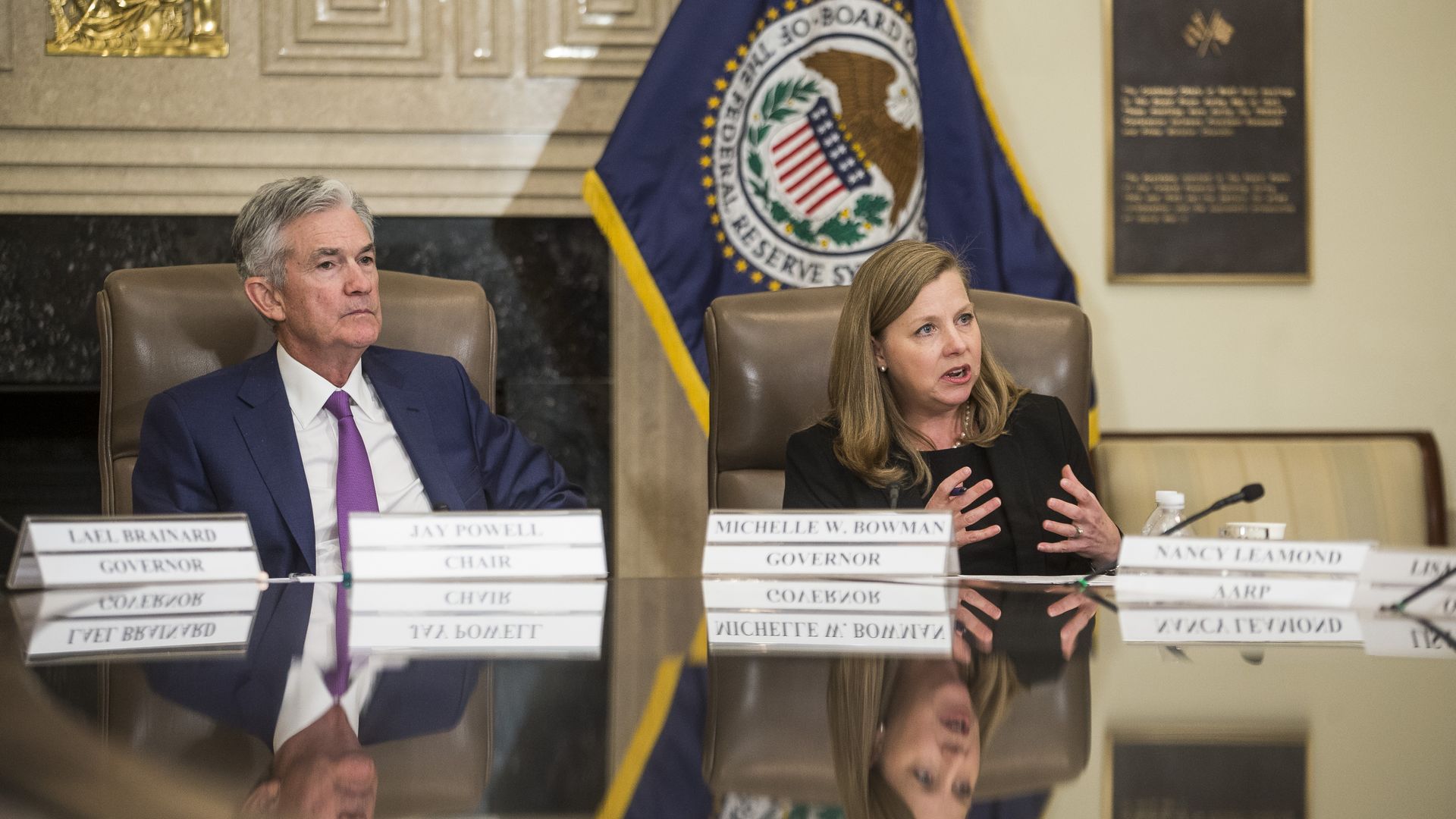
Fed governor Michelle Bowman, right, with chair Jerome Powell. Photo: Zach Gibson/Bloomberg via Getty Images
Axios Macro
Stay ahead of the curve on the most important economic developments with reporting and analysis on how business, policy, and markets collide.