Axios Macro
July 24, 2024


The political ground has shifted rapidly in the last few weeks. We explain why your economic decisions probably shouldn't follow suit, regardless of your political views, below.
- Plus, as we await the first read on Q2 GDP due out tomorrow morning, a look at early data hinting a pickup in economic activity at the start of Q3.
Today's newsletter, edited by Kate Marino and copy edited by Katie Lewis, is 717 words, a 3-minute read.
1 big thing: Don't let politics break your brain in assessing the economy
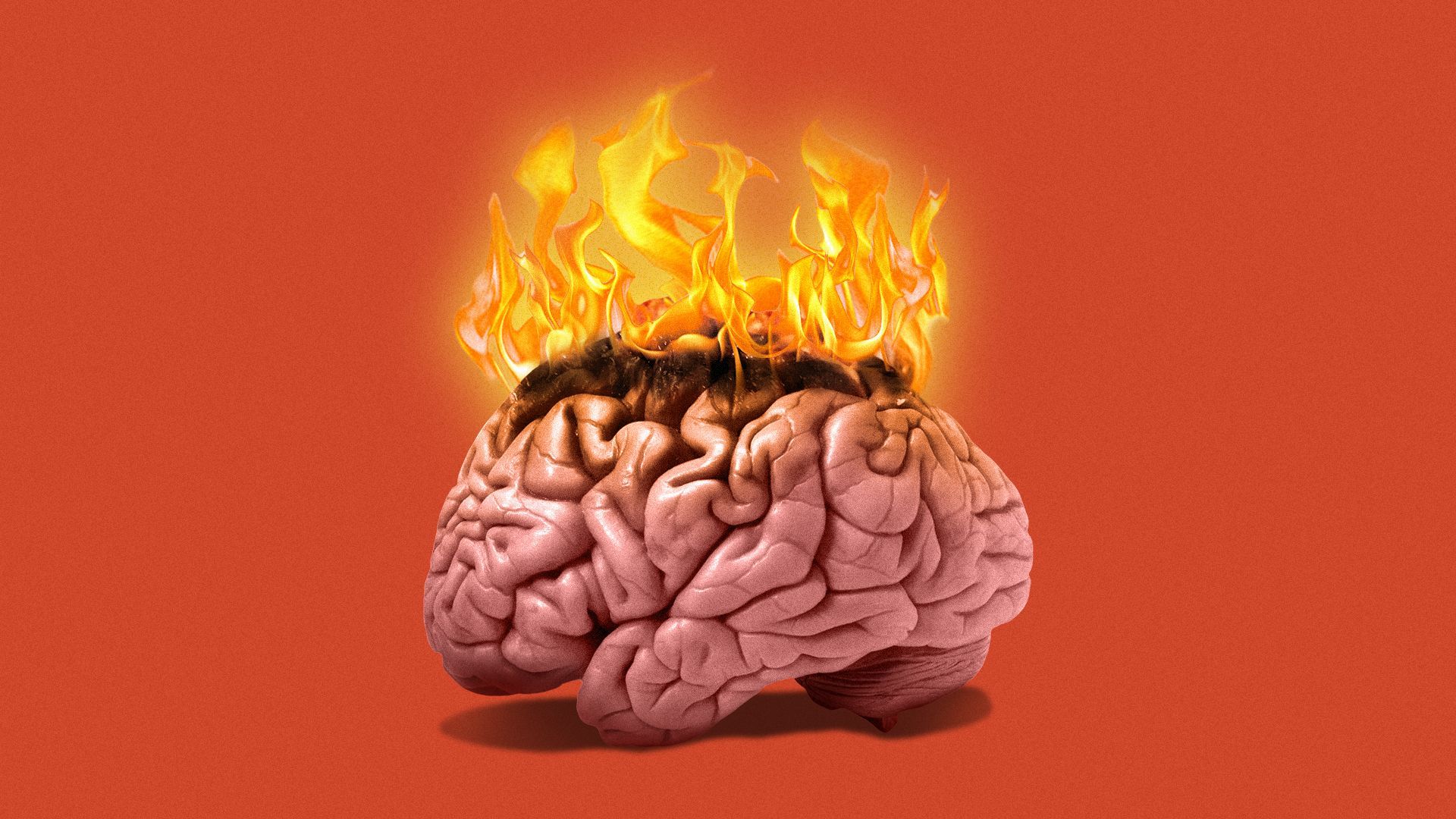
The last four weeks have been a seismic period for U.S. politics. But in making economic decisions — whether to buy a house, take a new job, allocate retirement savings or invest in a business — it is usually better to leave your politics brain at the door.
Why it matters: It's not that political outcomes don't have economic effects — policy choices matter for the economy in the long term. It's just that those effects are slow-moving, frequently non-obvious and always contingent on many other unknowables.
State of play: Four weeks ago tomorrow, the sitting president blundered through a debate. Eleven days ago, a gunman nearly assassinated the former president. Three days ago, the current president withdrew from the race, handing the baton to his vice president.
- Oh, and along the way, the former president was formally nominated for a new term, he picked a vice presidential nominee, there was a NATO summit and the current president got COVID.
Yes, but: However unnerving the news may have been lately, politics hasn't historically driven economic outcomes in a linear, predictable way.
- The archives are chockablock with certain-sounding predictions — frequently with an ideological subtext — that proved simply wrong.
- In 2016, economists predicted that a Trump victory would sink the stock market, trigger a global recession or cause inflation to surge. Warnings that Obama and Biden presidencies would sink stocks were commonplace.
- If you spend a lot of time following politics — and have a strong preference for who should win — it's easy to overestimate the impact that political results have on the economy over any actionable time frame.
What they're saying: "An election is usually overstated as an influence on the economic cycle," Philipp Carlsson-Szlezak, author of a terrific new book called "Shocks, Crises, and False Alarms: How to Assess True Macroeconomic Risk," tells Axios.
- "Political volatility is unusually high, but for politics to leave a material impact on the economy, we need legislation, not just electoral victories," he says.
- "There are areas of presidential policy discretion, such as tariffs, but it's a high bar for an election outcome to shape or cut short the cycle," says Carlsson-Szlezak, the global chief economist at Boston Consulting Group.
The intrigue: Suppose you're thinking about buying a house and want to know if mortgage rates will be higher or lower if a given candidate wins in November. The answer would depend on long list of specific decisions the candidate would eventually make as president.
- The list includes decisions about fiscal deficits (all else equal, higher deficits means higher rates), Federal Reserve appointments, and second-order policies like tariffs and immigration that affect rates by shifting the inflation and growth outlook.
The bottom line: There are untold moving pieces in a $28 trillion economy, so if you think you're absolutely sure of how a given election outcome will affect any one of them, you might just be letting your politics brain do the thinking for you.
2. The economy's July rebound

The economy started the current quarter on strong footing, preliminary data for July shows.
By the numbers: S&P Global's U.S. composite PMI index ticked up 0.2 percentage point to 55 — the highest in more than two years.
- The services sector expanded at the quickest rate since 2022, though manufacturing output contracted for the first time since January.
- Employment in both sectors continued to expand at a more muted pace. Average prices charged for goods and services rose at one of the slowest rates seen in the past four years.
What they're saying: The report signals "a 'Goldilocks' scenario at the start of the third quarter, with the economy growing at a robust pace while inflation moderates," Chris Williamson, S&P Global's chief business economist, said in a release.
- Williamson added that firms are reporting "heightened uncertainty around the election" that is crimping investment and hiring. (They may want to check out our story above.)
What's next: The GDP report out tomorrow at 8:30am ET is expected to show the economy grew at a 2.1% annualized pace in the April-June period.
- If economists are right, that would mark a slight pickup in growth after the 1.4% growth rate in the first quarter. Still, it would be a pullback from stronger growth rates seen last year — a sign interest rates are weighing on the economy.
Sign up for Axios Macro