Axios Macro
April 07, 2025


We may be sending this at lunchtime on a Monday, but it feels like a month of action has already been packed into this young week. 🙃
- Stocks opened the day in bear market territory, then surged into the green after a headline suggested President Trump could delay the imposition of most large-scale tariffs scheduled to go into effect Wednesday.
- Then, markets plunged when the White House called that report fake news.
🇨🇳 Situational awareness: The U.S. will impose an additional 50% tariff on Chinese imports, unless China withdraws its retaliatory tariff, Trump posted on Truth Social.
- He added that all talks with China "will be terminated."
Today's newsletter, edited by Ben Berkowitz and copy edited by Katie Lewis, is 825 words, a 3-minute read.
1 big thing: Stagflation fear gives way to recession fear

Just nine days ago, we wrote about the signs pointing to an imminent stagflation. It's time to revise that outlook; now, a plain ol' recession looks more likely.
The big picture: The shifts in global markets since Trump's tariff announcement last Wednesday carry the unmistakable signs of a looming downdraft in economic activity that would bring inflation, interest rates, and job market conditions with it.
- In effect, there has been a push-and-pull over whether the inflationary impact of higher import taxes will prove more powerful than the disinflationary impact on economic activity.
- When Trump announced tariffs far larger than Wall Street was expecting — and followed up with rhetoric suggesting few off-ramps that might lead to their reversal anytime soon — the smart money tilted toward that recessionary/disinflationary outlook.
State of play: Despite higher import taxes that economists widely believe will push consumer prices up in the near term, bond markets are pricing in medium-term inflation that is lower than anticipated a week ago.
- The five-year inflation breakeven — the spread between the yield on regular versus inflation-protected Treasury securities — was down to 2.34% on Friday, from 2.61% a week earlier.
- Commodity prices have plunged, with West Texas Intermediate crude oil down 15% over the last week, to under $61 a barrel. Copper is down 18% in the last two weeks.
- Bond yields have fallen over the last week, as investors have gained confidence that the Federal Reserve will soon be in interest rate-cutting mode — essentially, a bet that the downward drag of less economic activity will spur the Fed into action, overriding near-term inflation worries.
Between the lines: The normal order of things is for price pressures to fall when economic activity halts or turns negative.
- Demand for commodities falls as people drive and fly less, and building and other investment activity dries up. A weak job market means even those who hang onto their jobs are in less of a position to demand raises, and may pull back on spending as a precaution.
- The open question is how those deflationary forces will intersect with tariffs, including a cumulative 54% on Chinese imports, 46% on Vietnam, and 20% on the European Union.
- It's easy to imagine a scenario in which commodity prices stay low and wage pressures are non-existent, but many consumer goods become more expensive.
Of note: Administration officials emphasize the benefits of some of the recent market moves.
- "Everyone wants to look at the stock market going down. You know what else went down? Oil prices went down almost 15% in two days, which impacts working Americans much more than the stock market does," Treasury Secretary Scott Bessent told "Meet the Press" yesterday.
- "Interest rates hit their low for the year. So I'm expecting the mortgage applications to pick up."
2. Deal or no deal
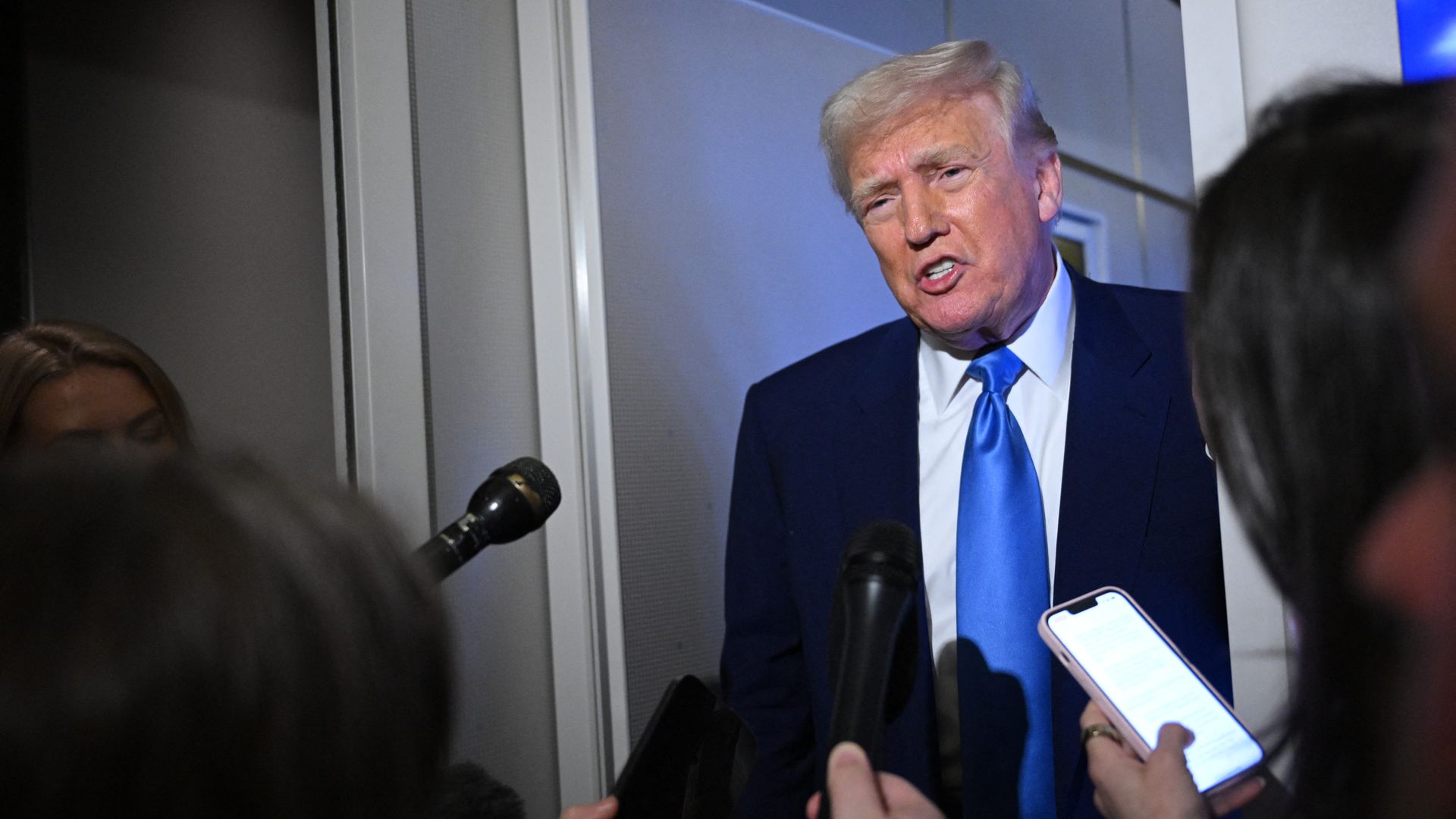
The trade policy stoking recession fears is fueled by conflicting White House messaging over how long the tariffs will last.
Why it matters: Whether the tariffs are a temporary negotiation tactic or the beginning of a new trade normal will help determine the extent of the new policy's economic blast radius.
- The answer, however, seems to depend on which of Trump's top economic officials gets the question — even before this morning's wild series of developments seemingly based on an erroneous tweet amplified by media organizations.
What's new: In the social media post threatening higher tariffs on Chinese goods, Trump said that "negotiations with other countries ... will begin taking place immediately."
- It's unclear what such talks will yield. Just yesterday, Trump said tariffs will stick unless trade deficits with key partners disappear.
What they're saying: "This is not a negotiation, this is a national emergency based on a trade deficit that's gotten out of control because of cheating," top Trump trade adviser Peter Navarro told Fox News yesterday.
- That same day, Bessent told "Meet the Press" that over 50 nations had approached the administration about lowering import levies and non-tariff trade barriers — seemingly acknowledging Trump might be open to negotiations.
- That openness was echoed by top White House economist Kevin Hassett on ABC.
What to watch: Foreign officials are descending on Washington to hash out a deal, including South Korea's top trade officials ,who will meet with U.S. Trade Representative Jamieson Greer, Bloomberg reports.
- The Trump administration imposed a 25% tariff on imports from South Korea, a huge blow for an economy that heavily depends on exports.
State of play: Trump said he spoke with Japanese Prime Minister Shigeru Ishiba, who will "send a top team to negotiate," according to a post on Truth Social this morning.
- That follows a phone call with a top Vietnamese official who Trump says wants to slash tariffs to zero "if they are able to make an agreement with the U.S.," Trump posted on Friday.
- That led to a huge rally in retail stocks, including Nike — a sign of how spring-loaded financial markets are for any news of less extreme tariffs.
Sign up for Axios Macro