Axios Macro

December 11, 2025


1 big thing: Exclusive — CEO sentiment improves, but hiring outlook is gloomy
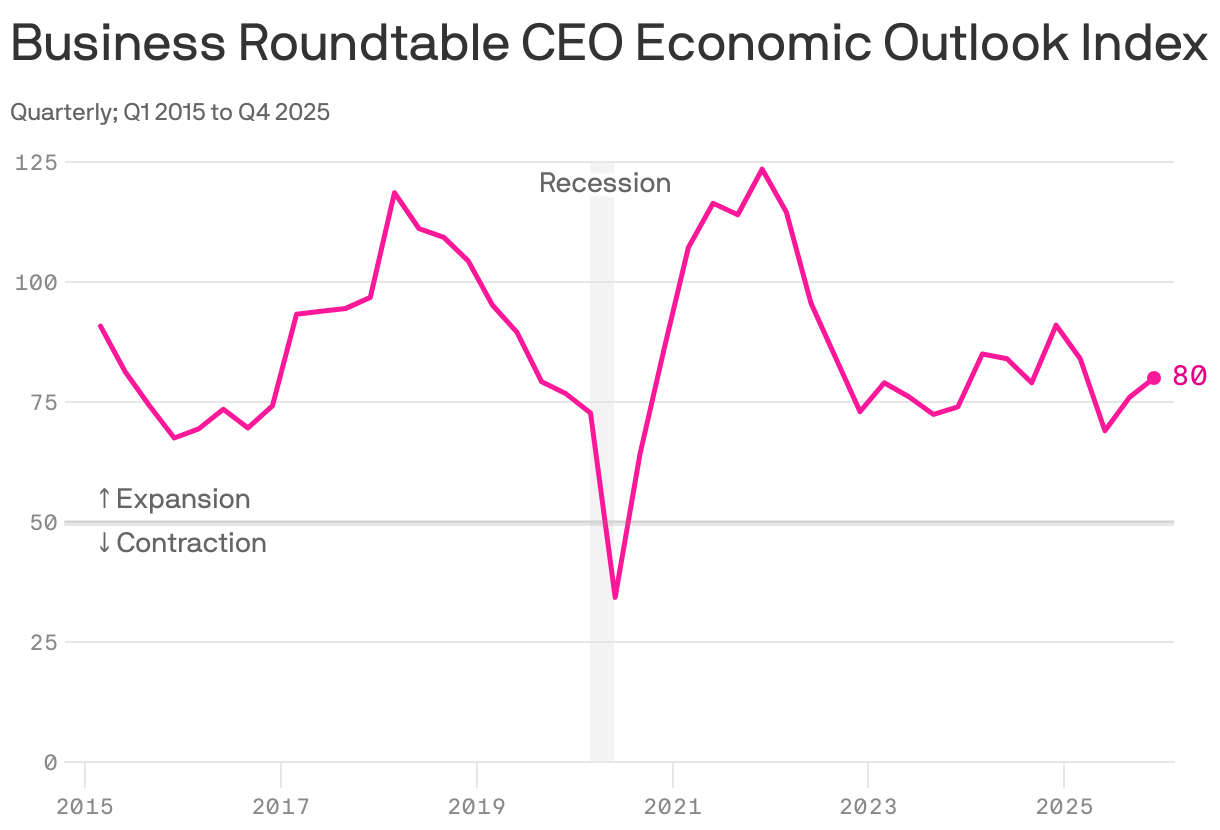
CEO sentiment increased for the third consecutive quarter, even as America's most prominent executives expect underlying job market conditions to remain weak.
Why it matters: The economic outlook among CEOs has steadily improved since plunging in the aftermath of President Trump's initiation of the global trade war.
- Under the hood, however, there is evidence that structural economic changes — including the proliferation of AI — are weighing on hiring intentions, a warning sign for the labor market.
By the numbers: The Business Roundtable's CEO Economic Outlook Index rose by 4 points in its fourth-quarter survey, which was fielded from the final weeks of November through earlier this month.
- The index is still shy of the highest level of the Trump 2.0 era and slightly below the historical average of 83.
Zoom in: The increase reflects a more upbeat view of company revenue in the next six months: Expectations for sales rose 6 points, though the survey does not ask respondents to adjust for the prospect of higher prices.
- Plans for capital expenditures — investments in equipment, buildings or software — ticked up 2 points, following a 10-point surge in the previous quarter.
- Hiring plans also improved relative to last quarter — up 4 points — though it is the survey's lone indicator below the level that signals growth.
What they're saying: "Notably this quarter, more CEOs plan to reduce employment than increase it for the third quarter in a row – the lowest three-quarter average since the Great Recession," Business Roundtable CEO Joshua Bolten said in a statement.
- About one-quarter of CEOs say they will increase hiring, while 35% say employment will shrink at their respective firms. The remaining 40% plan to keep hiring steady.
- A smaller share of CEOs plan to slash workers relative to last quarter, but the figures still show a notable shift among top executives.
- Consider the results from this time last year: A similar share of CEOs expected no change in employment levels, but just 21% said they anticipated cutting jobs, while 38% planned to increase hiring.
"CEOs' softening hiring plans reflect an uncertain economic environment in which AI is driving sizeable [capital expenditures] growth and productivity gains while tariff volatility is increasing costs, particularly for tariff-exposed companies, including small businesses," Bolten said today.
The big picture: The in-the-dumps hiring plans signaled by big firm CEOs — alongside a string of layoff announcements in recent months — signal a possible shift for the steady-state labor market that has persisted in recent years.
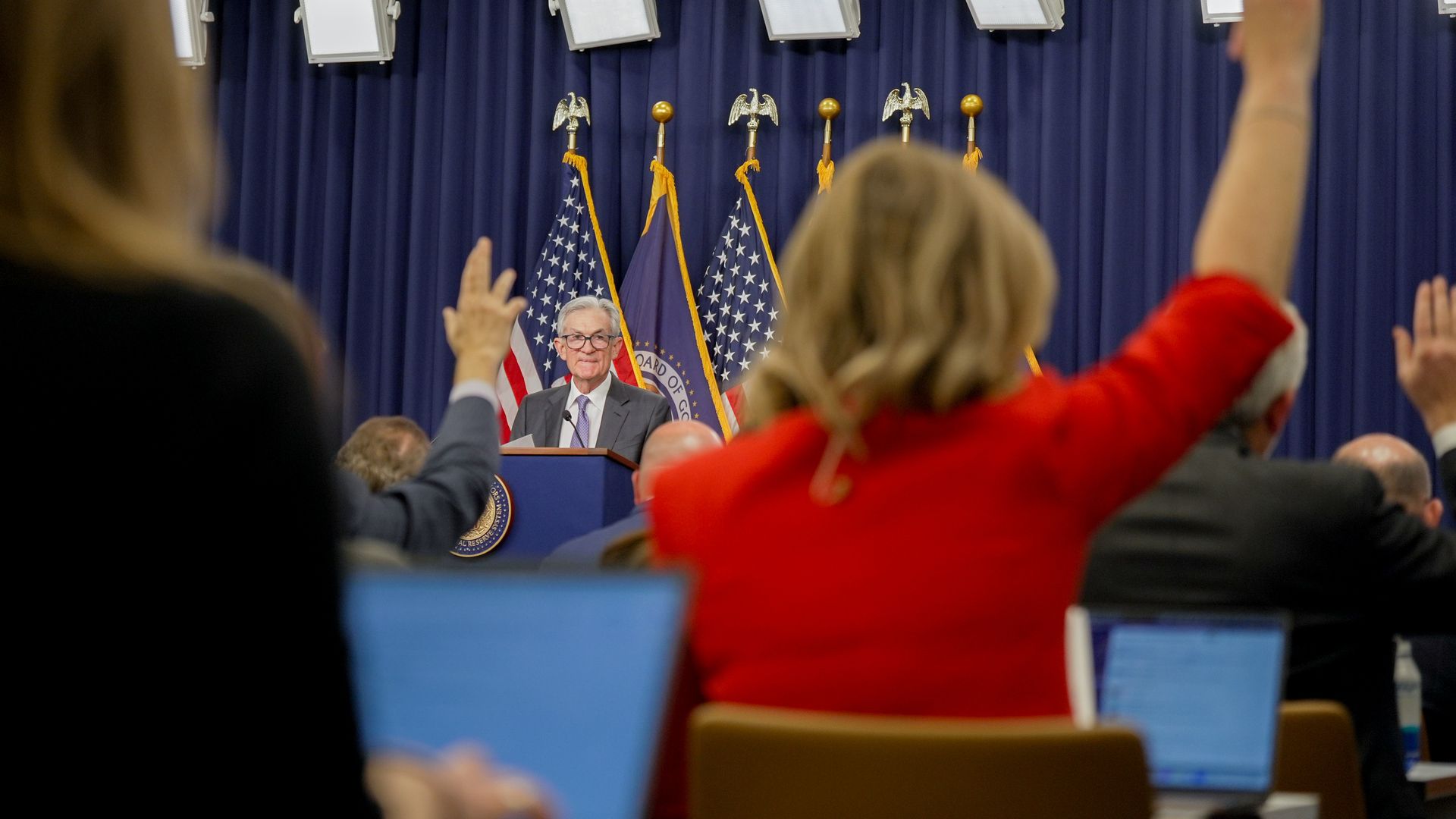
- Powell raised the possibility that the labor market might be even weaker than government data suggests.
- The economy has added a monthly average of 40,000 payroll jobs since April. But "we think there's an overstatement in these numbers, by about 60,000, so that would be negative 20,000 per month," Powell said at yesterday's press conference.
- "The labor market has continued to cool gradually, maybe just a touch more gradually than we thought," he added.
The bottom line: CEOs feel more optimistic, though that confidence boost is not expected to translate into more hiring — an unusual dynamic for the economy.
- "Although the results signal that CEOs are approaching the first half of 2026 with some caution, they are starting to see opportunities for growth," Cisco CEO Chuck Robbins, who chairs the Business Roundtable, said in a statement.
- "With the Index near its average, it reflects the resilience of the U.S. economy," he added, citing pro-growth tax policies and fewer regulations.
2. The Fed sees a productivity surge
Axios Macro