Axios Macro

January 26, 2026


It's a frigid, snow-covered week where we are in Washington, D.C. (and much of the U.S.), so today we look at the heated action in global currency and bond markets. ❄️
- More specifically, we explore why recent fluctuations in the Japanese yen and the nation's government bonds matter for everybody. 🇯🇵
- Plus, a closer look at Rick Rieder, now the betting markets' front-runner to become the next leader of the Federal Reserve. 🧐
Today's newsletter, edited by Jeffrey Cane, is 920 words, a 3-minute read.
1 big thing: Why the Japanese bond drama matters

The financial headlines overnight were full of speculation about currency interventions by the Japanese and U.S. governments. That's really a small piece of a bigger story — one with serious consequences for the global economy.
The big picture: Japan has played an outsize role in the global financial system over the last two decades, with its massive pile of low-interest debt and major institutional investors looking to deploy capital for higher returns.
- Those underpinnings are now coming into question. Should they unravel more fully, it could throttle capital inflows to the rest of the world and therefore lower asset values and lift long-term rates.
- It raises the prospect of a world where bond investors are more jittery about buying the debt of countries with large ongoing fiscal deficits, like a certain global superpower celebrating its 250th birthday this year.
Driving the news: The yen soared 1.2% against the U.S. dollar overnight, following a steep sell-off last week, as traders saw hints that a government intervention to prop up the currency could be imminent.
- "We will take all necessary measures to address speculative and highly abnormal movements," Japanese finance ministry official Atsushi Mimura said yesterday, per Bloomberg.
- It comes after a week of wild gyrations in both the currency and longer-term Japanese bonds, which sold off sharply last Monday and Tuesday, pushing borrowing rates sharply higher — with spillover effects to U.S. assets.
State of play: Japan has spent the last three decades trying to jolt its economy out of a deflationary trap that has been accompanied by persistently low interest rates.
- Those low rates have allowed the Japanese government to run up an enormous public debt of more than 200% of GDP.
- It has contributed to capital flows abroad. Japanese insurers and pension funds have plowed money into higher-returning assets overseas. Hedge funds have maintained carry trades, borrowing in yen and investing in higher-yielding assets elsewhere.
- The Japanese government's war on deflation increasingly looks to have been won — but nobody said the journey from the ultra-low rates regime to something more normal would be seamless.
Zoom out: The recent volatility began with Prime Minister Sanae Takaichi proposing tax cuts in the run-up to Feb. 8 elections. That, in turn, fueled worries about widening deficits and their impact on Japan's fiscal sustainability in light of the massive existing debt overhang.
- It is a turnabout from decades when the government could seemingly enjoy a policy-free lunch, running loose monetary policy and wide deficits with little pain in the form of inflation or higher rates.
- Key longer-term rates spiked to multi-decade highs. They have since receded, but the 40-year Japanese government bond is now yielding 3.91%, up from 2.65% a year ago.
- That in turn triggered a large (though short-lived) sell-off of U.S. assets, reflecting the heightened risk of a pullback of Treasury buying by Japanese institutions and the yen carry trade — and broader wariness of countries with high debt.
What they're saying: "Japan has been the world's financial shock absorber for a generation, and that role has abruptly ended," Nigel Green, CEO of deVere Group, says in a note.
- "The repricing of Japanese debt is a systemic event, not a local story, and investors need to treat it as such," he adds.
The bottom line: "The bond market is signaling a credibility test for fiscal policy," Green writes.
2. Rieder takes the lead
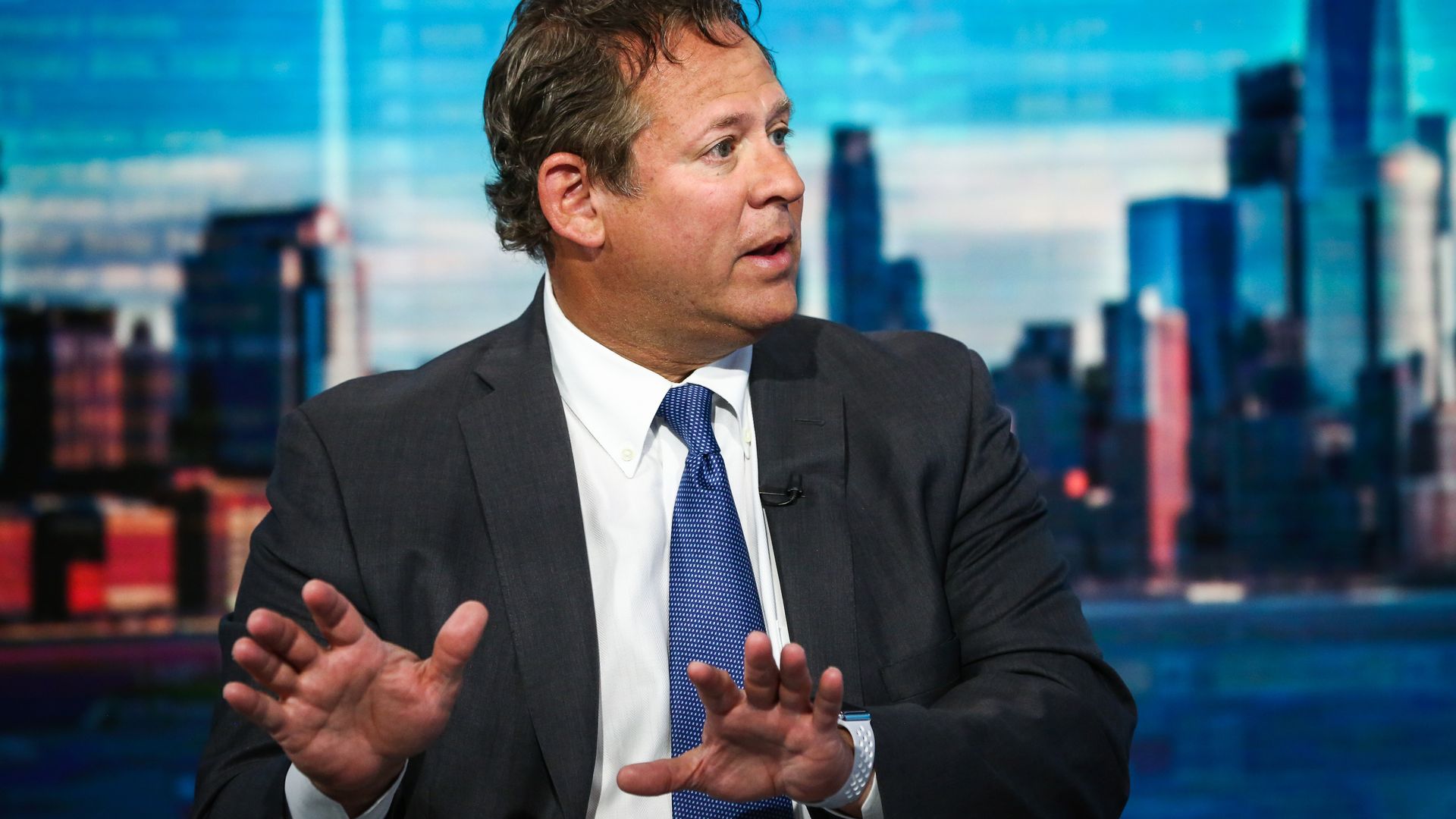
Traders on major betting exchanges now assign top odds to BlackRock executive Rick Rieder to be President Trump's Fed chair nominee.
Driving the news: Rieder had 47% odds on Polymarket this morning, with former Fed governor Kevin Warsh second at 28%. Rieder's odds were below 3% on Jan. 12.
- The markets have been volatile through the last several weeks, reflecting shifting comments from the president about the nomination. White House economic adviser Kevin Hassett reached 85% odds in December and is now down to 9%, for example.
- The betting exchanges may be volatile, but they reflect real money being put at risk — $269 million on Polymarket and another $59 million on Kalshi.
Zoom in: Rieder, as the chief investment officer for global fixed income at BlackRock, is in an unusual position for a potential Fed chair, having published research notes on economic data, which offer insights into his thinking on major debates of the moment.
- In a note on jobs data released Jan. 9, for example, Rieder was clear that he believes a productivity surge is underway that is dampening demand for labor, and that the job market is weaker than headline data imply.
What they're saying: Rieder wrote that "if people question whether productivity is occurring in today's economy, we would point to a number of illustrations that require closer inspection than just the top-line payroll growth number, which has been slowing of late."
- He adds that "while U.S. growth is solid, broad-based labor is not really participating in this economic vitality," and that this justifies further rate cuts.
⚾️ Fun fact: Rieder is also a minority investor in Major League Baseball's Baltimore Orioles, of which he is said to be a lifelong fan.
Sign up for Axios Macro